Why water woes dog Nandi Hills region though 5 rivers originate there
Chikkaballapur, Kolar, and Bengaluru Rural face severe water scarcity as poor management and inter-state disputes allow river resources to flow out of Karnataka

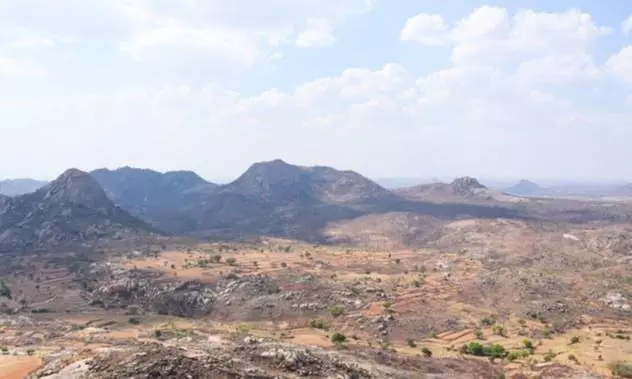
Chikkaballapur, Kolar, and Bengaluru Rural, the three Karnataka districts around Nandi Hills, a historical hill fortress and popular tourist spot near Bengaluru, continue to suffer from severe water scarcity. This despite the region being the origin of five key rivers: South Pinakini, North Pinakini, Arkavathi, Chitravati, and Palar.
As the water of these rivers flows into the neighbouring states of Tamil Nadu, Andhra Pradesh, and Telangana, the local communities of the water-rich belt remain poor victims of a ruthless irony and at the mercy of an ever-growing drought.
Also read: Karnataka’s water battles: State tussles with 17 inter-state river disputes before courts
That the Nandi Hills region continues to suffer despite being at the junction of five rivers is evident from the ordeal of the local farmers. Those growing grapes, silk, and horticultural produce struggle with water scarcity, despite being located close to the rivers.
AI-generated image of the river system in the Nandi Hills region.
While a lack of access to irrigation and drinking water underscores the paradox of this water-rich region, the fact that these rivers have found themselves at the centre of inter-state disputes over water rights has added to the woes.
River routes and their importance
The five rivers originating in this region have had some significance in the past, but poor conservation efforts have left them in a sorry state.
Arkavathi
Arkavathi flows through Bengaluru Rural, Bengaluru city, Magadi, Ramanagaram, and Kanakapura before entering Tamil Nadu. This river historically supplied drinking water to Bengaluru through reservoirs such as Hesarghatta Lake and Thippagondanahalli Reservoir. However, pollution has now rendered the water unfit for supply.
North Pinakini
The North Pinakini River flows eastward, passing through Chikkaballapur, Kolar, and Tumakuru districts, before reaching Andhra Pradesh. It supports minor irrigation in areas such as Manchenahalli and Gowribidanur, as much of its water is diverted to other states.
Also read: How big lifestyle brands are tapping the idea of wellbeing through water
South Pinakini
This river flows through the Bengaluru Rural district, eventually entering Tamil Nadu. It passes through areas such as Hosur and Krishnagiri before reaching the Bay of Bengal. Most of the river’s course is lined with lakes, which have become heavily polluted due to the discharge of industrial waste.
Chitravati
Chitravati flows through Andhra Pradesh, entering the state near Puttaparthi and Anantapur. It merges with the North Pinakini near Kadapa. The river is home to the Chitravati Balancing Reservoir, a key water storage project.
An aerial view of the Nandi Hills, one of the most popular weekend tourist destinations near Bengaluru. Photo: X
Palar
Palar flows southeast, passing through Chikkaballapur and Kolar before entering Andhra Pradesh and Tamil Nadu, and ultimately reaching the Bay of Bengal. Despite its importance, its flow has been compromised by poor conservation and management.
Poor water management
Had they been managed effectively, these five rivers could have provided water to hundreds of villages along their courses. With strategic dam construction and efficient water storage during the monsoon, they could have supported year-round irrigation and drinking water supplies.
Also read: Dirty tap water plagues Bihar cities as sewage taints drinking water supply
The agricultural lands of Bengaluru South, Kolar, and Chikkaballapur could have thrived, benefiting from abundant water for crops such as silk, flowers, and horticultural produce. However, the lack of infrastructure has left these rivers underutilised, with water being diverted to neighbouring states while the local regions suffer from chronic water shortages.
Despite receiving more than 120 TMC (thousand million cubic feet)of rainwater in Kolar and Chikkaballapur districts between 2021 and 2023, no significant efforts have been made to store this water. Even with above-average rainfall, there has been no initiative to capture and preserve the water for later use, leaving these districts in a state of perpetual drought.
Inter-state water disputes
The South Pinakini (also known as Pennar in Tamil Nadu) has led to a legal dispute between Karnataka and Tamil Nadu, both of which have seen serious involvement in river water-sharing disputes in the past. Karnataka’s plan to build a dam at Yaragol in Kolar has sparked a dispute, with Tamil Nadu claiming the dam will alter the river’s flow and affect their water supply.
Also read: How India ‘subsidises’ the poisoning of air and water through fertilisers
While the Supreme Court has instructed the formation of a water-dispute tribunal to address the issue, Karnataka has failed to take a strong stand, raising concerns over the state's ability to protect its water rights.
Tamil Nadu, on the other hand, has been demanding the tribunal’s formation to resolve the issue.
The need for urgent action
Water policy experts like R Rangaswamy have warned that Karnataka must take immediate action to address the ongoing water crisis. The rivers, which have the potential to provide water to vast agricultural lands, remain underutilised due to poor planning and management. Their effective storage and better management could transform the state's dry regions, but the government has failed to implement any long-term solutions.
Also read: Why these Karnataka villagers want a stop to stone quarrying
The state has remained at the mercy of seasonal rains. Without urgent intervention, the concerned districts will continue to suffer the consequences. The Karnataka government must act quickly and decisively to avoid further deterioration of its water resources, or it risks deeper crises in the days to come.
This article was originally published in The Federal Karnataka.