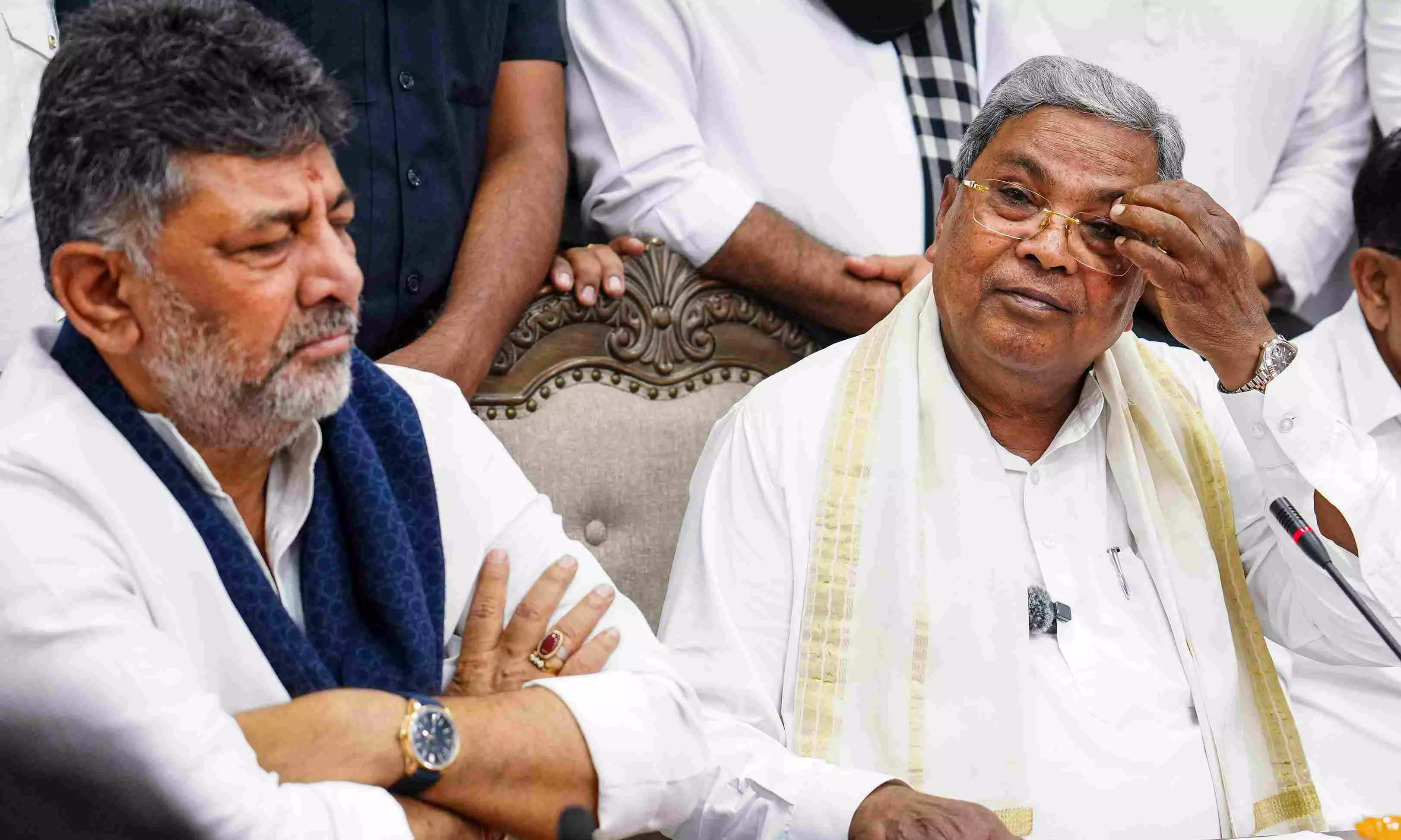
Why DK Shivakumar’s cabinet expansion has left Congress battling dissent in Karnataka
What was meant to end uncertainty over ministerial berths has instead triggered factional rift, representation concerns and fresh political challenges for the Congress

Four days after the expansion of Chief Minister DK Shivakumar’s cabinet, the Congress is still battling an escalating rebellion rather than celebrating the formation of his government. What was expected to end the uncertainty over ministerial berths has instead opened multiple fronts of discontent across Karnataka, with young legislators, senior leaders and community groups expressing anger over their exclusion.
Also read | Karnataka Cabinet expansion: Why Siddaramaiah is upset despite calling the shots
While the Congress high command rushed Karnataka in-charge Randeep Singh Surjewala to Bengaluru on Tuesday evening to contain the damage, protests and dissent continue to spread, turning the cabinet exercise into the first major political challenge for the new DK Shivakumar government. He will stay in Bengaluru for two more days, sources said.
Surjewala leads damage control
The dissatisfaction is now emerging from different sections of the party. Young MLAs argue that despite repeatedly promising generational change, the leadership failed to create space for young faces. Several legislators who have won consecutive elections claim they have once again been ignored despite years of work for the party.
At the other end, senior Congress leaders insist that decades of loyalty and service have been overlooked. Leaders who expected cabinet positions believe the selection process gave insufficient weight to seniority, organisational contribution and experience. Their public criticism has exposed the growing divide within the party.
To prevent the rebellion from snowballing, the Congress high command deputed Surjewala to Bengaluru. Surjewala has held marathon meetings with Chief Minister DK Shivakumar and personally visited the residences of disgruntled leaders, including senior legislators M Krishnappa, HK Patil and Dinesh Gundu Rao, urging them to remain patient and continue working for the party.
The damage-control exercise yielded only limited success. MLA Yashavanthrayagouda Patil, who had resigned from his Assembly committee position after being denied a ministerial berth, withdrew his resignation following assurances from the party leadership. Koppal MLA Raghavendra Hitnal also met Surjewala to convey his concerns. However, party sources admit that many legislators remain unconvinced.
The unrest has also taken a caste and regional dimension. Several leaders allege that the cabinet failed to adequately balance caste equations and regional representation. The disclosure of the recommendation lists reportedly submitted separately by Siddaramaiah and DK Shivakumar has further intensified resentment among AHINDA leaders, many of whom feel their names were deliberately ignored. Senior leader HC Mahadevappa’s visit to Delhi on Thursday to meet the high command has added to speculation over the growing internal divide.
AHINDA tensions deepen
Siddaramaiah’s camp also believes that efforts are underway to create a rift within the AHINDA bloc by projecting that the party high command largely accepted the list of ministers recommended by the former chief minister.
Leaders close to Siddaramaiah reject this claim, pointing out that several of his key loyalists, particularly AHINDA leaders such as HC Mahadevappa, were not accommodated in DK Shivakumar’s cabinet. Sources say Mahadevappa's visit to Delhi was aimed at seeking clarity from the high command over the selection process and countering the perception that Siddaramaiah's recommendations had been fully accepted. Leaders in Siddaramaiah's camp insist that the list submitted by him primarily consisted of AHINDA leaders and argue that the final cabinet reflects only partial acceptance of his suggestions.
Also read | Can Karnataka build Mekedatu without Tamil Nadu's nod? What expert says
They point out that among those inducted are six OBC leaders, three Muslims, six Scheduled Caste leaders, three Scheduled Tribe leaders and one Christian, making a total of 19 members belonging to the AHINDA social coalition in the 34-member cabinet, including the Chief Minister. “The attempt is to drive a wedge between Siddaramaiah and the AHINDA leadership, but he has the original list to prove what he recommended,” a senior leader close to the former Chief Minister told The Federal.
Outside the party too, the cabinet composition has triggered protests. The Akhila Karnataka Brahmana Mahasabha staged a demonstration at Freedom Park in Bengaluru, demanding representation for the Brahmin community after no leader from the community found a place in the cabinet. Similar voices are emerging from other sections seeking greater social representation.
Siddaramaiah’s silence looms large
What is making the crisis more uncomfortable for the Congress high command is the political silence of former Chief Minister Siddaramaiah. Since the cabinet expansion, he has largely kept himself away from the party's reconciliation efforts and has maintained a visible distance from the central leadership. His silence has become politically significant as several disappointed MLAs and senior leaders are seen rallying behind him instead of approaching the new chief minister.
Congress leaders acknowledge that while Surjewala is attempting to pacify the disgruntled legislators, the bigger challenge before the high command is to rebuild trust with Siddaramaiah. Without his active participation in the reconciliation process, many believe the resentment within the legislature party could persist despite repeated assurances from Delhi.
For DK Shivakumar, who assumed office promising a united Congress government, the cabinet expansion has turned into an early test of political management. Whether the high command can convince both the dissatisfied legislators and Siddaramaiah in the coming days may determine how long the internal turbulence continues and how effectively the new government is able to shift its focus from internal politics to governance.
Horatti refuses to quit
Basavaraj Horatti’s refusal to step down as Chairman of the Karnataka Legislative Council has added another political complication for the Congress government. Even after the Congress high command named Salim Ahmed as its candidate for the post, Horatti has maintained that he will not resign voluntarily.
Also read | Cauvery row flares up: Shivakumar urges Vijay to defer Bengaluru visit; Karnataka bandh on Aug 13
Chief Minister DK Shivakumar held a late-night meeting with Horatti at the latter's residence, along with senior ministers Satish Jarkiholi, BZ Zameer Ahmed Khan, UT Khader, Cheluvarayaswamy and Magadi Balakrishna, in an attempt to persuade him to vacate the constitutional post without triggering a political confrontation. However, Horatti is learnt to have conveyed that if the government wants to remove him, it should follow the constitutional route by moving a no-confidence motion instead of seeking his resignation.
Earlier, Horatti had publicly criticised the Congress high command's decision to announce candidates for the chairman and deputy chairman posts on the party letterhead, describing it as an unprecedented move that undermines the autonomy and dignity of the legislature. With Horatti remaining firm on his stand, the Congress now faces yet another political and constitutional challenge even as it struggles to contain the fallout of the cabinet expansion.