








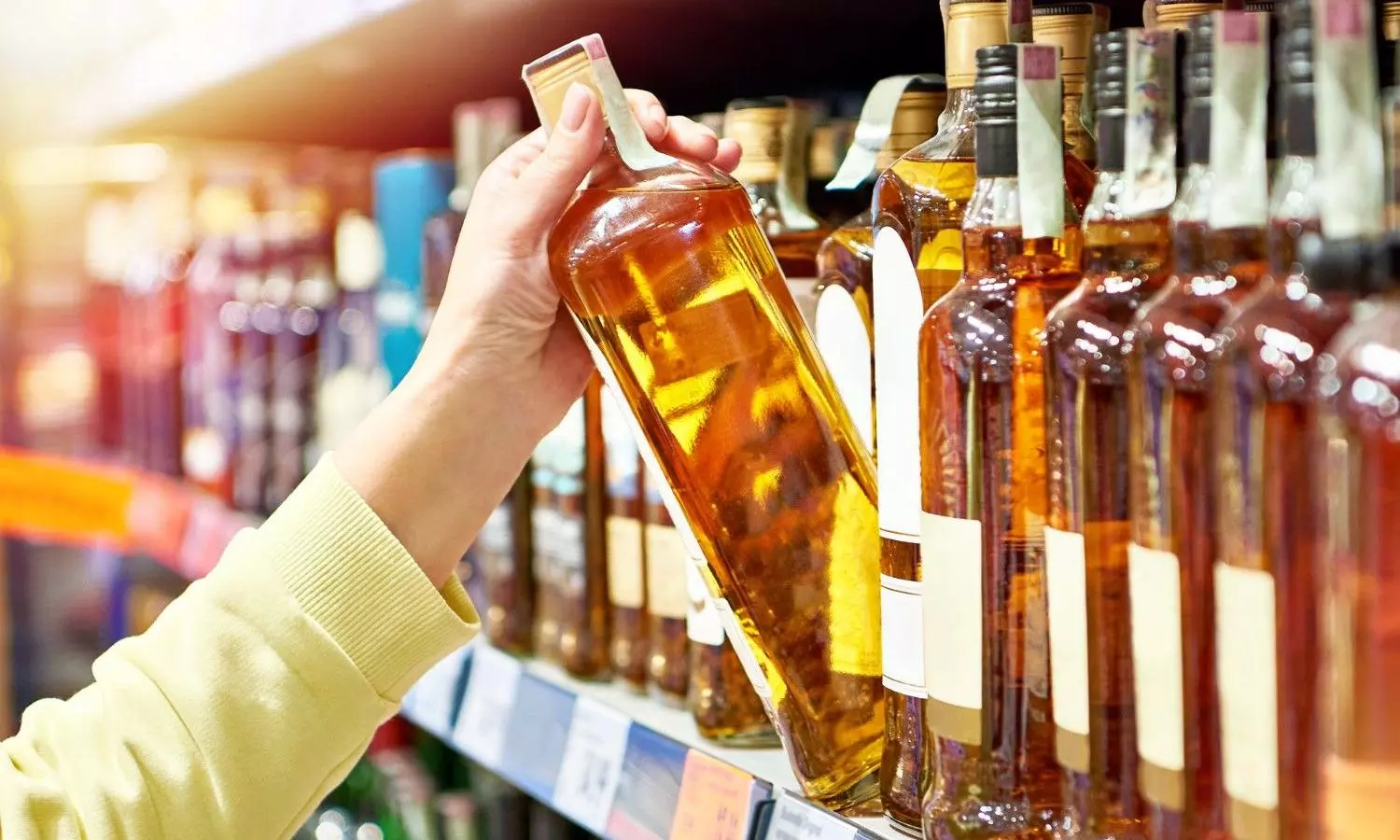
Why Karnataka introduced SC/ST quota in liquor licence auctions
The state government's decision marks the beginning of a new chapter in the history of the Excise Department

The Karnataka government has, for the first time, introduced reservation for Scheduled Castes (SCs) and Scheduled Tribes (STs) in liquor licence auctions, setting a new benchmark for the country.
The official notification issued by the Chief Minister DK Shivakumar-led Congress government has brought about a transformative change in the state's excise policy. Through an amendment to Rule 5 of the Karnataka Excise (Sale of Indian and Foreign Liquors) Rules, 1968, reservation has been made mandatory in the e-auction of CL-2A and CL-9A licences, the amendment has been implemented by exercising powers under Section 71 of the Karnataka Excise Act, 1965.
Why this new reservation
The idea of social justice in governance has traditionally been confined to the fields of education and employment. However, this recent decision by the state government has gone beyond these conventional boundaries and extended the principle of social equity to the sphere of business and commerce.
Also read: Karnataka govt to launch Prajaseva ministry to address citizen grievances
One of the key features of the order is the scientific and equitable distribution of reservation. With the objective of ensuring equal opportunities among sub-groups within the Scheduled Castes, the government has specified percentage-wise reservation.
Of the total reservation, 5.25 per cent has been allocated to SC Category A, 5.25 per cent to Category B, 4.5 per cent to Category C, and 3 per cent to Scheduled Tribes. This classification is intended to ensure adequate representation for those who have historically been deprived of opportunities within these communities. It is not merely a matter of numbers, but an effort to bring economically disadvantaged sections into the commercial mainstream.
In states such as Maharashtra, Tamil Nadu, Andhra Pradesh, Telangana and Kerala, liquor licences have traditionally been granted based on financial eligibility, investment capacity and tax-paying ability. These systems have largely followed capital-driven auction models.
Also read: Karnataka MLC polls: DK Shivakumar calls the shots, leaves BJP, JD-S in tatters
Karnataka, however, has added a social justice dimension to the auction process, becoming the first state in the country to adopt such a measure. This reflects the priority the government has accorded to social inclusion.
Social and economic significance of the move
The liquor trade is one of the more profitable business sectors. Until now, access to this sector has been largely concentrated among a limited group of players. With the introduction of reservation, the doors of this industry have now been opened to SC/ST communities. This is expected to improve the economic standing of entrepreneurs from these communities.
The lack of access to business opportunities has long been a major factor contributing to poverty. By removing this barrier, the government has created avenues for entrepreneurship among youth from marginalised sections.
The order reflects the constitutional vision that social justice should not remain limited to political reservation alone. The greater the participation of disadvantaged communities in the economy, the more equitable the distribution of wealth within the state is likely to become.
Challenges and way forward
While introducing reservation is one part of the process, ensuring its effective implementation is an equally significant challenge. To enable beneficiaries of this reservation to succeed, the government must also consider facilitating access to bank loans and other forms of financial assistance. Securing a licence alone will not be enough; training, capacity building and proper guidance will also be essential for successful operation and management.
The state government's decision marks the beginning of a new chapter in the history of the Excise Department. Its commitment to taking social justice to every level of governance deserves appreciation.
Other states are closely observing this model, and Karnataka is likely to emerge as a guide for the rest of the country in matters of social inclusion. By breaking the monopoly that existed in the excise sector, this order has opened a pathway to economic self-reliance even for those at the margins of society.
(This article was originally published in The Federal Karnataka)