Kerala CPI(M)’s moment of truth: Cadres speak, leadership under fire
As criticism grows within the CPI(M), debates over leadership, candidate choices and generational change are becoming harder to ignore

The CPI(M) in Kerala is undergoing one of its most intense internal reviews in recent years after its election setback. The party leadership has opened the doors for criticism in a way that many observers describe as unusual for the CPI(M). State secretary MV Govindan and general secretary MA Baby publicly encouraged cadres and supporters to speak openly about mistakes and concerns.
What stood out was the assurance that criticism could be voiced “without fear”. That phrase has since sparked wider debate within party circles, with many questioning whether there had been hesitation earlier in expressing dissent within the organisation.
Internal review
The CPI(M)’s internal review process is now underway across different organisational levels. District committee meetings have largely been completed, and the feedback emerging from them has reportedly been sharp and direct.
Also read: CPI(M) launches rare introspection after Kerala poll rout
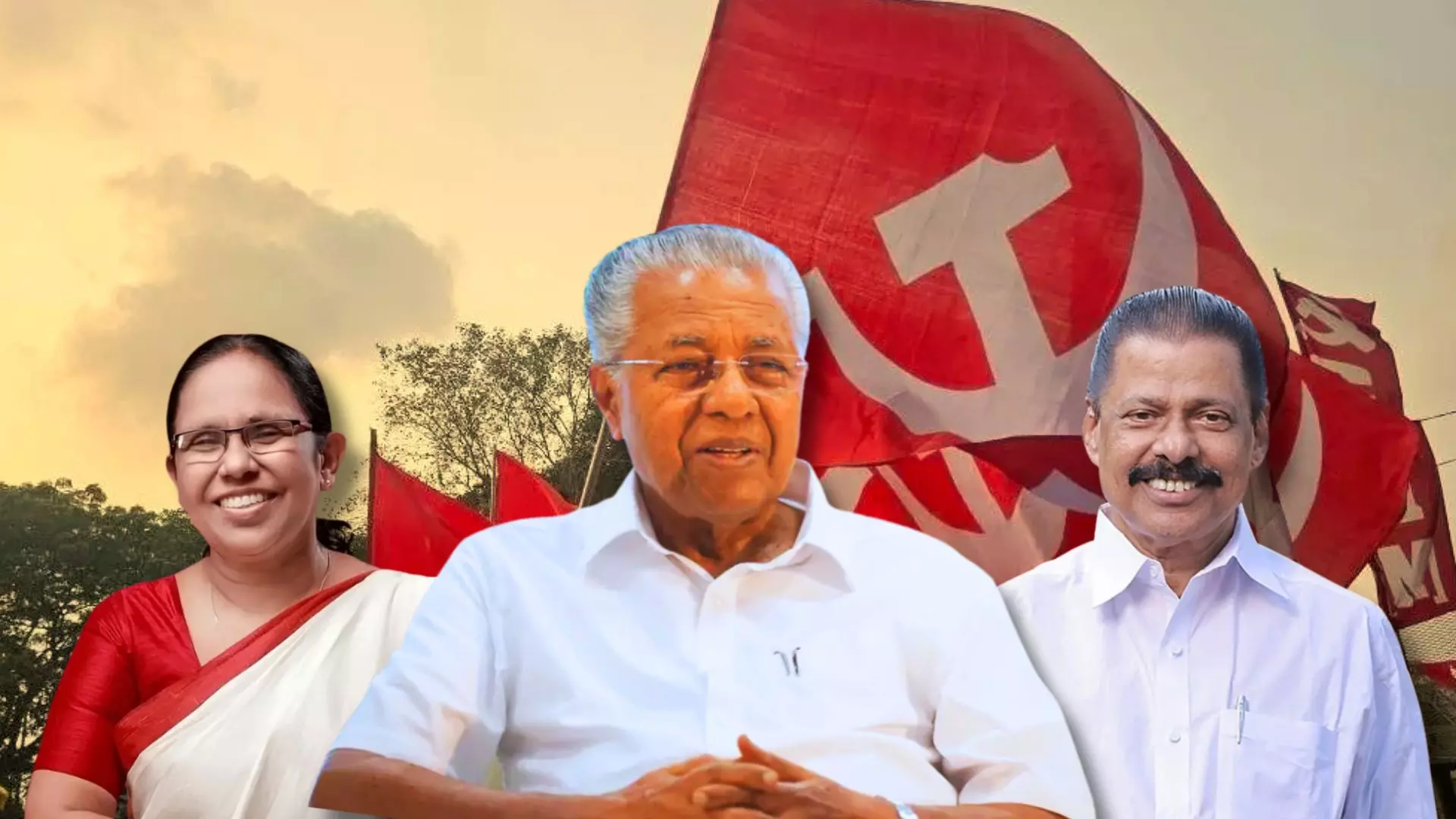
Several cadres have openly criticised former Chief Minister Pinarayi Vijayan and the current leadership structure under MV Govindan. For nearly a decade, Vijayan was seen not just as the face of the government but also as the dominant voice within the party organisation.
Now, sections within the party argue that the organisation gradually lost its ability to independently assess and correct the functioning of the government.
The criticism is no longer limited to closed-door meetings. Party members and supporters have increasingly taken to social media platforms to express dissatisfaction, some of it unusually blunt for a cadre-based organisation known for discipline and internal cohesion.
Age debate
The discussion has also expanded into questions surrounding leadership and age. Vijayan, who turned 82 on May 24, has become the centre of a wider conversation within sections of the party.
Also read: Travelling in Kerala? Note these road restrictions as state braces for early monsoon
Some cadres have reportedly questioned the exceptions made for him within the CPI(M)’s otherwise strict organisational norms regarding leadership continuity. A few voices have even suggested that the veteran leader should consider stepping aside.
The ongoing criticism spans multiple issues, including governance decisions, political positioning, organisational culture and candidate selection.
One of the biggest flashpoints has been the treatment of senior leader KK Shailaja, once regarded as one of the party’s most popular public faces.
Shailaja factor
Shailaja was shifted from her stronghold Mattannur, where she secured a record victory margin in the 2021 Assembly election, and fielded instead from Peravoor against KPCC president Sunny Joseph. She eventually lost the election.
Within the party, the decision has triggered strong reactions. Several cadres reportedly see the move as more than a tactical error and describe it as the sidelining of a highly popular leader.
Her reduced prominence in recent years has become a recurring topic in internal discussions and political debates surrounding the future direction of the CPI(M).
Alongside Shailaja, names such as K Radhakrishnan and M Swaraj are increasingly being discussed as possible representatives of a generational transition within the party.
Other flashpoints
Another issue that has generated discussion is the candidature of PK Shyamala, leader of the All India Democratic Women’s Association (AIDWA) and wife of Govindan.
While the leadership defended her candidature as a legitimate political decision, sections within the party reportedly viewed it with discomfort.
The party is also facing questions over Vijayan’s political proximity to SNDP Yogam general secretary Vellappally Natesan. His controversial remarks against minority communities have often appeared at odds with the CPI(M)’s ideological positioning.
All these developments have contributed to what many within the organisation see as a broader perception problem for the party.
Bigger shift?
The current introspection within the CPI(M) is being viewed by many political observers as more than just a routine post-election exercise.
The scale and openness of the criticism, especially against the party’s top leadership, mark a rare moment in Kerala politics. Whether this process results in structural changes, leadership transitions or merely temporary course correction remains to be seen.
But for now, the debate within the CPI(M) appears more open, public and consequential than it has been in years.
(The content above has been transcribed from video using a fine-tuned AI model. To ensure accuracy, quality, and editorial integrity, we employ a Human-In-The-Loop (HITL) process. While AI assists in creating the initial draft, our experienced editorial team carefully reviews, edits, and refines the content before publication. At The Federal, we combine the efficiency of AI with the expertise of human editors to deliver reliable and insightful journalism.)