Kerala Budget prioritises welfare as LDF govt banks on continuity
The budget hikes DA for staff, offers free college education and allocates Rs 14,500 crore for social security pensions ahead of assembly elections

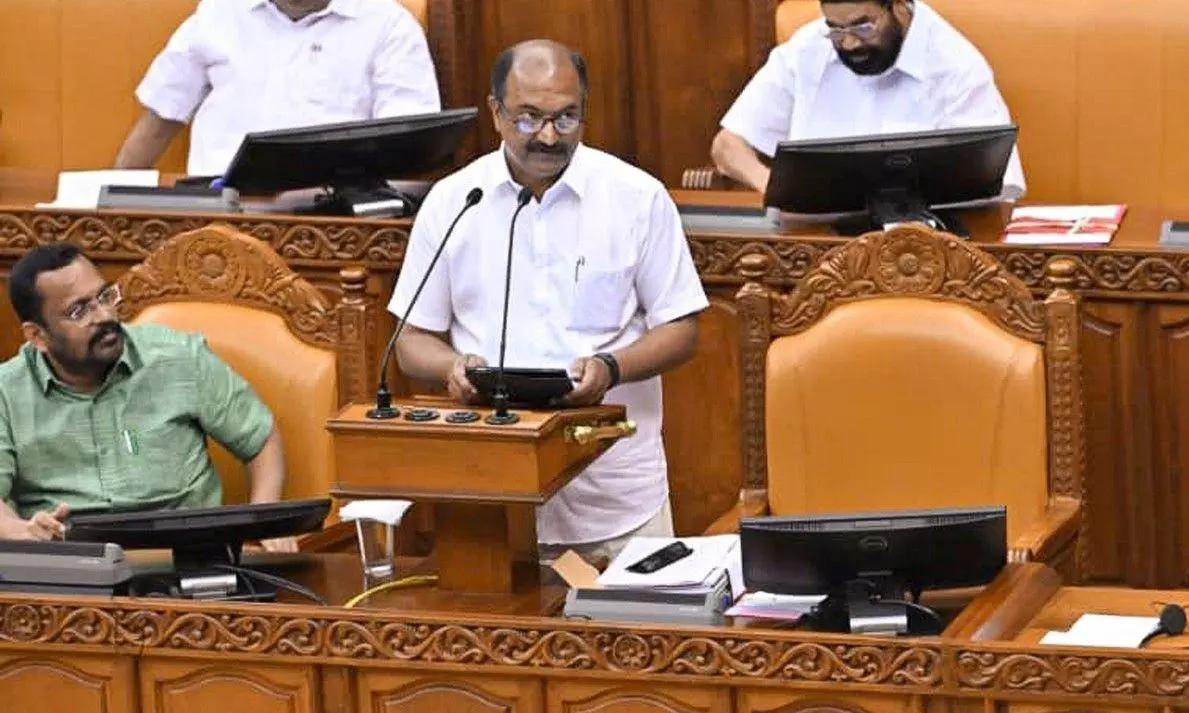
The Kerala Budget for 2026–27, presented by state Finance Minister KN Balagopal on Thursday (January 29), opens at the point where the state’s politics most visibly meets its economy: Government employees, pensioners and scheme workers.
The announcement enhancing the Dearness Allowance and Dearness Relief, along with repeated assurances that delayed arrears will be addressed, sets the tone for what is unmistakably a welfare-forward, end-of-term Budget from the second Pinarayi Vijayan government.
Continuity rather than surprise
For nearly a fourth of Kerala’s households that depend directly or indirectly on salaries, pensions or honorariums paid by the state, this Budget signals continuity rather than surprise. DA for state government employees and DR for pensioners have been revised, even as the government concedes delays in clearing accumulated arrears.
The political messaging is clear: The state may be fiscally constrained, but it will not retreat from its compact with salaried employees and retirees, a core constituency of the Left Democratic Front.
Also Read: Kerala Economic Survey 2026 finds state's debt burden easing amid economic expansion
This emphasis is extended far beyond regular government staff. Anganwadi workers, ASHA workers, pre-primary teachers, saksharatha preraks, and noon-meal workers all receive wage or honorarium hikes, mostly in the range of Rs 1,000 a month, while school noon-meal workers see a daily wage increase.
The Budget makes little attempt to disguise its redistributive priorities. It asserts that welfare measures for workers and scheme staff can only be protected if the Left remains in power, underlining the ideological framing of the document.
Welfare schemes prioritised
The biggest fiscal commitment remains social security pensions. Welfare pensions have already been enhanced to Rs 2,000 per month, with Rs 14,500 crore earmarked for pension disbursal in 2026–27.
According to the government, 62 lakh beneficiaries receive pensions regularly, with no arrears pending. The scale is significant: by the end of its tenure, the second Pinarayi government claims it will have disbursed Rs 54,000 crore as welfare pensions, taking the cumulative figure for the two Left terms to nearly Rs 90,000 crore.
Beyond pensions, the Budget foregrounds three flagship schemes announced earlier: the Sthree Suraksha Scheme (women security scheme) providing Rs 1,000 a month to women and transwomen aged 35–60 not covered by other social security nets; the Connect to Work Scholarship for youth undergoing skill training; and a working grant to Kudumbashree ADS units. Together, these schemes cover over one crore beneficiaries, a figure the government repeatedly cites to argue that nearly 30 percent of Kerala’s population receives some form of direct monthly assistance.
Free college education
Another politically significant announcement in the Budget is the decision to make college education free up to the graduation level in arts and science colleges.
“This is not merely a welfare announcement. It is a declaration that does justice to Kerala’s economic history so far. The benefit is not limited to reducing dropout rates alone; it is also an intervention that removes a major uncertainty from the lives of students and their parents. There is no need to question whether the state has the money for this. Since Kerala emerged as a region that supplies a highly educated workforce to the international labour market, the state has reaped multiple benefits. Any investment in the higher education sector will be beneficial to the state in the long run” said Dr TT Sreekumar, social scientist and political commentator.
Also Read: Kerala gears up for political showdown as LDF turns financial grievances into poll plank
However, the Opposition has questioned whether the scheme, announced in the final phase of the government’s term, is more about electoral appeal than a carefully costed reform of the higher education sector.
Populist Budget
This expansive welfare architecture raises the inevitable question: How populist is this Budget? In form, it undeniably is. Cash transfers, wage hikes, pensions and subsidies dominated the early sections of the speech. In timing too, the Budget is unmistakably political. This is the final full Budget of the second Pinarayi Vijayan government, presented months before a new assembly election cycle begins to gather momentum. The emphasis is on protecting incomes rather than announcing disruptive reforms.
Why Kerala Budget 2026–27 looks populist
•DA hike for government employees; assurance on pending arrears
• Welfare pension raised to Rs 2,000; Rs 14,500 crore earmarked
• Wage hikes for ASHA, Anganwadi, pre-primary and scheme workers
• Cash-transfer schemes for women, youth and Kudumbashree units
• Heavy emphasis on beneficiaries in the final full year of the government
Yet the government insists that the populism is fiscally grounded. A key claim of the Budget is that Kerala’s debt position is improving, not worsening. The debt-to-GSDP ratio, the minister says, has fallen from 38.47 per cent in 2021 to 33.44 per cent now, a decline of about five percentage points in four years. While the state’s absolute debt has risen to an estimated Rs 4.88 lakh crore, the government argues that this is within manageable limits and well below the trajectory that would have prevailed had past trends continued.
Government’s defence
• Debt-to-GSDP ratio down to 33.44 per cent
• Own tax and non-tax revenue up sharply over five years
• No cut in development expenditure, claims the finance minister
“The real question to be asked is not how we survived amidst central neglect, but rather how much Kerala would have risen, had there been no such severe neglect. No one with common sense is raising the allegation that Kerala is overburdened with debt. Everybody knows that the state cannot borrow beyond the ceiling limit in the Fiscal Responsibility Act. It is also true that in Kerala’s case, the borrowing limit is further reduced, citing petty excuses” said KN Balagopal in his Budget speech.
Centre blamed for constraints
Over the past five years, the state claims to have generated an additional Rs 1.27 lakh crore in own tax revenue and nearly Rs 25,000 crore in non-tax revenue compared to the previous government’s averages. Average annual own tax revenue has risen from about Rs 47,000 crore to over Rs 73,000 crore, with estimates touching Rs 83,731 crore in 2025–26. This expansion, the finance minister argues, has allowed Kerala to sustain high welfare and development spending despite what he repeatedly describes as “severe central neglect”.
This political framing serves two purposes. First, it deflects criticism that the Budget is fiscally reckless by placing the blame for constraints squarely on New Delhi. Second, it allows the government to justify continued borrowing and off-budget spending through institutions like KIIFB, which remains central to Kerala’s infrastructure push. Development expenditure, the government insists, has not been cut anywhere, and total annual expenditure is projected to rise to Rs 1.92 lakh crore in 2025–26.
Appeal to voters
On the development side, the Budget lists an extensive catalogue of achievements and ongoing projects: NH66 expansion, Vizhinjam port, hill and coastal highways, tunnel roads in Wayanad, IT parks, industrial investments, housing through LIFE, and extreme poverty eradication. New proposals such as a Regional Rapid Transit System, a Rare Earth Corridor, a Defence Technology Innovation Hub, Cyber Valley and a Malayalam language AI model signal the government’s attempt to project long-term vision beyond welfare.
Also Read: Why Kerala CM's car-pooling with Vellappally could be a costly ride for the Left
Still, critics are likely to argue that many of these projects were announced earlier and that the current Budget leans heavily on reiteration rather than fresh allocations. The real fiscal stress points remain unresolved: delayed DA arrears, dependence on borrowing, and vulnerability to central policy decisions on GST and borrowing ceilings.
In that sense, the Budget is less about bold economic restructuring and more about consolidation. It seeks to reassure government employees that their incomes are protected, beneficiaries that welfare will not be rolled back, and voters that the Left’s model remains intact despite fiscal headwinds.
Politicised budgeting?
The Opposition came down heavily on the state Budget, with Opposition Leader VD Satheesan saying “the public will not believe this Budget,” and alleging that the government had undermined its credibility by mixing unnecessary politics into what should have been a serious financial exercise. He said the document appeared more like a political statement than an economic roadmap, with ideological messaging and attacks taking precedence over clear answers on revenue mobilisation, debt management and the feasibility of the promises made.
Opposition’s charge
• Budget lacks credibility
• Too much political messaging, too little fiscal clarity
Is the Budget driven by election-season populism? Undoubtedly. The Balagopal Budget does not pretend otherwise. Instead, it makes a calculated argument that in Kerala, welfare is not fiscal indiscipline, but the state’s defining economic choice, one the government is willing to defend both politically and financially as it heads into the final year of its term.