Kerala low-alcohol tax row: Policy reform or procedural lapse?
The new regime has sparked allegations of constitutional violations even though the UDF govt has defended it as a health measure. Is the dispute about public health or governance?

The revised budget introduced separate tax slabs for beverages containing between 0.5 per cent and 20 per cent alcohol. Products with alcohol content between 0.5 per cent and 10 per cent will attract a sales tax of 120 per cent, while those containing between 10 per cent and 20 per cent alcohol will be taxed at 175 per cent. The proposal marks a significant reduction from the 251 per cent tax rate traditionally applied to spirit-based alcoholic beverages.
Also read: Gujarat eases liquor rules for outsiders, foreign nationals at GIFT City
The category primarily includes ready-to-drink alcoholic mixes, flavoured beverages and spirit-based coolers that are lighter in alcohol content than conventional liquor. Such products are generally positioned as casual lifestyle beverages rather than traditional alcoholic drinks.
Government's case
The government argues that Kerala’s drinking culture remains heavily dependent on hard liquor and that encouraging a gradual shift towards lower-strength beverages could help reduce the broader social and health burden associated with alcohol consumption.
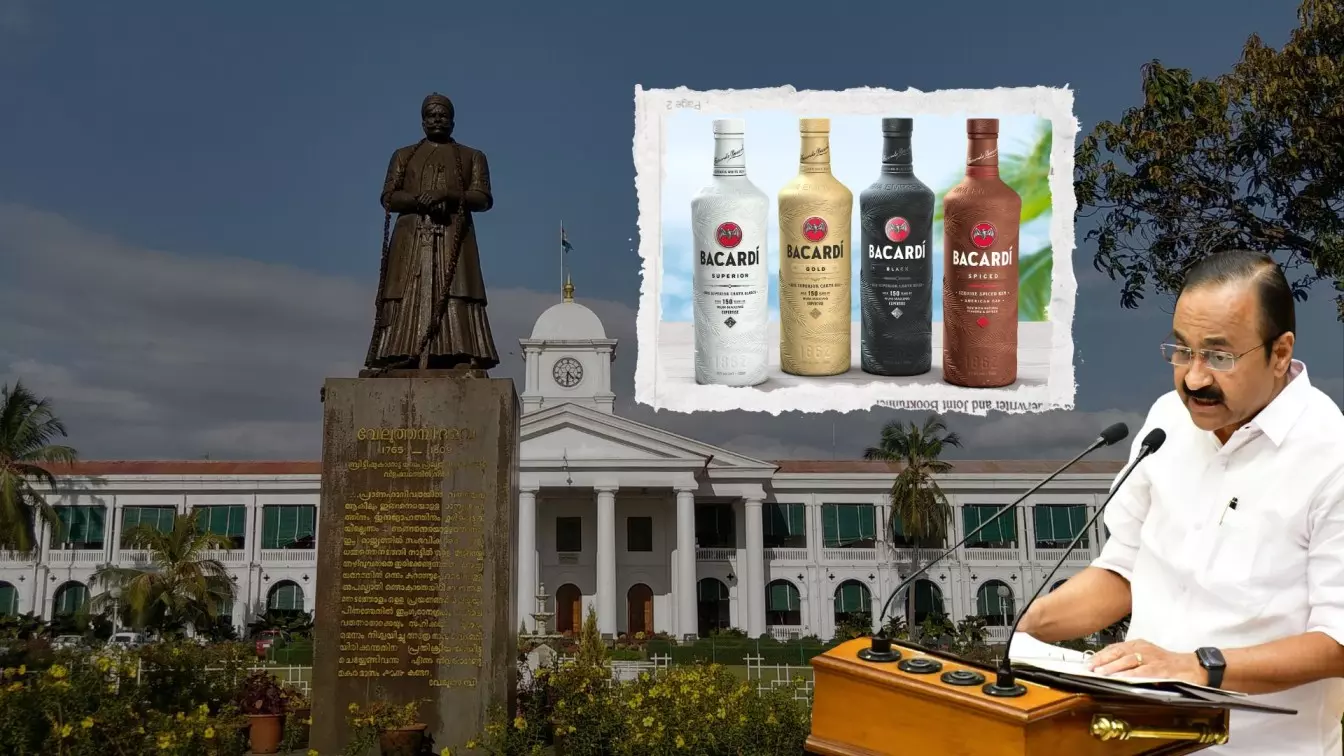
The issue escalated when opposition parties alleged that the proposal was designed to benefit specific liquor companies. The debate quickly became associated with ready-to-drink products such as Bacardi Breezer, leading critics to describe the measure as a “Bacardi tax” proposal.
Officials have also maintained that the concept is not new. According to the government, earlier state administrations had already created a separate category for low-alcohol beverages through amendments to the law, and the current budget merely fixes the tax rates for that category.
Also read: As Bihar's liquor ban turns 10, Nitish faces pressure from allies, rivals
Supporters of the proposal point to international trends and tourism-driven markets where lighter alcoholic beverages are widely available. They argue Kerala’s previous tax structure made the segment commercially unviable.
Were procedures followed?
The issue escalated when opposition parties alleged that the proposal was designed to benefit specific liquor companies. The debate quickly became associated with ready-to-drink products such as Bacardi Breezer, leading critics to describe the measure as a “Bacardi tax” proposal.
The opposition has alleged that the decision was pushed through without adequate consultation and has raised questions about whether established procedures were followed. Reports suggest that key stakeholders, including the state excise department, may not have been fully involved in the process.
Also read: Kerala Budget: Pivot to port-led growth sparks row over land reforms and privitisation
The controversy intensified in the Kerala Assembly, where opposition members staged protests and walkouts, demanding answers from the government.
Due process questions
The opposition’s criticism goes beyond taxation policy. It argues that the issue concerns governance and adherence to established procedures.
According to critics, the matter involves the excise department and should have undergone proper departmental examination before any decision was taken. They contend that if key decisions were processed without the knowledge of the minister responsible for the department under the Rules of Business framed under Article 166 of the Constitution, it raises serious constitutional questions.
The opposition has therefore framed the issue not merely as a policy disagreement but as a potential violation of due process. These allegations remain contested and have not been established.
Excise minister's response
State Excise Minister M Liju has clarified that no new liquor policy has been announced and that the budget measure relates only to taxation. He has stated that broader discussions on the state's liquor policy will take place after the Assembly session and that stakeholder consultations are planned before any wider policy decisions are made.
Also read: Can VD Satheesan's 'governance with empathy' survive Kerala’s fiscal reality?
The minister has also pointed out that the category of low-alcohol beverages was introduced under the previous Left Democratic Front government and that the current measure concerns tax calibration rather than a structural change in alcohol policy.
At the same time, reports indicate that Liju sought discussions with Chief Minister V D Satheesan, who is also the state's finance minister, amid concerns that the proposal may have moved forward without sufficient consultation with the excise department.
Optics matter
The state government continues to insist that the proposal is category-based and not company-specific. It argues that any manufacturer producing beverages within the prescribed alcohol range would be eligible under the new tax structure.
However, critics argue that even if the policy objective is legitimate, the communication surrounding the measure has been inadequate. Questions remain over why a long-pending proposal appears to have moved rapidly now and why the government allowed perceptions of favouritism and procedural irregularities to take hold.
As a result, the debate is no longer confined to alcohol taxation. It has become a broader discussion about transparency, governance and public trust.
For the state government, the challenge is no longer simply defending the tax proposal. It must also convince the public that the policy was implemented through a transparent process and for the reasons it claims.
Until those questions are answered convincingly, Kerala’s low-alcohol beverage controversy is unlikely to fade from public debate.
The content above has been transcribed from video using a fine-tuned AI model. To ensure accuracy, quality, and editorial integrity, we employ a Human-In-The-Loop (HITL) process. While AI assists in creating the initial draft, our experienced editorial team carefully reviews, edits, and refines the content before publication. At The Federal, we combine the efficiency of AI with the expertise of human editors to deliver reliable and insightful journalism.