








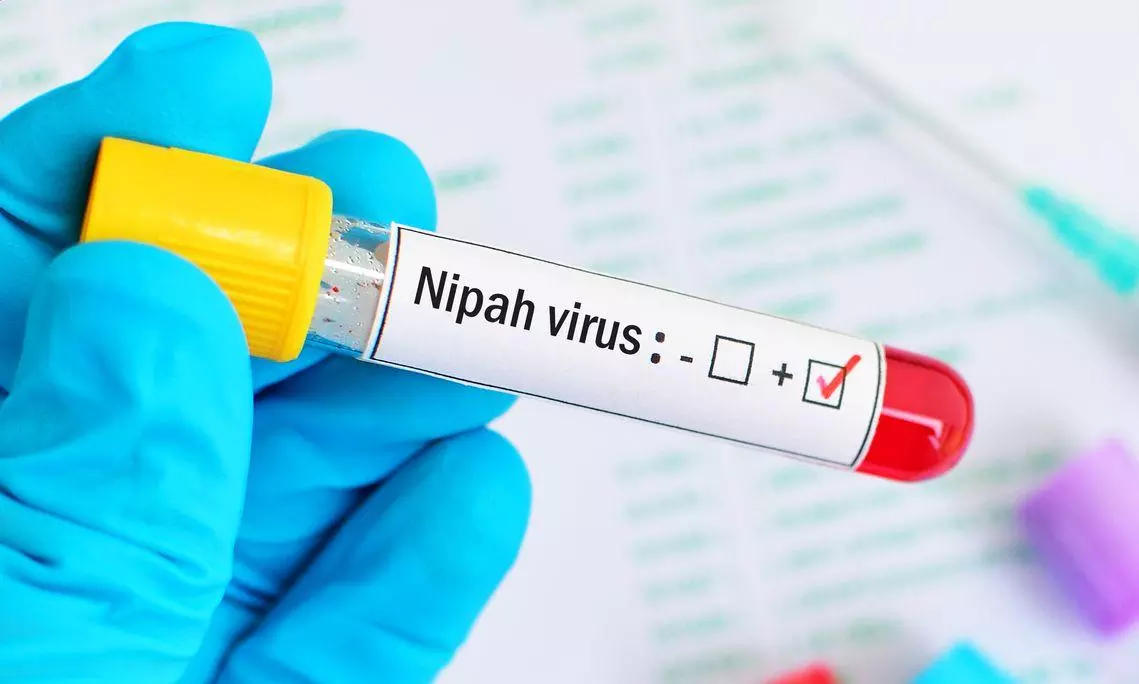
Nipah confirmed in Kozhikode, 77 contacts traced as govt steps up containment measures
A 43-year-old man from Ramanattukara tests positive; authorities place high-risk contacts in quarantine and intensify surveillance across Kozhikode

Kerala is once again on high alert after a Nipah case was confirmed in Kozhikode district on Thursday (June 11), prompting the administration to step up preventive measures.
The sample test result from the National Institute of Virology (NIV), Pune, confirmed the infection in a 43-year-old man from Ramanattukara, Kozhikode District Collector MS Madhavikutty said.
A government press release said the patient is undergoing treatment in the ICU of Kozhikode Medical College Hospital.
Containment measures intensified
Health Minister K Muraleedharan said the patient’s condition was stable, though he remained on ventilator support.According to Madhavikutty, 77 people have been identified in the contact list of the infected individual. Of these, 58 are healthcare workers, 14 are family members, and five are friends and colleagues.
Also read: Second Sudanese national admitted to Hyderabad hospital amid Ebola scare
None of the contacts has reported any symptoms so far. Of the 77 contacts, two have been classified in the highest-risk category, 13 in the high-risk category, and 62 in the low-risk category. All those in the highest-risk and high-risk categories have been placed under quarantine, the statement said.
The patient’s route map has also been prepared, the collector said. Field-level containment and surveillance activities have already commenced. Personal protective equipment, such as PPE kits, gloves, and masks, has been made available, and steps have been initiated to ensure the availability of medicines as a precautionary measure.
A control room has been opened at the district medical office to provide information and address public queries regarding the disease. The contact numbers are 0495-2373901 and 9072007767.
How patient may have been infected
According to the minister, the patient initially developed a fever that subsided but later returned, prompting hospitalisation.
“He is engaged in a small-scale business and had recently taken a godown on rent which he cleaned himself. We suspect he may have contracted the infection during that process,” Muraleedharan said.
He said all necessary arrangements had been made at the Kozhikode Medical College to handle the situation. However, the patient had come into contact with a large number of people, Muraleedharan said.
Also read: World braces for 'Godzilla El Nino'. Should India be worried?
“He first visited the outpatient section of a hospital. Later, he underwent MRI and echocardiography tests. We have asked the health workers concerned and others who may have been exposed to remain in quarantine,” the minister said.
Centre informed, vigilance intensified
Muraleedharan chaired a high-level review meeting attended by the principal secretary, director of health services, director of medical education, Kozhikode district collector, and the principal and superintendent of Kozhikode Medical College.
“The district collector informed the meeting that there is currently no requirement to declare containment zones. Availability of all required medicines is being ensured,” he said.
Muraleedharan told reporters in Thiruvananthapuram that the matter had been reported to the Centre. “They can come and examine the situation if required. We have taken all possible medical precautions in the case,” he said.
Referring to the recurring incidence of Nipah infections in Kerala, the minister said recent studies indicate that people need to be particularly vigilant between May and September, which is considered the mating season of fruit bats.
“Bats flapping their wings and their droppings can contribute to the spread of the virus. People who notice bats in their houses should inform the authorities instead of pelting stones at them,” he said.
Muraleedharan said further studies were being conducted to understand the transmission pattern of the virus.
About Nipah virus
According to a document on the website of Kerala’s Directorate of Health Services, Nipah virus (NiV) is a zoonotic virus, meaning that it can spread between animals and people.
Fruit bats, also called flying foxes, are the animal reservoir for the Human Nipah Virus (NiV) in nature. Nipah virus is also known to cause illness in pigs and people, the document says.
“Infection with NiV is associated with encephalitis (swelling of the brain) and can cause mild to severe illness and even death. Outbreaks occur almost annually in parts of Asia, primarily Bangladesh and India,” it said.
Also read: Why two critical cancer drugs just got costlier in India
“Nipah virus infection can be prevented by avoiding exposure to sick pigs and bats in areas where the virus is present, and not drinking raw date palm sap, which can be contaminated by an infected bat. During an outbreak, standard infection control practices can help prevent person-to-person spread in hospital settings,” the document found on the official website said.
Shigella infection in Wayanad
Meanwhile, in the neighbouring Wayanad district, eight schoolchildren have been affected by Shigella infection. Muraleedharan on Wednesday said the situation remains under control.
Disease prevention and containment measures, along with intensive awareness campaigns, are being carried out in the affected areas. A special chlorination drive is also underway to disinfect drinking water sources.
People experiencing symptoms have been advised to seek treatment at the nearest health facility without delay, the statement added.
Shigella is a bacterial infection that causes diarrhoea, fever, and stomach cramps. It spreads primarily through contaminated food or water, or through contact with infected individuals.
(With agency inputs)