








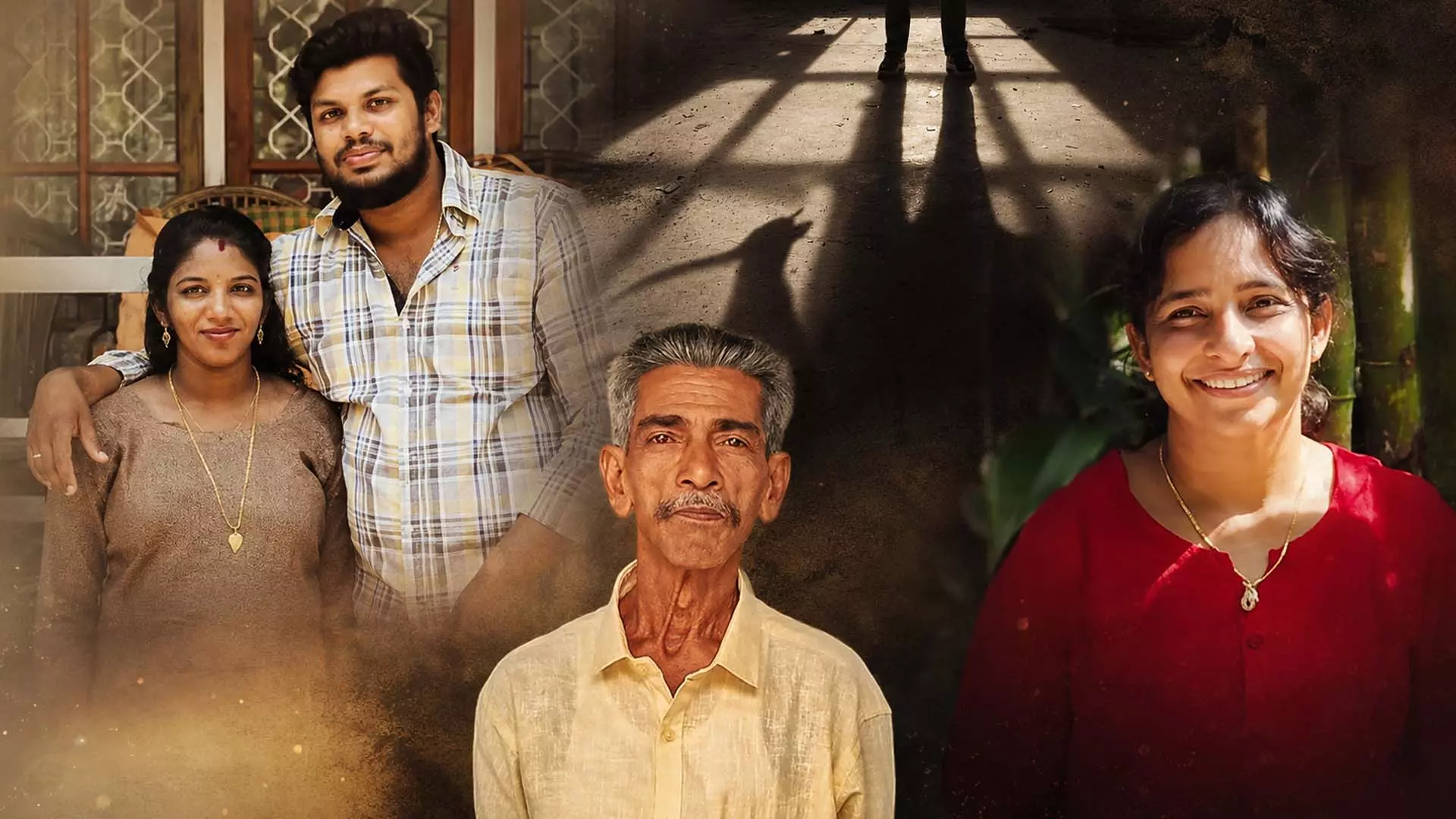
When reality is darker than fiction: A look at the chilling crimes that shook Keralam.
Not just who, but how: Kerala's most disturbing murders: Cobra, cyanide and teenagers' plot
A schoolgirl's alleged murder plot in Alappuzha has revived memories of Kerala’s most unusual cases, including the Uthra snakebite and Koodathayi cyanide killings

Of late, Keralam has seen chilling murders that shocked the state — not just because of who died, but because of how they were killed. A snake, turned into a weapon. Cyanide, used again and again to hide a trail of deaths. The latest one has left even the state's home minister shocked: a teenage girl plotting her grandfather's murder and passing it off as a theft. Each case leaves behind the same chilling question: how far can a mind go to kill?
The latest case — four teenagers accused of murdering a 65-year-old man in Alappuzha — has once again gripped the state. Yes, a murder is a murder, but it's the sheer brutality of how these crimes unfold that keeps raising disturbing questions. The case has also revived memories of some of Keralam's most chilling and unusual murder investigations — including the 2020 killing of Uthra in Kollam.
Here are three such cases that gripped the state because of the sheer nature of the crime
13-year-old accused of killing grandfather
Also read: Bengaluru 5-star hotel murders: Man 'confesses' to killing 2 daughters over custody battle
The victim, 65-year-old Sivankutty of Karuvatta in Alappuzha district, was found dead inside his house on Monday morning. His wife and daughter were away at a hospital at the time. Police suspect the 13-year-old, who is an eighth-standard student and the victim’s granddaughter, planned the crime, while her three friends allegedly carried it out. The other accused are aged between 16 and 17, all hailing from Paravur in Kollam district, and one is reportedly the girl’s boyfriend.
Murder portrayed as theft
The teenagers allegedly planned the killing to make it appear like a theft. Sivankutty’s gold chain was missing, cupboards in the bedroom had been broken open and cash and other valuables were reportedly taken.
According to the preliminary probe, the three teenagers allegedly entered the house after breaking a sheet at the rear of the building and attacked Sivankutty during the purported theft. His hands and legs were reportedly tied and a cloth was tightened around his neck.
Police also said the teenagers had allegedly streamed the killing 'live' to the 13-year-old over a video call.
Also read: Bengaluru triple-murder co-accused used AI tool to plan killings, cops say, seek chat history
Police said around 4.5 sovereigns of gold were stolen from the house and have since been recovered. One ring was allegedly sold for Rs 16,000.
While the motives are being investigated, the initial probe revealed that the girl had allegedly told her boyfriend that she had experienced “bad touch” from her grandfather, raising the possibility that the murder could have been linked to revenge as well. Local reports say the girl has confessed to the crime. The case has drawn particular attention because of the ages of those accused and the alleged planning involved.
Uthra snakebite murder (2020)
The latest case has also brought back memories of the 2020 Uthra murder case in Kollam.
Uthra died after being bitten by a snake while she was sleeping at her parents’ home in Anchal, Kollam district. A cobra was later found in the bedroom and clubbed to death. What initially appeared to be a snakebite death soon came under suspicion after her family raised questions about the circumstances.
The investigation found that Uthra had previously survived a snakebite from a Russell’s viper. The second incident involved a cobra and was eventually established as a deliberate killing by her husband, Suraj S Kumar. He had attempted to kill his wife not once, but twice.
The meticulously planned murder was later confessed to by Suraj Kumar, a wildlife enthusiast. He admitted to purchasing the snakes from his acquaintances and introducing them into the bedroom while Uthra was sleeping, with the intention of killing her.
In the first attempt, Suraj placed a Russell’s viper inside their bedroom while Uthra was asleep. However, she woke up and screamed for help. He then rushed her to the hospital.
The second attempt came two months later, while Uthra was recovering from the first bite. On the night of May 6, 2020, he released a cobra inside their bedroom while she was sleeping. Drawing from his previous experience, he had mixed a sedative into her dinner to prevent her from waking up.
Uthra succumbed to the snakebite in the second attempt.
The unusual details
Investigators examined several details, including the timing of the bite and the depth and location of the puncture wounds. The circumstances led them to conclude that the cobra had been deliberately released to her bedroom to kill Uthra.
It was also found that he was watching videos and reading about snakebite deaths and behaviour of snakes.
Also read: Indian teenager charged with murdering mother, younger brother in Massachusetts
The prosecution case established dowry-related motives, with Suraj allegedly seeking to get rid of Uthra, who had a mild disability. The case became a landmark investigation because of the unusual method used to carry out the murder and the eventual conviction of the accused.
Koodathayi cyanide killings (2002-16)
Another case that continues to stand out is the Koodathayi cyanide killings, a series of deaths within one family that initially appeared unrelated but were later investigated as murders.
The case centred on Jollyamma Joseph, popularly known as Jolly, who was accused of killing six members of her family over a period of about 14 years. The deaths began in 2002 and continued until 2016. The case drew wide attention for its nature of murder.
Jolly had meticulously planned the poisoning by covertly mixing potassium cyanide into their food, drinks, or medication. She obtained the lethal chemical from a relative's friend who worked in a goldsmith shop, where cyanide is commonly used to extract gold.
The victims
2002: Jolly’s mother-in-law, Annamma Thomas, died after reportedly drinking a glass of water. Her death was attributed to a heart attack.
2008: Her father-in-law, Tom Thomas, collapsed and died.
2011: Jolly’s husband, Roy Thomas, died after dinner. He was found dead in the bathroom, with the death initially treated as a suicide linked to financial problems. A post-mortem, however, detected traces of poison.
2014: Roy’s maternal uncle, Manjadiyil Mathew, died after allegedly being poisoned.
2014: Roy’s cousin’s daughter, Alphine, died after choking on food.
2016: Roy’s cousin, Sili’s relative, died after reportedly consuming a mushroom capsule, according to the case narrative.
False identity
The case broke open only because Roy's brother, Rojo Thomas, refused to let his brother's death rest as a suicide. His persistence pushed police to reopen the investigation, and a pattern soon emerged: every victim had died shortly after eating food prepared or served by Jolly, with cyanide later detected in autopsies or exhumations.
Also read: Pune minor sexually assaulted, murdered; 25-year-old neighbour held
Jolly was also accused of creating an elaborate false identity, including claiming to be a lecturer at the National Institute of Technology, Kozhikode. She was arrested after the investigation linked her to the deaths.
The prosecution alleged that motives ranged from gaining control of family property and securing a different life to personal and relationship-related motives.
Stranger than fiction, eh?