








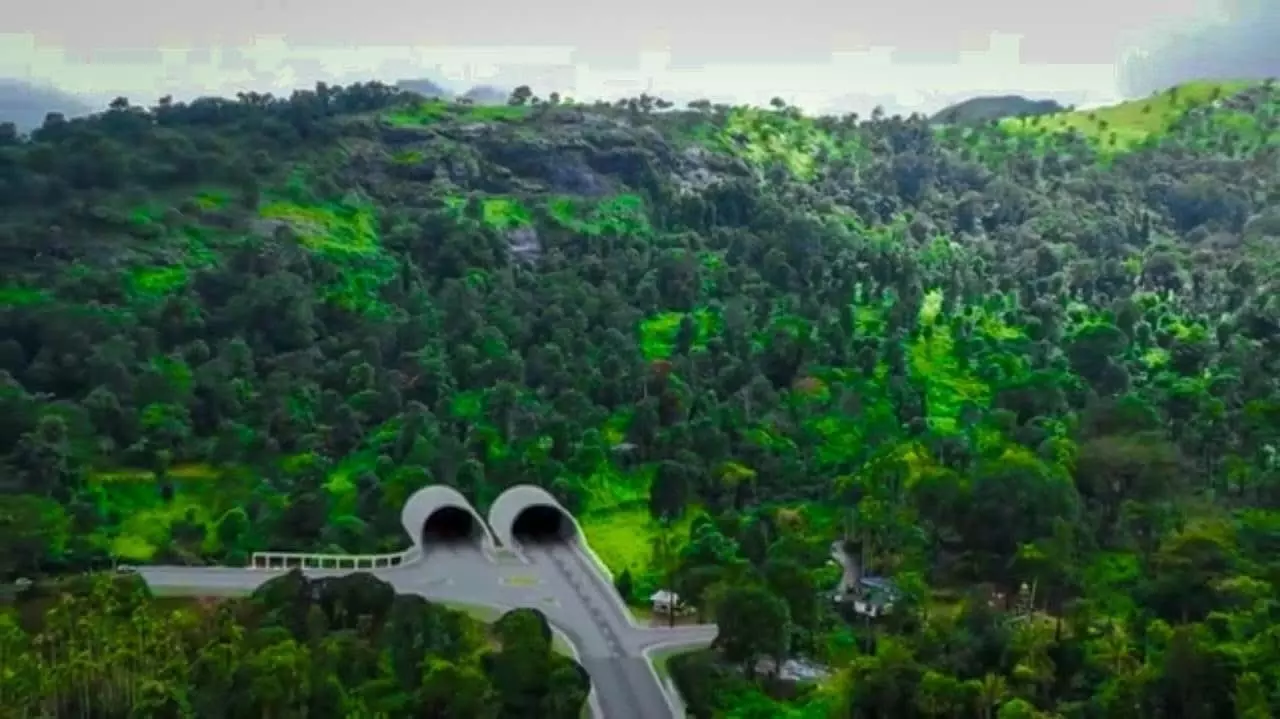
Wayanad Tunnel Project: All you need to know
Twin-tube tunnel through the Western Ghats is expected to cut travel time by up to an hour, ease dependence on the Thamarassery Ghat road, and emerge as Kerala's longest road tunnel by 2030

A major landslide was reported at Kalladi near Meppady in Wayanad, Kerala on Tuesday (July 7). At least two people have died, and eight people have been hospitalised, with at least six others reported missing.
The landslide occurred near Meenakshi Bridge at Kalladi, where work on the Wayanad Tunnel project connecting Wayanad and Kozhikode districts is underway. The debris from the landslide crashed onto the ongoing Anakkompoyil-Meppadi twin-tunnel road construction site.
The spot is about 5.5 km from Chooralmala, where a devastating landslide claimed 300 lives and flattened scores of houses on July 30, 2024.
Wayanad Tunnel Project
The Wayanad Tunnel Project, one of Kerala's most ambitious road infrastructure initiatives, is progressing towards transforming connectivity between Kozhikode and Wayanad with a modern twin-tube tunnel through the Western Ghats.
Envisaged as a faster, safer, and more reliable alternative to the existing Thamarassery Ghat road, the project is expected to substantially reduce travel time while improving year-round access to the hill district.
Also Read: Wayanad landslides | Not rain, main reason quarries, human activities: Gadgil
Being developed as part of State Highway 83 by the Kerala government, the project will connect Kozhikode and Wayanad through Kunnamangalam, NIT, Mukkam, Thiruvambady, Anakkampoyil, Kalladi, Meppadi, and Kalpetta. The new alignment is intended to bypass the winding and accident-prone mountain roads that currently serve as the primary route between the two districts.
Among India's longest road tunnels
The project features twin four-lane tunnels stretching about 8.11 km, making them the longest road tunnels in Kerala and the third-longest in India. The overall tunnel alignment is approximately 8.73 km, with construction being overseen by the Konkan Railway Corporation Limited (KRCL).
Designed to modern international standards, the twin-tube configuration will provide two lanes in each direction, enabling uninterrupted movement of passenger and commercial vehicles. The tunnel is expected to improve the efficiency of freight movement, support tourism in Wayanad, and strengthen economic links between the coastal and high-range regions of the state.
Smart safety features planned
The tunnel has been designed with an array of advanced safety and intelligent traffic management systems. These include mechanical ventilation, fire detection and suppression systems, round-the-clock CCTV surveillance, emergency communication facilities and traffic signalling.
Also Read: Twin tunnel project: How it will reduce travel time between Kozhikode and Wayanad
Dedicated escape routes and cross-passages connecting the twin tunnels at intervals of every 300 metres will allow safe evacuation during emergencies. The integrated monitoring systems are aimed at ensuring safer travel through the long underground corridor.
Construction milestones
The project entered the execution stage following its official inauguration on August 31, 2025, after which preliminary works such as temporary bridges and labour camps were completed.
A major construction milestone was achieved on March 6, 2026, when then-Kerala Chief Minister Pinarayi Vijayan inaugurated the first controlled rock blast at Marippuzha, marking the beginning of the intensive tunnel excavation phase.
Also Read: Wayanad landslide, one year on: Scars remain, but hope endures
Over the next two to three years, excavation is expected to proceed simultaneously from both the Kozhikode and Wayanad ends. During this period, critical infrastructure including ventilation systems, fire safety equipment, surveillance networks, and emergency access passages will also be installed.
According to the construction agreement involving Dilip Buildcon and KRCL, the Rs 2,134.5-crore project is scheduled for completion within four years, with commissioning targeted for late 2029 or early 2030.
Faster journey, significant savings
Once operational, the tunnel is expected to reduce travel time between Kozhikode and Wayanad by around 45 to 60 minutes. It will also shorten the distance between Anakkampoyil and Meppadi from 42 km to less than 20 km, offering commuters and transport operators a significant saving in travel time and fuel costs.
The project is also expected to provide a more dependable route during adverse weather by reducing dependence on the landslide-prone Thamarassery Ghat section of National Highway 766.
Also Read: Why the 2024 Wayanad relief fund is back in focus now
The project received a key regulatory boost on February 24, 2026, when the Union Ministry of Environment, Forest and Climate Change granted Stage-II (final) forest clearance for the diversion of 17.263 hectares of forest land, paving the way for full-scale construction to proceed.
Once completed, the Wayanad Tunnel is expected to become a strategic infrastructure asset that enhances connectivity, boosts tourism, and strengthens economic activity across northern Kerala.
Environmental concerns
Some environmental groups had raised concerns about the construction of a tunnel in the region. Conservation groups, including the Wayanad Prakrithi Samrakshana Samithi (WPSS), have argued that the project is "suicidal" for the local environment. Environmentalists argue that large-scale tunnelling and associated road construction could disturb fragile ecosystems that have evolved over millions of years.
The Western Ghats act as a major watershed for Kerala's rivers. Experts warn that tunnelling could intercept underground acquifers, alter natural groundwater flow, reduce water availability in nearby streams and springs, and affect drinking water sources for villages. They say that several tunnel projects elsewhere have experienced spring depletion after excavation, leading to concerns that similar problems could occur here.
Also Read: Huge landslide hits Wayanad tunnel project near Meppady, 6 km from 2024 site; 2 dead
However, political parties across the spectrum in the state were in favour of building the tunnel, which they hoped would lead to comprehensive development in the hilly region.
In September 2024, when asked about the possible environmental impact, especially in the wake of recent landslides, Thiruvambady MLA Linto Joseph told The Federal, ‘’The state government has done extensive studies, even on the environmental aspect. During his Norway visit, the chief minister had elaborate talks with Norwegian Geotechnical Institute officials. In 2022, Dominik H Lang, its director, visited the places where the tunnel was to come up. We have picked up places where there is minimal environmental damage.’’
Linto had also referred to Union Highway Minister Nitin Gadkari’s statement in which he talked about the necessity of building tunnel projects across the country, as it would be the safest infrastructure project in terms of ecology.