Kerala CPI(M) faces internal dissent over electoral defeat, leadership accountability
As dissent grows ahead of the September 13-15 State Committee meeting, the CPI(M)’s self-criticism is raising questions over leadership accountability

The CPI(M) in Kerala is facing its biggest internal reckoning in decades after a crushing electoral setback. As the party heads into an extended State Committee meeting in Kozhikode from September 13 to 15, dissent within its ranks is growing. The key question now is whether the leadership will be held accountable.
The party had asked its cadre to introspect after the defeat. But that exercise appears to have opened a new front within the organisation, with party members, sympathisers and sections of the rank and file increasingly speaking openly about what went wrong.
Much of that criticism is now spilling into the public domain. This makes the CPI(M)’s post-election review more complicated than a routine organisational exercise. The question is no longer simply what went wrong in the election, but who is willing to take responsibility.
Leadership under lens
The CPI(M)’s Central Committee review was unusually critical of the Kerala unit. It acknowledged that the party’s vote share had fallen to 21.77 per cent, its lowest level in four decades, and pointed to serious weaknesses in candidate selection.
Also read | How Keralam varsities are now caught in govt vs governor political contest
The review made it clear that the state leadership could not simply shift the blame to district committees. It said the state leadership should take responsibility for decisions involving candidates, including the inadequate representation of women, minorities and youth.
The defeats in Payyannur, Taliparamba and Ambalappuzha added to the concern. Former CPI(M) leaders V Kunhikrishnan, TK Govindan and G Sudhakaran defeated the party-backed candidates in these traditional Left strongholds.
The cadre disconnect
The Central Committee described these defeats as evidence of a growing gap between the leadership and the rank and file. It also identified parliamentary opportunism as a trend within the party and pointed to the apathy of sections of the cadre during the election campaign.
The review called for an examination of whether democratic centralism and inner-party democracy had been properly implemented. It also acknowledged that the gap between the people and the party, and between lower-level cadre and the leadership, had become so wide that people were no longer willing to share their real feelings with party workers.
That, the party admitted, contributed to its failure to assess the ground situation correctly and anticipate the electoral setback. The question now is whether this admission will translate into accountability at the top.
Kannur test
The developments in Kannur have already offered an indication of the tensions ahead. Payyannur and Taliparamba are part of the CPI(M)’s traditional organisational heartland, making the victories of former party leaders particularly significant.
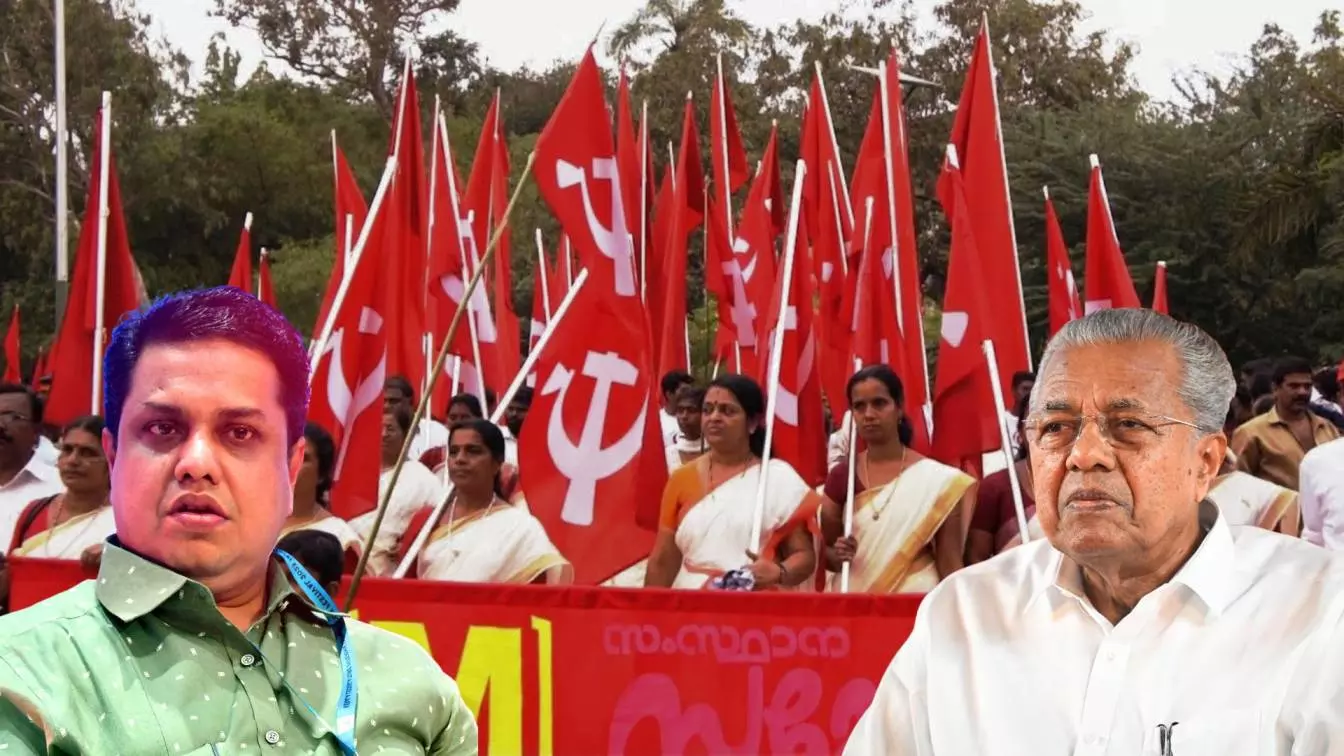
The party organised post-election review meetings at four locations across the two constituencies, with former Chief Minister Pinarayi Vijayan (in cover picture, right) taking the lead in reaching out to the cadre.
But Vijayan’s message was uncompromising. At Taliparamba, he said those who had deserted the LDF after being influenced by what he described as a flood of false propaganda were beginning to understand the reality. Recent reports have highlighted the contrast between this approach and the Central Committee’s emphasis on organisational shortcomings.
A course correction?
That contrast could become one of the key tensions at the extended State Committee meeting. The Central Committee has spoken about the gap between leadership and cadre, while the message from the top in Kannur has focused substantially on opposition propaganda and voters’ political choices.
The self-criticism process therefore faces a basic test: can the cadre question decisions taken by the leadership without the exercise becoming a controlled organisational process?
There are, however, signs of a political course correction. One example is the CPI(M)’s changing position on Vellappally Natesan. The party’s earlier review admitted that its response to Natesan’s anti-Muslim remarks had not been strong enough and that statements by some party leaders had contributed to the alienation of sections of the people.
A secular line
The latest controversy over Natesan’s attack on former Assembly Speaker AN Shamseer (in cover picture, left) saw a much sharper response from the CPI(M). That suggests the leadership is conscious of the political cost of appearing accommodating towards personalities associated with communal mobilisation.
The party has also renewed its emphasis on the Governor, university appointments, the BJP’s ideological expansion and what it describes as the UDF’s soft Hindutva. The broader effort appears to be an attempt to redraw a political line that, according to the party’s own review, became blurred during the election campaign.
The Global Ayyappa Sangamam remains central to that debate. The party’s review found that the reading out of Uttar Pradesh Chief Minister Yogi Adityanath’s message at the event created embarrassment for its secular image and contributed to an impression that the CPI(M) was soft towards Hindutva forces.
The ideological challenge
The issue, therefore, is not merely one of communication. It is about political consistency. If the CPI(M) has genuinely opened the door to self-criticism, questions about political decisions, candidate selection, leadership style and organisational functioning are bound to emerge.
The leadership will now have to decide how much of that criticism it is prepared to absorb. The growing willingness of party members to question decisions publicly makes the exercise harder to contain within party meetings.
There is also pressure outside the organisation. The CPI(M) is dealing with a tussle with its Left ally, the CPI, over the Deputy Leader of Opposition post in the Assembly. While the dispute is relatively small compared with the scale of the electoral defeat, it adds another layer of pressure to a Left front already attempting to recover.
Kozhikode test
The CPI(M) therefore faces pressure from several directions. It must rebuild its electoral base, regain the confidence of traditional working-class and minority sections, address dissatisfaction within the organisation, manage tensions within the LDF and convince its cadre that self-criticism applies equally to the leadership.
All eyes now turn to Kozhikode. The extended State Committee will meet from September 13 to 15, with general secretary MA Baby and several Polit Bureau members expected to attend. The meeting is set to become a major organisational test for the CPI(M) following the election defeat.
Also read | Kerala floods, landslides: 4 killed, central districts battered
The Central Committee has already described the Kerala defeat as incomparable with earlier setbacks and said the party can recover only by frankly accepting its mistakes, rectifying them and rebuilding its connection with the people.
The real question is whether that frankness will extend to the highest levels of the organisation.
The CPI(M) asked its cadre to speak the truth about the defeat. The cadre now appear increasingly willing to do just that. The challenge for the leadership is whether it is ready to listen.
And that is what makes the Kozhikode meeting so crucial. For the CPI(M), this may no longer be simply a debate about why it lost an election. It could become a much bigger debate about who the party listens to, how decisions are taken, how dissent is handled and whether the leadership itself is prepared to change along with the cadre.
The real test of self-criticism begins when the criticism comes from within.