








Keralam passes SARAL Bill to fast-track industrial nods amid ecological concerns
The Bill fast-tracks industrial clearances, but the Opposition and ruling front MLA G Sudhakaran warn of risks to paddy fields, wetlands and local governance

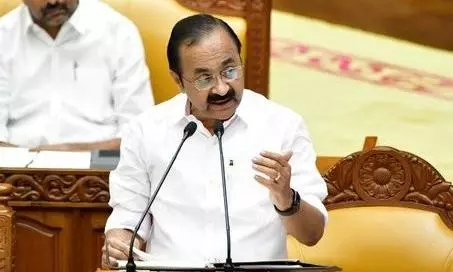
The Keralam Assembly on Thursday (October 29) passed the SARAL Keralam Bill, 2026, aimed at speeding up industrial clearances and simplifying investment procedures, amid sharp objections from the Opposition LDF and an unusual intervention by ruling front MLA G Sudhakaran, who warned that the legislation could threaten the state’s agricultural land and fragile ecosystems.
The debate exposed serious concerns over the possible impact of the legislation on paddy fields, wetlands, forests and groundwater, with Sudhakaran demanding explicit environmental safeguards in the Bill rather than relying on assurances from the government.
Also read | Arlekar’s parting move against Kerala PSC raises constitutional questions
The Opposition backed his concerns and eventually walked out of the House, accusing the government of opening the door for powerful commercial interests to exploit ecologically sensitive land.
Warning of ecological damage
Describing the legislation as potentially a ‘Karal Bill’, loosely meaning disastrous, rather than a simple one, Sudhakaran said its implications for Keralam’s agricultural sector, particularly Kuttanad, should not be underestimated.
“I’m not asking the government to withdraw the Bill, but it must make necessary changes. The implementation of the Bill in its present form could affect agricultural land, forest areas and water sources. These must be protected before the legislation is implemented,” he said while moving his amendment.
Recalling his participation in struggles to protect paddy fields in Kuttanad, Sudhakaran questioned whether verbal assurances from the government would be sufficient to prevent ecological damage.
“You cannot expect us to believe everything said verbally in the Assembly. There is a danger here. What precautions have been taken? The safeguards must be written into the Bill,” he said.
He warned that the consequences could become apparent during the present government’s tenure itself and argued that the legislation, in its current form, could ultimately prove damaging to the state.
Pinarayi slams ‘draconian provisions’
Leader of the Opposition Pinarayi Vijayan endorsed Sudhakaran’s concerns, turning the debate into a wider confrontation over the government's approach to industrial development and environmental protection.
“The issues raised by G Sudhakaran are valid. This Bill is going to hand over paddy fields and wetlands to big mafias. It will also take away the powers of local self-government institutions,” Vijayan said.
He questioned the concentration of decision-making powers in the proposed approval committees, arguing that the legislation could undermine decentralised governance and weaken the existing checks on land use.
Vijayan also described the Bill as draconian, comparing its provisions to the Emergency period and pointing out that it did not provide an appeal mechanism against decisions taken under the new system.
He accused the UDF government of trying to claim credit for industrial progress made during the previous LDF administration, arguing that Keralam had already improved its ease-of-doing-business ranking under the Left government.
Satheesan defends investment reforms
Chief Minister VD Satheesan rejected the criticism and defended the legislation as a major reform necessary to make Keralam more attractive to investors.
“No development work that harms the environment or the life and livelihood of people will be permitted,” Satheesan said, insisting that the Bill would not dilute safeguards relating to environmental protection, public health, employee welfare or safety.
Also read | Keralam Mercedes crash: 4 cops suspended, Kerala HC report seeks judge’s suspension
He said the proposed SARAL Authority would not take over the powers of existing departments or agencies. Their technical scrutiny and inspection responsibilities would continue, while the new mechanism would ensure that investment proposals were examined and decisions taken within a fixed timeframe.
Satheesan also invoked the example of BMW, saying the company had been discouraged from setting up a factory in Keralam before establishing operations in Tamil Nadu. “We want to send a message to the world that Keralam is investment-friendly,” he said, describing SARAL as a reform based on the principle of ‘One State, One Approval, One Document’.
However, the chief minister also questioned Sudhakaran’s concern over the protection of paddy fields, pointing out that the MLA had earlier sought the establishment of AIIMS at the Manakkal paddy field in Purakkad, Alappuzha. Satheesan clarified that AIIMS would not be established on paddy land.
Minister assures land protection
Industries Minister PK Kunhalikutty, who piloted the legislation, dismissed the Opposition’s objections as inconsistent with its earlier position on industrial clearances.
“Those who had said that industries could be started anywhere without obtaining clearances for three years are now opposing a Bill that seeks to simplify investment approvals,” he said, referring to the previous government's deemed-approval provisions.
Kunhalikutty assured the House that the legislation would not result in the loss of agricultural land or damage to wetlands. “Not even a single cent of land will be lost. There is no compulsion on anyone to surrender land. If it is paddy land, the District Collector has the authority to prevent illegal reclamation. No permission will be granted without examining these aspects,” he said.
Fast-track nods, lingering concerns
At the heart of the controversy is the Bill’s proposal to create a statutory mechanism for granting an integrated clearance certificate covering multiple licences, permits and approvals required for investment projects exceeding Rs 25 crore.
Projects involving investments between Rs 25 crore and Rs 50 crore will come under district-level approval committees, while those above Rs 50 crore will be handled by a state-level committee. The legislation sets a maximum period of 75 days for processing a complete application, including technical scrutiny, appraisal and final approval.
Also read | Kerala Budget: Pivot to port-led growth sparks row over land reforms and privitisation
While the government maintains that existing environmental and safety standards will remain in force, critics point to the transfer of specified clearance powers from existing authorities to the new committees. They also question the absence of an effective appellate mechanism and the potential implications for local bodies' regulatory authority.
The government says the departments concerned will retain their inspection and enforcement powers and that central clearances required under Central laws will continue to be obtained separately.
Despite the government incorporating some amendments, the concerns over environmental safeguards remained unresolved during the debate. The Opposition staged a walkout, raising slogans against the Bill, before the legislation was passed.