Mini Cooper crash: Dead moral-policed as hate campaign shapes narrative
Questions raised on outing of two Hindu women with Muslim colleague in night; religious identity of accused and family’s affluence present perceptions of alleged entitlement and means to evade law

“Our children studying or working far from home are rushing out for midnight tea. This is not the first such accident. According to Vedic principles, 8 pm to 4 am is meant for sleep. Though modern lifestyles may not allow us to follow these routines entirely, isn’t it time to discuss whether midnight eating and drinking outings are necessary?”
This was part of a Facebook post by Hindu Aikya Vedi (United Hindu Forum, a Sangh Parivar affiliate) leader KP Sasikala shortly after the fatal Mini Cooper crash at Nedumbassery that claimed three young lives. While she did not explicitly blame the victims, the insinuation was difficult to miss. The post was amplified by the right-wing ecosystem, with the focus shifting to why Gopika and Devika, both Hindus, were out at night with their Muslim colleague Iyas.
Hate campaign, underlying Islamophobia
The insinuation gained traction despite the fact that the three were part of a group of seven young colleagues who worked together at an antique shop and had gone out on three two-wheelers. The accident has since become the trigger for a multi-layered hate campaign, extending from social media into political discourse and sections of the mainstream media, with Islamophobia emerging as its underlying thread.
Also read: Andhra MP’s son booked after speeding Aston Martin kills saleswoman
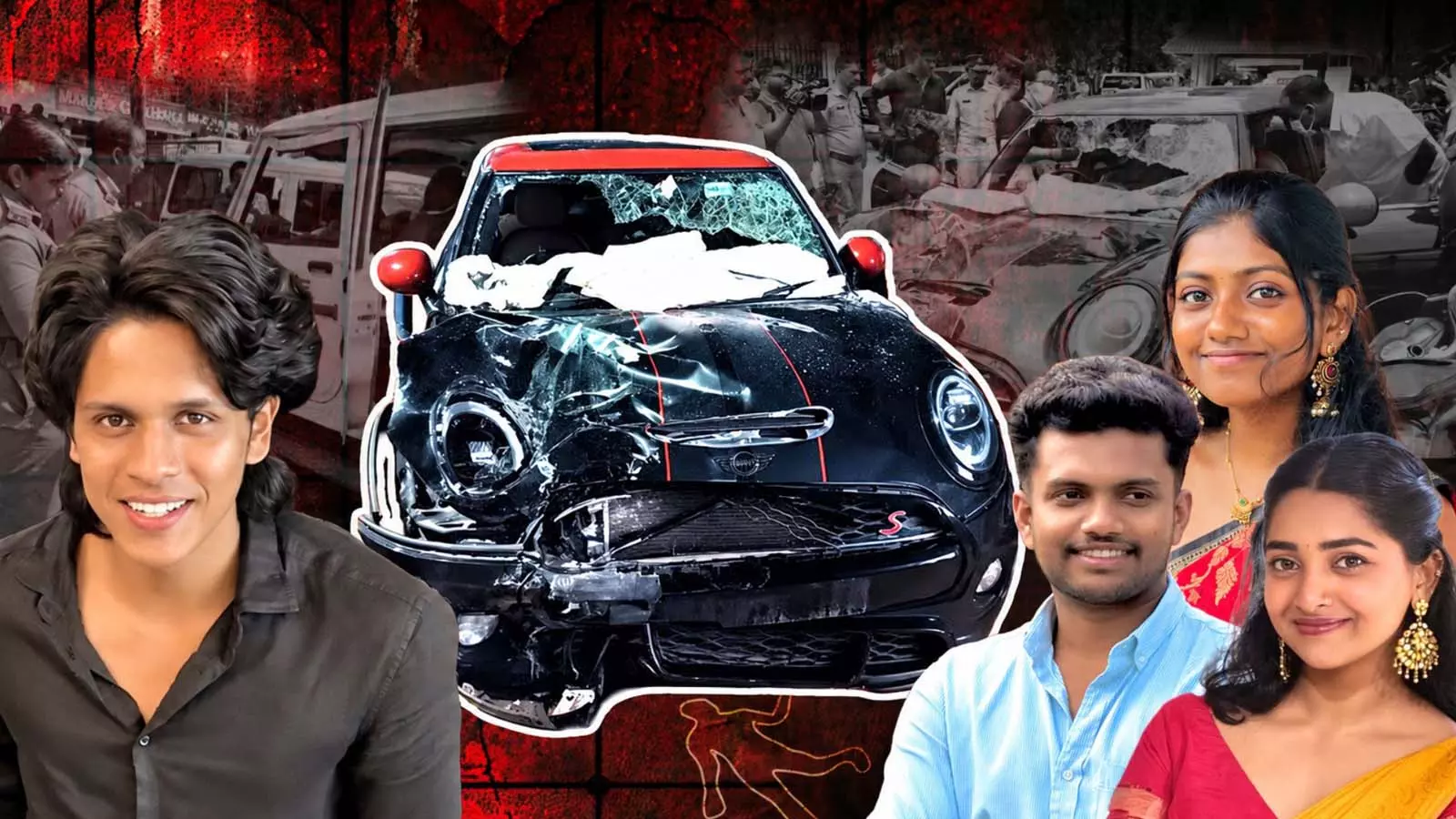
The three victims, Gopika, Devika and Iyas, were young people pursuing their studies while working part-time. Their lives were cut short when a speeding Mini Cooper, allegedly driven by 19-year-old Suhail Sajeev, rammed their scooter near Nedumbassery airport. Suhail and the three other occupants of the car have been arrested. The police investigation is expected to establish the circumstances of the crash and individual responsibility.
But the public reaction has increasingly moved away from the central question of accountability for the deaths.
‘Inhumane’: Victim’s family lashes out
The controversy over Sasikala’s post escalated when Gopika’s family publicly challenged her remarks. The family objected to the insinuations surrounding the young woman's character and questioned the attempt to turn her death into a debate about the morality of going out at night.
Professor MR Anilkumar, Gopika’s paternal uncle, lashed out at Hindu Aikya Vedi leader Sasikala after the funeral, using strong words to condemn her remarks. He said publicly humiliating the deceased girls and hurting their family was “unacceptable and inhumane”.
Also read: Keralam highway accident: Eight killed after car rams parked truck in Thrissur
Sasikala has since said she is initiating legal action against Anilkumar, maintaining that her Facebook post contained no communal remarks and did not defame either of the deceased women. The exchange brought the dispute into the public domain, turning a grieving family's demand for dignity into a confrontation with a prominent Hindutva figure.
Accident forgotten, dead moral policed
The focus shifted to the two women's presence outside at night with a Muslim male colleague. Their ordinary association with a co-worker was recast as something suspicious, requiring public explanation.
“It’s more than gossip or concern, for that matter. This is how a dog whistle operates. A statement need not explicitly identify its intended targets if its audience can supply the insinuation. In this case, the discussion of traditional routines and midnight tea was amplified into moral policing of the victims, with their religious identities and association with Iyas becoming part of the story. Gopika and Devika were victims of a fatal collision. They did not owe the public an explanation for being outside at night, nor does her family” said Ajisha Mohan a college mate of the deceased students.
The fact that seven young people had been together, working at the same antique shop and travelling on three two-wheelers, complicates the insinuation that the outing itself was somehow suspect. Yet the focus on the two women and their Muslim colleague has overshadowed the more pertinent questions about the crash.
Is accused getting preferential treatment?
The second strand of the campaign centres on Suhail and his family, particularly the Mini Cooper that his mother reportedly gifted him on his 18th birthday.
Videos of the birthday gift have circulated widely, turning the luxury car into a symbol of privilege. The contrast between the accused driver's access to an expensive vehicle and the victims' lives as students earning money through part-time employment has intensified public anger.
Also read: Days after Lamborghini crash, tobacco baron’s son Shivam Mishra arrested in Kanpur
The case has prompted legitimate questions about reckless driving, parental responsibility and the culture surrounding powerful, luxury cars in the hands of young drivers. Reports and videos circulating after the accident have also fuelled scrutiny of Suhail's alleged driving behaviour.
A remark attributed to Suhail after the accident, that his father would handle the matter, has further reinforced perceptions of entitlement. The victims’ families have expressed concerns that the accused could use their family’s influence to evade accountability. The decision to send Suhail and his three friends to a Borstal school rather than keep them in prison, their reported haircuts even before the identification parade, and an FIR that did not name the accused have also raised questions about the police investigation of preferential treatment.
‘Mother can’t be shamed for being successful’
But at the same time, the scrutiny has also become entangled with the family's religious identity. The professional achievements of Suhail’s mother, a successful businesswoman, have become part of the public discussion because she reportedly gifted him the car.
“Her business and lifestyle have attracted attention in the aftermath of the crash. There is a legitimate debate about the responsibilities of parents who provide young adults with access to powerful vehicles. But a woman's professional success is not, in itself, evidence of wrongdoing,” opined Preetha GP, social commentator.
“Mocking and insulting a mother’s love and faith in her child in the wake of a tragedy is cruel. A mother’s love and trust are not certificates of her child’s character. They are simply expressions of her love,” opined Preetha GP, a social commentator.
Also read: We still don’t know who the rich are in India; here's why that matters
Sections of the non-Malayalam mainstream media have devoted considerable attention to Suhail's family, its wealth and the birthday gift. Such details can be relevant to questions of privilege and responsibility. The concern is whether the coverage maintains an evidence-based focus or contributes to a narrative in which the family's Muslim identity becomes an implicit explanation for the tragedy.
3 narratives
While the circumstances of the crash and the accused driver's conduct remain central to the investigation, the public debate on the Nedumbassery crash has expanded to include the victims' association with a Muslim colleague, the wealth of accused Suhail’s family, and the role of his mother as a businesswoman. Remarks by political figures, social media posts and media coverage have contributed to these parallel narratives, bringing questions of gender, class and religion into the discussion surrounding the accident. Justice for the victims requires facts, accountability and a fair investigation. It does not require moral policing of the dead or the collective vilification of the living.