Chennai Mannady's Kalikambal Temple level raised to fight flooding
It's among nearly 25 temples across Tamil Nadu being lifted to prevent flooding, as expanding cities and higher roads leave heritage structures vulnerable

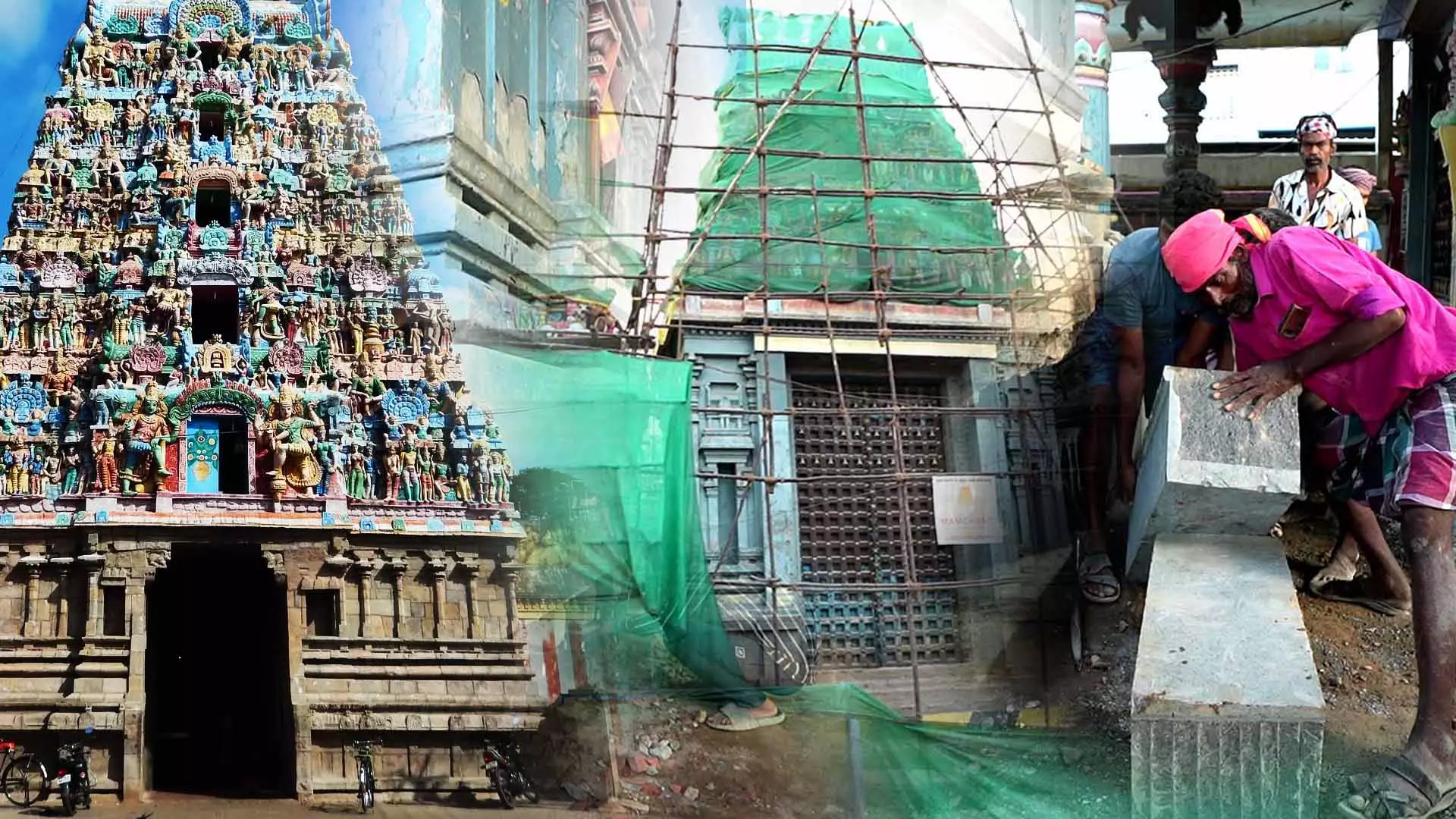
In Chennai’s busy Mannady area, a centuries-old temple is being physically lifted to survive a modern urban challenge — flooding. The five-tier Rajagopuram of the Sri Kalikambal Temple is being raised by three feet using hydraulic jacks to stop rainwater from entering the shrine during monsoons.
Over the years, rising road levels have turned many temples into low-lying zones. So, during heavy rains, water flows directly into temple complexes, damaging structures and disrupting daily worship.
The Sri Kalikambal Temple is among nearly 25 temples across Tamil Nadu being lifted to prevent flooding, as expanding cities and higher roads leave these heritage structures vulnerable.
Engineering intervention
Another example is the Raveeswarar Temple in Vyasarpadi, where similar engineering solutions have been used to counter recurring waterlogging. Engineers say such interventions are becoming essential to preserve temples as urban landscapes change.
Davinder Chauhan, an engineer involved in the work, said the aim is to protect heritage structures. “Our aim is to save our heritage for the future,” he said, explaining that several stone temples across Chennai and Tamil Nadu have already been lifted using this method.
He added that the process relies on traditional construction principles, ensuring that the original stone structures remain intact while being elevated.
Restoration work
Along with lifting the Rajagopuram, restoration includes waterproofing, re-laying of flooring, cleaning, painting, and renovation of the main shrine. The lifting of the gopuram alone is expected to take about two months and cost nearly Rs 40 lakh.
Officials from the Hindu Religious and Charitable Endowments Department inspected the temple and decided on its immediate renovation. Permissions were obtained from multiple departments, including the National Disaster Management Authority.
Earlier, the temple stood nearly three feet below the road level, causing repeated flooding during the rainy season. Now, the temple has been raised to seven feet above the road level, with the Rajagopuram lifted by 6.2 feet. This eliminates the need to pump out floodwater during monsoons.
Devotees’ relief
Devotees recall repeated flooding and difficulties during the rains - which often disrupted prayers and temple activities. They say the lifting work brings hope that the shrine will finally remain protected during heavy rainfall.
Engineers involved in the project stressed that preserving the temple’s original character is a priority. No cement mortar was used, and only traditional materials and uncut granite that matches the existing structure were used.
As climate risks intensify and urban development continues, Chennai’s temples are adapting to survive, not by relocating, but by rising above the waterline to protect both people's faith and heritage.
The content above has been transcribed from video using a fine-tuned AI model. To ensure accuracy, quality, and editorial integrity, we employ a Human-In-The-Loop (HITL) process. While AI assists in creating the initial draft, our experienced editorial team carefully reviews, edits, and refines the content before publication. At The Federal, we combine the efficiency of AI with the expertise of human editors to deliver reliable and insightful journalism.