IN PHOTOS: How Keeladi artefacts align with Sangam literature references
From advanced water management systems to ornaments to weaving tools to gaming objects, the findings suggest the existence of a prosperous and vibrant society

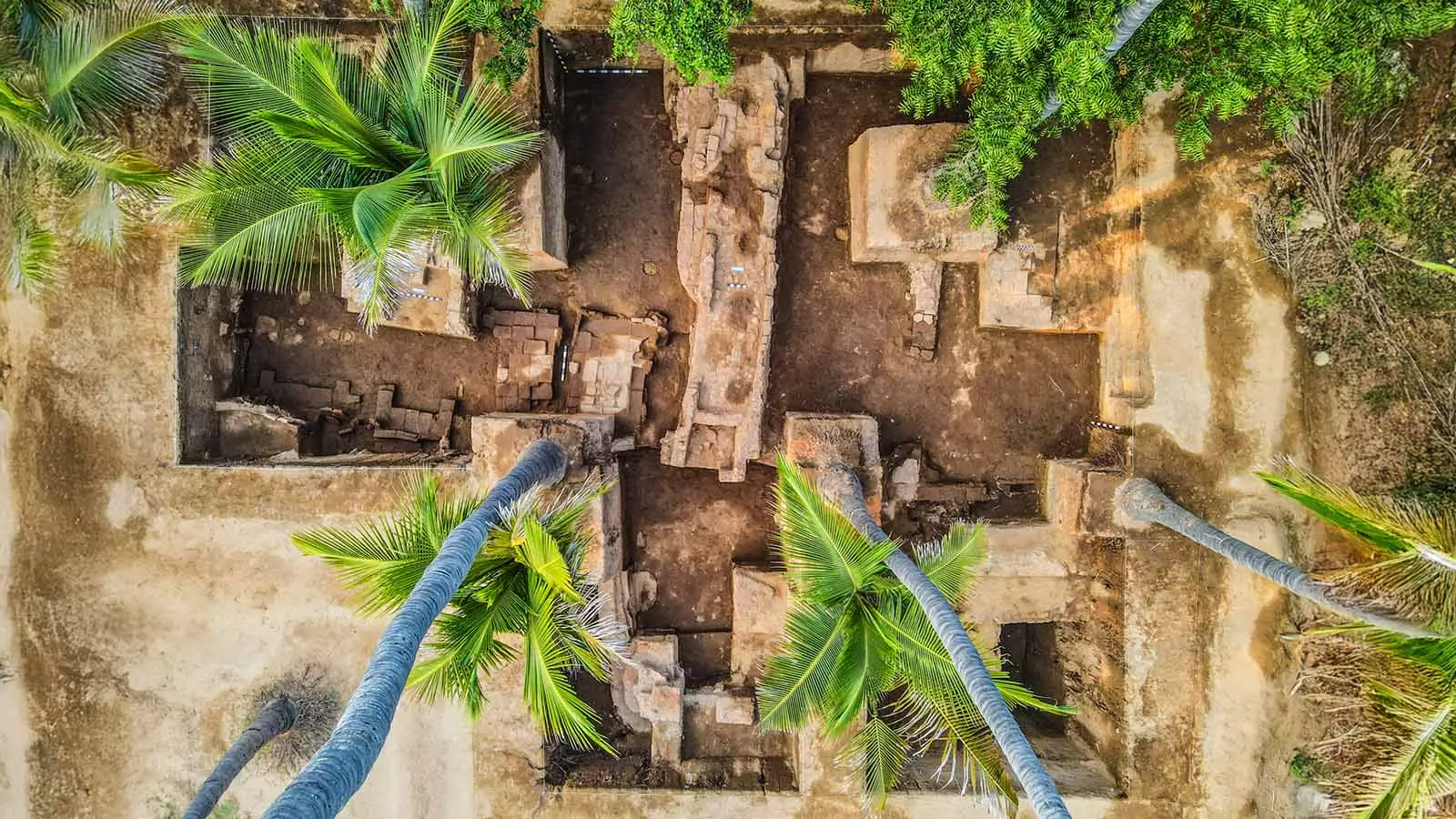
Artefacts unearthed at the Keeladi excavation site align with descriptions found in Sangam literature, strengthening the link between Tamil classical poetry and the lived urban realities from over 2,000 years ago, experts say.
Also Read: Keeladi-Saraswati excavations lack scientific scrutiny: PA Krishnan
From advanced water management systems to ornaments, weaving tools to gaming objects, the findings suggest the existence of a prosperous, skilled, and culturally vibrant society.
As the artefacts from Keeladi gain significance, The Federal, with the help of experts in Tamil literature, Indology, and archaeologists involved in the excavation, lists the exact verses from Sangam literature that correspond to the Keeladi artefacts.
Ring well
Keeladi excavations have revealed a ring well — a well fitted with 33 terracotta rings. This well has the largest number of rings discovered in excavations conducted so far in Tamil Nadu.
Evidence in Sangam literature: "The suburban with ring wells" — Pattinapalai 76
Terracotta water pipes
Water pipes made of terracotta in the shape of barrels and spirals were unearthed. Barrel and spiral-shaped pipes were used to filter water. Three terracotta pipes are connected to one another and fitted with a pot with a filter at the end.
Evidence in Sangam literature: Buried terracotta water pipes are referred to as surungai in Paripadal.
"Flowing through the centre of the Surungai of Nedumal, the water that comes out appears like water being emitted by an elephant through its trunk after sucking it." — Paripadal: 20:103-104
Ornaments and jewellery
Seven gold ornaments worn by women, along with copper ornaments, precious beads, more than 4,000 stone beads, glass beads, conch bangles, ivory bangle fragments, combs, and terracotta beads, were all produced locally.
A total of 28 terracotta earrings and 63 broken bangle fragments were collected in this excavation.
Also Read: Keeladi report: Politics, proof, and buried history | Explainer
These valuable ornaments and other jewellery items stand as evidence of the prosperity and affluence of Sangam-era society.
Evidence in Sangam literature: Many poems refer to sets of bangles, long chains, studs, rings and anklets worn by women.
“The maiden with rows of white bangles” — Kuruntokai 189
“Golden bangles that fit snugly on the forearm” — Narriṇai 356
“She adorned herself with well-crafted ornaments, wearing them with elegance and grace.” — Kalithogai 28
“The pearl-studded, golden anklets resounded clearly as she walked.” — Natrrinai, 110
Costume designing tools
The recovery of 10 spindle whorls, 20 sharply pointed bone-tip tools used for creating designs, hanging stones for yarn, terracotta spheres, a copper needle and earthen vessels used to hold liquid clearly attest to the various stages of the weaving industry, from spinning, yarning, looming, weaving, and later dyeing.
Archaeological findings by the Excavation wing of the Archaeological Survey of India (ASI) at this site also confirmed the existence of a dyeing industry. Thus, the recovery of these antiquities attests to the existence of a weaving industry.
Evidence in Sangam literature: Verses in Purananuru and Natrinai indicate that women were extensively engaged in weaving. They used multiple techniques and specialised tools for their work.
“Women who had learnt the techniques of weaving.”
“Like the finely spun cotton thread prepared by a woman skilled in cotton work, upon tender flesh hardened by fiery anger, sinews stood out …" — Purananuru 125
Gaming artefacts
The occurrence of artefacts such as dice, hopscotches, and gamesmen reflects the pastime activities of ancient people. The majority of the gamesmen recovered from the excavation are made of terracotta.
At Keeladi, 601 hopscotches were unearthed. Even today, the same game is prevalent in Madurai and other regions, known as "Pandi" or "Nondivilayattu."
Also Read: Keeladi excavation report vetted; deficiencies flagged in methodology, interpretation
Dice were also recovered from the site. The presence of single- and double-holed terracotta discs suggests they were used either as toy cart wheels or as pieces for a twist-disc game.
Apart from these, 80 gamesmen of similar shape but varying sizes were collected during the excavation. Together, these artefacts indicate the prevalence of games and leisure activities among children, men, and women in ancient society.
Evidence in Sangam literature: “The young women, with the quick tinkling of small red anklets, playfully handle the golden Kazhangu, dancing with grace and joy.” — Purananuru 36: 3-4