Telangana’s 'Future City': New economic growth engine or real-estate dream?
As FCDA gears up for June 2 launch, experts and activists clash over land acquisition, transparency, and whether the 30,000-acre project will truly benefit public

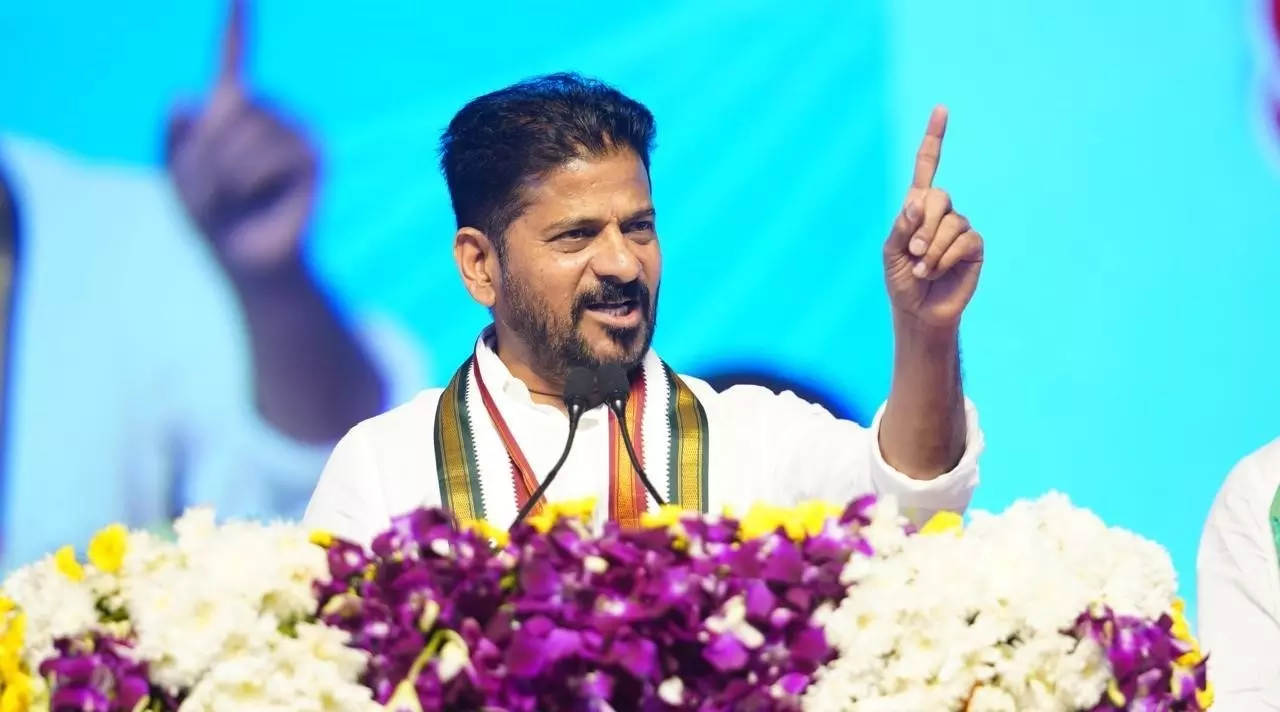
As the preparations by the Telangana's Future City Development Authority (FCDA) are in full swing to inaugurate the Bharat Future City on June 2, the state’s foundation day, Chief Minister Revanth Reddy's ambitious project faces mounting scrutiny.
Will it genuinely drive economic growth and employment, or primarily serve political branding and real-estate interests while displacing farming communities through large-scale land acquisition?
Also read: Telangana to launch Indiramma family life insurance on June 2; check eligibility, benefits
The Federal Telangana spoke with Kanneganti Ravi of Rythu Swarajya Vedika and public policy expert Mohan Rao, examining concerns around transparency, compensation, environmental impact, and employment.
'Not just a political blame game'
Ravi said the debate should not remain confined to political exchanges between the ruling and Opposition parties of the state, as the Congress and the Opposition Bharat Rashtra Samithi recently exchanged words over the ‘Bharat Future City’ project, with the latter threatening to scrap it once it comes to power and the former hitting back.
According to him, successive governments in Telangana and Andhra Pradesh have relied on “dream projects” conceived at the state’s topmost executive level (chief minister) without adequate public consultation.
Ravi called the Future City another such project, envisioned more as an exercise in large-scale urban expansion than a real people-centric development plan.
Why a new city?
The leader of the RSV, a farmers’ welfare body, questioned the need for building the Bharat Future City (also called the Fourth City) across tens of thousands of acres when the first three urban centres — Hyderabad, Secunderabad and Cyberabad — still have significant vacant spaces and infrastructure to house future industries and investments. Ravi argued that the existing urban spaces could be developed for industries instead of converting fertile agricultural land into urban real estate.
The upcoming urban centre, claimed to be India’s first net-zero greenfield smart city, spans over 30,000 acres between the Srisailam and Nagarjunasagar highways near Hyderabad and the Rajiv Gandhi International Airport.
Citing examples from other states, such as Ahmedabad’s rapid expansion in Gujarat or Amaravati, the new capital city in Andhra Pradesh, Ravi said the trend of building entirely new cities has often benefited contractors, corporations and real-estate interests more than the public.
Also read: How one move by Telangana govt has left state's rich textile belt sinking
Ravi raised alarm over the proposed acquisition of over 30,000 acres, warning that the actual project footprint could expand further, putting agriculture-dependent villages at serious risk. He questioned the project's transparency, alleging that communities lacked clear information on rehabilitation, compensation, employment, and environmental safeguards.
Land-use policy questioned
He also challenged Telangana's land-use policy, saying it lacks any comprehensive framework governing allocations across agriculture, forests, urban areas, industries and public services. Without such a framework, he asked how governments justify handing vast tracts of land to private corporations, citing the names Amazon and Reliance Industries.
Rao, however, defended the government’s intent behind the project, arguing that every chief minister seeks to leave behind a developmental legacy. He compared the Bharat Future City vision to earlier landmark initiatives, such as Y S Rajasekhara Reddy's Aarogyasri and N Chandrababu Naidu's HITEC City in undivided Andhra Pradesh.
According to him, the current Telangana CM was similarly attempting to create a new growth engine through the upcoming project. He said there was nothing inherently wrong with the government aspiring to build a modern urban and industrial hub.
Rapid urbanisation
While acknowledging that public consultation was necessary for such projects, he insisted the project was still in a preliminary stage and discussions were ongoing. He argued that Telangana’s rapid urbanisation made such projects necessary.
He pointed out that around 38 per cent of Telangana’s population currently lives in urban areas and claimed Hyderabad’s growth had reached a saturation point, leaving limited room for further expansion within the city. The government, he said, appeared to view Future City as an alternative urban corridor along the Nagarjunasagar Road stretch.
Also read: Amaravati labour crisis slows Andhra capital works; World Bank discovers stark reality
Rao argued that industrialisation was necessary to tackle unemployment, as governments alone cannot generate enough jobs. Attracting foreign investment, he said, demands world-class integrated infrastructure — the core intent behind the Future City proposal.
Global investors expect such groundwork before committing capital. He also noted the project envisions cohesive urban planning, placing workplaces, schools, hospitals, and homes within accessible reach — a deliberate contrast to Hyderabad's fragmented layout — potentially positioning Telangana more competitively among states courting industrial investment.
“If implemented properly, such a model could be welcomed,” he said.
Questions over livelihood
Ravi pressed for specific answers on whether displaced farmers, labourers, village youth and women would receive guaranteed employment. He questioned whether incoming industries aligned with the government's net-zero goals, raising concerns over pollution, drainage, and water supply and the long-term environmental impact of big infrastructure projects and data centres. He warned that thousands of farming families across 54 villages in the region risk gradual displacement and irreversible livelihood loss.
He criticised compensation rates of Rs 35 lakh per acre against market values near Rs 2 crore, and demanded that full project documents be made public for genuine transparency.
Rao agreed that greater public discussion and transparency were necessary. He said the project was still evolving and that the government could engage with activists, civil society groups, and experts before finalising its plans.
Also read: How Andhra is carving itself out as a major defence hub amid stiff southern competition
While backing the creation of the FCDA, comparing it to the Hyderabad Metropolitan Development Authority, and saying preliminary planning exercises had already begun, Rao acknowledged that the government would have to ensure fair compensation and prevent injustice to farmers.
He cautioned that if people’s rights were violated, public resistance would be unavoidable.
The discussion concluded with both panellists agreeing that the government must provide more clarity on land acquisition, rehabilitation, environmental safeguards, and employment generation.
Would Future City become a truly inclusive development model, or remain merely a chief minister's ambitious dream? We will have to wait and see.
(Adapted from a video discussion on The Federal Telangana's YouTube channel.)