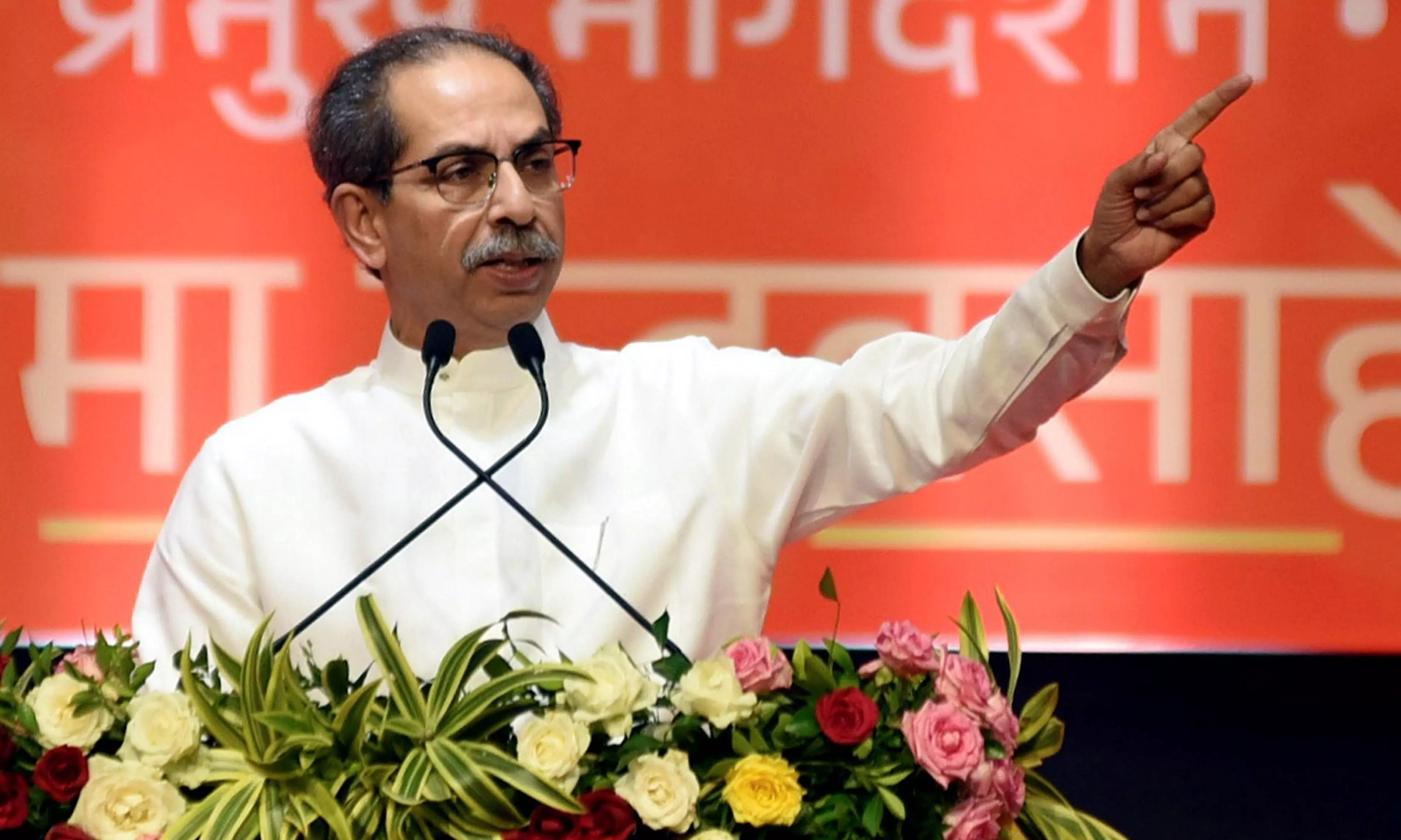
BMC results dent Sena (UBT)’s power base, but ‘Brand Thackeray’ survives in Mumbai
Loss of civic control curtails resources even as Uddhav Thackeray faces the challenge of rebuilding the Shiv Sena (UBT) beyond its traditional Marathi core

The outcome of the Brihanmumbai Municipal Corporation (BMC) elections signals a major turning point for Uddhav Thackeray and the Shiv Sena (UBT), bringing to a close the party’s quarter-century dominance over India’s richest civic body. Control of the BMC had long underpinned the Sena’s political clout in Mumbai, providing both institutional leverage and organisational resources that shaped its power base.
Facing a campaign fought under financial and organisational constraints, Thackeray centred his strategy squarely on Mumbai. The Sena (UBT) leaned heavily on appeals to Marathi identity, targeted welfare promises for the Marathi manoos, and its long-standing local networks. The decision to mend ties with Raj Thackeray was a calculated move to prevent a split in the Marathi vote. While these efforts helped the party retain influence in parts of south and central Mumbai, including strongholds such as Dadar and Byculla, they were simply not enough to preserve control of the civic body.
Also read | Why Thackeray and Pawar strongholds crumbled in Maharashtra local body polls
With 65 seats, the Sena (UBT) trailed the BJP but avoided a collapse. Significantly, the results in Mumbai underlined Uddhav Thackeray’s continued political relevance within the Sena legacy. The Eknath Shinde-led faction, which secured 29 seats, was unable to eclipse Thackeray’s standing in the city, allowing him to maintain his claim as the primary inheritor of the Shiv Sena’s political lineage established by Bal Thackeray.
Reacting to the BMC results, Uddhav said the fight in Maharashtra would continue until the Marathi community received due respect, asserting in a post on X that the battle was not over. Raj echoed the sentiment, blaming the defeat on the ruling Mahayuti’s financial and institutional might, and said the MNS would continue its struggle for the language, identity and rights of the Marathi people.
Nativist appeal hits limits
Speaking to The Federal, Mumbai-based political analyst Abhay Deshpande said the most significant message from the BMC elections was that the “Brand Thackeray” continues to hold sway in Mumbai, despite sustained efforts by the BJP-led Mahayuti to sever the family’s association with the Shiv Sena. While Eknath Shinde succeeded in splitting the party and taking away a majority of Uddhav Thackeray’s MLAs, and the Sena (UBT) suffered heavy losses across Maharashtra, Deshpande underlined that Mumbai remains a distinct political battleground altogether.
According to him, the city witnessed a clear consolidation of Marathi votes in favour of the Shiv Sena (UBT), aided by the tactical alliance with the Raj Thackeray-led Maharashtra Navnirman Sena (MNS). However, the verdict also exposed the limits of a purely nativist mobilisation. Marathi consolidation alone, Deshpande said, fell short of delivering the numbers required to capture the BMC.
Deshpande argued that the results reaffirmed the continuing relevance of the Maha Vikas Aghadi (MVA) as a political force, and suggested that the Sena (UBT)’s decision to sideline the Congress in favour of the MNS proved costly. An alliance comprising all three parties, he said, could well have altered the outcome in the BMC polls.
A long road ahead
Looking ahead, Deshpande said Uddhav Thackeray faces twin challenges if the Sena (UBT) is to reclaim political ground in Maharashtra. The immediate task is to prevent further defections, as the BJP continues to poach leaders. The larger challenge, he added, lies in expanding the party’s social base beyond its traditional core and forging outreach to other communities, including minorities.
While Uddhav Thackeray continues to project his faction as the rightful inheritor of Bal Thackeray’s legacy, Deshpande cautioned that the reality of being ousted from the BMC after 25 years cannot be ignored. The Sena (UBT)’s marginal presence beyond Mumbai, winning just one seat in Thane, the city that produced the Shiv Sena’s first mayor, and performing dismally in Navi Mumbai and Panvel, underlines the scale of the task ahead. Reviving the party’s fortunes before the next Assembly elections, he said, will require a fundamental recalibration of strategy.
While the Shiv Sena (UBT) continues to be a political force in Mumbai, there is significant room for the party’s revival, said senior journalist Mrunalini Nanivadekar. Arguing that the moment calls for a generational transition, she said Aaditya Thackeray must step out of his father’s shadow and lead a sustained outreach across Maharashtra. If the Sena (UBT), under his leadership, can craft a compelling political narrative, she added, it has the potential to emerge as a major force in the 2029 Assembly elections.
Rebuilding without the BMC
The absence of control over the BMC forces the Shiv Sena (UBT) into a markedly different phase of politics. Without the administrative authority and organisational backing that the civic body once provided, Uddhav Thackeray’s party must now operate with constrained resources and reduced influence. This shift comes at a moment when Mumbai’s social and electoral landscape is evolving, making the task of political mobilisation more complex and demanding a broader, more inclusive strategy.
Also read | Thackeray cousins vow to continue Marathi identity politics despite BMC defeat
The outcome also alters the configuration of the Opposition in the city. With the Congress sinking to its lowest-ever tally in the BMC, Uddhav Thackeray emerges as the principal Opposition voice in the city’s civic politics, even without control of the municipal body.
Taken together, the BMC results represent a moment of recalibration rather than closure. While Uddhav Thackeray has been displaced from the institutional centre that long defined Shiv Sena’s dominance, the party’s ability to retain a committed core and assert its claim to the Thackeray political legacy in Mumbai provides a limited but tangible base from which to regroup and rework its strategy ahead.