








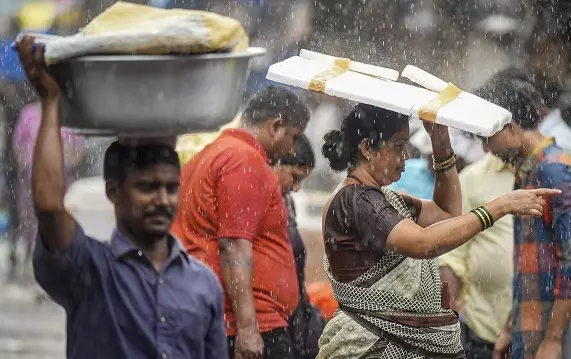
Mumbai breathes easy as light rain brings hope amid delayed monsoon, water crisis
IMD predicts favourable conditions for further advancement of monsoon over Maharashtra as state witnesses falling reservoir levels, faces drinking water shortage

A parched Mumbai breathed a sigh of relief after parts of the city received light to moderate rainfall on Sunday (June 21) morning.
The India Meteorological Department (IMD) has also predicted favourable conditions for the further advancement of the southwest monsoon over parts of Maharashtra, providing a much-needed succour to the state, which had been battling crippling summer heat and an acute water crisis brought about by a delayed monsoon.
Also read: Deadly summer: Heat wave crisis deepens as water shortages grip India
The monsoon reached South Konkan earlier this month, but its further advance had remained stalled due to unfavourable weather conditions.
The delay in the monsoon, which dried up water reservoirs to abysmal levels, prompted authorities to prioritise the supply of drinking water.
Low water level in dams
The Water Resources Department, in its report released on June 10, said that Maharashtra’s 3,028 large, medium, and minor dams currently hold only 25.51 per cent of their live storage capacity. Pune recorded the lowest water availability with reservoirs holding just 15.54 per cent of live storage capacity, down from 26.82 per cent recorded in the corresponding period last year.
Many reservoirs that supply water to industries and agricultural fields, including Khadakwasla, Pansheet, Varasgaon, Bhatghar, Nira Deoghar, Dimbhe, Mulshi, Koyna and Warna reported lower-than-expected storage levels.
Also read: How India’s water crisis is not just due to climate change, but also governance failure
The Brihanmumbai Municipal Corporation (BMC) on June 18 reported that Mumbai has only 40 days’ worth of drinking water stock left and is working on a strategy to tackle the water crisis.
Only 1,55, 187 million litres of water was available in the lakes of Tansa, Vihar, Tulsi, Bhatsa, Upper Vaitarna, Modak Sagar, and Middle Vaitarna.
Officials said that the catchment areas of the Tansa and Modak Sagar lakes have received 13 mm and seven mm of rainfall while those in other lakes have not received any rain this year. The silver lining, however, is that the water stock this year is more than what Mumbai had last year – 8.69 per cent (1,25,824 million).
BMC slashes water supply
In view of the depleting water storage levels in its reservoirs, the Maharashtra government on June 14 asked officials to prioritise drinking water supply till August 31.
Worried about the falling water level in the seven reservoirs that look after the water needs of Mumbai, the BMC imposed a 20 per cent reduction in water supply to industrial, commercial and sports facilities.
Also read: Bengaluru’s water crisis deepens as cases of contaminated drinking water surge
While BMC has cut supply to construction sites and swimming pools, it has said no new water connections will be approved for construction under further notice.
It has also asked residents and establishments to judiciously use drinking water and not use it to water plants, wash vehicles, or clean roads and instead use alternative sources of water for such purposes.
The BMC slashed its daily supply from the lakes by 10 per cent in May following the IMD’s forecast about a weak southwest monsoon due to El Nino conditions.
Tourism takes a hit
The declining water supply and a truant monsoon has not only raised fears of a drought, but has also increased the dependence on water tankers. According to data by the state’s Water Supply and Sanitation Department, 999 tankers were deployed to supply water to 2,579 hamlets and 915 villages as of June 1, while the number was 868 till May 25.
Also read: Chennai’s drinking water crisis mirrors deeper urban failures across India
The water crisis also hit the state’s tourism, leading to the temporary shutdown of Imagicaa Water Park in Raigad district. The park, a well-known tourist hotspot at Khalpur, located between Mumbai and Pune, was closed from June 19 after the state Irrigation Department gave orders against drawing water from nearby reservoirs.