- Home
- India
- World
- Premium
- THE FEDERAL SPECIAL
- States
- Perspective
- Videos
- Sports
- Education
- Entertainment
- Elections
- Features
- Health
- Business
- Series
- In memoriam: Sheikh Mujibur Rahman
- Bishnoi's Men
- NEET TANGLE
- Economy Series
- Earth Day
- Kashmir’s Frozen Turbulence
- India@75
- The legend of Ramjanmabhoomi
- Liberalisation@30
- How to tame a dragon
- Celebrating biodiversity
- Farm Matters
- 50 days of solitude
- Bringing Migrants Home
- Budget 2020
- Jharkhand Votes
- The Federal Investigates
- The Federal Impact
- Vanishing Sand
- Gandhi @ 150
- Andhra Today
- Field report
- Operation Gulmarg
- Pandemic @1 Mn in India
- The Federal Year-End
- The Zero Year
- Science
- Brand studio
- Newsletter

Why experts doubt practicality of Amit Shah’s ‘3-year case disposal’ claim under new criminal laws
The Union Home Minister has tied his three-year promise to full implementation of the new criminal laws introduced in July 2024. Official figures show extensive rollout, but legal practitioners differ on how far these measures can help with quick disposal of cases.

When Union Home Minister Amit Shah told a gathering in Bhopal earlier this month that a criminal case could soon be disposed of within three years from the registration of a first information report (FIR) — even if appeals against lower court judgments saw it being dragged to the Supreme Court — he attached an important caveat. The three new criminal laws would first have to be...
When Union Home Minister Amit Shah told a gathering in Bhopal earlier this month that a criminal case could soon be disposed of within three years from the registration of a first information report (FIR) — even if appeals against lower court judgments saw it being dragged to the Supreme Court — he attached an important caveat. The three new criminal laws would first have to be fully implemented, a task he expected to be completed in about another year and a half. The remarks, however, raise two significant questions: what would constitute full implementation and how would that ensure faster movement of criminal cases.
The Bharatiya Nyaya Sanhita (BNS), Bharatiya Nagarik Suraksha Sanhita (BNSS) and Bharatiya Sakshya Adhiniyam (BSA) came into force on July 1, 2024, replacing the Indian Penal Code (IPC) 1860, the Code of Criminal Procedure (CrPc) 1973 and the Indian Evidence Act (IEA) 1872.
Ever since, the government's ambition regarding disposal of cases has been consistent, although the projected milestones have varied. At Kurukshetra in October last year, Shah expressed confidence that after 2026 every FIR would be resolved in approximately three years. In January 2026, a Home Ministry statement spoke of time-bound justice, right up to a Supreme Court judgment in case of appeals, by 2029. The Bhopal statement envisaged another eighteen months for implementation before the three-year target could be realised.
The three laws introduce targeted timelines for completion of proceedings at each stage of the investigation and judicial process, electronic procedures and scientific evidence collection requirements; extensive training and digital rollout are underway. Yet lawyers, police officers and researchers interviewed by The Federal differ on how far these measures can shorten the lifetime of a case.
Also read: Why Delhi’s Astha Kunj ‘gangrape case’ raises questions about access to safe public dating spaces
For example, the BNSS sets a two-month cap for completing investigations into specified sexual offences. In a sessions trial, Section 251(1)(b) directs the court to frame charges within 60 days of the first hearing, while Section 258(1) ordinarily requires a judgment within 30 days of the completion of arguments, extendable to 45 days for reasons recorded in writing. Section 346 seeks to keep hearings continuous and limit unnecessary adjournments.
These deadlines apply to identified stages, whereas an investigation, the examination and cross-examination of witnesses, hearing of arguments, a trial judgment and successive appeals involve different actors and schedules. The often-mentioned 60-day and 90-day periods for filing a police report have a particular legal significance: under Section 187, they determine when an accused person in custody may become entitled to default bail. They do not supply a uniform deadline for completing every investigation.
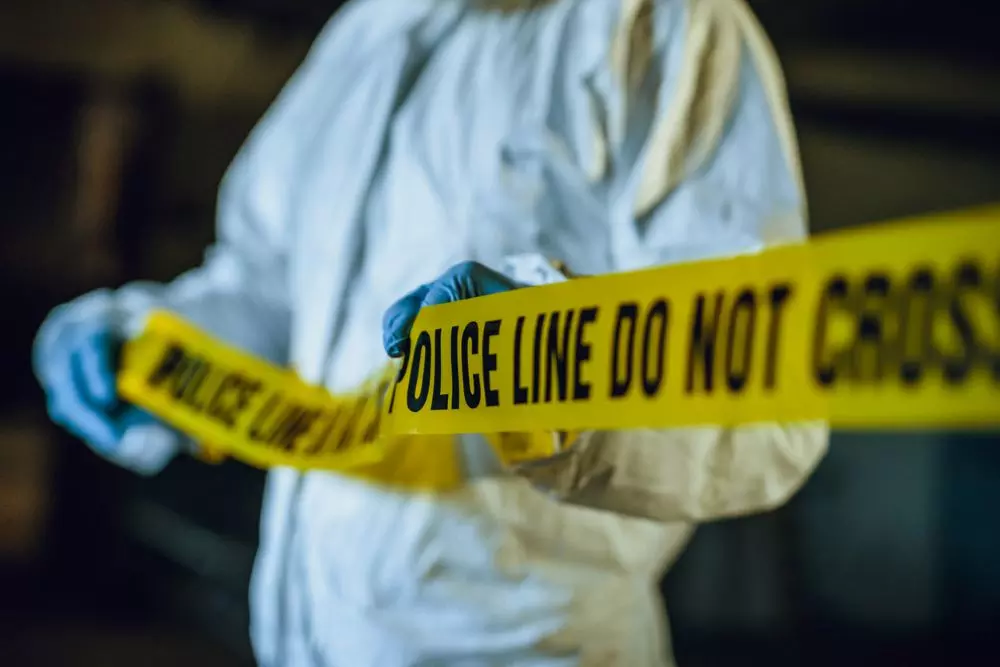
The new laws pose challengs in implementation. One officer described having to work out how to film a search while conducting it. An inspector recounted waiting overnight for a forensic van to reach a murder scene. Photo: istock
Evidence collection faces its own deadlines. Section 105 requires audio-video recording of searches and seizures and prompt forwarding to a magistrate. Section 184(6) gives the doctor examining a rape survivor seven days to send the medical report to the investigating officer, who must forward it with the case papers. Section 193(3)(i) requires police to specify the custody sequence for electronic devices. Their effectiveness depends on the availability of required resources to enable compliance.
Criminal lawyer Abhinav Sekhri questions the very premise of a single date marking the completion of the transition from the old to the new laws. “The entire discourse around full implementation is a red herring,” he said. His reasoning begins with Section 531 of the BNSS, the repeal-and-savings provision of which was designed to preserve proceedings already underway when the new procedural code commenced. Investigations, inquiries, trials, appeals and applications pending at that point continue under the Code of Criminal Procedure, 1973.
“The repeal and savings clause of the BNSS was modelled on the 1973 CrPC and envisages a stage-wise implementation to minimise disruption,” Sekhri explained. Courts will consequently work with both procedural codes for years, just as lawyers and police must remember the provisions applicable to older and newer cases. He regards implementation as an institutional transition rather than a switch to be thrown: “Full implementation will be a point where judges, lawyers and police begin thinking in terms of the new laws. Much like it was with the CrPC, I think it will take at least 7-10 years for the new laws to take root meaningfully.”
His assessment of digitisation is similarly cautious. “As of now, the new procedures are largely adding an extra layer of complexity.” Many of his post-2024 cases are still at an early stage, making it difficult to judge how trial courts are managing the new electronic requirements. “My sense, however, is that expecting digitisation alone to reduce delay [in disposal of cases] will not work out as we hope,” he said.
The results of the government's early assessment of implementation relate chiefly to the investigation phase. In his Kurukshetra address, Shah had said that in the first year, charge sheets had been filed within 60 days in about 53 per cent of FIRs registered under the new laws and within 90 days in 65 per cent. These are useful indicators of one stage of the justice delivery process. Following the same cases until their trial judgments and hearing of appeals would reveal whether the time saved in investigation continues through the system.
The official trainingfigures establish substantial progress. A Lok Sabha reply dated 24 July 2026 listed 15,72,863 police personnel trained in the new laws out of 17,06,735 available, a little over 92 per cent. The same material separately reported that the Bureau of Police Research and Development had trained 83,740 officers and other stakeholders, including master trainers, across the five pillars of the criminal justice system. Those are distinct training categories and should be read as such.
In a Rajya Sabha reply on the integration and operation of Crime and Criminals Tracking Network and Systems (CCTNS), the Home Ministry said all 17,798 police stations in the country were using the CCTNS as of February 1, 2026. A separate reply on 11 February put the use of e-Sakshya, the application for recording and retrieving photographic, video and witness-statement evidence, at 15,899 police stations across 35 States and Union Territories. That is a reach equivalent to about 89 per cent of the CCTNS station count, although the numbers come from separate replies and the government has not presented their comparison as an official coverage rate.
The Centre is also developing the Inter-Operable Criminal Justice System (ICJS), linking police, prosecution, courts, prisons and forensic agencies. Video testimony and e-Summons form part of the same effort. The test is whether evidence can move reliably from the investigator to the courtroom and the parties.
Dr Neeraj Tiwari, associate professor at National Law University Delhi and a part-time consultant to the Home Ministry and Bureau of Police Research and Development, is optimistic about that direction. Responding in his personal capacity, he told The Federal that upgraded CCTNS and ICJS platforms would support prompt FIR registration and described technological integration across investigation, inquiry and trial as an important part of the reforms. He also acknowledged that coordination between criminal justice agencies “currently lags owing to the lack of a centralised coordination mechanism”.
Tiwari summed up the government's approach thus: “The two ‘T's’, timeline and technology, in the NCLs [new criminal laws] aim to achieve the third 'T' — timely justice.” He expects expanding forensic education and services to support investigations into serious crimes. The Home Ministry's January announcement of an investment of Rs 30,000 crore over five years in a forensic laboratory network gives a measure of the scale of the proposed disbursal.
A May 2026 report from the Vidhi Centre for Legal Policy titled Procedure in Practice: Practitioner perspectives on the BNSS, further helps explain the concerns regarding the implementation of the provisions of the new laws. Drawing on interviews with judges and police personnel in Delhi, researchers Neha Singhal and Ishaan Bamba found that officers struggled with the changed section numbers, uneven practical training and unfamiliar electronic procedures. One officer described having to work out how to film a search while conducting it. An inspector recounted waiting overnight for a forensic van to reach a murder scene. Those experiences cannot establish a national failure, but they identify the operational questions that national training figures leave unanswered.
Retired police officer RK Vij identifies an important gain in the new procedure. “The mandatory use of audio-video electronic means during search and seizure using the e-Sakshya app has been very helpful in establishing credibility of the police procedures,” he told The Federal. A video recording can document how officers entered a location, what they found and how a seizure was made, giving a court more material against which to assess the account subsequently recorded in writing.
Vij also regards the statutory deadlines as potentially valuable. “Similarly, framing of charges within two months by the trial court and pronouncement of judgment in 30 to 45 days after the arguments are over, if adhered strictly, may reduce overall time of delivering justice.” The provisions governing medical examination reports and the recorded custody sequence of electronic devices likewise create points at which an investigation can be checked for delay or an unexplained break in the handling of evidence.
Yet Vij points to a purported gap between creating a digital record and having the court examine it. “It is learnt that despite the use of e-Sakshya by the IOs [investigating officers], the online facility to watch audio-videos (i.e., primary evidence) is yet not available with the courts. The IOs are still using pen drives and other devices to produce secondary evidence,” he claimed. This is his account of information received about practice in courts, rather than a finding about every court. However, it suggests an obvious test of implementation: whether recordings can travel securely, remain intact and be viewed by the judicial officer and both sides of a case.
Advocate and former judicial officer Bharat Chugh approaches e-Sakshya from the trial lawyer's perspective. According to him, in the application, access for the defence was insufficiently considered. “Supplying a copy to the defence wasn’t thought through and access only for the IO, prosecutor and court was envisaged.” A recording that helps establish a seizure can also contain material relevant to challenging the prosecution's version. Its usefulness therefore depends on timely disclosure, verifiable authenticity and a means for lawyers to inspect it, he argues.
Chugh also raised concerns about the possible risk of “stage-managed searches showing something to be seized after the fact”. A recording begun after crucial events may show an officer presenting an object without capturing how it was found, he claimed. Completeness of the footage, accompanying records and courtroom scrutiny will determine its evidentiary value. A recording must be collected properly, made accessible to the parties and examined within a functioning court system, to make it effective.
On whether digital procedures are already reducing trial delays, Chugh's response was: “Potentially, yes, but currently no”. He explained: “Most courts across the country do not provide witnesses the ability to depose through VC [video conference].”
Vij's final qualification tackles the issues of faster case disposal from the policing side. “Much depends on available resources with all organs of the criminal justice system (CJS). Unless there are more IOs and better forensic (including cyber) facilities, the required result may not show.”

While deadlines for framing charges and delivering judgments are manageable in straightforward cases, more complicated matters involving murder or financial fraud require careful preparation, say legal experts. Photo: iStock
Capacity matters because forensic experts face more demands under the new law. Section 176(3) of BNSS provides for a forensic expert's visit and videography at crime scenes involving offences punishable with imprisonment of seven years or more. Implementation is subject to state notification and a phased commencement mechanism in the provision. The India Justice Report 2025 found that nearly half of sanctioned scientific and administrative forensic posts were vacant on the data it examined from January 2023. Those figures predate the criminal laws and must be updated to assess present capacity, but the scale of the earlier shortage explains why recruitment and timely reports are central to the debate.
In its February reply, the Home Ministry said it did not centrally maintain counts of FIRs, witness statements or digital-evidence records uploaded through e-Sakshya; the information rested with States and Union Territories. Upload volumes, successful transmissions, defence access and time taken for courts to receive files would indicate how consistently the application is actually used.
The Vidhi study records a revealing distinction at the judicial stage. Some Delhi judges regarded the deadlines for framing charges and delivering judgments as manageable in straightforward cases, particularly because judgments are often prepared as arguments progress. More complicated matters involving murder or financial fraud require careful preparation by both sides. Missing witnesses, prosecution delays, repeated adjournments and shortages of trained court staff continue to affect the pace of proceedings. One magistrate was claimed to have told the researchers that having a single stenographer limited the amount of work the court could finish.
Chugh put the issue plainly when asked about judicial timelines: they “make no sense until you increase the number of judges or equitably distribute work”. The concern is that a deadline for completing a late stage of trial can have limited effect when a case waits months for witnesses, a forensic report or its next hearing. Procedures that reduce avoidable adjournments can help, but the courts must also have enough personnel and space to conduct the hearings.
A former director general and inspector general of police of a state, who requested anonymity, also considered the three-year period achievable only in a limited class of matters. “Theoretically, yes, but not all cases will reach from police station to Supreme Court,” he said. Talking about infrastructural challenges, he added, “The volume of cases in India is huge. We don't have a sufficient number of courts to deal with that.”
The former officer also favoured examining prosecution and conviction outcomes. Those numbers would need to be assessed with information on acquittals, access to counsel and the fairness of investigations and trials.
Devyani Srivastava, senior manager, research, at the National Law School of India University, proposed more direct public scrutiny of the changes. “A social audit at the police station level will go a long way in addressing persistent gaps in the implementation of the procedural safeguards,” she said. She suggested that each station house officer hold a monthly public meeting, attended by supervisory officers, at which citizens could raise delays in FIR registration, gaps in information on their cases and complaints of misconduct.
Srivastava also wanted states to publish their rules and standard operating procedures governing the collection, storage and sharing of e-Sakshya material. She called for figures on the number and rank of investigating officers provided with official smartphones and adequate storage to operate the application. Such disclosures could help establish whether the digital systems available at a police station are supported by sufficient equipment and workable procedures, she explained.
A separate, outcome-based measure would track every successive group of FIRs registered since July 1, 2024, documenting how many reach the charge-sheet stage, trial judgment and final appellate disposal after one, two and three years. Results could be broken down by the offence and court, with the age of pending cases reported alongside cases disposed of.
The initial cases registered under the new laws will complete three years in July 2027, offering the government a way to test its promise even before the projected implementation milestone in 2028. India's training figures and expanding software networks demonstrate extensive rollout. The next measure of success must follow cases as they pass from police stations and forensic laboratories into trial courts and, where appealed, higher courts. Publishing those timelines would allow the Home Minister's three-year promise to be tested against actual outcomes.