- Home
- India
- World
- Premium
- THE FEDERAL SPECIAL
- States
- Perspective
- Videos
- Sports
- Education
- Entertainment
- Elections
- Features
- Health
- Business
- Series
- In memoriam: Sheikh Mujibur Rahman
- Bishnoi's Men
- NEET TANGLE
- Economy Series
- Earth Day
- Kashmir’s Frozen Turbulence
- India@75
- The legend of Ramjanmabhoomi
- Liberalisation@30
- How to tame a dragon
- Celebrating biodiversity
- Farm Matters
- 50 days of solitude
- Bringing Migrants Home
- Budget 2020
- Jharkhand Votes
- The Federal Investigates
- The Federal Impact
- Vanishing Sand
- Gandhi @ 150
- Andhra Today
- Field report
- Operation Gulmarg
- Pandemic @1 Mn in India
- The Federal Year-End
- The Zero Year
- Science
- Brand studio
- Newsletter

Why ‘Kalinga Bull' Biju Patnaik came riding a donkey to an award ceremony in the ‘90s
What happens when someone presents a chief minister with a 'Gadha Shiromani' (best donkey) award? If the CM were the late Biju Patnaik, whose death anniversary is on April 17, he would appreciate the humour. Perhaps that confidence and people connect are among reasons why the ‘Kalinga Shanda’ (Odisha Bull), as Patnaik was referred to because of his power, continues to command respect across party lines.

It was the night of March 10, 1990. The next day was Holi, the festival of colours. Inside the office of Chinta O Chetana, a socio-cultural organisation based in the Odisha capital of Bhubaneswar, Surendra Das was busy taking stock of preparations for an event the next day that would see the state chief minister Bijayananda Patnaik (or simply Biju Patnaik as he is better known) in...
It was the night of March 10, 1990. The next day was Holi, the festival of colours. Inside the office of Chinta O Chetana, a socio-cultural organisation based in the Odisha capital of Bhubaneswar, Surendra Das was busy taking stock of preparations for an event the next day that would see the state chief minister Bijayananda Patnaik (or simply Biju Patnaik as he is better known) in attendance.
For decades, the organisation had presented political stalwarts in the state — most of them those who had served as its chairpersons — with funny, tongue-in-cheek titles as part of an annual two-day event.
But what happens when you decide to present the chief minister of the state you are based in with the ‘Gadha Shiromani’ (greatest donkey) award? Chinta O Chetana was about to find out.
Even today, Das, 80, the organisation’s general secretary, is unsure how word got around. “Perhaps from the press where the event’s posters were printed,” he murmurs.
Be that as it may, the organisation members were surprised to be paid a visit by the superintendent of police (SP) in full official uniform. “He glanced around the office and then asked how dare we present the CM with such an award,” recalls Das.
Before leaving, the senior cop issued a stern warning, “Stop this. Otherwise, you will all be arrested.”
A sense of dread replaced the hitherto upbeat atmosphere at the Chinta O Chetana office.
Founded in 1979 by another former state CM, Dr. Harekrushna Mahtab, to develop thought and action through literature, culture and social service, the organisation was later led by ‘Biju Babu’ (as Patnaik was fondly known) till his death in 1997; Friday, April 17, marks his 29th death anniversary.
From Patnaik, the mantle of the organisation’s leadership had passed to former CM Nandini Satpathy. “Currently, Mahtab’s son and Bharatiya Janata Party (BJP) parliamentarian, Bhartruhari Mahtab, is the national chairperson,” says Das.
The ‘Gadha Shiromani’ award was not the first to be awarded to Patnaik by Chinta O Chetana. The leader had earlier been presented with titles such as ‘Ola Ram’ (super idiot), ‘Maha Murkha’ (greatest fool) and ‘Bhuspandita’ (jack of all trades). Later, Satpathy, the state’s first woman chief minister, too, received the ‘Ugra Tara’ (aggressive star) award.
“The idea behind the awards was pure fun, to enjoy the lighter moments of life,” explains Das.
Also read: Why in Tamil Nadu, elections are busy, happy times for look-alikes of actors-turned-politicians
The 1990 Holi event was special, since it was only earlier that month that Biju Babu had been sworn in as Odisha CM for the second time; the oath-taking coinciding with his birthday on March 5. In his first term, he had led the Congress government for just over two years (1961- 1963), his second term as CM was as a Janata Dal leader.
The day after the SP’s visit, Das recalls he paid his customary visit to Naveen Niwas, “Biju Babu’s residence”.
Son of a freedom fighter mother and a school teacher father, Das claims he had quit a job as deputy director, CBI, on Biju Babu’s insistence, to involve himself with Chinta O Chetana.
After applying colour to his “idol”, Das recalls being asked about the day’s event by the then CM. With the SP’s threat fresh on his mind, Das says he told Patnaik about the ‘Gadha Shiromani’ award in a low voice.
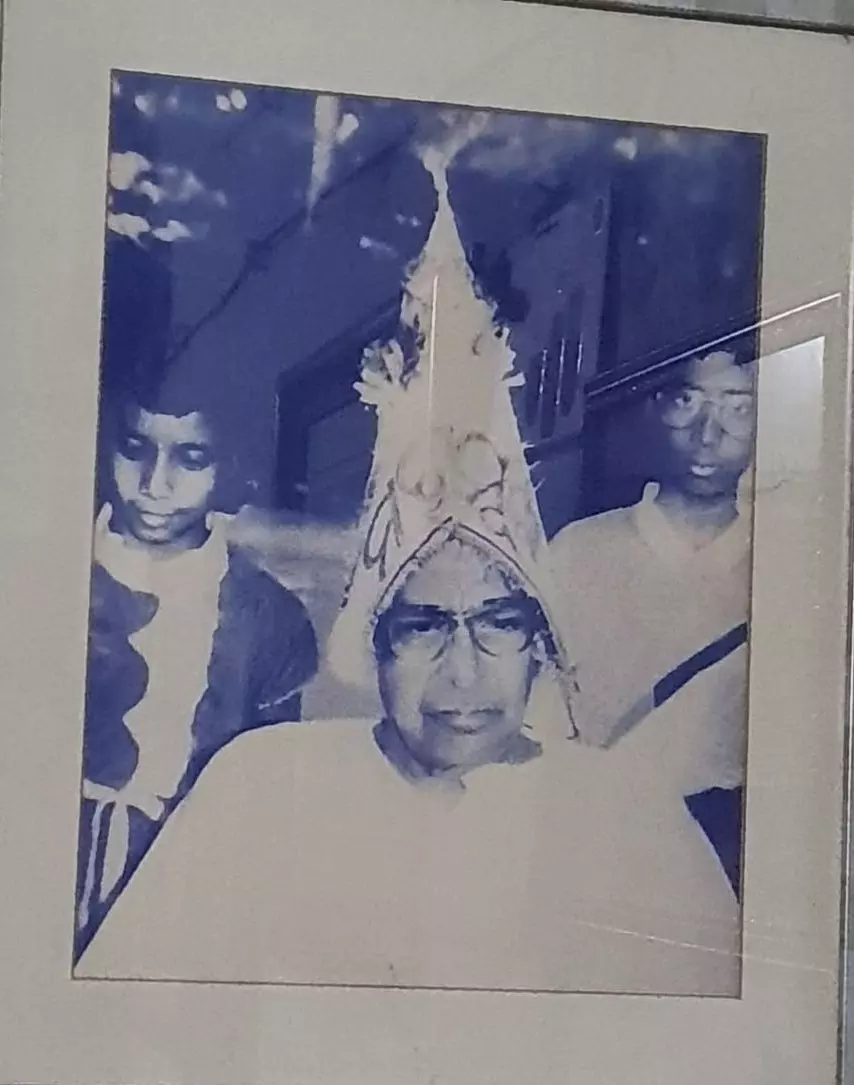
File photo of Biju Patnaik receiving the 'Maha Murkha’ award from Chinta O Chetana. Photo: By special arrangement
The general secretary recalls the CM’s excitement. “Oh.. gadha (donkey)! Best choice. I am indeed a big donkey; I deserve the award. I will attend,” the CM purportedly told him, embracing the humour behind the title.
When Das told him about the SP’s visit, adding that they were thinking of cancelling the award, he remembers a “visibly irritated Patnaik calling the SP”.
“It’s Biju Patnaik who will receive the ‘Gadha Shiromani’ award in front of his own people. What’s your problem?” he purportedly told the senior cop.
For most people that is the enduring memory of Patnaik, a “people’s leader, completely confident of himself”.
Such was his charisma that even decades after his death, ‘Biju Babu’, whose son, Biju Janata Dal (BJD) founder Naveen Patnaik, served as the Odisha CM between 2000 and 2024, continues to command respect from across party lines.
So much so that when recently BJP MP Nishikant Dubey reportedly alleged that Biju Patnaik had been a link between Nehru, the US government and the CIA during the Indo-China war of 1962, he ruffled enough feathers to have to render an unconditional apology.
Born in Cuttack in 1916, Patnaik had a career in aviation and as an industrialist, before serving as the Odisha CM, becoming a Parliamentarian and holding Union ministries.
“Biju Patnaik was a leader who is part of the folklore of Odisha. One reason for this is his daring exploits as a pilot,” says Ruben Banerjee, author of Naveen Patnaik: The Authoritative Biography and Editor Missing: The Media in Today’s India.
Both he and his wife, Gyanwati Sethi (or Gyan Patnaik) were pilots. During his years in aviation, he served during the Second World War, and delivered supplies and provided logistical support, including during the Battle of Stalingrad. He would also distribute nationalist pamphlets, give shelter to freedom fighters and ferry them to safe locations. In 1947, when the Dutch tried to establish control over Indonesia, he and his wife flew out the then Indonesian Prime Minister Sutan Sjahrir to Delhi. He and his Kalinga Airlines also played an important role in Kashmir in 1947-48.
"All this made him a hero in a state with not too many contemporary icons,” says Banerjee.
Further explaining the late leader’s charm, he recalls: “He was tall, 6 feet 4 inches, and talked well. He was called the Kalinga Shanda [Odisha bull] for his power, and he liked that. He had access to and acceptance from leaders across party lines. He had been an industrialist before he joined politics; a rare leader who became poorer after becoming a politician.”
Banerjee adds: “His charisma is disproportionate to his days in power… which couldn’t have been more than a cumulative 10 years. But that added to the mystic of Biju Babu.”
Also read: Why rush to appropriate late Kanshi Ram in UP reflects broader lack of unifying Dalit face
The political, governance and social narrative of the state is peppered with anecdotes about the late leader.
“One morning in 1996, just over a year before his death, Biju Babu, then an MP, set out from Bhubaneswar for a meeting of party workers in Khordha district. It was windy, raining cats and dogs, driving was extremely difficult,” recalls a retired Odisha government officer speaking on condition of anonymity, who claims to have been with the late leader that day.
He adds: “Suddenly, a few kilometres before the destination, owing to poor visibility, the driver lost control. The vehicle skidded dangerously off the road, entering fields [along the road]. Some people, including a couple of Janata Dal MLAs, managed to pull out their leader and placed him in another vehicle. An unfazed Biju Babu asked the driver to take him to the meeting venue on time. After a while, the two MLAs suggested that they allege that the accident had been a conspiracy by the ruling Congress CM JB Patnaik and his party men. A visibly annoyed Biju Babu glared at them, replying, ‘Ridiculous! Biju Patnaik hates lies, can’t stoop so low’.”
To, senior journalist and author of Biju Patnaik: The Rainmaker of Opposition Politics, Bhaskar Parichha, Patnaik was a flamboyant leader who defied all conventional norms of politics.
“Biju Babu was never considered the leader of a single party; he was a mass leader. He was extremely sought-after and commanded enormous respect from leaders cutting across party lines,” says the journalist-writer, adding, “he had been instrumental in uniting the opposition in the country”.
To journalist Sandeep Sahu, Patnaik was a democrat at heart, a true sportsman who led from the front. “He would always try his best to take the opposition along. He was above pettiness, didn’t go after opponents with a vengeance,” says Sahu.
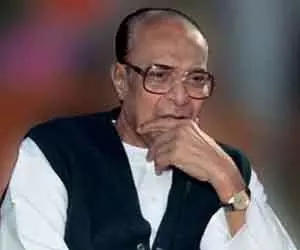
Odisha politics and the public narrative is replete with annecdotes and memories of Biju Patnaik. Photo: Wikipedia
Describing Patnaik as a politician with rare qualities, he adds that whether in power or not, Patnaik never suffered from any political insecurity. “If he won an election, it was fine; but he never considered an electoral setback as the end of life.”
Many recall how, during his second tenure as CM [he was then a Janata Dal leader], when a senior state cabinet minister got embroiled in a sexual misconduct case, he entrusted the probe to Congress leader Nandini Satpathy. Others recall his opposition to the Mandal Commission report at the peak of the controversy surrounding it in ‘90s. In a 1979 report, the Commission had identified socially and educationally backward classes and recommended reservations, but Patnaik reportedly held that the poor had no caste.
Das recalls how, while travelling to Paradip for party-related work, the late leader stopped at the house of a Muslim family near Kujanga (in Jagatsinghapur district), to relish a meal of pakhala (fermented rice), fish and some fried savouries.
“There were two Brahmin politicians with us, they too, enjoyed the food there,” reminisces Das, “He [Patnaik] was far beyond caste, class and religion.”
Beyond his personality, political sophistication and mass appeal, the leader is also widely regarded and respected as the “architect of modern Odisha”.
According to Prafulla Chandra Ghadei, an Odisha politics veteran, Patnaik’s biggest contribution to the state was the Paradip port, work for which started during his first tenure as CM in the early sixties.
He is also credited for constructing one of the country’s first expressways, exclusively meant for industrial development in 1962. Many believe the over 120 km stretch joining Daitari iron ore mines with Paradip was the first of its kind in India.
Old timers recall how, in order to avoid displacement along the route, the then CM drew a straight line on a piece of paper and instructed the engineers to design the road accordingly.
Sahu also talks of the creation of new districts by Patnaik, “to ensure people’s access to administration and for administrative efficiency”.
“Biju Babu was unique, a true statesman. There can’t be another Biju Patnaik,” says Ghadei, 85, who, in his close to six decades in politics, has served in the cabinets of both Patnaik and his son Naveen. On Friday, April 17, to mark the late leader’s death anniversary, the Kalinga Foundation Trust, of which Ghadei is the chairperson, will unveil a statue of Patnaik, he says.
Banerjee credits the late leader for having groomed many politicians, some of whom are still around — people like Srikant Kumar Jena, Bijoy Mohapatra, Dilip Ray and others. “They were referred to as ‘Biju Paribar’, members of Biju’s family, and whenever he changed parties, they would move with him,” he says.
For all his many qualities and achievements, however, what lives on in the mind and heart of many is his ability to build relationships, his people connect.
“Biju Babu was extremely fun-loving,” recalls Tathagata Satpathy, 70, a politician-turned-editor. The son of Nandini Satpathy, the four-time BJD MP who quit active politics in 2019, has for years had the opportunity to observe politics and its players at close quarters.
“Privately, he shared with me many incidents of his life, thrilling accounts. But Biju Babu never tried to colour history,” says Satpathy, who had begun his political journey under Patnaik, becoming a Janata Dal MLA in 1990.
Banerjee recalls his first meeting with the late leader in the same vein. “As a young reporter in 1987, soon after my arrival in Odisha, he was upset with something the publication had written and called me for a meeting. ‘Do you know who I am?’ he demanded. ‘I am Biju Patnaik, 6ft 4 inches’. I was still blissfully ignorant of his stature and retorted, ‘I am Ruben Banerjee. 5 ft 5 inches’. He burst out laughing and our equation changed. That’s the kind of person he was: he had a large heart,” he says.
Also read: A decade after the 2016 event which saw JNU being branded ‘anti-national’, what's changed on campus
And what of the story of the ‘Gadha Shiromani’ award? It didn’t quite end with the call to the SP.
At around 4pm on the designated day, Das and others were at the event venue when a telephone call from Naveen Niwas informed them that the CM was on his way. The organisers rushed to AG square, “roughly 100 metres away”.
“As the CM’s car inched in, we waved at it, signalling it to stop. Biju Babu was requested to get down”.
The reason? In keeping with the spirit of the award, it had been decided to have the CM enter the venue on a donkey.
“Biju Babu’s only concern was that the poor animal would not be able to carry his weight. When told that it could take a load of 300kg, Biju Babu obliged and mounted the donkey,” says Das.
Amidst loud cheers, he gleefully arrived at the event. For the thousands present, it was a sight of a lifetime. The event was a success.
But it proved to be a life-changer for a cartoonist whose work had been part of an exhibition at the event.
“The cartoon showed Biju Babu spraying colours with a pichkari (colour gun) on Nandini Satpathy. Though political in nature, the essence of the cartoon was fun,” recalls Das.
The CM ordered Das to bring the cartoonist to him the next day.
When they reached Naveen Niwas, they found Biju Babu sipping black tea with his favourite ‘Nice’ biscuits. He offered the two some, then “dialled the owner of a leading national daily in Delhi, telling him he was sending this ‘dynamic young cartoonist’.”
According to Das, the leader not only went on to make all arrangements for the artist’s stay in the national capital, but also handed him Rs 10,000 for his initial expenses and an air ticket to Delhi, instructing him to call him in case of emergencies.
“It’s extremely difficult to imagine a personality like that of Biju Babu... For him, the entire state was like his family,” says Das, repeating Banerjee’s description of him as a leader with a “large heart”.
“When he died, his body was draped with the national flags of three countries — India, Russia and Indonesia — very apt for a rare personality,” says Banerjee.