- Home
- India
- World
- Premium
- THE FEDERAL SPECIAL
- States
- Perspective
- Videos
- Sports
- Education
- Entertainment
- Elections
- Features
- Health
- Business
- Series
- In memoriam: Sheikh Mujibur Rahman
- Bishnoi's Men
- NEET TANGLE
- Economy Series
- Earth Day
- Kashmir’s Frozen Turbulence
- India@75
- The legend of Ramjanmabhoomi
- Liberalisation@30
- How to tame a dragon
- Celebrating biodiversity
- Farm Matters
- 50 days of solitude
- Bringing Migrants Home
- Budget 2020
- Jharkhand Votes
- The Federal Investigates
- The Federal Impact
- Vanishing Sand
- Gandhi @ 150
- Andhra Today
- Field report
- Operation Gulmarg
- Pandemic @1 Mn in India
- The Federal Year-End
- The Zero Year
- Science
- Brand studio
- Newsletter
- Home
- IndiaIndia
- World
- The Federal Special
- StatesStates
- PerspectivePerspective
- VideosVideos
- Sports
- Education
- Entertainment
- ElectionsElections
- Features
- Health
- BusinessBusiness
- Premium
- Loading...
Premium

Why pendency of cases is as much a challenge for lawyers as for litigants
CJI Surya Kant drew up a special Supreme Court roster last month, constituting four benches to exclusively hear the oldest pending cases on certain days of the week. According to reports, there are currently over 96,000 cases pending before the Supreme Court, the oldest of which dates back to 1986. While the concern in such cases is often directed towards litigants, counsels say for them the battle is against fading memory, loss of evidence, deaths of those involved...

The oldest suit that Bombay high court counsel Rohan Kelkar is currently appearing in was filed on February 4, 2008, more than a decade back. “That was the day I joined the bar. Today, not even the issues have been framed,” he says.Kelkar adds: “From experience, I can say that there is no prospect of that happening for at least the next four-five years; the sole plaintiff will turn 102...
The oldest suit that Bombay high court counsel Rohan Kelkar is currently appearing in was filed on February 4, 2008, more than a decade back. “That was the day I joined the bar. Today, not even the issues have been framed,” he says.
Kelkar adds: “From experience, I can say that there is no prospect of that happening for at least the next four-five years; the sole plaintiff will turn 102 by then. I shudder to think what evidence I will lead when the time comes.”
Though Kelkar doesn’t share details of the case, his dismay highlights an oft-cited concern about India’s judicial system — the backlog of cases.
This issue is prevalent not just in the country’s district and high courts, but also India’s apex court, the Supreme Court of India. According to reports, there are over 96,000 cases pending before the Supreme Court currently, the oldest of which dates back to 1986. While over 74,200 of these are said to be civil disputes, over 21,800 are criminal cases.
In a written response to the Rajya Sabha last week, Union law minister Arjun Lal Meghwal reportedly stated that there were more than 10,000 cases which had remained stuck before the Supreme Court for 10 years or more, while 26 remained pending for over 30 years and 558 for over 20 years.
In a significant step last month, one which hinted at the apex court’s awareness of the gravity of the issue, Chief Justice of India (CJI) Surya Kant drew up a special Supreme Court roster, constituting four benches to exclusively hear the oldest cases pending before the apex court on “non-miscellaneous” days, namely Tuesday, Wednesday, and Thursday.
While announcing the decision, the CJI was quoted in the media as saying that “the judiciary’s foremost obligation is not merely to decide cases, but to decide them within a timeframe that preserves the faith of citizens in the rule of law. Every old pending matter represents a litigant who has waited years, and sometimes decades, for closure”. “The age of a case”, he added, “cannot become the reason for its continued neglect”.
Also read: From andolankaris to 'andolanjeevis', what’s common to protestors across agitations in India
Avani Bansal, an advocate at the Supreme Court, echoes the CJI’s concern when she tells the Federal that “as lawyers, the hardest part of our job is not arguing cases, it is explaining delays we cannot justify”.
Bansal gives the example of one of her clients, an 80-year-old music teacher from Jharkhand, who Bansal says, “has spent the past eighteen years fighting to be placed in the correct pay scale”.
“Nearly Rs 1 crore of her life’s earnings is still due to her. Every hearing, she asks us the same question: ‘How much longer?’ We have no honest answer,” the advocate admits, questioning, “Should people have to die waiting for justice?”
Bansal insists that “India needs to start recognising a ‘Right to Time’ — the right of every citizen to have their legal disputes decided and their government files and claims resolved within a reasonable and predictable timeframe”. “Without the ‘Right to Time’,” she says, “the promise of the Constitution remains incomplete, because rights that exist only on paper and arrive too late cease to be rights at all”.
Senior advocate and former judge of the Patna high court Anjana Prakash agrees: “A litigant, as we all know, approaches a Court not by choice but because he is driven to such a course on account of his circumstances. Therefore, for him an early adjudication of his dispute is of utmost importance. We need to view that person’s anxiety in this context.”
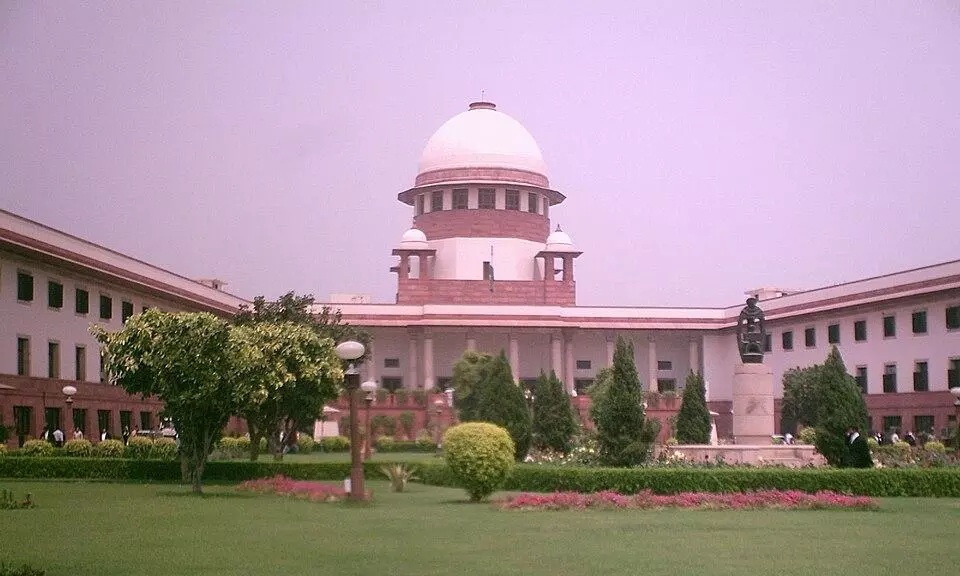
The issue that advocates across courts cite — as both the reason and the fall-out of pendency — is the transfer, or retirement, of judges. File photo
While the old adage “Justice delayed is justice denied” has often been cited to highlight the plight of litigants fighting out long-drawn court battles, what is perhaps often ignored here is the struggle of the legal counsel representing these litigants. While it is easy to believe that the long-pending cases would mean more earnings in fees for the advocates, and rightly so, there are reasons why legal counsels, too, would want their cases to follow a reasonable timeframe. The desire for justice for their clients is one; the other is the struggle that they themselves potentially face when cases carry on for decades — fading memories, deaths of those involved, changing laws, preservation of evidence…
“In the adversarial system, a lawyer understandably occupies a position of great responsibility as well as accountability. Any delays in judicial functioning reflect on the entire institution and machinery which we lawyers are of course a part of. Delays in a judicial system can sometimes hamper the course of justice because with each passing day it gets harder for evidence to be recorded and appreciated in its full force,” admits advocate Vishavjeet Chaudhary.
Parika Singh, an advocate in the Supreme Court, cites the example of a 25-year-old Central Bureau of Investigation (CBI) matter, in which she is a legal counsel. “I have seen the investigating officer appear 20 years later, the defence given merely six months and the judge transferred right before the final arguments. If the clients, lawyers and judges are all watching the seconds tick by with restless frustration year after year, the question arises whose interest is the delay really serving? And who will compensate for it?”
Where a pending case sees a change in counsel, the challenges for the new lawyer are amplified.
“As a lawyer, it is very difficult to deal with a case where the brief has been transferred to you after a partly done trial. The level of diligence exercised by the lawyer of the first instance affects the case and sometimes the preparation cannot be the same when briefs constantly change amongst lawyers. This affects the trust between the client and the lawyer, as a delayed trial owing to circumstances beyond a lawyer's control can still make the client believe that the lawyer is not working hard, which has monetary consequences for the lawyer,” explains Shreyansh Mardia, an advocate at the Rajasthan high court.
Where a litigant passes away during the pendency of a case, their legal heirs don't automatically step into their shoes and come on record (as litigant), explains Darshan Mehta, an advocate at the Bombay high court. “Bringing legal heirs on record requires a separate application, with its own notices and sometimes contested claims over who the rightful heirs are. These procedural realities, though routine, often end up being as taxing as the legal issues themselves.”
Mardia cites another scenario, where the legal heir may not even be aware of a pending case.
But the issue that advocates across courts cite — as both the reason and the fall-out of pendency — is the transfer, or retirement, of judges.
“I've been pursuing a testamentary suit [case relating to the will of a deceased person] since the year 2004, over two decades now. The matter was finally reserved for judgment in the year 2018, which we thought meant the end was in sight. But the judge, who had assignment of the said suit, retired in the year 2024, without passing the judgment and the matter is still not closed,” says Mehta.
He adds: “Benches change due to transfers, retirements, or elevations, and each time that happens, the case effectively starts over in the judge's mind. Every time a judge changes, we as advocates have to walk the court through years of testimony and record all over again, not because the law had changed, but simply because the person hearing it had.”
The change, Mardia believes, could have repercussions beyond the delay.
“A judge who understood the matter from the beginning may have granted a favourable order, but a new judge hearing it midway can have differing opinions that can take away a favourable result and cause major issues for the lawyer as well as the client,” he explains, adding “long-drawn litigations are a major hurdle in a lawyer's career”.
Also read: Pride, concern or both — What parents feel when their children take on the system for their rights
While most lawyers The Federal spoke to welcomed the CJI’s push for quick disposal of pending cases, Mehta also called for “better synchronisation of the judicial process” — “better coordination between listing [of cases], scheduling and case management, so time isn't lost in avoidable procedural gaps”.
He adds: “Equally important is accountability on both sides; judges being disciplined about how many matters they take up and hear each day and lawyers not seeking adjournments unless genuinely necessary. Special benches can help clear the immediate backlog, but without these structural and behavioural changes, the backlog will simply build up again.”
The attempt, for all parties involved, should be to avoid the kind of delay which leads to an impractical scenario where an advocate like Kelkar fears his client would have to “wait for a decree until he is 200, and when, of course, there will be the prospect of at least two appeals”.