- Home
- India
- World
- Premium
- THE FEDERAL SPECIAL
- States
- Perspective
- Videos
- Sports
- Education
- Entertainment
- Elections
- Features
- Health
- Business
- Series
- In memoriam: Sheikh Mujibur Rahman
- Bishnoi's Men
- NEET TANGLE
- Economy Series
- Earth Day
- Kashmir’s Frozen Turbulence
- India@75
- The legend of Ramjanmabhoomi
- Liberalisation@30
- How to tame a dragon
- Celebrating biodiversity
- Farm Matters
- 50 days of solitude
- Bringing Migrants Home
- Budget 2020
- Jharkhand Votes
- The Federal Investigates
- The Federal Impact
- Vanishing Sand
- Gandhi @ 150
- Andhra Today
- Field report
- Operation Gulmarg
- Pandemic @1 Mn in India
- The Federal Year-End
- The Zero Year
- Science
- Brand studio
- Newsletter

Beyond brain-mapping & narco-analysis, how forensic psychologists are helping crack complex crimes
Around the world, neuroscience has moved from research laboratories into police investigations and courtrooms. In many high-profile cases in India in recent years, including probe in the 2025 Dharmasthala mass burial case, there have been demands of brain mapping of the accused, or narco-analysis and polygraph tests, to establish guilt. Criminal and forensic psychologists now assist with analysing offender behaviour and developing psychological profiles.

Between 2003 and 2009, 20 women from low-income backgrounds were found dead in public toilets and bus stands across Karnataka. Investigations revealed that the victims — many of whom had been struggling to find work or were seeking to get married — had been poisoned. The murderer in the infamous case which came to be identified as the ‘Cyanide Mohan case’, Mohan Kumar, a...
Between 2003 and 2009, 20 women from low-income backgrounds were found dead in public toilets and bus stands across Karnataka. Investigations revealed that the victims — many of whom had been struggling to find work or were seeking to get married — had been poisoned. The murderer in the infamous case which came to be identified as the ‘Cyanide Mohan case’, Mohan Kumar, a schoolteacher, reportedly lured women with promises of marriage or jobs, sexually assaulted them, then gave them cyanide-laced pills disguised as contraceptives before stealing their jewellery.
When he was finally arrested in October 2009, after investigators traced the disappearance of one victim, Anita, through a stolen mobile phone used by his nephew, police realised they had a serial killer. He was eventually linked to 20 murders across Karnataka and neighbouring states.
Beyond the breakthrough in Anita's case, investigators connected the remaining murders by recognising the striking consistency of his modus operandi. Behavioural analysis helped link what had appeared to be isolated disappearances, revealing a repeat offender whose predictable patterns ultimately strengthened the case against him.
Increasingly, investigators are looking beyond fingerprints and DNA into the minds of the accused. In many high-profile cases in recent years, including probe in the 2025 Dharmasthala mass burial case — allegations of murders and mass burials in the temple town of Dharmasthala, Karnataka — there have been demands of brain mapping of the accused, or narco-analysis (administering drugs to extract information from a person while they are in a state of reduced consciousness) and polygraph (also known as lie-detector) tests, to establish guilt.
Criminal and forensic psychologists now assist law enforcement by analysing offender behaviour, developing psychological profiles, advising on interviews, assessing risk and helping connect seemingly unrelated crimes. Around the world, neuroscience has also moved from research laboratories into police investigations and courtrooms.
Also read: Regimented routines to peer pressure — Life inside Kerala’s NEET, JEE coaching centres
One such technique is brain mapping, or brain fingerprinting, which uses electroencephalography (EEG) to measure electrical activity in the brain. It tests whether a suspect recognises hidden details of a crime by detecting the P300 signal, a brainwave that appears when a person is presented with words or images linked to a meaningful memory.
Indian neuroscientist Champadi Raman Mukundan is credited with developing the Brain Electrical Oscillatory Signature (BEOS) test in 1997, which seeks to identify experiential knowledge by analysing subtle patterns of brain activity. Unlike the P300 test, BEOS is the technique that has been used in India. Investigators today rely on forensic and criminal psychology as well to look for evidence.
Mumbai-based forensic psychologist Krupa Nishar believes that forensic psychology is playing an increasingly prominent role in India's criminal justice system. “The Ministry of Home Affairs has pushed for greater use of forensic science in investigations, with Union Home Minister Amit Shah stating that crimes punishable by seven years or more should mandatorily undergo forensic investigation,” she notes.
While in general, forensic science has made astonishing advances in the past decades, cold cases that involve more cunning crooks like elusive serial killers could benefit more with forensic psychology, say experts. Photo: iStock
While forensic psychology is just one branch of forensic science, its reach has widened considerably, contributing to investigations into homicide, sexual offences, cybercrime, financial fraud, terrorism, domestic violence and corporate misconduct. Forensic psychologists assist victims, advise police, prisons, forensic laboratories and lawyers, contribute to research and policy, and help rehabilitate offenders. India also employs specialised techniques, apart from the BEOS test, such as polygraph examinations, Layered Voice Analysis (LVA), the Suspect Detection System (SDS) and, in limited court-approved circumstances, narco analysis, alongside conventional psychological assessments.
“Forensic psychology is like the parent umbrella under which criminal psychology rests,” says Puducherry-based criminal psychologist Pulkit Sharma. “It focuses on understanding an offender's personality, motives and behaviour (why people commit crimes).”
Several high-profile investigations have reportedly demonstrated the value of forensic psychology. Cases such as the 26/11 Mumbai terror attacks involving Ajmal Kasab, the Hathras case and the Aftab Poonawala murder case brought forensic psychology into public discussion. In such investigations, behavioural analysis, psychological assessments, offender interviewing techniques and specialised forensic psychological procedures complemented conventional forensic evidence and investigative work.
Beyond these headline-making cases, forensic psychology has proved equally valuable in lesser-known investigations involving homicide, sexual offences, cybercrime, child abuse, financial fraud, domestic violence, missing persons, and workplace misconduct, say those The Federal spoke to.
“In many of these cases, understanding an offender's behavioural patterns, motives, risk factors, and decision-making process has helped investigators generate leads, plan interviews, assess threats, and support victims more effectively,” says Nishar.
Most people know of profiling from television or books. However, as legal experts say, behavioural profiling rarely identifies an offender on its own. Instead, it narrows the field of suspects, complements forensic evidence rather than replacing it and offers probabilistic insights that guide investigations rather than definitive predictions. Bengaluru-based Swedish crime author Zac O’Yeah, creator of the Hari Majestic detective series, believes that over the past four or five decades, and more recently in India, police have begun taking behavioural profiling far more seriously.
“If, for example, you visit the police museums, such as the one in Kolkata, you will see that the old cases were built around tangible evidence such as fingerprinting, which, I seem to recall, was invented in India and then later came DNA and so on. Psychology has always been concerned with things that go wrong in the head, so it was probably just a question of time before the police started using it, so nowadays quite a few cases can be solved through psychological profiling.”
According to him, in general, forensic science has made astonishing advances in the last decades, but cold cases that involve more cunning offenders, like elusive serial killers, could benefit with forensic psychology.
Nishar agrees, adding the caveat that although forensic psychology cannot replace physical or forensic evidence, it often becomes the missing piece when an investigation reaches a dead end.
“I often say, 'When physical evidence reaches its limit, behavioural evidence begins to speak’. Every crime scene reflects not just what happened, but also how and why it happened. Those behavioural patterns can provide valuable investigative leads. This is especially valuable in cases where there are no eyewitnesses, limited forensic traces, or when investigations have gone cold,” Nishar explains. “The future of criminal investigation lies in combining scientific evidence with behavioural science. DNA may tell us who was present, but psychology often helps explain why, how, and what is likely to happen next. When both are used together, the chances of solving complex cases improve significantly.”
Sharma jokes that, unlike as shown in TV or books, studying the psychology of a particular criminal is a dull and lengthy process. “I had to give my expert opinion on occasions if a crime was committed because of mental illness, as many claim. There are hours of detailed interviews and psychological tests to determine if that’s the truth. A criminal psychologist has to prepare lengthy documents to submit to the court.”
For many detectives and forensic psychologists, one of the biggest lessons from working on criminal cases is that crime is constantly evolving. Earlier, the focus was primarily on offences like murder, robbery, or sexual assault. Today, criminals are adapting to technology, giving rise to sophisticated cybercrimes, financial frauds, identity theft, online grooming, and digital extortion.
In Mumbai, Rajani Pandit, one of India's pioneering woman private detectives, runs a detective agency that has exposed fraudsters and assisted in criminal investigations. “After four decades of studying criminals of all kinds, I believe that it is important to understand not only who did it (crime) but why did they did it,” Pandit comments.
She adds: “Technology has helped in solving crime but has also helped in committing crime. Today, crime has increased exponentially. To solve crimes, one needs an understanding of criminal and forensic psychology.”
Whenever Pandit is asked to track down a criminal – most of the requests in recent times have been background checks and tracking suspicious activities – she talks to the clients extensively. “I have to understand their motives as well,” she says, “which is more psychologically based as I rely on my knowledge of criminal minds.”
In one such case, she recalls, a client who had wanted Pandit to track his ex-girlfriend’s address, ostensibly to return her things, displayed motives that she found suspicious. “Call it intuition or the study of behavioural cues, but I did not hand him the address,” she says. “People can go to any extent for revenge, money or love. In one case, a young man from an educated family killed his friend for insulting him and dumped his body in a sewer. Understanding a criminal’s environment, relationships and behaviour can often reveal the motive behind a crime.”
Sharma stresses that criminal behaviour is rarely the result of a single factor. “It is often a complex interaction of biological vulnerabilities, psychological processes, family dynamics, social influences, environmental factors, and individual choices,” he reiterates. “However, it is important to understand that these experiences alone do not create criminals. Millions of people face difficult childhoods or financial hardships and never engage in crime.”
The real difference often lies in how individuals interpret situations and make decisions. Cognitive distortions, irrational beliefs, poor impulse control, lack of empathy, learned behaviour, and repeated exposure to violence can all influence criminal behaviour. Equally important is the environment that either reinforces or discourages these thought patterns. The reasons why certain people commit crime, according to Sharma, are poor impulse control, low frustration tolerance, not caring about social and legal consequences and having an ‘I don’t give a damn’ attitude. “Most people with criminal mindsets don’t regret their actions,” Sharma notes.
Also read: How digital impersonators are turning staff trust into a weapon to empty company accounts
Perhaps the biggest myth, according to experts, is that criminals fit a particular stereotype. In reality, crime cuts across all socioeconomic groups. White-collar crimes, corporate fraud, cybercrime, and financial scams are often committed by highly educated individuals. “This is why profiling based solely on background can be misleading,” Nishar notes.
Although forensic psychology cannot replace physical or forensic evidence, it often becomes the missing piece when an investigation reaches a dead end. Photo: iStock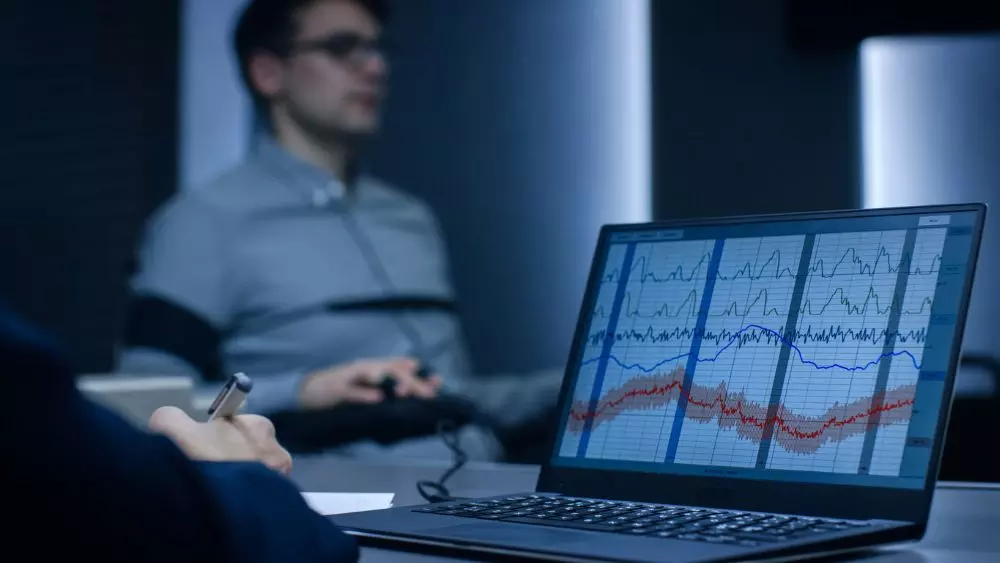
Ultimately, solving crimes requires understanding behaviour and not just evidence. Forensic psychology helps investigators move beyond stereotypes, understand motives and decision-making, improve interviewing techniques, assess risk, and support evidence-based investigations. India does not maintain a separate registry for forensic psychologists, but experts estimate the country has only a small pool of specialists, likely numbering in the hundreds, despite growing interest from police forces, courts and prisons in behavioural analysis and offender assessment.
A police detective, who spoke under the condition of anonymity, cautions, “Trust in the technology is high, in fact, that it is already playing a role in separating the guilty from the innocent. However, what detectives must understand is that forensic psychology in itself is not fool-proof evidence.”
But even when forensic psychology and tools such as the BEOS test offer insights into a crime, the larger question remains – “Can such conclusions meet the rigorous standards of evidence required in a court of law?”
According to Chennai-based criminal lawyer Vaishnav Rao, the conclusions could be considered. “Brain-mapping, narco-analysis and so on are permissible in the court of law but subject to the court’s decision,” he says. “Unless and until the findings are proved, it will be a presumption. We call it an expert opinion which is of good footing until proved otherwise.”
Rao adds that under the Bharatiya Sakshya Adhiniyam, 2023, scientific and expert evidence may assist courts, but techniques such as narco-analysis and brain-mapping tests continue to raise questions about reliability, consent and whether they can meet the standard required to prove guilt.
Rao refers to the Supreme Court’s landmark decision in Selvi vs State of Karnataka (2010), where it had held that forceful subjection of an accused to a narco-analysis test constituted a violation of the personal liberty guaranteed by Article 21 of the Constitution. The three-judge bench had explained how “popular perceptions” of torture or cruelty are “associated with gory images of blood-letting and broken bones”. However, CJI KG Balakrishnan wrote in the judgment, “we must recognise that a forcible intrusion into a person’s mental processes is also an affront to human dignity and liberty”.
Subsequently, in Amlesh Kumar vs. State of Bihar (2025), the accused had relied on the Selvi vs. State of Karnataka ruling to challenge the Patna High Court’s decision to allow a narco-analysis test requested by the sub-divisional police officer. The case raised questions about the use of a “truth serum” and its place within criminal investigations.
“The Supreme Court found that the Patna HC was wrong to allow a test when the case solely concerned Amlesh’s bail application,” Rao notes. “However, it used the opportunity to examine a larger issue: Can an accused demand a narco-analysis test as a right? And can they use its results as evidence to prove their innocence? The Court decided to consider these questions after noting that different High Courts had taken conflicting views on the matter.”
As courts continue to grapple with the limits of such techniques, investigators are exploring forensic psychology and brain-mapping tools to better understand offenders, identify patterns and build stronger cases. Innovations in this field could have a big impact on the way we address criminal behaviour.