- Home
- India
- World
- Premium
- THE FEDERAL SPECIAL
- States
- Perspective
- Videos
- Sports
- Education
- Entertainment
- Elections
- Features
- Health
- Business
- Series
- In memoriam: Sheikh Mujibur Rahman
- Bishnoi's Men
- NEET TANGLE
- Economy Series
- Earth Day
- Kashmir’s Frozen Turbulence
- India@75
- The legend of Ramjanmabhoomi
- Liberalisation@30
- How to tame a dragon
- Celebrating biodiversity
- Farm Matters
- 50 days of solitude
- Bringing Migrants Home
- Budget 2020
- Jharkhand Votes
- The Federal Investigates
- The Federal Impact
- Vanishing Sand
- Gandhi @ 150
- Andhra Today
- Field report
- Operation Gulmarg
- Pandemic @1 Mn in India
- The Federal Year-End
- The Zero Year
- Science
- Brand studio
- Newsletter

Why DU’s 1-month ban on protests may not be part of ‘broader cross-campus shift against dissent’
Delhi University is not usually shorthand for ideological protest in the way JNU is. Its politics has historically been electoral, with the DUSU office shifting hands between RSS’s ABVP and Congress’s NSUI. Left organisations maintain political visibility but remain electorally marginal.

On February 12, historian S. Irfan Habib stood outside Delhi University’s (DU) Arts Faculty, addressing a gathering during a literature festival organised by the All India Students’ Association (AISA), when a bucket of water came flying at him. It missed him narrowly.There was no prohibitory order from the university. No public statement from the administration.A day later, on February 13,...
On February 12, historian S. Irfan Habib stood outside Delhi University’s (DU) Arts Faculty, addressing a gathering during a literature festival organised by the All India Students’ Association (AISA), when a bucket of water came flying at him. It missed him narrowly.
There was no prohibitory order from the university. No public statement from the administration.
A day later, on February 13, a demonstration in the same area, called by a joint forum of students and teachers backing the University Grants Commission’s (UGC’s) 2026 Equity Regulations, spiralled into chaos. The regulations seek to curb caste-based discrimination in colleges and universities, but have been opposed by general category students who claim it could lead to chaos on campuses. The Supreme Court of India, while hearing petitions challenging the Regulations, put a stay on implementation on January 29.
At the February 13 DU demonstration backing the Regulations, an influencer alleged she was assaulted because she was a Brahmin, and an AISA activist was purportedly pushed, causing her to fall. The situation quickly escalated, and at night, a mob gathered outside the Maurice Nagar police station, chanting “Goli maaron saalon ko” (directed at the organisers of the demonstration and those present) and “Brahmanvad Zindabad”.
This time, the university’s response was different.
The very next day, DU Vice-Chancellor Yogesh Singh expressed concern about the incident and posted on his X account saying, “At the University of Delhi, we may come from diverse backgrounds, but we unite as one family in the spirit of Rashtra Pratham. I appeal to everyone to remain patient while the UGC Regulations 2026 are under consideration by the Hon'ble Supreme Court of India.”
On February 17, the Delhi University proctor issued a sweeping directive: “public meetings, processions, demonstrations, and protests of any kind are strictly prohibited within the University Campus for a period of one month,” the order said.
“This order is issued in view of information received indicating that unrestricted public gatherings, processions, or demonstrations on campus may lead to obstruction of traffic, threats to human life, and disturbance of public peace. In the past, organizers have often failed to control such protests, which have escalated and spread widely, resulting in deterioration of law and order…” it added.
The ban will remain in force for a month, unless withdrawn earlier.
Also read: A decade after the 2016 event which saw JNU being branded ‘anti-national’, what's changed on campus
When asked by The Federal why there had been no such notice issued after a bucket of water was thrown at Habib, DU VC Yogesh Singh said, “No comment”. Asked what prompted a blanket ban given that violent incidents have happened on campus earlier as well, Singh said, “Koi baat nahi (It doesn’t matter). This was also a big incident. When something like this happens with our daughters, both daughters, it’s a big thing.”
The statements speak for themselves.
"The University administration’s decision to impose a blanket ban on protests reeks of selective action and double standards,” said Students' Federation of India (SFI) state president and DU student, Sooraj Elamon. “Time and again, when violence has originated from ABVP [the Rashtriya Swayamsevak Sangh’s student organisation, Akhil Bharatiya Vidyarthi Parishad] leaders and right-wing elements, the administration has either remained silent or issued token responses. Instead of acting firmly against those who perpetrate violence, the administration is now clamping down on peaceful student protests. Democratic dissent cannot be equated with hooliganism. If the administration is serious about restoring order, it must first end its pattern of shielding violent elements and ensure equal accountability for all,” he added.
Delhi University is not usually shorthand for ideological protest in the way the national capital’s Jawaharlal Nehru University (JNU) is. Its politics has historically been electoral and driven by money and muscle. The DUSU office has shifted hands between the ABVP and Congress’s National Students’ Union of India (NSUI). Left organisations maintain political visibility but remain electorally marginal.
Currently, both the Delhi University Teachers’ Association (DUTA) and DUSU are led by affiliates of the RSS-BJP — the National Democratic Teachers’ Front (NDTF) and the ABVP, respectively. Unlike JNU, DU is not perceived as a campus out of the control of the current ruling dispensation; to be tamed and neutralised.
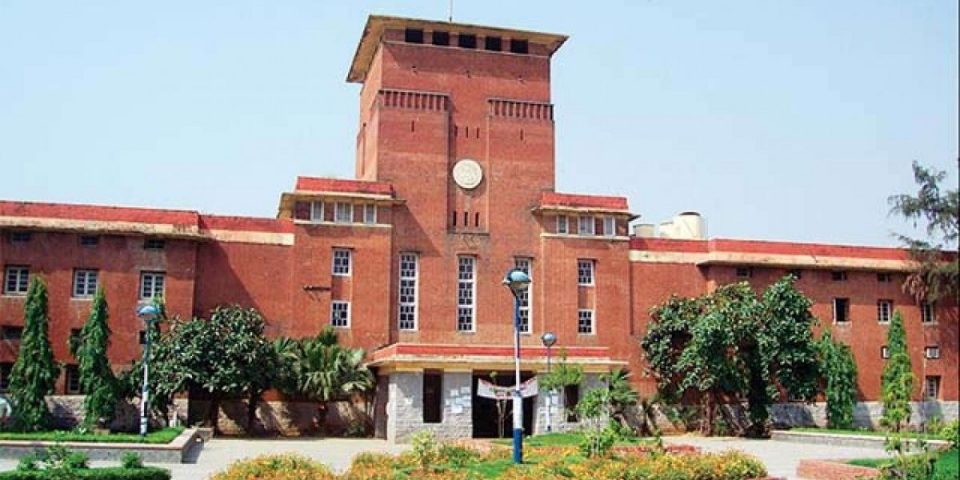
The ban was purportedly issued to prevent "obstruction of traffic, threats to human life, and disturbance of public peace". The order added, in "the past, organizers have often failed to control such protests…”. File photo
Yet, the administration chose to respond with a blanket ban. Why?
Professor N Sukumar of DU’s Political Science department believes the broader shift predates this moment. Since 2014, he claims, universities across India have increasingly been viewed as spaces to be managed rather than engaged with.
“Universities are meant to be egalitarian spaces. But increasingly, we are seeing ideological dominance where dissent is not tolerated and critical engagement faces a blanket ban. I have been here for 25 years, and I have witnessed a clear shift, not just in this university, but across institutions, particularly since 2014 [the year the Narendra Modi-led NDA government first came to power at the Centre]. There is a growing tendency to view university campuses as problematic spaces, and a reluctance to allow them to engage with marginal or dissenting concerns,” he told The Federal.
If DU’s latest restrictions suggest a tightening of space for protest, it is not alone. In the decade since the 2016 event at JNU, organsised to mark the anniversary of 2001 Parliament attack convict Afzal Guru’s execution, which saw the campus being branded ‘anti-national’, much has allegedly changed at the university, with students and faculty members claiming physical spaces for protest, once central to JNU’s political culture, having steadily shrunk. At Jamia Millia Islamia, recent months have seen student protests over disciplinary action and campus restrictions, while Ashoka University witnessed controversy and demonstrations last year over a faculty member’s social media posts on Operation Sindoor, reopening debates around academic freedom.
Together, these episodes show that campuses are negotiating similar tensions. But DU’s size, its long history of combative student politics, and its proximity to national power make its decisions particularly consequential.
Also read: Professional milestones to personal moments — what Umar and Sharjeel have lost since 2020 arrest
However, most people at DU do not see the current ban as indicative of a similar shift in stance. According to Sukumar, too, the development is tied directly to the UGC Equity Regulations.
“Universities often claim they are preserving campuses as ‘safe spaces,’ but there are deep prejudices at play when it comes to caste. There is a clear reluctance to allow sustained debate on these questions. That, in itself, reveals the character of these institutions; they end up perpetuating caste hierarchies,” he said.
Others echo this assessment.
“This (UGC equity regulations) is a very sensitive issue. You have Dalit students and those from Other Backward Classes coming together to protest. Socially and politically, that becomes costly for the BJP. So, what they seek to do is prevent these communities from coming out and being publicly seen protesting against the government,” said DU professor Apoorvanand (identified by a single name only), terming it “a political decision”.
“What the university authorities are trying to do is ensure that no voice other than that of the BJP is heard on campus. We are told that the ABVP or the BJP are not doing politics; they are doing nationalism, whereas other student organisations are accused of doing politics. And they don’t want politics; they want nationalism,” he claimed.
Abhigyan (identified by first name only), AISA state secretary and DU student, also described the February 13 incident as “a completely political and completely calculated move”.
“The BJP-RSS are in a pickle on this matter. They want the money of the upper castes and classes, but want the votes of the lower castes. So, they don’t know what to do. And by banning protests, the university and police have normalised this upper caste hegemony,” he alleged, adding that the ban would be challenged – politically and/or legally.
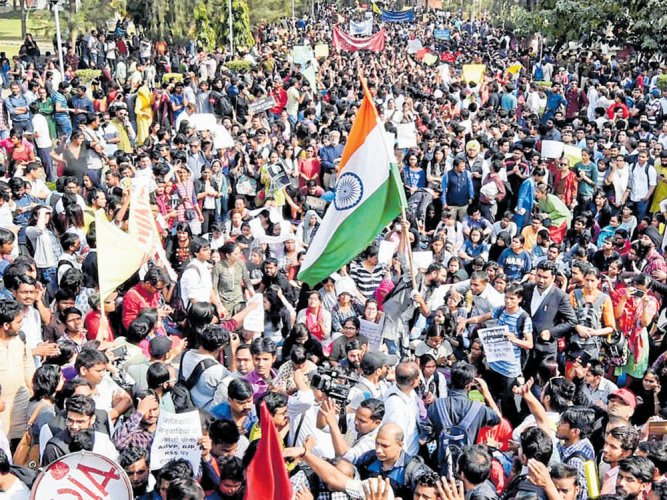
File photo of an ABVP protest. Currently, both the Delhi University Teachers’ Association (DUTA) and the Delhi University Students' Union are led by affiliates of the RSS-BJP — the National Democratic Teachers’ Front (NDTF) and the ABVP, respectively.
Democratic Teachers’ Front (DTF) secretary Abha Dev Habib Abhigyan, stating that the order was imposed only after “certain protests began”.
“It appears to be an attempt to shut down dissent on this issue, perhaps reflecting signals vice-chancellors have received from the top. After all, they are appointed by the same government and are expected to act accordingly,” she alleged.
Rocky Tuseed, DUSU president in 2017-18 from the NSUI, also said the timing was not coincidental.
“This has come right after the UGC protest. This is not the way for the university to behave by curbing democratic space. This is a completely one-sided decision. And I don’t think they are targeting only student organisations; they’re trying to curb the voices of Gen Z. They don’t want them or anyone to protest any decisions; they want them to be horses with blinders on,” he said.
What adds more fuel to the fire on theories of this being planned or political is that neither DUTA nor DUSU have issued any statement regarding the ban. The Federal reached out to DUSU president Aryan Maan. However, his phone was unreachable.
DUTA president VS Negi, on his part, struck a cautious tone. “After repeated untoward incidents happened in the university one after one, maintaining peace and harmony during any public gathering or meeting is, of course, desirable, but a total ban on open public activities is undesirable. In this connection, it is pertinent to mention that DU should take steps to bring back normal democratic space ASAP,” he told The Federal.
The lack of democratic space, the essence of a university, is what many say is being lost through this order.
“Public institutions, at the very least, must allow debate. If a university cannot host discussions – especially on something as significant as the UGC 2026 Equity rules – then where will such issues be debated? Universities are precisely the spaces meant for this,” said Sukumar.
Also read: Emergency era to Nepal agitation: Decoding youth protests and what puts these movements at risk
Teachers also said that it was the university’s responsibility to maintain peace on campus. “What authorities are supposed to do is stop the disruptors, not tell protesters that they cannot protest because someone might come and disrupt it. That, to me, is a failure to perform your role as a law-and-order authority and as a university administration. It is an abdication of duty,” said Apoorvanand.
Habib too questioned what the role of a proctor was, if not to handle such situations.
As the university stands barricaded, the question now is what happens going forward.
“During my time, anger against the ruling dispensation was more repressed. Now, young people are coming out and raising their voices. This is what is creating a problem. This is lava, which is simmering, and soon the volcano will burst,” cautioned Tuseed.
The “rights of citizens cannot be easily suspended”, agreed Habib.
The historian drew parallels to 2018, when nationwide protests erupted over the department-wise reservation roster and over perceived dilution of the SC/ST Atrocities Act. “To assume that this too can be controlled by imposing curfew-like restrictions in select units is a misreading of how such movements unfold,” she said.