- Home
- India
- World
- Premium
- THE FEDERAL SPECIAL
- States
- Perspective
- Videos
- Sports
- Education
- Entertainment
- Elections
- Features
- Health
- Business
- Series
- In memoriam: Sheikh Mujibur Rahman
- Bishnoi's Men
- NEET TANGLE
- Economy Series
- Earth Day
- Kashmir’s Frozen Turbulence
- India@75
- The legend of Ramjanmabhoomi
- Liberalisation@30
- How to tame a dragon
- Celebrating biodiversity
- Farm Matters
- 50 days of solitude
- Bringing Migrants Home
- Budget 2020
- Jharkhand Votes
- The Federal Investigates
- The Federal Impact
- Vanishing Sand
- Gandhi @ 150
- Andhra Today
- Field report
- Operation Gulmarg
- Pandemic @1 Mn in India
- The Federal Year-End
- The Zero Year
- Science
- Brand studio
- Newsletter

How the 'dark genome', so long treated as 'junk DNA', is changing our understanding of evolution
In a new book, Eclipsed Horizons: Unveiling the Dark Genome, Sudhakaran Prabakaran looks at how the vast and once-overlooked landscape of the ‘dark genome' may explain evolution's greatest leaps. Over the past two decades, molecular biology has undergone a profound shift. Non-coding DNA is now recognised as a major regulator of gene expression. In the second of a two-part series, we tap into this evolving understanding of the 'dark genome'.

For decades, scientists have treated a major section of human DNA as “junk”.This is because barely two per cent of human DNA consists of genes that encode proteins — those that dictate cells to produce protein; or what are known as protein-coding genes; the remaining 98 per cent was dismissed as evolutionary debris with little biological significance. Increasingly, however, researchers...
For decades, scientists have treated a major section of human DNA as “junk”.
This is because barely two per cent of human DNA consists of genes that encode proteins — those that dictate cells to produce protein; or what are known as protein-coding genes; the remaining 98 per cent was dismissed as evolutionary debris with little biological significance. Increasingly, however, researchers are questioning whether this ‘dark genome’ can explain evolution's greatest leaps.
(Read Part I of the series here to know more about what is the 'dark genome' and why scientistst may have been mistaken in treating it as 'junk'.)
Take the case of two species, humans and chimpanzees, who share about 98.8–99 per cent of their protein-coding genes. Yet the differences between the two are profound. According to scientist Sudhakaran Prabakaran, the answer lies within the vast and once-overlooked landscape of the non-coding, or ‘dark’, genome; that is not so much in the genetic ‘text’ itself as in the instructions that determine how that text is read.
Just as small changes in a manuscript tradition — did Draupadi mock Duryodhan, laugh or just smile in the Mahabharata — can alter how readers interpret an epic. Likewise, small changes in regulatory Deoxyribonucleic Acid (DNA) can profoundly alter how genes are expressed, resulting in differences between humans and chimps.
In the book Eclipsed Horizons: Unveiling the Dark Genome (World Scientific Publishing, 2026), Prabakaran, associate teaching professor at Northeastern University and CEO of NonExomics (a scientists’ led company involved in biotechnology research), advances a bold and provocative hypothesis. He argues that the so-called ‘dark genome’ is not a graveyard of discarded DNA but a vast reservoir of regulatory information that may help explain rapid evolutionary innovation, adaptation to changing environments and perhaps even humanity's future beyond Earth, colonising outer space.
Also read: How India's nuclear energy journey has led to a new route for production of green hydrogen
One telling example of how the ‘dark genome’ can explain evolutionary leaps comes from a 2006 study on Human Accelerated Regions (HARs) — stretches of non-coding DNA that changed unusually rapidly during human evolution. Prabakaran highlights HAR1, a sequence of just 118 DNA letters on chromosome 20 (one of 23 pairs of chromosomes in humans). Remarkably, this sequence remained almost unchanged for nearly 300 million years of vertebrate evolution, differing by only two letters between chickens and chimpanzees. Yet, within the relatively short span of human evolution, 18 letters changed. Scientists later discovered that HAR1 plays an important role in the development of the human cerebral cortex.
Sudhakaran Prabakaran and his team have catalogued non-canonical proteins from outside conventional boundaries of genes, revealing that parts of genome once dismissed as "junk" can produce unrecognised biological molecules. Photo: iStock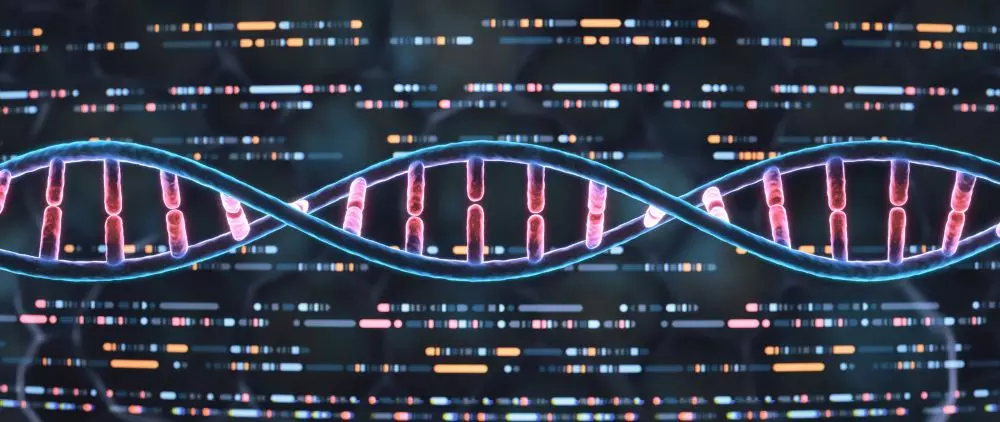
As Prabakaran puts it, this is "not the behaviour of junk". A DNA sequence that had remained virtually frozen since before the age of dinosaurs was suddenly and rapidly rewritten in the human lineage, influencing the development of the organ central to our species. To him, this exemplifies the hidden power of the dark genome, genetic regions once dismissed as biological noise but now recognised as potential drivers of some of the most significant innovations in our evolutionary history.
Charles Darwin envisioned evolution as a gradual process. Tiny inherited variations arise in every generation; natural selection slowly favours those that improve survival or reproduction. Over immense spans of time, these accumulated changes eventually give rise to new species, such as drug-resistant malaria parasites.
For more than a century, this gradualist view dominated evolutionary thinking. However, the fossil record and modern evolutionary studies reveal that nature is not always so leisurely. While many species remain relatively unchanged for millions of years, there are also episodes of astonishingly rapid diversification, with hundreds of new species emerging in a short time.
One of the most spectacular examples highlighted by Prabakaran is the adaptive radiation of African cichlid fish in the great East African lakes — Lake Victoria, Lake Malawi and Lake Tanganyika. From only a handful of ancestral species, these lakes have produced well over 2,000 cichlid species.
Lake Malawi alone is home to about 800 species, most of which evolved within the last one to two million years. Even more remarkable is Lake Victoria, where more than 500 species are thought to have evolved in less than 15,000–20,000 years, after the lake refilled following a dry period. These fish differ dramatically in body shape, colour, jaw structure, feeding habits, habitat preferences and courtship behaviour, making them among the fastest-evolving vertebrates known.
Such palaeontological observations inspired palaeontologists Stephen Jay Gould and Niles Eldredge to propose the theory of punctuated equilibrium in 1972. They argued that evolution is often characterised by long periods of relative stability, interrupted by comparatively brief bursts during which new species arise rapidly.
Simple regulatory mechanism has allowed different cichlid species to gain and lose stripes during evolution. Similar changes in the regulation of genes have enabled cichlids to exploit new food sources, habitats and mating strategies. Photo: iStock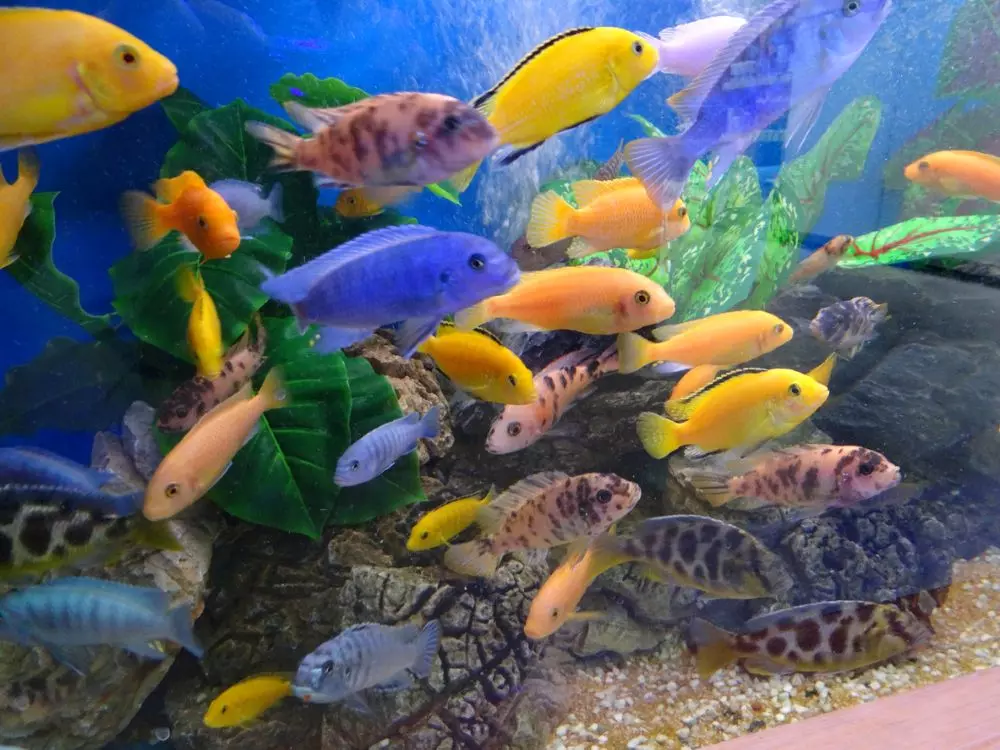
This raises an intriguing question. How do such bursts of evolution occur? What enables a population to generate so many successful new forms within such a short geological interval? Can the gradual accumulation of random mutations alone account for these evolutionary explosions, or is there another source of genetic innovation hidden within the genome?
Prabakaran points to studies of African cichlid fish showing that spectacular evolutionary changes can arise not by rewriting proteins but by altering the genetic switches that control them. One of the best-known examples is the agouti-related peptide 2 (agrp2) gene, which acts as a molecular "switch" controlling the horizontal stripes seen in many cichlid species. When the gene is highly active, stripes fail to develop; when its activity is reduced, dark stripes appear.
This simple regulatory mechanism has allowed different cichlid species to repeatedly gain and lose stripes during evolution. Similar changes in the regulation of genes involved in jaw development, colour vision and craniofacial growth have enabled cichlids to exploit new food sources, habitats and mating strategies without substantially altering their protein-coding genes.
A 2020 study, led by scientist Shraddha Puntambekar, is that novel open reading frames, new protein-coding sequences arising from the dark genome, emerged in step with, and may help explain, the rapid speciation event of African cichlid fishes. To Prabakaran, examples illustrate how the "dark genome" provides evolution with a rich repertoire of regulatory switches that can generate striking new forms without the slow invention of entirely new proteins.
Also read: Why countdown to Gaganyaan launch, India’s 1st crewed space mission, is still likely to take a while
Seen in this historical perspective, the story of evolution becomes a continuing search for deeper explanations.
Austrian monk Gregor Mendel explained how hereditary information is transmitted from one generation to the next, as discrete units, one from each parent. Darwin showed how natural selection acts on inherited variation to produce new species. The Modern Synthesis united genetics and evolution (or Darwin’s and Mendel’s theories), explaining how genetic variation arises and spreads through populations. Stephen Jay Gould and Niles Eldredge reminded us that evolution is not always gradual but often proceeds in bursts, separated by long periods of relative stability.
Prabakaran's contribution is to propose a possible molecular mechanism underlying these bursts. Rather than relying primarily on gradual changes in protein-coding genes, he argues that much of the evolutionary novelty may arise from changes in the genome's regulatory architecture.
Over the past two decades, molecular biology has undergone a profound shift. Non-coding DNA is now recognised as a major regulator of gene expression. Prabakaran's own work goes further. As he puts it, "regions catalogued as non-coding, even pseudogenes long written off as dead, can be translated into proteins". Prabakaran and his team have catalogued more than 2.50,000 non-canonical proteins originating from regions outside the conventional boundaries of genes, revealing that parts of the genome once dismissed as "junk" can produce previously unrecognised biological molecules.
Prabakaran extends this idea further. He argues that the ‘dark genome’ is constantly generating new open reading frames, some of which may acquire biological functions under extreme environmental conditions, such as prolonged droughts or even life beyond Earth. This is where his thinking departs from conventional evolutionary biology. Rather than viewing non-coding DNA merely as relics of past evolution, he sees it as a reservoir of future evolutionary possibilities. Using information theory to analyse these sequences, he argues that they are "not random noise" but possess an underlying structure capable of generating biological novelty.
Some evidence already points in this direction. Studies of astronauts, mice, plants, yeast, and cultured human cells have shown that many non-coding regions of the genome alter their activity in response to spaceflight. These changes are thought to reflect adaptations to microgravity, cosmic radiation, disrupted circadian rhythms, oxidative stress and altered immune function.
Similar investigations have also been undertaken during the last year’s mission of Group Captain Shubhanshu Shukla aboard the International Space Station (as part of the private crewed mission Axion Mission 4). Prabakaran suggests that such regulatory flexibility could provide the raw material for long-term evolutionary adaptation if humans one day establish permanent settlements beyond Earth. As Prabakaran succinctly puts it, "The dark genome is full of real products whose purpose we simply haven't met yet. They are reservoirs, not relics."
However, this remains a bold hypothesis and not all would agree. Scientists have observed changes in gene expression and epigenetic regulation during spaceflight. Still, there is, as yet, no evidence that these changes have led to the evolution of new species or to permanent heritable adaptations.
Whether future evidence ultimately supports or modifies this hypothesis remains to be seen. But as scientific philosopher Karl Popper reminded us, science advances through bold conjectures subjected to rigorous attempts at refutation. In proposing that the dark genome may be a reservoir rather than a relic, Prabakaran has certainly offered one of the boldest conjectures in contemporary genomics.