


- Home
- India
- World
- Premium
- THE FEDERAL SPECIAL
- States
- Perspective
- Videos
- Sports
- Education
- Entertainment
- Elections
- Features
- Health
- Business
- Series
- In memoriam: Sheikh Mujibur Rahman
- Bishnoi's Men
- NEET TANGLE
- Economy Series
- Earth Day
- Kashmir’s Frozen Turbulence
- India@75
- The legend of Ramjanmabhoomi
- Liberalisation@30
- How to tame a dragon
- Celebrating biodiversity
- Farm Matters
- 50 days of solitude
- Bringing Migrants Home
- Budget 2020
- Jharkhand Votes
- The Federal Investigates
- The Federal Impact
- Vanishing Sand
- Gandhi @ 150
- Andhra Today
- Field report
- Operation Gulmarg
- Pandemic @1 Mn in India
- The Federal Year-End
- The Zero Year
- Science
- Brand studio
- Newsletter

Why Indians may be living a longer life, but unable to fully enjoy being alive
The World Health Organization’s latest Global Health Estimates, released last month, puts India’s average life expectancy at birth to be 71 years in 2023. Significantly, however, India’s healthy life expectancy is only 60.6 years. Part of it comes from our social conditioning where age is seen to be synonymous with declining health.

Ravindra Kumar, a retired Canadian embassy employee in his late sixties, has progressively seen his world shrink in recent years. Living with age-related hearing loss, the Ghaziabad resident has been withdrawing from conversations that he struggles to follow. He avoids going out and rarely calls relatives; even at home, his is often a silent presence. His family — wife, children (a...
Ravindra Kumar, a retired Canadian embassy employee in his late sixties, has progressively seen his world shrink in recent years. Living with age-related hearing loss, the Ghaziabad resident has been withdrawing from conversations that he struggles to follow. He avoids going out and rarely calls relatives; even at home, his is often a silent presence. His family — wife, children (a married daughter who lives close by and a son) — would like him to be more involved. “They want me to use a hearing aid, but I don’t want to be dependent on a device,” he says, by way of explaining his reluctance.
And so, he has become increasingly withdrawn, inhabiting an inner world that admits not even those closest to him. “I play with my granddaughter once she returns from school; the rest of the time I just sit and ponder on life.”
The World Health Organization’s latest Global Health Estimates, released last month, puts India’s average life expectancy at birth to be 71 years in 2023. Significantly, however, there is a gap between living and living healthy; one which the WHO report acknowledges. In the case of India, that gap is a decade; the Global Health Estimates puts India’s healthy life expectancy at 60.6 years. Globally, non-communicable diseases (NCDs) accounted for 74 per cent of deaths in 2023, up from 58 per cent in 2000.
Also read: Not for better or worse? When adoptive parents seek to hand over custody of child
Delhi-based palliative care physician Sneha Rooh counts hypertension, diabetes, osteoporosis (the weakening of bones, which leads to increased risk of fractures in women), heart disease in men and dementia as the most common complaints she encounters in patients past 60 (the threshold of senior citizens in India).
For Hardik Patel, a consultant physiotherapist at Fortis Hospitals in Mulund and Vashi (both neighbourhoods in Mumbai), the core distinction is between ageing and disability. Some loss of muscle, bone density and reaction time is expected, he says. Recurrent falls, trouble rising from a chair and dependence on others for daily tasks are not and should not be shrugged off as old age, he adds. Patel proposes a simple test: Ask not "How old is the patient?" but "What can the patient still do independently, and what has changed?" Someone who now pushes off with both hands to stand up, avoids stairs or stops going out is a candidate for assessment, he clarifies.
Part of the gap between life expectancy and healthy life expectancy can be explained by issues such as problems of access to healthcare, or limited personal and family funds post-retirement.
As in the case of 62-year-old Delhi resident Yashoda Devi, who can no longer negotiate the stairs without struggling with knee pain. A local clinic suspected osteoarthritis, but Devi never followed up on treatment. A homemaker, she lives with her goods supplier husband and two children, a 37-year-old son who works at a garments factory and a 32-year-old daughter who provides tuition classes to the neighbourhood children. “Achi sehat ka taluq seedha aapke khaate mein jo raashi hai usse hai (Good health is directly linked to how much money you have in your account),” she says sagely. “We are a lower-middle-class family. My children are busy earning their bread and butter. They have their own responsibilities. I don't want to disturb them every few days to take me to the doctor,” she says, rubbing a pain-relaxing gel onto her knees. She accepts the pain “as a natural part of ageing".
According to a 2024 Forbes report, about 70 per cent of Indians were covered under public health insurance or voluntary private insurance in 2021. The remaining 30 per cent, reportedly left without any insurance cover, then numbered around 40 crore. The Indian government has introduced schemes like the Jan Arogya Yojana and Ayushman Bharat to help improve access to healthcare, but often the benefits get lost in lack of awareness, paperwork issues or alleged delays in payment.
Even where families are able to afford medical care, social conditioning often plays a part in the elderly ignoring “minor health inconveniences”, which, however, can go a long way in interfering with a full, active life. Indians are taught to earn for their children and expect care in return, which makes spending on one's own health feel indulgent, notes Rooh.
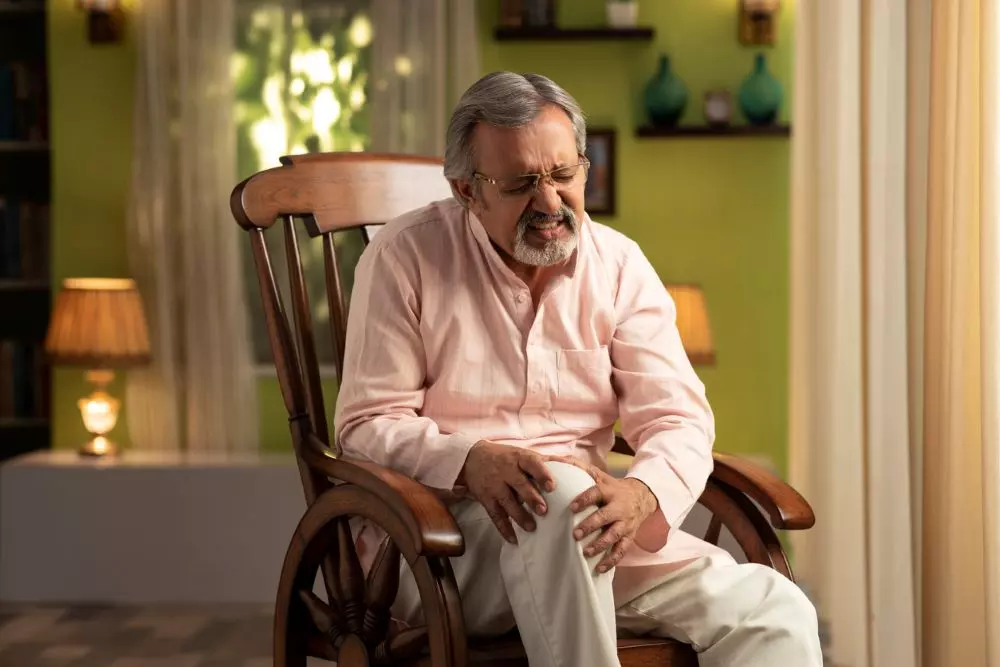
Social conditioning often plays a part in the elderly ignoring “minor health inconveniences”, which, however, can go a long way in interfering with a full, active life. Photo: iStock
Then there is the old resignation to ageing and what old age should look like.
In the 1968 comedy film Padosan, starring Sunil Dutt, Saira Bano, Kishore Kumar and Mehmood, Dutt’s character is seen reading from a book that lists that till the age of 25 one should maintain Brahmacharya (discipline), while 25 to 50 years were for Grihastha or family life. While he doesn’t get a chance to go beyond 50 in the film, traditional Indian philosophy earmarked 50-75 as the period of Vanaprastha or retirement from household life and post 75 to be a period of Sanyasa, or detachment from material and worldly life and seeking of moksha or release.
While not many would probably follow this structured life today, the conditioning that beyond a certain age one is to withdraw and surrender to the years is a belief that continues to condition many Indians, say those The Federal spoke to.
That attitude explains a lot about ageing and ageing well to Sujatha Rajamani, a consultant psychotherapist at KIMS Hospital in Hyderabad. In the West, she says, retirement can mean a bucket list. In India, it often means a sort of cheerful resignation. The children are married, the grandchildren have arrived, and what else is there? "Ab toh kabhi bhi bhagwan bulae, hum toh tayyaar hai. (Death can come any time now and we are prepared).” Women, she says, are assumed to be healthy as long as they are cooking. Men, whose friendships often lived entirely at the office, find the circle gone the day the routine ends.
That attitude can be frustrating for the family.
“My father, 80, is a COPD [chronic obstructive pulmonary disorder] patient, but refuses to undergo regular check-ups, depending instead on inhalers. In recent months, he has been wheezing more, has lost weight and refuses to step out of the house to minimise his struggle to breathe. But whenever my mother and I try to talk him into a doctor’s visit or to motivate him to take better care of his health so that he can lead a more full life, his standard answer is that at his age he can’t be expected to be any different,” says Preyashi Chatterjee (name changed on request), 50, a communication professional based in New Delhi.
She adds: “It is now taking a toll on my mother. She is 75, active and independent and doesn’t believe in depending on hired help. With my father hardly able to do anything around the house, there is no division of work.”
Often though, the family can help mould the attitude towards age. Love, in an Indian family, often expresses itself as taking things out of people's hands, point out medical practitioners. Fetch the water. Carry the bag… encouraging senior people to stop being active.
Where age brings in conditions like dementia, assistance is necessary.
As in the case of 38-year-old Delhi resident Majid Hussain, much of whose daily routine revolves around his 68-year-old father, who has been living with dementia for the past three years. Hussain, who runs a business in manufacturing paper carry-bags, brings his father to the factory daily, keeping him close while trying to keep the business running. “It's tough. Just now, he asked me for a cup of tea, even though he had already had his evening tea. He doesn't remember the way back home either,” Hussain says. The smallest routines, it seems, can become the hardest to hold on to.
But wherever possible, doctors advise families to encourage senior people to exercise, to be independent, to follow a routine that includes leaving the house and to pursue interests and passions.
Also read: Why numbers tell only part of India's healthcare story; cost, access and outcome matter too
A slow change is already becoming visible, especially in urban areas, say some. Senior people are travelling more, pursuing a second career or an interest which the rigour of a professional life had made difficult to keep up with. This is being reflected in films like Unchai (starring Amitabh Bachchan) and 102 Not Out (again Bachchan), which show the elderly reclaiming life. Retirement communities are coming up, where the company of contemporaries is ensuring a more active social life, while providing practical and medical help when needed.
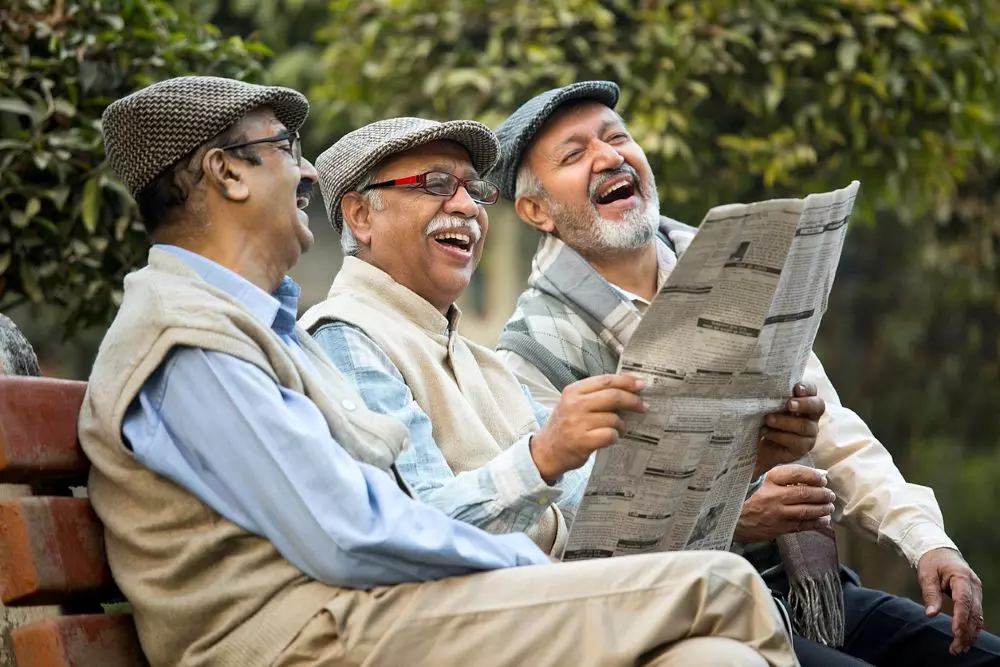
Retirement communities are coming up, where the company of contemporaries is ensuring a more active social life, while providing practical and medical help when needed. Photo: iStock
According to Adarsh Narahari, managing director of the Bengaluru-based Primus Senior Living facility, the average age of a homebuyer here is about 68 years. “The people choosing senior living are perfectly healthy, active and fit. They simply want to be part of an ecosystem that helps them slow down the ageing process,” says Narahari.
He adds: “Awareness has particularly grown over the last decade. People have realised that unless they remain active, keep pursuing their passions and maintain a strong sense of community, they are unlikely to age healthily. That is what we are seeing, and that is how we define healthy ageing.”
His views are echoed by K Mangal Chand Jain, managing director of Sukhshanti Retirement Home, also in Bengaluru. “Most people who come here to live are happy and active. Many of the problems experienced by the elderly stem from loneliness. Once they move here, find themselves surrounded by people, make friends and become part of a community, many of those concerns begin to fade,” he says.
Feelings of loneliness can intensify where the elderly are left behind in hometowns as sons and daughters migrate for better opportunities. But professional caregivers, who are increasingly stepping in to take care of the aged, say they are beginning to see some among their employers who refuse to spend their time pining. Rekha Lodwal, 38, a caregiver in Delhi, cites the example of a 73-year-old retired government servant she works for. “Her family has moved to the US, but she chose to stay back because she is happy here. She is remarkably conscious of her health. I remember her once handing back a juice packet because she thought it contained too much sugar. She is very particular about what she eats and takes charge of her own health,” says Lodwal.
Finally, the urge to ‘live’ has to come from within.
“People often say you should be young at heart. But the moment someone crosses a certain age, they begin telling themselves, ‘I am 70 now, I cannot do this.’ That is where the problem begins,” admits Ganesh Kudva, a 75-year-old resident of Sukhshanti. For him, age is often as much a question of mindset as it is of physical ability. “Of course, you cannot take unnecessary risks, but many people don't even want to try. A fellow resident at Sukhshanti, who is over 90, plays table tennis rather well. I often give him company because at least he is willing to participate. But there are others who will discourage him, saying, ‘At this age, why do you need to do this?’ People who want to stay active are sometimes held back by those around them.”
Kudwa also talks of how retirement can become a psychological full stop. “Some people begin preparing for retirement two years before they actually retire. By 58, they have already switched off mentally. Once they retire, they don't want to travel, see new places... What is left to enjoy then?”
Accepting changes in one’s body is not easy. Needing a walking stick, depending on a hearing aid (as in the case of Kumar), forgetting what one was saying in midsentence, can seem embarrassing. It might seem far more easy to lock oneself up and hit a pause button on life.
But Kudwa insists one “must keep moving”.
Part of being fit is believing that one is; in not giving up on life while life remains to be lived. Enjoying life, pursuing a hobby, going out, keeping company, participating in family life, going for proper routine medical check-ups, making efforts at staying healthy, may not be a guarantee against declining physical strength or disease. But it might narrow the gap between living and existing.