- Home
- India
- World
- Premium
- THE FEDERAL SPECIAL
- States
- Perspective
- Videos
- Sports
- Education
- Entertainment
- Elections
- Features
- Health
- Business
- Series
- In memoriam: Sheikh Mujibur Rahman
- Bishnoi's Men
- NEET TANGLE
- Economy Series
- Earth Day
- Kashmir’s Frozen Turbulence
- India@75
- The legend of Ramjanmabhoomi
- Liberalisation@30
- How to tame a dragon
- Celebrating biodiversity
- Farm Matters
- 50 days of solitude
- Bringing Migrants Home
- Budget 2020
- Jharkhand Votes
- The Federal Investigates
- The Federal Impact
- Vanishing Sand
- Gandhi @ 150
- Andhra Today
- Field report
- Operation Gulmarg
- Pandemic @1 Mn in India
- The Federal Year-End
- The Zero Year
- Science
- Brand studio
- Newsletter

Regimented routines to peer pressure — Life inside Kerala’s NEET, JEE coaching centres
In Kerala, towns such as Pala and Thrissur have emerged as major coaching hubs, drawing students from across the state and beyond. For students, life inside these coaching centres revolves almost entirely around studies, with little room for relaxation or recreation. Some centres even discourage daily communication with families, allowing calls home to be made only one or twice a week.

When MS Anish Kumar, a journalist in Kerala’s Kozhikode district, brought his 18-year-old daughter, Alami, home from the Brilliant Study Centre last month, he remembers the family was shocked by the transformation in her. For a year, Alami had been preparing for engineering entrance examinations at the coaching centre in the state’s Pala town (Kottayam district)."We can never forget that...
When MS Anish Kumar, a journalist in Kerala’s Kozhikode district, brought his 18-year-old daughter, Alami, home from the Brilliant Study Centre last month, he remembers the family was shocked by the transformation in her. For a year, Alami had been preparing for engineering entrance examinations at the coaching centre in the state’s Pala town (Kottayam district).
"We can never forget that day. She had sunken eyes, had lost weight and was so exhausted that we could barely recognise her. When she combed her hair after reaching home, handfuls fell out. It was heartbreaking," Anish recalls.
Alami secured admission to multiple engineering courses and chose to study BTech in Information Technology at the Cochin University of Science and Technology (CUSAT). But for Anish, the eventual outcome did little to erase the emotional and physical toll the coaching year took on his daughter. "No child should have to endure such a phase in the pursuit of higher education," he says. “We have always told her that studies and a job are not more important than life itself."
The allegations of irregularities surrounding the National Eligibility-Cum-Entrance Test (NEET) for medical — a paper leak scandal which broke out in May forced a re-examination — triggered the just-concluded students’ protest for accountability and reforms in education in Delhi. The echoes of the agitation were felt across the country and culminated in the resignation of Bharatiya Janata Party MP Dharmendra Pradhan as Union education minister. But while the debate has largely centred on question paper leaks, the integrity of testing agencies and the future of millions of aspirants, beyond the examination itself lies another institution that has become inseparable from India's competitive exam culture: the coaching industry.
Over the past three decades, a vast parallel education system has grown alongside formal schooling. What began as neighbourhood tuition classes has evolved into an industry worth thousands of crores, complete with residential campuses, regimented schedules and teaching methods designed around cracking the entrance examinations for engineering or medical. In Kerala, towns such as Pala and Thrissur have emerged as major coaching hubs, drawing students from across the state and beyond. For many families, these centres have become as important as schools, shaping daily life, family finances and childhood itself.
Of the more than 20 student suicides reported in the aftermath of the cancelled NEET examination, one was from Kerala. Aijha R. Mahesh, 19, a native of Kasaragod, died by suicide in June in a private hostel at Cherpunkal near Pala, where she was staying while undergoing NEET coaching in the famous Brilliant Study Centre. She was found hanging in her hostel room. Family members said she had been under severe mental stress and had spoken to them about the difficulty of coping with the intense coaching programme.
Also read: Tenacity to triumph: How Gen Z won their battle for accountability, reform in education
Coaching institutes admit that the pressure on students is real. Their contention, however, is that the root of the problem lies in the entrance examination system, and meaningful relief is unlikely without structural reforms.
"I don't think it is correct to attribute these deaths solely to entrance examinations. There could be many other factors involved. We also see suicides among students at IITs, AIIMS and medical colleges, but those figures rarely become part of the public conversation. I have never believed that entrance examinations alone are responsible," says PB Shivakumar, general manager (Public Relations), Brilliant Study Centre.
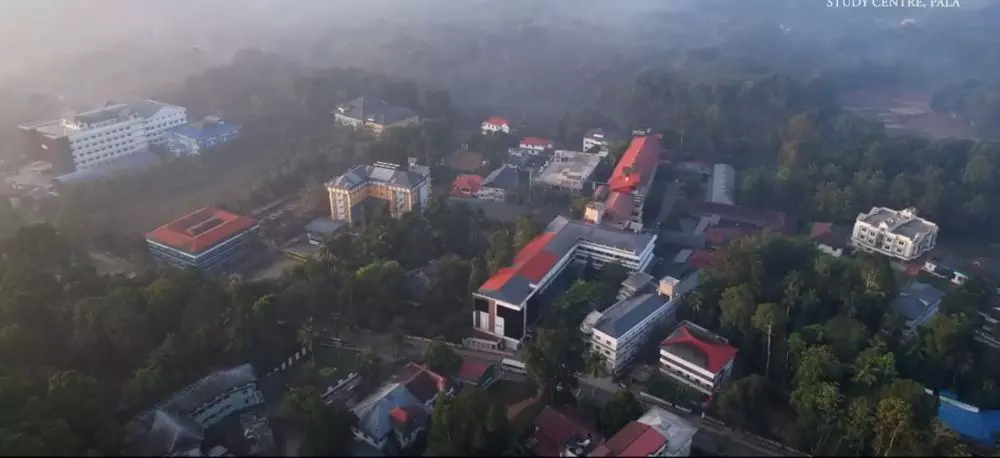
Aerial view of the Brilliant Study Centre campus in Pala. Photo: YouTube
Brilliant Study Centre, headquartered in Pala in Kerala's Kottayam district, is one of the pioneers of the state's entrance coaching industry. Founded in 1984, the institute has grown into one of the country's largest coaching networks, with seven centres across Kerala. Its sprawling Pala campus resembles a university, with multiple academic blocks, hostels, cafeterias and other facilities catering to thousands of students.
According to the institute, around 25,000 students from its seven centres appear for the medical entrance examination every year, while another 12,000 to 15,000 take engineering entrance tests. Many more enrol in its crash courses and online programmes. Overall, nearly 40,000 students undergo coaching at Brilliant annually before appearing for medical or engineering entrance examinations.
Brilliant, however, is not the only major player in Kerala's entrance coaching landscape. The state has at least four coaching institutes of comparable scale, besides several smaller regional players. The combined ‘P.C. Thomas Classes and Chaithanya Classes’ in Thrissur is another. With a legacy of nearly 64 years, it is among the oldest coaching institutions in the state.
Then there is Xylem, a learning platform, which according to its website, has 30000 offline students across their 35 centres. The number of students includes those studying for other competitive examinations in addition to those preparing for Joint Entrance Examination (JEE), NEET and the Kerala Engineering Architecture Medical test (KEAM). Together, these coaching centres train a roughly estimated 1 – 1.2 lakh students every year, reflecting the enormous size and influence of Kerala's entrance coaching industry.
For students, life inside these coaching centres is unlike anything they have experienced before. The focus is almost entirely on studies, with little room for relaxation or recreation. Some institutes follow highly regimented routines, including wake-up calls as early as 4 am, while others are less restrictive. But irrespective of the rules, students say the greatest pressure comes from their peers rather than the management.
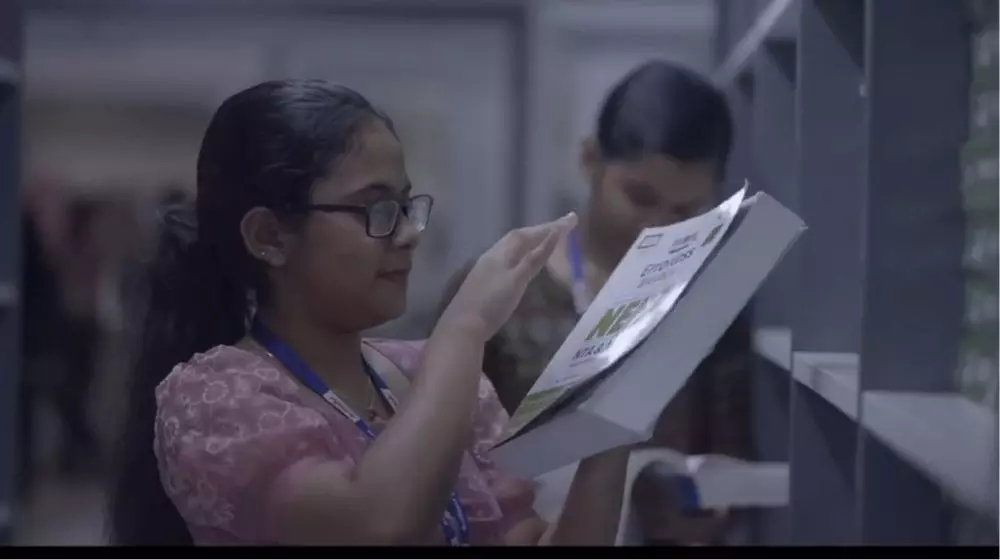
Students at the Brilliant Study Centre campus: Photo: YouTube
Ayisha Saja, from Sullia, Kasargode, a Brilliant student in the last academic year, is now pursuing BTech in Robotics and Automation at TIST, Ernakulam, says the coaching centre has two categories of hostels. "There are 'controlled' hostels, which are run directly by the management with teachers serving as mentors and wardens, and 'supervised' hostels, which are managed by external operators," she says.
According to her, students are not allowed to use mobile phones or personal electronic gadgets. Instead, they are provided customised tablets with access only to the institute's study material. Students are generally permitted to speak to their families only twice a week.
The cost of living at the coaching centre is another burden for many families, says Saja. "Apart from the tuition fee, almost everything else is expensive, especially hostel expenses," she says. "Even medical care is costly. Students are usually taken to a few designated hospitals, where consultation charges are high. Even basic healthcare on or around the campus ends up costing much more than expected."
According to estimates, the coaching centres charge around Rs 89,000 for one term, while hostel charges can add another Rs 9000 per month. A consultation at the medical centre, for even a simple health issue, is charged at Rs 500, say students.
Saja adds: "The controlled hostels are better equipped and offer closer academic supervision. Admission is generally reserved for students with the highest scores and teachers are available on the premises to mentor them. The supervised hostels, on the other hand, function more like paying guest accommodations and, according to students, receive comparatively less attention from the institute.”.
"The biggest pressure is not from the management but from the peer group," she says. "At the same time, there is a perception among students that those staying in the controlled hostels receive more attention. There are also students from integrated school programmes, where coaching begins alongside regular schooling. The toppers from these batches are often grouped separately on WhatsApp and from a student's perspective, appear to receive preferential attention."
However, most students see it as a necessary sacrifice for a better future. They enter coaching centres knowing that the year ahead will demand discipline, long hours and an almost exclusive focus on studies. Many adapt to the routine and complete the programme. But not everyone copes equally well. Some struggle under the relentless pressure, drop out midway, or fall through the cracks.
“Many students who scored A+ grades throughout school arrive at coaching centres with high expectations from their families and communities. Within weeks, they realise their scores are lower than their roommates or classmates. Some people say coaching centres should have more recreational activities. But this one-year programme is essentially a sacrifice. Students are trying to revise everything they learned in Classes 11 and 12. Extra activities can easily distract them from that goal”, says Shilpa Shaji, an MBBS final-year student who runs a career-based YouTube channel for the students, in one of her popular videos.
Sathya C. Thomas, who is pursuing Masters in Food Innovation at Lincoln University, New Zealand, after completing a BTech in Dairy Technology from Kerala Veterinary and Animal Sciences University, says the competitive culture inside coaching centres leaves little room for anything beyond studies.
"When I studied at Brilliant a few years ago, there was a clear hierarchy among students. Those consistently scoring 95 to 100 per cent in the internal tests received more attention, better coaching and access to the best teachers. The management naturally wanted them to become toppers and the public face of the institute. That was never a secret. There was hardly any social life. Friendships and gatherings took a back seat because everyone was focused on the competition. It was study, study and study all the time."
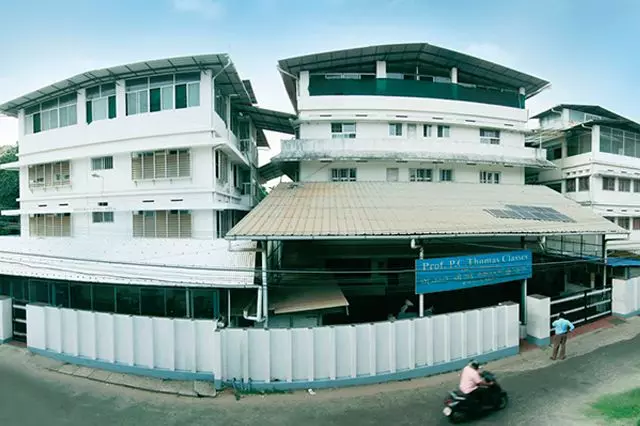
The P.C. Thomas Classes and Chaithanya Classes campus in Thrissur. Photo: chaithanyaclasses.com
Sidharth (name changed) from Thrissur enrolled at P.C. Thomas Classes after Class 10, in a bid to follow in the footsteps of his family and become a doctor. Today, however, he has left not only the coaching centre but also the pursuit of medicine. Instead, he is pursuing a degree in Fine Arts.
"Medicine was never my dream," he says. "Both my parents and my sister are doctors, and they wanted me to follow the same path. I had done well in school, so after Class 10, I joined P.C. Thomas classes. But I couldn't cope with the atmosphere. It was extremely competitive and, for me, quite toxic. I started skipping classes and eventually dropped out."
Sidharth is careful not to blame the coaching institute. "There were many students who genuinely wanted to become doctors or IITians. They were willing to make every sacrifice, and they managed well. I wasn't one of them. The bigger problem is when parents push children into coaching against their interests. I had to fight my family for some time before they accepted my decision. Today, I am content with the path I have chosen. My parents may still wish I had become a doctor, but it's my life."
For every student whose photograph appears in a coaching centre's success supplement, there are hundreds who fought just as hard but failed. Some collapse under the pressure.
“A year of coaching costs at least Rs 2.5 lakh. How can the child of a daily wage labourer even enter this race? This system, where only the children of those who can afford expensive coaching become doctors and engineers, has to change. The future of our children should not be decided by the capsules and coaching modules sold by private institutes. After twelve years of schooling, it is heartbreaking that school education itself carries almost no value in the admissions process,” says Anish.
Even coaching institutes, often accused of thriving on the high-stakes entrance examination system, say the problem lies as much with the examination structure as with coaching itself. They argue that despite the Supreme Court's intervention in 2024 and the recommendations of an expert committee, little has changed.
"The problem is not just about forming committees or announcing reforms. The system itself has to become more student-friendly. We welcome the proposal to make NEET fully online by 2027, as it could significantly reduce students' anxiety. But the examination also needs to be conducted far more professionally. A student's future should not depend on the attitude of an invigilator or what happens on a single day. NEET should either be held twice a year, like JEE, or be conducted in two stages with a preliminary and a final examination. Before 2012 [when NEET was introduced], students had multiple entrance tests and more than one opportunity [a reference to the separate All India Medical Entrance test and the state entrance exams]. The problem began when everything was merged into a single examination. A filtering mechanism, where a preliminary test shortlists candidates for a final examination, would be a fairer and more effective system," says P B Sivakumar of Brilliant Study Centre.
"There is a crucial difference between Kerala and many northern states. In Kerala and most southern states, school education and family life remain central, and entrance coaching comes only afterwards. In many northern states, children enter coaching centres as early as Class 5 and complete their schooling alongside coaching. That model risks sacrificing childhood and turning education into a coaching industry. Kerala's system, despite its flaws, still keeps schools at the centre of learning," he claims.
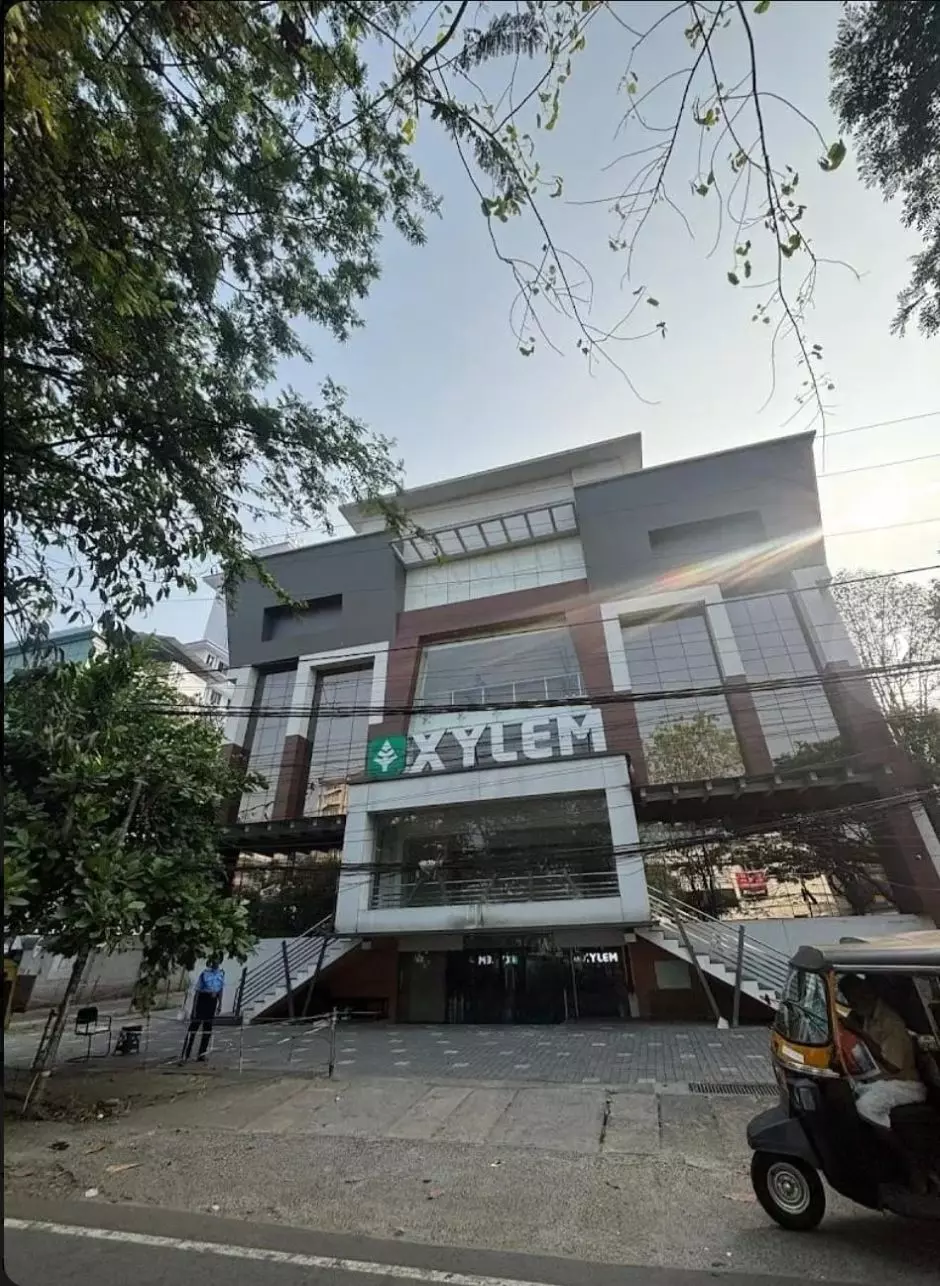
A Xylem centre in Kochi. Photo: By special arrangement
Educationists and social commentators, however, argue that the problem runs much deeper than NEET or coaching centres. They say the real crisis lies in an admission system that reduces learning to a race for marks, allowing the coaching industry to dictate the way children learn.
"The real problem is an admission system that values marks alone while ignoring a student's aptitude and interests. As long as admissions are decided purely by scores, education will remain an exercise in rote learning. The entrance coaching industry has perfected this model and has become so influential that it now shapes the curriculum and even the syllabus at the school level. Instead of nurturing curiosity, creativity and independent thinking, the system rewards repetition and memorisation. In the process, children lose not only their childhood and adolescence but also the opportunity for healthy psychological development. What we need is not just reform of entrance examinations, but a fundamental rethinking of the entire education system," says AP Muraleedharan, former president of the Kerala Sastra Sahitya Parishath (KSSP), the people's science movement and a social commentator.
The debate, therefore, is no longer about a single examination. It is about an education system in which one test has become powerful enough to shape childhood, redefine schooling and sustain an industry that now touches the lives of nearly every aspiring doctor and engineer in the country.
Anish’s younger daughter, Adithi, is currently studying in class 9. “By the time she finishes school after Class 12, I hope India has a different examination system. One where coaching centres are no longer indispensable, where every deserving student, regardless of wealth, has a fair chance, and where question paper leaks do not destroy young lives,” says the worried parent.