


- Home
- India
- World
- Premium
- THE FEDERAL SPECIAL
- States
- Perspective
- Videos
- Sports
- Education
- Entertainment
- Elections
- Features
- Health
- Business
- Series
- In memoriam: Sheikh Mujibur Rahman
- Bishnoi's Men
- NEET TANGLE
- Economy Series
- Earth Day
- Kashmir’s Frozen Turbulence
- India@75
- The legend of Ramjanmabhoomi
- Liberalisation@30
- How to tame a dragon
- Celebrating biodiversity
- Farm Matters
- 50 days of solitude
- Bringing Migrants Home
- Budget 2020
- Jharkhand Votes
- The Federal Investigates
- The Federal Impact
- Vanishing Sand
- Gandhi @ 150
- Andhra Today
- Field report
- Operation Gulmarg
- Pandemic @1 Mn in India
- The Federal Year-End
- The Zero Year
- Science
- Brand studio
- Newsletter

Aamir to Omar, & the widowed mom or divorced dad... how Indians are breaking age cap on relationships
Last month, J&K CM Omar Abdullah, 56, announced his marriage to journalist Nidhi Razdan. The announcement follows more such examples: actor Amir Khan, 61, marrying girlfriend Gauri Spratt earlier this year, former MP Pinaki Misra, 67, marrying TMC MP Mahua Moitra last year, BJP’s Dilip Ghosh, 62, marrying Rinku Majumdar, also last year…India, for long age-conservative about relationships and marriage, appears to be finally recognising the need for companionship in one's later years.

Mumbai-based Aruna Nanda, 64, lost her husband to cardiac arrest nine years ago. Her 34-year-old son works as an engineer in Dubai, while her relationship with her in-laws remains strained. She lives alone. On a heritage walk through Mumbai about five years ago, Nanda, a former school-teacher-turned-homemaker, met a 68-year-old who owns a business in construction equipment. They stayed in...
Mumbai-based Aruna Nanda, 64, lost her husband to cardiac arrest nine years ago. Her 34-year-old son works as an engineer in Dubai, while her relationship with her in-laws remains strained. She lives alone. On a heritage walk through Mumbai about five years ago, Nanda, a former school-teacher-turned-homemaker, met a 68-year-old who owns a business in construction equipment. They stayed in touch, initially finding companionship in shared interests. Over time, that companionship grew into something deeper. “In the beginning, it was about having someone to go on walks with, attend cultural events and watch films at the cinema. Gradually, our bond grew stronger and we realised we could spend the rest of our lives in each other's company,” explains Nanda, adding that her current partner has never been married.
When Jammu and Kashmir Chief Minister Omar Abdullah announced his marriage to journalist Nidhi Razdan last month, he became the latest among a handful of public figures in India to have, in the past year or so, challenged the “socially acceptable age” to enter into new relationships. Abdullah is 56, divorced with two sons, while his new wife, Razdan, is reportedly 49. Months back, actor Aamir Khan, a senior citizen at 61, married 47-year-old Gauri Spratt. This is Khan’s third marriage. Last year, Trinamool Congress MP Mahua Moitra, 50, married 65-year-old former MP Pinaki Misra, while BJP leader Dilip Ghosh, 60, married 51-year-old fellow party member Rinku Majumdar.
There might have been some raised eyebrows, even gossip, but the relationships attracted far less scrutiny and backlash than they would probably once have.
Also read: Why Indians may be living a longer life, but unable to fully enjoy being alive
For decades, Indian society remained stubbornly guided by the ancient ideas of the four stages of life (Brahmacharya, Grihastha, Vanaprastha and Sanyasa) that firmly made romance, desire and relationships the privilege of youth. A middle-aged person who lost their partner would be encouraged to re-marry (especially if they were men), to care for the children born of the previous union, or to carry on the family line (again in case of men) if there had been no children born, but by and large marriage and relationships remained the domain of the young.
“Biology can reinforce these assumptions,” says Hyderabad-based behaviourist Pranjal Mani Tripathi. “Because female fertility ends with menopause, societies that closely associate intimacy with reproduction may begin to regard romance as less relevant once the reproductive years are over. But the end of fertility does not mean the end of emotional or sexual desire,” Tripathi explains.
The age-cap on relationships in real life was reflected in reel; while Hollywood was making films like Book Club (2018), which placed the romantic and sexual lives of four women in their sixties at the centre of its story or Our Souls at Night (2017) about two lonely neighbours finding companionship, with encouraging regularity, the subject remained largely ignored in Bollywood. There was the occasional Pyaar Mein Twist (2005), starring Rishi Kapoor and Dimple Kapadia as parents of grown children who fall in love, or the Nafisa Ali-Dharmendra track in Life in a…Metro, about old sweethearts reuniting, but they were just that… the odd ones.
“Limited budgets, the reluctance of actors to take on unconventional roles and the pressure of box-office performance can make filmmakers cautious about stories that challenge established ideas of romance,” says writer Bodhy Roy, admitting that Indian cinema remains behind Western cinema in acknowledging the emotional lives of older people.
But now real life itself is giving writers and filmmakers inspiration to look beyond the traditionally accepted relationships.
While Lucknow-based sociologist Rajni Arya believes that the acceptance of relationships between older people remains largely confined to the world of celebrities — “These famous people are at a distance from us. When the masses hear about them doing such things, they may feel happy, confused or even angry. But they rarely imagine that this could become a reality within their own families,” she says — around us too, a change is slowly taking place, with more people like Nanda owning up to their need for companionship in the latter stages of their lives.
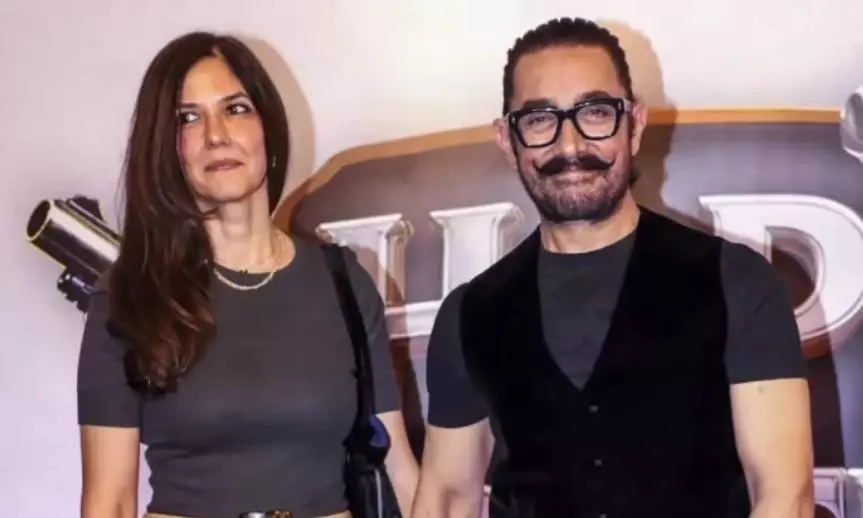
File photo of Aamir Khan with partner Gauri Spratt.
Take the case of Uttar Pradesh-based Tanya Sinha, 53, for whom the opportunity to find a partner came only after years of putting her own life on hold to care for her parents. She married her widowed colleague, 59, last year.
“I am an only child, and my parents were entirely dependent on me. My mother is a homemaker, while my father had to stop working after an accident left him paralysed. As an only child, my circumstances were very different. I became their sole caregiver. I couldn't be selfish and simply get married and settle down. My parents were my responsibility, and my prime years, in the conventional societal sense, went into looking after them and managing our finances. There was no time to explore marriage proposals or even think about falling in love,” explains Sinha.
She adds: “Now that my parents are comfortable and our lives are more settled, I finally have the time to meet people and spend time beyond work-related conversations. Financial stability was particularly important in my case. We had spent all our lives in rented accommodation and I finally managed to buy them a house. Only after that could I begin making space for my own life,” she adds.
According to Delhi-based Siddharth S Kumaar, a relationship coach, companionship and emotional intimacy are among the principal reasons people seek relationships in their 50s and 60s. “The end of demanding parenting responsibilities and career pressures can leave people with more time to devote to themselves and their relationships. Increasing life expectancy has also extended the horizon of what people imagine their later years could look like”, he says.
The India Ageing Report 2023 estimates that the percentage of Indian population aged 60 and above is projected to rise from 10.5 per cent in 2022 to 20.8 per cent by 2050. The Longitudinal Ageing Study in India (LASI), conducted in 2017–18, found that 36 per cent of Indians aged 60 and above were widowed. More than half of women in the surveyed age bracket were widowed, compared with 17 per cent of men. Yet conversations about ageing still tend to revolve around pensions, healthcare, retirement homes and who will take care of whom. The question of who older people might want to spend their evenings with receives considerably less attention.
A 2022 qualitative study by Debanjan Banerjee and TS Rao, which interviewed 20 Indians above 60, found that participants continued to value emotional intimacy, affection, physical closeness and sexual expression. The researchers also identified social stereotypes and stigma as barriers to expressing these needs.
The study was not designed to measure how many older Indians are actively seeking relationships. But it challenges the assumption that older people no longer have romantic or sexual needs.
“Insaan ko akelapan kha jaata hai. Koi bimari ki zaroorat nahi hoti [loneliness can consume a person even when there is no illness],” says Rajat Negi, 58, from Ajmer, Rajasthan, who divorced two years ago after a prolonged marital dispute. His two daughters, aged 18 and 15, live with their mother in another part of the city. Negi works in human resources in Gurugram. The five to six years of hardship in his marriage, he says, have changed the way he views relationships. “I had an arranged marriage and at the time there was so much family pressure that I didn't even understand what I wanted in a life partner. The experience has made me value compatibility much more.”
He is now in a relationship with a 50-year-old Delhi-based fashion designer, who is also navigating marital difficulties. For Negi, the connection is rooted in a sense of shared understanding. “We complete each other. Our likes and dislikes are the same. In my previous relationship, I probably never fell in love. There was more of a sense of duty than anything else.”
Unlike in one’s youth, relationships formed later in life can come with greater self-realisation and clarity about one’s expectations from life and one’s partner. The rose-tinted glasses of youth are off. But experts still ask for caution to be exercised; loneliness can bring its own kind of oblivion and push one to hasty decision-making, ignoring the red flags that one would usually be alert to; cases of the elderly being defrauded are not uncommon.
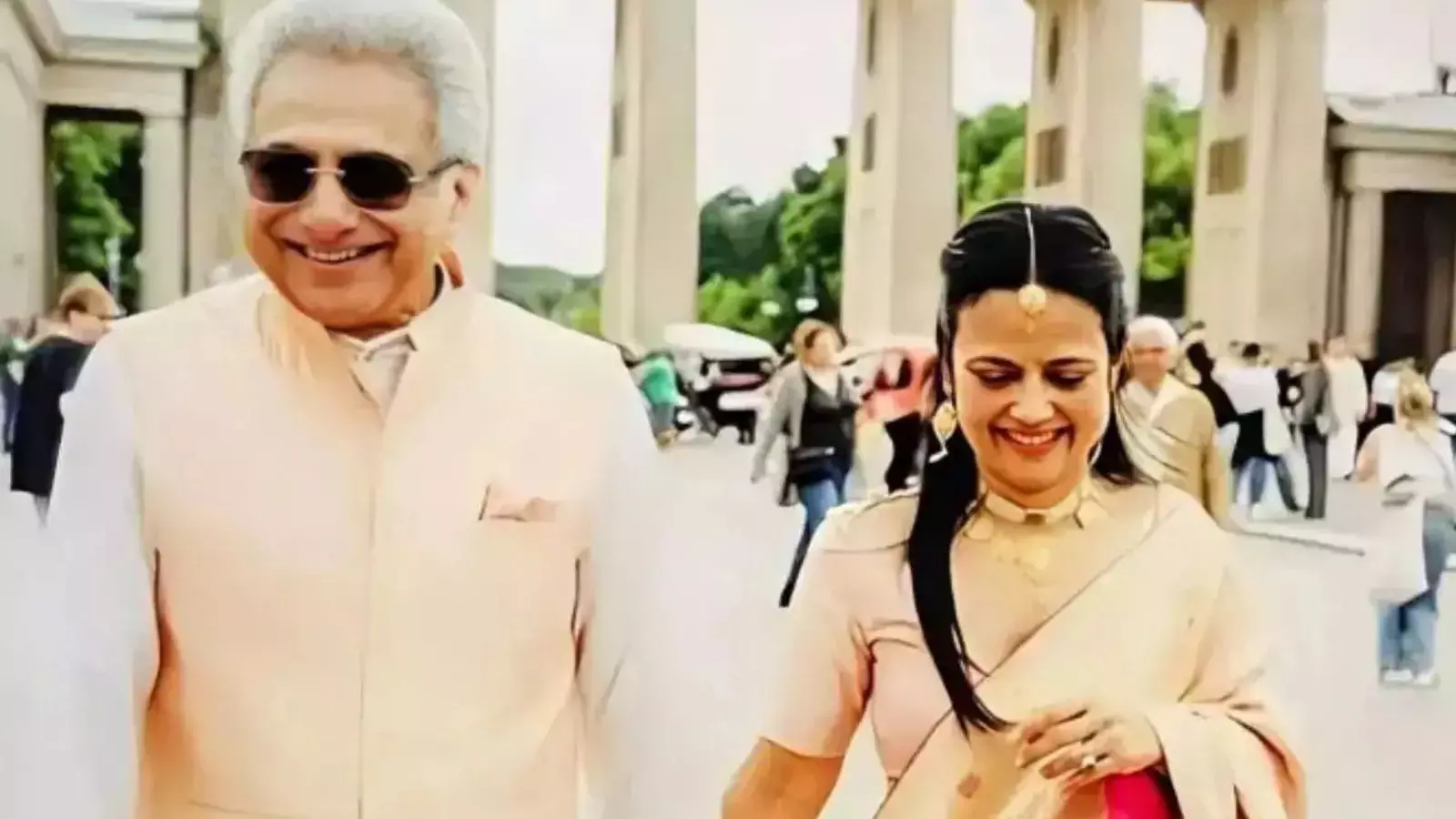
Mahua Moitra with husband Pinaki Misra. File photo
Of course, exercising caution doesn’t mean not seeking out companionship. While social media now provides one easy route, Sachin Chawla, founder and partner of Delhi-based MakeMyLagan Matrimonials, also talks of those in their 40s, 50s and 60s increasingly approaching these services to explore relationships.
Having experienced relationships and the demands of everyday life, many are clearer about their priorities, Chawla says. Education, professional standing, financial stability and family background matter to some; others place greater emphasis on personality, emotional compatibility and shared interests. Some are willing to consider partners who already have children, while others have specific preferences about age and family arrangements.
“The enquiries, he says, are not limited to remarriage. They also reflect a desire for companionship and the freedom to reconsider personal choices after years spent meeting family and professional obligations,” adds Chawla.
One reason for shying away from making the relationship official is probably a reluctance to change established lifestyles and routines; the other can be fear of social and family backlash. Women who are financially independent and professionally established, especially may be less willing to compromise their lifestyles simply to enter another marriage. Responsibilities towards children from previous relationships can further shape decisions.
While Chawla talks of an encouraging trend in some families approaching his matchmaking service of adult children being involved in helping parents find partners, and in some cases initiating the search themselves, others The Federal spoke to cited concerns about property, inheritance, financial exploitation or the possibility of an unfamiliar person entering an established family structure, shaping family reactions, especially the acceptance, or lack of it, of adult children of a parent's new relationship and partner. They could also struggle with the emotional idea of seeing a widowed parent moving on.
Research offers some insight into these tensions. A 2018 study published in the Journal of Family Issues, based on interviews with 27 adult children in Israel whose widowed parents had repartnered after retirement age, identified two recurring themes: conflicts of loyalty towards the deceased parent and comparisons between that parent and the new partner.
A separate study published in Omega: Journal of Death and Dying in 2023 examined families in which fathers remarried soon after the death of a spouse. Some adult children described feeling as though they had lost one parent through death and another through the changed relationship. The study also found that family relationships could eventually be repaired, although some parents were left with unexpressed regret.
Such concerns can be intensified in the case of women. As are practical challenges in finding a suitable partner.
Tripathi cites a gendered perception of ageing. Women are considered to age sooner than men, he says, making their romantic choices more vulnerable to scrutiny. And so, even when they seek companionship, they may face greater hurdles than men. Chawla, admits women above 40 may find it more difficult to find compatible matches than men of comparable ages. Some men in their 40s and 50s may prefer younger partners, while women in the same age group may look for someone closer to their age, with compatible life experiences and emotional maturity.
While the taboos are especially many for women, those The Federal spoke to also spoke of increased self-chastising.
"Women are often defined through their responsibilities: first as daughters, then wives and mothers. Far fewer people consider that, beyond these relationships, they have an individual identity of their own," says Thakur. And after years of putting societal expectations and responsibilities ahead of their own needs, Kumaar observes, women may experience a particularly difficult sense of guilt with prioritising their emotional needs.
In Daadi Ki Shaadi, a 2026 film starring Neetu Kapoor in the lead role, the family is thrown into a panic when they see a social media update from Kapoor, a widow living a solitary life in Shimla, purportedly informing her impending marriage. Children, their spouses and grandchildren who rarely visit her make a beeline for the family home. It is ultimately revealed that the post was a mistake; Kapoor never intended to remarry, but the reaction could easily be consistent with a similar real-life situation.
“Cinema has a significant opportunity here," agrees filmmaker Abhinav Thakur. "We need to portray older women not through the lens of sympathy or sacrifice, but as complete human beings. They have as much right to love, find happiness and make decisions about their lives as anyone else.” He adds: "Women are often defined through their responsibilities: first as daughters, then wives and mothers. Far fewer people consider that, beyond these relationships, they have an individual identity of their own," he says.
Also read: Not for better or worse? When adoptive parents seek to hand over custody of child
Nanda admits to initially trying to dismiss the feelings she had started developing for her current partner. “Getting into a relationship after losing my husband filled me with immense guilt.” She has also never quite confided in her son about her feelings, though she believes “he knows and respects” her choices.
Yet, she is no hurry to give the relationship the formal label of marriage. “I don't want my son to feel embarrassed. Marriage is a stamp of social approval, and we are no longer looking for anyone's approval to be who we are,” she says.
For some that disregard of societal expectations can find expression in going public with their relationship; for others like Nanda, it can simply mean prioritising one’s emotional needs.