- Home
- India
- World
- Premium
- THE FEDERAL SPECIAL
- States
- Perspective
- Videos
- Sports
- Education
- Entertainment
- Elections
- Features
- Health
- Business
- Series
- In memoriam: Sheikh Mujibur Rahman
- Bishnoi's Men
- NEET TANGLE
- Economy Series
- Earth Day
- Kashmir’s Frozen Turbulence
- India@75
- The legend of Ramjanmabhoomi
- Liberalisation@30
- How to tame a dragon
- Celebrating biodiversity
- Farm Matters
- 50 days of solitude
- Bringing Migrants Home
- Budget 2020
- Jharkhand Votes
- The Federal Investigates
- The Federal Impact
- Vanishing Sand
- Gandhi @ 150
- Andhra Today
- Field report
- Operation Gulmarg
- Pandemic @1 Mn in India
- The Federal Year-End
- The Zero Year
- Science
- Brand studio
- Newsletter

How Bengal worker’s death in Pune turns focus on migrants' lives across India
The 'targeting' of workers from West Bengal, allegedly over suspicions of being illegal Bangladeshi immigrants, is only the latest in a long narrative of discrimination, ridicule and at times, assault that migrants from across states have had to face for years.

When Obaydul Khandakar left his village in Dinhata, Cooch Behar, to work at a brick kiln in Rajasthan’s Sikar district in early 2025, he was prepared for back-breaking labour but not suspicion and detention.On May 5 last year, Patan police rounded up Khandakar, his wife and children, and a few other Bengali-speaking workers from the kiln, on the pretext of verifying their citizenship....
When Obaydul Khandakar left his village in Dinhata, Cooch Behar, to work at a brick kiln in Rajasthan’s Sikar district in early 2025, he was prepared for back-breaking labour but not suspicion and detention.
On May 5 last year, Patan police rounded up Khandakar, his wife and children, and a few other Bengali-speaking workers from the kiln, on the pretext of verifying their citizenship. Khandakar claims they were held for over a week in a guest house, despite presenting valid Aadhaar cards and other documents as proof of Indian citizenship. “We showed all valid documents, including an Aadhaar card, to prove our Indian citizenship, and yet we were detained just because we speak a dialect that is similar to that used in Bangladesh. Is speaking Bengali a crime?” he asked. The group, he recalls, were finally released on May 13, following administrative intervention by West Bengal.
The incident triggered outrage in West Bengal over concerns about the safety of migrant labourers from the state. What was initially regarded as an isolated case, however, soon appeared to be part of a broader pattern following the Union home ministry’s directives to states to form special task forces to strengthen identification and deportation efforts of alleged illegal immigrants from Bangladesh and Myanmar.
Now, the death of a Bengali worker in Pune earlier this month has again raised questions of the 'targeting' of migrants from West Bengal, allegedly over suspicions of being illegal Bangladeshi immigrants.
The issue is, however, only the latest in a long narrative of trauma and obstacles, including discrimination, ridicule and at times assault that migrants from across states have had to face for years. In moments of crisis, they are often among the most vulnerable. As was exposed by the Covid-pandemic-induced lockdown in the country in 2020. When cities came to a grinding halt, it triggered a mass exodus of migrant workers making their way back home. With no earnings and little savings or means to make the journey back home, the image of some traversing miles on foot, remains one of the most moving images of the pandemic.
And last year, in border towns of Punjab, Haryana, Gujarat and Rajasthan, migrant workers were again reportedly left scrambling for security as tensions between India and Pakistan escalated in the wake of Operation Sindoor, following the terror attack in Pahalgam.
It's not an easy life, marked by poverty and back-breaking labour in a city that often fails to become home. Yet, the hope of earning a little more, of securing a better life for their families, pushes them to daily brave it all.
Take for example the case of Sheikh Samulla, a migrant worker from West Bengal who has been engaged in hand embroidery work in Delhi for the past 15 years. “Since the [Covid pandemic] lockdown, work conditions have been extremely poor. Some months I earn Rs 15,000, and some months nothing at all. In Chandni Chowk [one of the city’s business and shopping hubs], I have to wait for hours for work, and even then, payments are not made on time,” he claims. For Samulla, the worry of livelihood is all-encompassing, leaving little room for considerations of dignity or identity.
Also read: Why Kashmiri traders scattered across India claim fear of verbal abuse, assault
A 2024 article on the website of the Centre for Development Policy and Practice (CDPP) cites Census figures to show how the number of internal migrants in India rose from 309 million in 2001 to 450 million in 2011. In 2025 alone, an estimated 150 million people migrated across states for better opportunities, according to an article published in India Data Map this month. “Maharashtra ranks first with 20 million migrant workers, followed by Delhi with 15 million, and Tamil Nadu with 10 million,” the article added.
Yet, “India's migration policy framework struggles to deal with the difficulties of internal migration, particularly interstate mobility and labour rights. Despite legal safeguards such as the Interstate Migrant Workmen Act of 1979, execution is insufficient, rendering it ineffective in protecting migrant workers,” adds the CDPP article. “A major obstacle to India's approach is the need for a national framework to ensure the portability of social security benefits, including housing, healthcare, and education. Migrants encounter considerable challenges because services such as the Public Distribution System (PDS) are dependent on their place of origin. Despite attempts like Aadhar to promote portability, implementation is inconsistent, limiting access to critical services,” it notes.
The most recent example of lack of portability is the deletion of names from electoral rolls during special intensive revision (SIR) of rolls in many states.
The Federal had, in an earlier article, cited the example of Ramesh Prasad, a daily wage labourer in Lucknow, who claimed his name was dropped from the list in his native village of Jaunpur. For the migrant worker, the most worrying part of getting his name included from Lucknow was the potential loss of income. “I went to the booth level officer [BLO] twice, but it was taking so long that I came back. The SIR process has created difficulties for people like us because if we don’t work even for one day, our earnings are lost,” he had told The Federal.
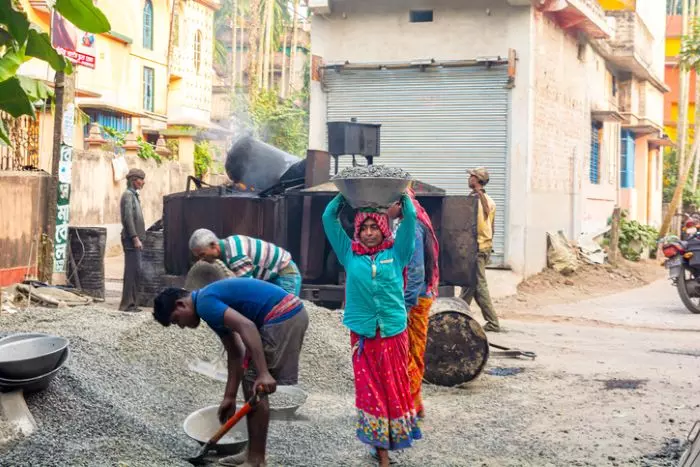
The hope of earning a little more, of securing a better life for their families, pushes migrant workers to daily brave a life that is far from easy, or fair. Photo: iStock
As Delhi-based activist Sunil Ahledia points out, migrant labourers contribute significantly in the daily operations of our urban centres, working as house helps, sanitation workers, construction labour, in the service and hospitality industry... “Yet they are not given their due respect. Government schemes exist only on paper. On ground, these people have neither permanent shelter nor social security,” he says.
Ahledia adds: “Since 2014 [when the Narendra Modi-led NDA government first came to power], discrimination based on region and language has increased. The narrative built around Hindu–Muslim divisions and ‘outsiders’ has made it difficult for these workers to find housing and employment. There is deep fear among these workers toward the administration and the police.”
The CDPP article too points out “political rhetoric” fuelling “hatred toward migrants, particularly in regions such as Maharashtra and Gujarat, where migrants from Bihar and Uttar Pradesh are frequently viewed as ‘outsiders’ endangering local jobs”. In Maharashtra, what started as targeting of migrants from the southern states by late Shiv Sena patriarch Bal Thackeray in the ‘60s, has now crystallised into a depiction of “Bihari migrants as ‘infiltrators’ who are to blame for economic difficulties” of locals, by leaders like Raj Thackeray.
Now, that distrust has spilt over to the Bengali-speaking migrants, if West Bengal Chief Minister Mamata Banerjee’s allegation of the Pune worker’s death as “hate crime” is proved right.
According to Samirul Islam, chairperson of the West Bengal Migrant Workers Welfare Board and a TMC Rajya Sabha MP, there are around 22 lakh Bengali migrants from West Bengal working in various states across India. This group overnight became suspect, following the Centre’s directive last month urging stringent measures against “illegal” Bangladeshi immigrants.
Many migrants recount experiences of harassment in states such as Gujarat, Odisha, Delhi, Uttar Pradesh, Maharashtra and even Assam.
Osman Gani, a migrant from South Dinajpur, recalls his return from Gurugram after months of feeling unsafe. “From May [2025], we started facing harassment from police and locals, who accused us of being Bangladeshis,” he tells The Federal. “We showed them our Aadhaar and voter ID cards to prove our Indian citizenship, but they [allegedly] termed them fake. Fearing for our safety, we booked buses and returned home.”
But once back, there were few opportunities to earn a livelihood. “In West Bengal, agricultural work is seasonal and daily wages are around Rs 250-Rs 300, migration offers the possibility of earning anything between Rs 500 to Rs 800 a day, or more if one is skilled,” says Gani.
As a fallout of the 'harassment' faced by Bengali-speaking workers in several states, a social backlash is now being witnessed in West Bengal. Advocacy groups such as Bangla Pokkho have sharpened their campaign around linguistic identity and “Bengali rights”, organising protests and raising slogans that stress priority for locals in jobs and public spaces.
A group of activists allegedly linked to Bangla Pokkho protested outside an outlet of popular food and beverages chain Haldiram, in Kolkata, last month. They objected to a job advertisement that they claimed preferred Hindi-speaking candidates.
Also read: How the fatal attack on Anjel Chakma is symbolic of a growing bloodlust in 'Devbhoomi' Uttarakhand
Often, isolated incidents of crime can put migrants at the receiving end.
“In 2018, violence erupted in Gujarat over a rape case involving a Bihari migrant, resulting in mob attacks that displaced hundreds of migrant labourers. Similarly, in 2012, rumours sparked violence against Northeastern migrants in Bengaluru, forcing nearly 30,000 to escape within days, demonstrating their vulnerability,” cites the CDPP article.
In Kerala, the murder of a migrant labourer in Palakkad and convictions in a couple of rape and murder cases, including the infamous Jisha murder case of 2016, in which Assam native Amir ui Islam is in jail, have triggered periodic anxiety around the safety of migrant workers.
In 2023, videos claiming that migrants were being attacked in Tamil Nadu went viral, prompting a police clarification that the visuals were "fake" and legal action would be taken against those found to be circulating them. “When those videos circulated, my family in Bihar panicked,” says Rakesh (name changed on request), a worker in the garment industry. “But here, my Tamil friends and colleagues have been supportive. Rumours travel faster than the truth. A meeting was organised in our mill to inform us about the police helpline and how to seek legal help,'' he recalls.
More often, however, the isolation is more routine — language barriers making it difficult to mingle, mutual distrust, and ridicule.
Mohammad Intaab, who moved to Delhi from Bihar about 15 years back and has been working as a daily-wage construction worker in the national capital since, recalls how in the past the word “Bihari” would be used as a slur. “Earlier, just seeing a gamchha [cotton towel used by people in the East], people would shout, ‘Hey, you Bihari, come here!’ That has reduced a lot now.” His meagre earnings of Rs 500–600 a day support a large family of 15–16 members. “The country will move forward only when hatred ends. We must rise above Hindu–Muslim conflicts and build brotherhood,” he says.
For Shaher Ali, a migrant worker from Assam who has spent 31 years in Delhi, the biggest anguish is rooted in “identity”. “We have our own dialect, which is different from the Bangladeshi dialect, but people here often fail to tell the difference,” he says.
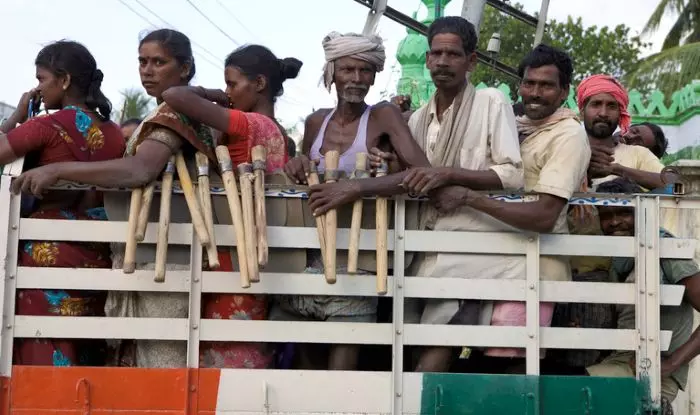
Migrant labourers contribute significantly in the daily operations of our urban centres, working as house helps, sanitation workers, construction labour, in the service and hospitality industry… Yet they often dont get their due respect. Photo: iStock
For fellow migrant from Assam, Quddoos Ali, even after 35 years in Delhi, police checks have become routine. “They come, check Aadhaar cards and all documents. Only when they are convinced that we are from Dhubri (Assam) and not Bangladeshi do they feel satisfied.” He clarifies that the people living with him are from Bihar, Uttar Pradesh, and Madhya Pradesh, and they all live together harmoniously. Yet the label of being an “outsider” always shadows them.
Living conditions are poor.
If in Delhi, Shaher rues the alleged demolition of his jhuggi by the administration, purportedly to make way for a neighbourhood park, in Karnataka and Tamil Nadu, migrant workers often live in cramped sheds on the outskirts of towns or adjoining their workplaces. Clean drinking water and sanitation seem to be a big ask here.
Still, their numbers continue to grow. In Karnataka, their presence has spilled beyond the borders of cities like Bengaluru and Mysuru, to smaller towns and districts such as Kalaburagi, Yadgir, and Raichur.
“Some locals have objected to us not speaking Kannada, but I tried to explain to them [that I have come here only recently] and assure them that I will learn the language. I have also faced incidents where a few people deliberately picked fights. I have come to Bengaluru to earn a living, and sometimes one has to face such situations,” says Yogendra, a migrant worker from Bihar, now living in Bengaluru.
The language barrier is an issue faced by most, probably making integration into local society more difficult.
“The language barrier is tougher than any hostility,” agrees Alok Chander, a 32-year-old from Gaya who has been in Chennai for the past six years. “Sometimes, there are occasions when local workers ridicule us. But I only care about my earnings and my family's growth here.”
Chander adds: “Back in Bihar, I only worked for a few days a month, but here I get to work for almost 20 days a month and get good earnings, daily wages of about Rs.700 to Rs 800.” Citing instances of migrant children attending local schools in Chennai, he says he plans to bring his two daughters from Gaya and admit them in Chennai Corporation schools next year.
Also read: Living on the Zero Line: Why life is a daily struggle for residents of Bengal's Hakimpur village
And so, dreams are dreamt, and sometimes even lived, as migrants learn resilience and survival skills. Many of them also learn to look at the positives, rather than talking about what could be different.
Twenty-six-year-old Nima Yamang from Arunachal Pradesh, now the lead hairstylist in a salon chain in Kochi, arrived in Kerala just before the Covid outbreak in the country. Initially, she worked as a helper, unsure of how long she would stay. Six years on, her migration story has deepened. Over the past year, her sisters and cousins have moved to Kochi and now live and work with her.
“When I first came here, I was alone and struggling with the language. Now my family is here. We manage together. I don’t feel like a stranger anymore,” says Nima. “Here I earn well and live independently. Back home, there would have been pressure to marry early. I am not thinking of going back.”
In another part of the city, Rupa from Assam and Ashfaq from Uttar Pradesh (both identified by first name only) are preparing for a new phase in their lives. The couple, also employed in the beauty sector, are expecting their first child in June. Their relationship, which crosses religious lines, would have faced resistance in their native villages.
“We could not have lived together openly there,” says Rupa. “Here, people may see us as outsiders, but they don’t question our personal choices.” Ashfaq echoes the sentiment. “There is some distance, yes. We are not fully part of the local society. But we can work, save money and plan our future. That matters.”
The future was also what Khandakar was working for, for himself and for his family. For most migrants, however, living as it were on borrowed space, the morrow is far more fragile, far more uncertain, than for many others. Often too insignificant to be a decising factor in most policy decisions, migrant workers are curiously, frequently the first to feel the impact of change.
(With inputs from Samir K Purkayastha, Rajeev Ramachandran, Pramila Krishnan, Abhishek Rawat and Prabhu Swamy Natekar)