- Home
- India
- World
- Premium
- THE FEDERAL SPECIAL
- States
- Perspective
- Videos
- Sports
- Education
- Entertainment
- Elections
- Features
- Health
- Business
- Series
- In memoriam: Sheikh Mujibur Rahman
- Bishnoi's Men
- NEET TANGLE
- Economy Series
- Earth Day
- Kashmir’s Frozen Turbulence
- India@75
- The legend of Ramjanmabhoomi
- Liberalisation@30
- How to tame a dragon
- Celebrating biodiversity
- Farm Matters
- 50 days of solitude
- Bringing Migrants Home
- Budget 2020
- Jharkhand Votes
- The Federal Investigates
- The Federal Impact
- Vanishing Sand
- Gandhi @ 150
- Andhra Today
- Field report
- Operation Gulmarg
- Pandemic @1 Mn in India
- The Federal Year-End
- The Zero Year
- Science
- Brand studio
- Newsletter
- Home
- IndiaIndia
- World
- The Federal Special
- StatesStates
- PerspectivePerspective
- VideosVideos
- Sports
- Education
- Entertainment
- ElectionsElections
- Features
- Health
- BusinessBusiness
- Premium
- Loading...
Premium

How planned repatriation of ancestral human remains from UK museum is uniting Naga tribes back home
Oxford’s Pitt Rivers museum is said to have the largest collection of Naga antiquities. In July this year, the museum agreed to return and repatriate 39 ancestral human remains, believed to have been collected by colonial administrators during their time in India. While the repatriation is expected to take place in November and details of the process are still being worked out, the announcement has been welcomed by communities back home.

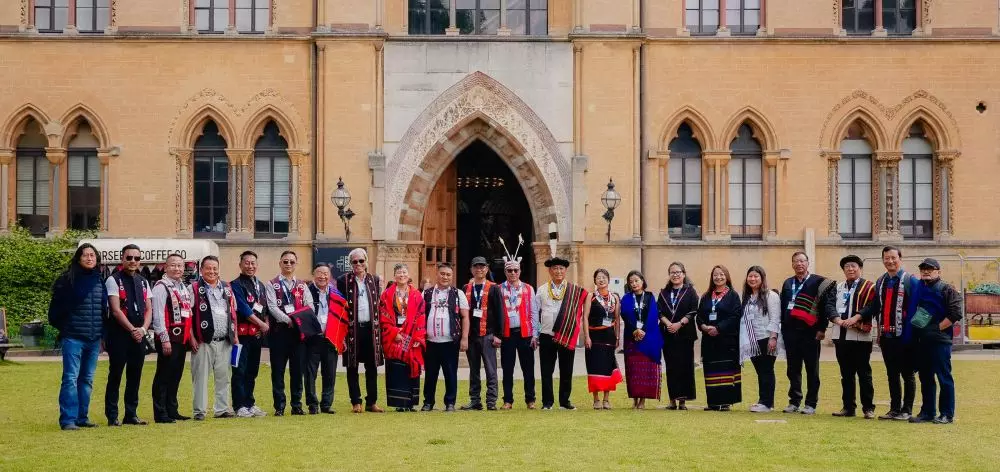
It was a Friday evening in Dimapur, Nagaland. The clock had ticked well past 9pm, but Dr Ellen Konyak Jamir and her colleagues remained immersed in an intense, late-night meeting, discussing the historic repatriation of ancestral human remains from Oxford’s Pitt Rivers museum. In July this year, the museum agreed to return and repatriate 39 ancestral human remains (bones and skulls),...
It was a Friday evening in Dimapur, Nagaland. The clock had ticked well past 9pm, but Dr Ellen Konyak Jamir and her colleagues remained immersed in an intense, late-night meeting, discussing the historic repatriation of ancestral human remains from Oxford’s Pitt Rivers museum. In July this year, the museum agreed to return and repatriate 39 ancestral human remains (bones and skulls), believed to have been collected by colonial administrators during their time in India. While the repatriation is expected to take place in November and the details of the process are still being worked out, the announcement has been welcomed by communities back home.
For Jamir and her colleagues at the Forum for Naga Reconciliation (FNR), who have been working on the repatriation for more than five years now, this is far more than a diplomatic negotiation or an archival project. What had started as a quest, transcended into an all-consuming life’s mission over the years.
“It is like going into uncharted waters,” explains Jamir, professor at the Oriental Theological Seminary at Dimapur. “The more we get involved, the more there is to learn.”
Beyond the tangled web of international repatriation and the healing of colonial scars, the return of the human remains also forces the community to confront its own past demons — the traditional practice of headhunting, outlawed since the ‘60s by the Indian government. Warrior tribes were known to behead enemies from rival tribes and display the severed heads as trophies. The collection at Pitt Rivers Museum is believed to have been such headhunting trophies collected by the British during their time here and moved back to the UK.
The FNR was formed in 2008 following a Naga Peace Convention organised by the Naga Shisha Hoho, a Christian prayer group, in Dimapur. The aim was to reconcile and unite the different warring Naga tribal groups and factions and establish a grassroots platform dedicated to building and nurturing peace and healing.
“We are forced to revisit our history because our ancestors are not just bones; they are our living history,” says Jamir. “We have to ask: How did they end up there? How were their remains taken under duress? That is something many of our people did not even realise or know.”
Also read: How a character’s success can limit the actor from experimenting on screen
The Pitt Rivers Museum is credited with holding the largest collection of Naga material in the world, much of it gathered during the colonial era. Among this collection are some human remains, which the museum removed from display in 2020. Following news of the decision, Naga anthropologist Dr Dolly Kikon — then an associate professor at the University of Melbourne — reached out to the museum offering to connect them with Naga bodies. She eventually brought the matter to the FNR's notice. Recognising the forum's long-standing work in peacebuilding, the Pitt Rivers Museum formally engaged with the FNR, opening an unprecedented dialogue around repatriation, historical trauma and social healing. Before making any formal moves, the FNR turned inward, launching a broad consultation across Naga ancestral lands to gauge local sentiments on repatriation of the remains. In 2020-21, the museum began a series of discussions with Naga elders on research and possible repatriation of the remains. During this time, the FNR formed teams for participatory research with Naga communities on repatriation. While talks were still underway, however, in March 2025 came the disturbing advertisements about a UK-based auction house’s attempts to sell a Naga skull. While the FNR and the museum worked together to put a stop to the sale, for those back home, working on the repatriation, the message was clear — it was time to bring the ancestors home.
In June last year, when Dr Vihuto Asumi stepped into that Oxford hall as part of a Naga delegation to facilitate the repatriation, he found himself face to face with the remains.
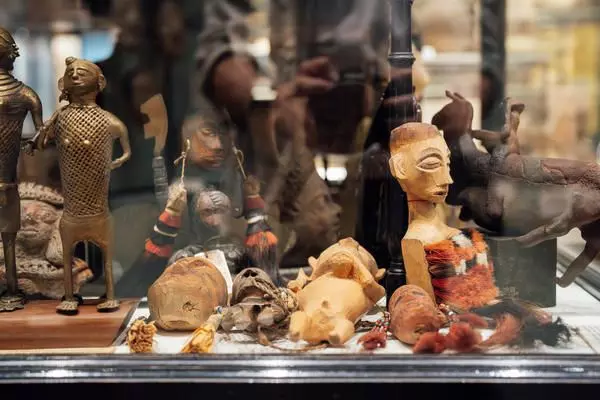
Naga antiquities at the Pitt Rivers Museum. Photo: www.prm.ox.ac.uk
As President of the Sümi Hoho, the apex socio-cultural body of the Sümi Naga community — a major Naga ethnic group — Asumi’s presence carried the mandate of a tribe’s collective voice. The Hoho functions as guardian of the community’s interests, protector of ancestral customs, and ultimate arbitrator of disputes.
“I cannot describe the feeling,” says Asumi, recalling the experience. “I saw the skull of a nine-year-old child. And then of a woman. And I thought to myself: What was their fault?” says Asumi, referring to the headhunting practice of the past, which he describes as “brutal and unfortunate”.
Talking about last year’s auction attempt, news of which, Jamir says, “disturbed us deeply”, Asumi adds, “The remains of our ancestors are not to be displayed like objects, nor are they commercial commodities to be bought and sold. They must be given a place of pride, of final, sacred rest”.
Founded in 1884, the Pitt Rivers Museum bears the name of General Augustus Pitt-Rivers, an influential figure in archaeology and evolutionary anthropology who donated his vast personal collection to the University of Oxford.
For over a century, the descendants of these individuals had no idea that the physical remains of 39 of their ancestors were catalogued as ethnographic curiosities.
According to available historical narratives, during 1832 and 1947, Western researchers and administrators turned the North-East into a focal point for early British anthropological study. To the Victorian eye, the Nagas were an enigma, a complex quilt of sovereign tribes famed for their warrior ethos and headhunting practices. Key colonial officials and officers like JH Hutton, JP Mills and WC Smith wrote detailed, groundbreaking books on the different Naga tribes. Working hand-in-hand with the imperial government, they carefully recorded local customs, oral histories, and everyday traditions.
Following news of the repatriation of the Naga remains, Des Hobson, a 58-year-old UK-based ecologist and the grandson of JP Mills, wrote to the Pitt Rivers Museum expressing his family’s deep disappointment with a press statement issued by the museum, which he felt inaccurately portrayed his grandfather’s legacy and the nature of his collecting.
Part of the statement maintained that: “Their [the remains] 'collecting' was not the neutral, scholarly activity the word implies. As a forthcoming article sets out, it was bound up with colonial violence; remains and objects were frequently confiscated during punitive military expeditions, rather than freely given…”
“Living in the UK, I am acutely aware of the injustice of British colonial rule and the sensitivities surrounding it,” Hobson explains. “[But] My grandfather was an extremely kind and conscientious man who loved the Nagas; he worked among them for nearly his whole career. That respect was mutual and it was demonstrated just three years ago when Naga villagers erected a monument in his honour in Thang [Nagaland]. As a family, we bear no desire to act as historical revisionists, but JP Mills’s legacy contains nuance that deserves to be accurately represented.”
Hobson adds: “I object to the press release associating him directly with colonial violence without proper context. Publicly available records including my grandfather’s own letters to his family show that an expedition he was ordered to join was to stop headhunting, at the request of the neighbouring Naga communities which were being terrorised.”
Hobson says he has now requested the museum to invite “JP Mills’s descendants to the repatriation ceremony. We would like to be permitted to say a few words during the ceremony”.
When Asumi stood in the corridors of Oxford, he says he experienced a complex, deeply emotional shift. “Initially, I used to be so angry at colonialism,” Asumi reflects candidly. “But when I went there, I became so indebted to them for even preserving the remains of our people. Had it not been for them, these remains would not have been known or preserved.”
Yet, preservation in a foreign drawer is not the same as honour. While the museum saved the remains from physical decay, it kept them trapped as voiceless relics of a bygone era.
The process of repatriation is neither simple nor swift. For Jamir and her colleagues at the FNR, it has meant navigating years of complex diplomatic, emotional, and historical terrain.
Unlike other global repatriation efforts led by state bureaucracies or single institutions, the Naga repatriation process stands out for its intensely unified, grassroots nature. “It is a collective drill where all the people of the land are coming together,” Jamir explains. “The government, the church, tribal bodies and student unions are all walking hand-in-hand.”
In a land home to 17 distinct tribes, each with its own dialect, customs, and history, the return of these 39 ancestors is performing a miracle: it is uniting the living.
“It is our vision that through the physical remains of these 39 Nagas, we will be able to foster a greater, lasting unity among all our communities,” says Jamir. “They are compelling us to feel a deep moral and spiritual bond. It is almost as if our ancestors are speaking to us across time, telling us that we need to collaborate, showing us the greater good that can come out of oneness.”
The repatriation has evolved from a historical correction into a spiritual pilgrimage. Rather than reopening old wounds, the ancestors are being embraced as facilitators of peace, reconciliation, and a renewed pride in indigenous heritage.
“Finally, both family and the soul of the ancestor would be in peace with the return of the ancestors to where they belong,” says a 50-year-old Dimapur resident speaking on condition of anonymity. Another adds: “It brings a closure for the entire clan, family and the near and dear ones”
Also read: Why a new Chinese heritage gallery in Kolkata holds deep, personal significance for the community
The journey is now moving toward its deeply anticipated culmination. A delegation of nearly 30 representatives drawn from across all Naga communities and FNR members is preparing to travel back to London this November to officially escort the ancestors home. Simultaneously, negotiations are underway with the state government to secure a designated plot of land to construct a memorial.
The Nagas have made one principle absolute: these ancestors will never again be placed behind glass cabinets or treated as museum relics.
“The remains of our ancestors are not items of display; they belong in a place of pride and final, sacred rest,” says Asumi. “Bringing them home will finally give us healing and peace of mind,” says Asumi.
As midnight approaches and the Friday evening meeting finally concludes, the path ahead remains long, but the mandate is clear. As the Naga people prepare to welcome their long-lost kin back to the misty green hills of their birth, the journey marks far more than the conclusion of a century-old colonial chapter. It is the restoration of dignity, a sacred victory for indigenous rights worldwide, and a powerful testament that no matter how far or how long an ancestor’s remains are carried away, the spirit of the hills always calls them home.