- Home
- India
- World
- Premium
- THE FEDERAL SPECIAL
- States
- Perspective
- Videos
- Sports
- Education
- Entertainment
- Elections
- Features
- Health
- Business
- Series
- In memoriam: Sheikh Mujibur Rahman
- Bishnoi's Men
- NEET TANGLE
- Economy Series
- Earth Day
- Kashmir’s Frozen Turbulence
- India@75
- The legend of Ramjanmabhoomi
- Liberalisation@30
- How to tame a dragon
- Celebrating biodiversity
- Farm Matters
- 50 days of solitude
- Bringing Migrants Home
- Budget 2020
- Jharkhand Votes
- The Federal Investigates
- The Federal Impact
- Vanishing Sand
- Gandhi @ 150
- Andhra Today
- Field report
- Operation Gulmarg
- Pandemic @1 Mn in India
- The Federal Year-End
- The Zero Year
- Science
- Brand studio
- Newsletter

Amidst controversy surrounding SIR, why National Voters’ Day has lost significance for many
Jan 25 is celebrated as National Voters’ Day to commemorate the foundation day of the Election Commission. Recently, however, the ECI’s credibility has been questioned and it’s been accused of safeguarding alleged vote fraud by the ruling NDA; more so since the rollout of the ongoing SIR process.

Sarvesh Kumar Pandey, a 37-year-old businessman based in Lucknow, Uttar Pradesh, is one of those whose names have been deleted from the draft electoral rolls following the special intensive revision (SIR) of rolls initiated in the state last year. Originally a resident of the Duddhi assembly constituency in UP’s Sonbhadra district, Pandey claims his name was dropped when the booth...
Sarvesh Kumar Pandey, a 37-year-old businessman based in Lucknow, Uttar Pradesh, is one of those whose names have been deleted from the draft electoral rolls following the special intensive revision (SIR) of rolls initiated in the state last year. Originally a resident of the Duddhi assembly constituency in UP’s Sonbhadra district, Pandey claims his name was dropped when the booth level officer (BLO) handling the exercise in his area found that he had moved to Lucknow several years back.
When the electoral rolls had been previously revised in the state, in 2003, Pandey says he was not of voting age. “However, I did get a voter card made when I became eligible to vote and voted from my constituency for the 2017 and 2022 assembly elections and the 2019 general elections. I couldn’t vote in the last general elections in 2024, because I couldn’t go home at the time owing to work commitments,” says Pandey.
He adds: “When the BLO found out I had moved to Lucknow, he deleted my name from the list in Duddhi, making a note that I have moved. Now, I am told that I will need to get my name added in Lucknow.”
First launched in Bihar in June 2025, a reported 6.5 crore names have been dropped from draft electoral rolls published by the Election Commission of India (ECI) in nine states and three union territories, including West Bengal, Kerala, Tamil Nadu, UP and Gujarat, where the SIR has since been rolled out. Everywhere the exercise has been met with confusion and controversy — BLOs committing suicide citing overwork and unrealistic timelines, public outcry over names being dropped from draft rolls, confusion over rules and documentary proof to be submitted for inclusion, Opposition parties accusing the ECI of facilitating and safeguarding vote fraud by the members of the ruling National Democratic Alliance (NDA) at the Centre and more. On Thursday (January 22), the Supreme Court questioned whether the ECI had “clearly and eloquently” cited cross-border immigration as reason for the SIR — the Bharatiya Janata Party (BJP) and its NDA allies have repeatedly cited the purging of the names of alleged bogus voters and illegal immigrants from the electoral rolls as reasons behind the exercise. However, the apex court said the ECI had only listed “frequent migration” as a reason for the SIR.
It is in this backdrop that the country will celebrate National Voters’ Day on January 25. Introduced in 2011, National Voters’ Day commemorates the foundation day of the ECI, formed on this day in 1950. The aim is “to encourage, facilitate, and maximise voter enrolment” and “to spread awareness among them to promote informed participation in the electoral process”. Prime Minister Narendra Modi has, in the past, termed National Voters’ Day “an occasion to appreciate the remarkable contribution of the EC to strengthen our democratic fabric and ensure smooth conduct of elections”.
But coming in the midst of the SIR controversy and the public sentiments against it, does the day hold any significance for voters today, or has it been reduced to just another symbolic calendar event in a country that has long prided itself on its democratic tradition?
Also read: Why the SIR's launch in Bengal on filmmaker Ritwik Ghatak's birth centenary is a profound irony
The political pushback against the SIR had started with its launch in Bihar, months before last year’s assembly polls in the state. While parliament witnessed a united Opposition disrupting the entire monsoon session in protest against what they dubbed as yet another attempt at election fraud or “vote chori”, Lok Sabha’s Leader of Opposition Rahul Gandhi embarked upon a 17-day Voter Adhikar Yatra across Bihar in August, along with allies including the Rashtriya Janata Dal (RJD)’s Tejashwi Yadav, Vikassheel Insaan Party chief Mukesh Sahani and Dipankar Bhattacharya of the CPI-ML(L).
The massive crowds that Rahul’s yatra drew gave the impression that the ‘vote chori’ campaign had struck a chord with the ordinary Bihari. However, when the Bihar assembly election results were declared in November, the entire Opposition was practically wiped out; the multi-party Grand Alliance, of which the Congress was a part, was reduced to a combined tally of just 35 seats in the 243-member Bihar Assembly.
Even two months on, the Opposition seems convinced that the SIR played a major role in the NDA’s massive victory and that a “completely compromised” Election Commission was “working as an agent of the BJP”.
“Till date the EC has not been able to give a category-wise break-up of the new voters that were added to the final rolls. We have one figure of 65 lakh who were deleted from the first draft roll and another figure of 21.53 lakh voters who were added to the rolls during final publication. We have been asking the EC to tell us how many of those deleted in the draft roll were reinstated in the final roll, how many foreign nationals, who the Prime Minister and BJP call ‘ghuspaithiya’, were found during the SIR... no answer till date to anything,” Abhay Kushwaha, the RJD’s Lok Sabha MP from Bihar’s Aurangabad, tells The Federal.
For Dipankar Bhattacharya of the CPI-ML(L), the SIR was “just one means, although an extremely draconian one, of undermining democracy”. “Election after election, we have seen how the EC and the government have colluded to ensure the lack of level playing that is essential for any free and fair electoral exercise. The SIR, of course, struck the voter directly, but every other trick the EC has allowed the government to pull, whether it is communal polarisation or poll-time distribution of cash sops or ignoring complaints of Model Code violation filed by the Opposition, is essentially an assault on democracy. When you weaken democracy, you weaken the voter because one has no meaning without the other.”
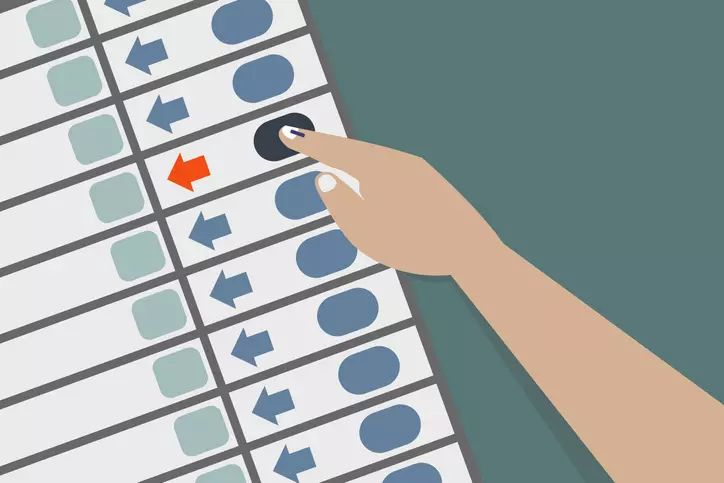
Everywhere the SIR has been met with confusion and controversy — BLOs committing suicide citing overwork and unrealistic timelines, public outcry over names being dropped from draft rolls, accusations of vote fraud... Representative image, iStock
Incidentally, following the poll victory in Bihar, BJP leaders too had hailed the “clean electoral rolls” following the SIR in the state and predicted a repeat in West Bengal in the 2026 assembly elections there. Of course, the BJP, or NDA, narrative is that opposition parties had been benefitting from alleged bogus voters on the rolls.
“Bihar went to the polls after a special intensive revision of the electoral rolls and the results speak for themselves. Now it is Bengal’s turn. Once a clean voter list is prepared through the SIR, removing fake voters, the BJP will achieve a similar sweep in Bengal,” BJP leader and leader of opposition in the West Bengal assembly, Suvendu Adhikari, had claimed at the time.
The SIR in West Bengal and eight other states and some Union Territories was rolled out in October-November 2025. While the initial days were marked by voter confusion on filling in forms and supporting documents to furnish, it quickly gave way to the horror of BLO suicides.
“We [the BLOs] are facing the most difficulties. The biggest issue is the workload. We are completely overburdened. There’s no time for us to eat or rest,” a government school teacher in UP, who has been roped in as a BLO, tells the Federal on condition of anonymity. “So many people come at the same time. Everyone is in a hurry. When someone asks us something, we can only check and tell them online. People don’t have that much patience. While we’re solving one person’s problem, another one says, ‘Do ours now’. They start arguing and fighting.”
As the face of the exercise, it often falls on the BLO to dispel fears surrounding the exercise. “In minority communities, there was visible concern, as many felt this could be linked to the NRC [National Register of Citizens], which is understandable given the character of the [present] central government. At the same time, there was strong community support in minority-dominated areas and most residents were ready with documents even during our first home visits,” recalls a BLO in Kerala’s Malappuram district.
Despite the best of efforts on the part of the masses, however, the number of those who find their names missing from the draft rolls, or who are being called to hearings for alleged discrepancies in documents, is not insignificant.
Take the example of 70-year-old Sheikh Muzambil, a farmer living in Joymolla village in West Bengal’s Hooghly district. Illiterate, he says he was advised by a government official who was helping him fill out an official form decades back to drop the family's last name of Mandal from his name because it was becoming “too long”. Muzambil agreed, but there was no affidavit, no documentary record of the change. Meanwhile, his three children retained the family name when they were admitted to school.
Now, the ECI has flagged this discrepancy between his and his children’s names; ironically, the ‘mismatch’ has been highlighted only in the case of one of his two sons. Twenty-eight-year-old Sheikh Habib Ali Mondal has been summoned to appear before a hearing panel to establish that Muzambil is indeed his father.
“What will happen to him if the election commission is not convinced that I am his father? My entire family is going through tremendous mental stress," confides a worried Muzambil. For them, it’s become a matter of his son’s very identity and future.
Stories like Muzambil’s are being reported from every state where the SIR has been rolled out.
In Chennai, K Harish, a 57-year-old who works as a security guard, rues that despite having voted in almost all elections since getting his voter identity card at the age of 18, his name is now missing from the draft rolls. “It’s making me question if all the procedures are being followed properly by ECI. After all these years, I have to prove my identity to them to get my right to vote,” he fumes.
For Ramesh Prasad, a daily wage labourer in Lucknow, who says his name has been dropped from the list in his native village of Jaunpur, the most worrying part of getting his name included from Lucknow is the potential loss of income. “I went to the BLO twice, but it was taking so long that I came back. The SIR process has created difficulties for people like us because if we don’t work even for one day, our earnings are lost,” he says.
In one way at least, however, the SIR has been a great leveller. The poor, or the illiterate, are not the only ones at the receiving end of “mismatches” or “logical discrepancies”.
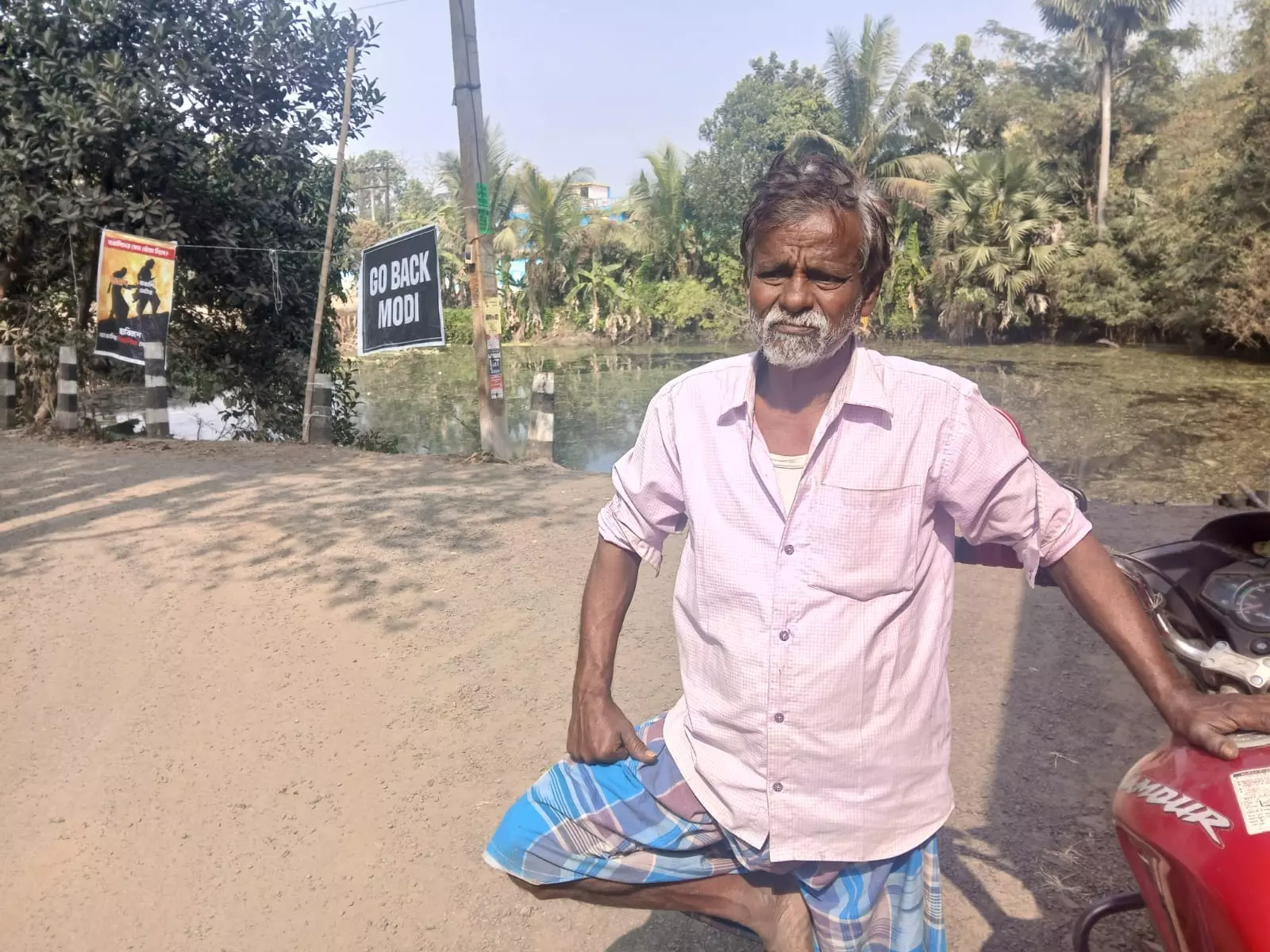
70-year-old Sheikh Muzambil of West Bengal, says he was advised decades back to drop the familys last name of Mandal. But his three children retained it. Now, the ECI has flagged this discrepancy for one of his sons. Photo: The Federal
Thirty-six-year-old Janaki Sree, an engineer based in Kerala’s Guruvayoor, was born in Chennai because her parents were working there at the time. “After they retired, we returned to Guruvayoor in 2006. I voted for the first time in the 2011 assembly election. But my family did not have voter registration in Kerala in 2002 [when the previous SIR was conducted in Kerala]. Unfortunately, my parents were not very politically active and were not enrolled in Chennai either. Now it has become difficult for us to trace my grandparents’ details in the voters’ list, which we could not do. I have submitted other documents for the hearing and hope that all three of us will be included in the list.”
Meanwhile, in Bengal, Nobel laureate Amartya Sen too has received a hearing notice from the EC because his age difference with his mother was found to be less than 15 years, according to the enumeration form. What has probably escaped the notice of the poll body, however, is that the legal marriage age for women in India was fixed at 18 years (and 21 years for men) in 1978, long after 92-year-old Sen was born. Before that, marrying and bearing children before the age of 18 was not uncommon.
And while “What’s in a name” may be one of the most oft-repeated lines written by Shakespeare, it’s not a philosophy that immediately sticks with the ECI, even when an alleged discrepancy has a perfecctly logical cultural or spiritual explanation. Documented proof is needed.
Sayan Dev Chatterjee, son of West Bengal minister Sovandeb Chattopadhyay, has found himself in SIR trouble after the ECI flagged that while he uses the last name Chatterjee, his father writes Chattopadhyay. The two are used interchangeably in Bengal — the first a shorter version of the second — much like Mukherjee and Mukhopadhyay, or Ganguly and Gangopadhyay.
Many Hindu monks, such as those from the Ramakrishna Math and Mission, have also received hearing notices because the names of their biological parents, whom they renounced after taking monastic vows, differ from the names of the spiritual gurus they now recognise as parental figures. Additional complications arise for monks who do not possess affidavits linking their birth names to the ordained names they adopted upon entering the order.
Similarly, a nun from The Missionaries of Charity had to attend a hearing because her form listed her religious superior as her guardian, a standard practice in the order, instead of her biological parents.
Also read: ‘Dead’ voters walking in Bihar, hundreds deleted from rolls in villages near Patna
For opposition parties, the SIR and the ECI’s role has become one of the primary issues to bond over with the masses.
While the Trinamool Congress in Bengal has been vociferous in criticising the discrepancies — the party’s Rajya Sabha MP Derek O’Brien has described the process as “software‑intensive rigging”, questioning the lack of transparency in how the discrepancies were generated — Saravanan Annadurai, DMK official spokesperson, claims, "SIR has destroyed the credibility of ECI”. “SIR exercise has been done in the past, but it was more inclusive and the idea was to include more people in the electoral roll to encourage the participation of people in the elections. When SIR was held earlier, it was not an exercise to prove citizenship but an electoral revision, which is not the case currently,” he adds.
In a democracy, says the Congress’s Rajya Sabha MP Imran Pratapgarhi, the voter is all-important. “Who will form the government and who will sit in Opposition is decided by the voter. But this can truly happen only when the Election Commission, which is responsible for conducting the elections, acts with fairness. What we have seen increasingly over the last 10 years, as our leader, Rahul Gandhi, keeps pointing out, is that the voter has been removed completely from this equation,” he says.
The criticism has done little to daunt the confidence of the BJP. The party’s Bengal spokesperson, Debajit Sarkar, dismissed all opposition allegations, saying, “There are bound to be problems in an exercise of this magnitude. But as they say, there is no gain without pain.” Vijay Kumar Bhurji, a BJP leader in UP, echoes him when he calls the SIR process “a purification of the voter list”. “This was a necessary procedure because a large number of bogus voters had been added.”
N Gopalaswami, former Chief Election Commissioner of India, too believes that it's not completely true that the exercise was not fair, or that it was not done at the right time.
“We also need to tackle the issue of illegal immigration. The need to make the corrections is more when we have elections around the corner,” he explains.
The Federal also tried reaching out to the chief election commissioner and election commissioners over the phone for a response, but received none.
Meanwhile, for those whose names are missing from the draft rolls, a celebration of National Voters’ Day “would be like rubbing salt on wounds”, says the Congress’s UP spokesperson, Raj Sharma.
“National Voters’ Day is meant to celebrate the right to vote, but against the backdrop of the SIR, it has turned into a struggle just to secure that right,” agrees Ranjit Bain of the People’s Forum to Save the Country, a newly formed platform advocating for citizens’ voting rights in response to the “flawed” SIR exercise.
Zaheeb Ajmal, a Patna-based activist who has worked closely with various civil society groups to ensure that legitimate voters were not delisted during the SIR, adds, “my whole experience of dealing with the EC apparatus during the SIR left me convinced that the voters’ rights and interests are of no consequence to the Election Commission.” “Try telling a poor 70-year-old man for whom the vote is the only power he wields that he can no longer vote because he was unable to present some document and then ask him to celebrate Voters’ Day; it’s the cruellest joke you can play on him.”
Ironically, on the occasion of National Voters’ Day, the election commission is reportedly all set to confer the “Best Election District Awards-2025, Special Awards and Media Awards” for election management and voter awareness in Bihar for the 2025 assembly elections in the state.
Also read: How West Bengal is pushing back against BJP’s Bangladeshi infiltration narrative
“The Election Commission’s first and foremost duty is towards the people of this country,” says Kushwaha, “because it is those people who make up our democracy, which the EC is constitutionally mandated to safeguard by ensuring free and fair elections”. “If the EC starts deliberating disenfranchising legitimate voters because those voters vote for the Opposition, then it is acting against the interests of the country. You can keep celebrating Voter’s Day, but if the voter has lost confidence in your (EC’s) ability to protect his vote, then what is the point,” Kushwaha alleges.
Not a part of this political discourse surrounding the SIR and yet echoing the allegations raised by opposition leaders, Sarvesh Kumar Pandey wonders how he can find the time to push through with the process of getting his name back on the electoral rolls. “It’s not possible for me to keep going back repeatedly to get Form 6 [for inclusion of name in the electoral rolls]. So what should I do in this situation? My name has been deleted from Sonbhadra. Whether it will get included in Lucknow or not is uncertain. In such a case, what meaning does Voters’ Day hold for me?” he asks.
(With inputs from Puneet Nicholas Yadav, Samir K Purkayastha, Rajeev Ramachandran, Shilpi Sen and Shweta Tripathi)