- Home
- India
- World
- Premium
- THE FEDERAL SPECIAL
- States
- Perspective
- Videos
- Sports
- Education
- Entertainment
- Elections
- Features
- Health
- Business
- Series
- In memoriam: Sheikh Mujibur Rahman
- Bishnoi's Men
- NEET TANGLE
- Economy Series
- Earth Day
- Kashmir’s Frozen Turbulence
- India@75
- The legend of Ramjanmabhoomi
- Liberalisation@30
- How to tame a dragon
- Celebrating biodiversity
- Farm Matters
- 50 days of solitude
- Bringing Migrants Home
- Budget 2020
- Jharkhand Votes
- The Federal Investigates
- The Federal Impact
- Vanishing Sand
- Gandhi @ 150
- Andhra Today
- Field report
- Operation Gulmarg
- Pandemic @1 Mn in India
- The Federal Year-End
- The Zero Year
- Science
- Brand studio
- Newsletter

With rising incidents of crimes against senior citizens, how to make Indian cities seniors-friendly
According to the latest data released by the National Crime Records Bureau (NCRB), crimes against senior citizens in India saw a sharp rise of 16.9 per cent in 2024, with 32,602 cases registered, as against 27,886 in 2023. As experts cite vulnerability rooted in many of them now living on their own, the seniors also talk of the emotional need to be seen and counted.

Sixty-four-year-old Arun Kapoor, a retired government school teacher, has been living on his own ever since the second Covid wave, which hit India in 2021, claimed his wife. His two sons live in the US with their families, visiting him once every two years, he says. For him, the first step towards making cities seniors-friendly would be “to acknowledge their existence”.“The young today...
Sixty-four-year-old Arun Kapoor, a retired government school teacher, has been living on his own ever since the second Covid wave, which hit India in 2021, claimed his wife. His two sons live in the US with their families, visiting him once every two years, he says. For him, the first step towards making cities seniors-friendly would be “to acknowledge their existence”.
“The young today see grandparents or even parents as people whom you visit for vacations. A few days in a year or two,” he says.
The loneliness he talks of, faced by many senior citizens — those above 60 — with children working abroad or in other cities, can cause more than emotional damage. While family is not above abuse, living alone, when advancing age and resultant decline in health could make one dependant on hired help, puts the elderly at increased risk of harassment by caregivers and domestic helps, manipulation by fraudsters and worse.
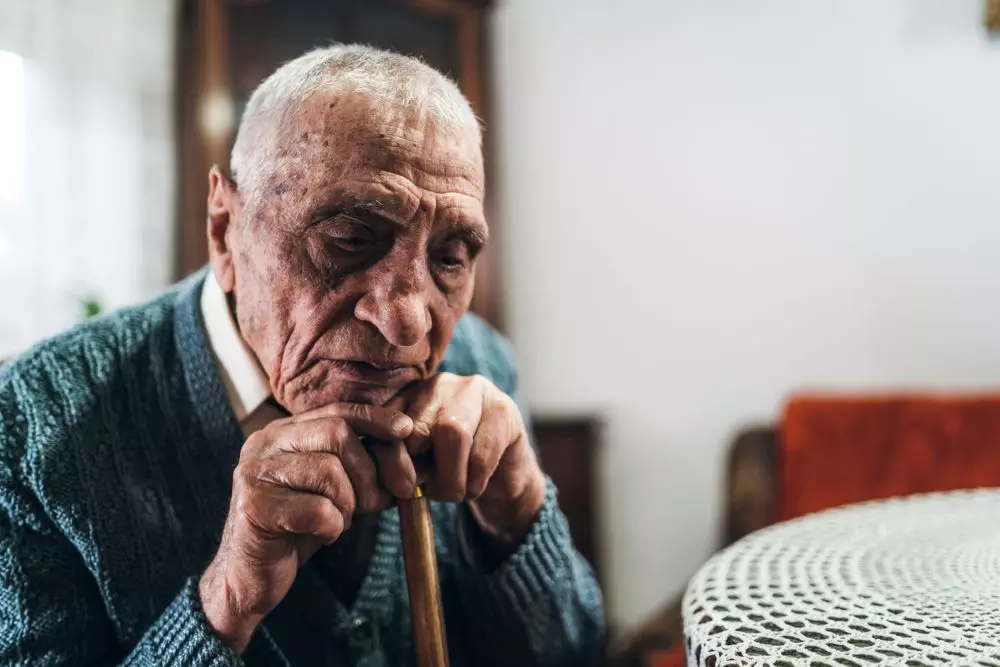
According to the latest data released by the National Crime Records Bureau (NCRB), crimes against senior citizens in India saw a sharp rise of 16.9 per cent in 2024. Photo: iStock
According to the latest data released by the National Crime Records Bureau (NCRB), crimes against senior citizens in India saw a sharp rise of 16.9 per cent in 2024, with 32,602 cases registered, as against 27,886 in 2023. Delhi saw the highest number of such cases — 1,267 — though the number is less than in 2023. The rate of filing chargesheets (51.6 per cent) was also among the lowest as compared to the metropolitan average of 59 per cent.
While the accumulated figure intensifies the shock, daily news reports are peppered with accounts of such crimes.
Also read: How professional instability is shaping financial planning, career choices for Indians
In March last year, an elderly couple was found murdered in their north-west Delhi residence, with the police arresting the domestic help for the crime. Earlier this week, Delhi police arrested a couple for allegedly targeting elderly people in e-rickshaws and stealing their valuables.
In Telangana, a retired cop’s wife (also a senior citizen) was allegedly murdered during a robbery attempt in Hyderabad’s Jubilee Hills earlier this month, while a senior citizen couple in Kowkoor, Hyderabad, was allegedly tied up and robbed by a gang.
In Andhra Pradesh, in January last year, police cracked a series of thefts in Prakasam district, where elderly women were allegedly being targeted using drinks laced with sleeping pills, and jewellery stolen.
Karnataka too has seen a steady rise in cases of crime against senior citizens; from 1,583 cases registered in 2022, the number rose to 1,840 in 2023 and 4,247 in 2024.
Retired Kerala cop PK Radhakrishnan also draws attention to online fraud targeting senior citizens.
“I recall a case from when I was working. A retired bank employee and his wife came in with a complaint. His retirement benefits, amounting to nearly Rs 1.8 crore, had been swindled in a pre-IPO stock fraud. He was literally in tears. He was a well-educated man and his wife was also a retired officer, yet they had lost their entire life savings,” he recalls, adding, “Elderly people, who often have considerable free time and access to online gadgets, are increasingly becoming easy targets for cyber fraud.”
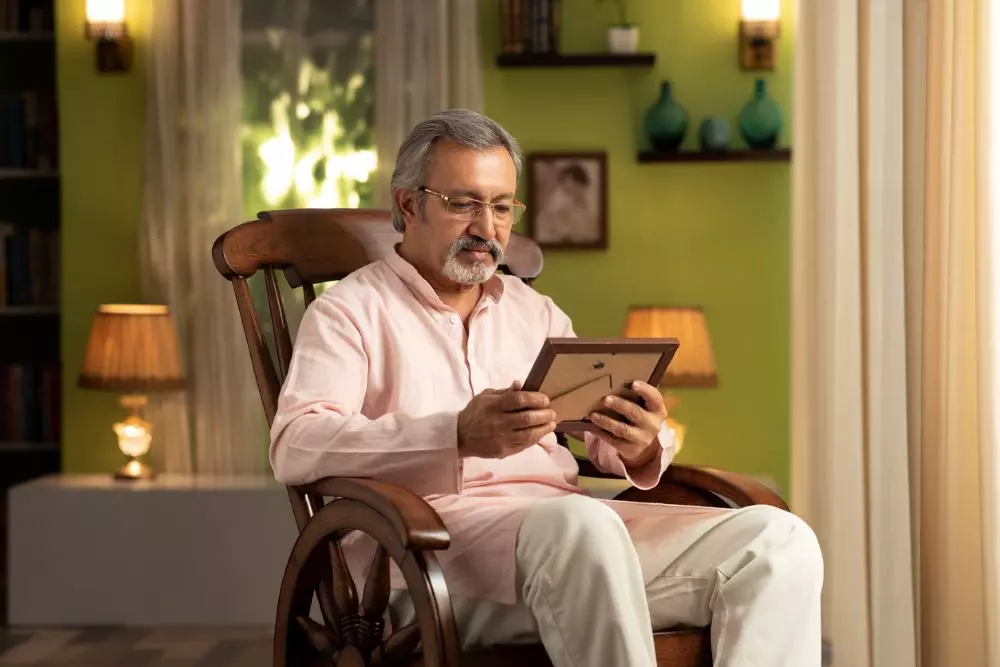
Experts say, for senir citizens the risk is no longer just crime on the streets. “It is increasingly about isolation, delayed response systems, and the absence of structured community support inside residential spaces." Photo: iStock
In a 2023 paper titled ‘Elderly Exploitation in India: Assessing Crime Patterns and Implication’, published in the International Journal of Research and Analytical Reviews, writer Dr Vishal Anand states, “Senior populace, who should be enjoying their golden years, often find themselves vulnerable due to the misconception of weakness and fear of reporting against these heinous crimes,” adding perpetrators can be anyone “from acquaintances to complete strangers”.
About 8.6 per cent of India’s population — 10.38 crore people — comprised senior citizens at the time of the 2011 Census. The number is expected to reach 22.7 crore, or 15 per cent of population, in 2036, according to the Technical Group on Population Projections (2011-2036) for India and States report, released in July 2020.
Also read: Why Goans living along the Mandovi are against the entry of a new mega casino vessel into the river
Which begs the question, how to make our cities senior-citizen friendly?
The Maintenance and Welfare of Parents and Senior Citizens Act, 2007, provides for establishment of old age homes, medical care of senior citizens and protection of their life and property. Many states, too, have made a range of provisions for their care.
Sixty-eight-year-old K Latha, who used the free daycare service for senior citizens launched in Tamil Nadu in 2025 under the Anbucholai initiative, for three months while staying at her son’s house in Chennai, says the centres kept them “physically and mentally active”. “As of now, these centres are available only in specific districts. Officials told me they would be expanded. I would be happy if such a centre were available in my village in Tiruvallur,” she adds.
But often there is little awareness of available help.
“National and state helplines are available for elders seeking assistance related to free shelter and counselling services. But these toll-free helplines have to be popularised among the needy,” says R. Elango, who heads the Elders for Elders Federation, a voluntary organisation working for the rights of senior citizens.
He adds: “The Tamil Nadu government operates five to ten old-age homes in each district, offering free shelter and food services. But only a few opt to live in old-age homes. The stigma associated with staying in old-age homes persists in our society.”
In Kolkata — which is emerging as one of India’s most ageing metropolitan cities owing to low fertility rates, shrinking household sizes and migration of working-age population, with people aged 60 and above accounting for 11.76 per cent of the population, according to Census 2011-based urban ageing analyses — Kolkata Police launched the senior citizen initiative ‘Pronam’ in 2009, as a community policing programme for elderly residents.
The programme aims at maintaining a police station-wise database of registered elderly residents and conducting periodic outreach through phone calls and home visits for those living alone. But despite rising concerns of abuse and vulnerability among senior citizens in urban households, the programme has enrolled fewer than 50,000 senior citizens so far, say sources in Kolkata Police. Both police sources and senior citizens in the city claim that the initiative has often remained more visible in official records than in day-to-day impact on the ground, with implementation varying across neighbourhoods.
“I am not even aware of this initiative. Nobody from the police has approached me either,” says Anindita Roy, 68, who lives on Hindustan Road with her nonagenarian mother. For safety, she says, “I do not open the door unless I recognise the voice. One feels unsure of even delivery personnel now.”
One reason for Kolkata’s increasingly ageing population, according to experts and studies, is the outmigration for employment.
Even in a gated complex in upscale New Town, security feels conditional. “Security guards are present, but there is no certainty about emergency response or how quickly help will arrive if something happens inside the flat,” says Avik Roy, a 70-year-old, living alone in a high-rise apartment in the area.
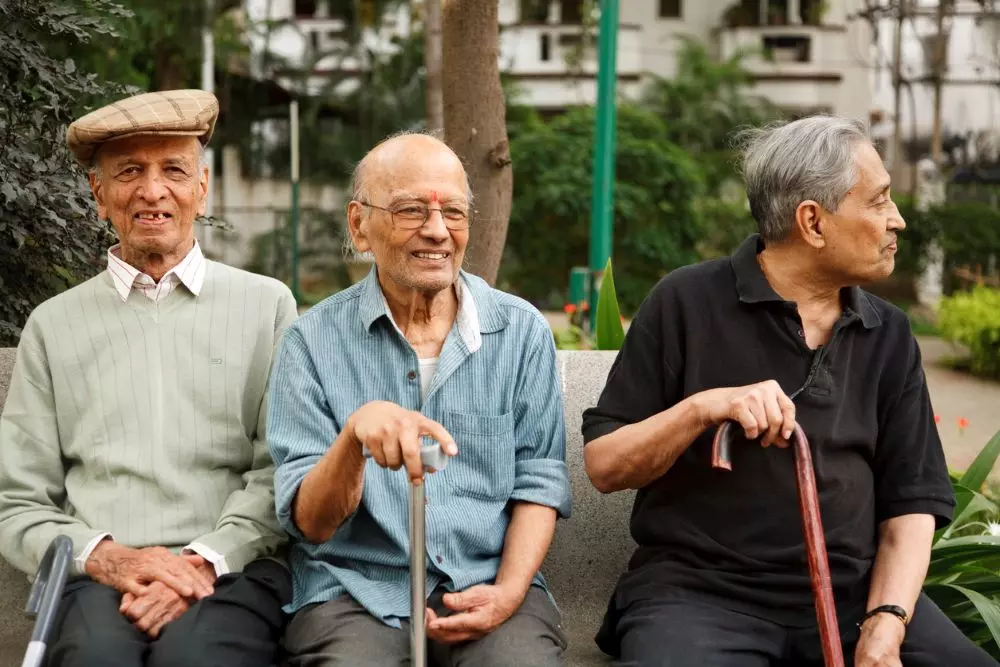
Many are now moving to assisted-living complexes for better support and security. It also brings in companionship. Photo: iStock
In Bengaluru, Adugodi sub-division deputy commissioner of police Vasudev says, “Police have advised senior citizens to speak to delivery personnel or unknown visitors only through windows or from behind grills”. He adds that senior citizens should keep emergency numbers such as police, ambulance services, and nearby hospitals on speed dial in their phones. “Panic buttons should be installed inside homes. CCTV cameras must be installed and regularly audited every week to ensure they are functioning properly. Apartment corridors should mandatorily be equipped with CCTV surveillance cameras,” he says.
As Kolkata-based advocate Nabapallab Roy of the Thakurpukur Centre for Peace and Development Initiative, a non-profit working with the elderly, points out, the threat for senior citizens — he talks about Kolkata, but it could be equally true of any Indian city — is no longer just crime on the streets. “It is increasingly about isolation, delayed response systems, and the absence of structured community support inside residential spaces”.
Take, for example, the case of 75-year-old Bengaluru resident Ananthamurthy (identified by first name only), who recently experienced a burning in his chest and difficulty in breathing while at home. Despite holding his phone in his hand, he was at a loss as to who to reach out to since both his children live abroad. He contacted the security staff of his apartment block through the intercom. It was they, with the help of neighbouring residents, who admitted Ananthamurthy to a hospital and ensured he received treatment. “The apartment association closely monitors the concerns and needs of senior citizens,” says the apartment association’s manager, Manjunath (identified by first name only).
Also read: How Jitu Munda — Odisha man who carried dead sister’s skeletal remains to bank — became ‘a VIP’
To ensure support, many senior citizens are now choosing to move to assisted living complexes across the country. It also offers the scope to find companionship among one's own age-group.
In Bengaluru’s Devanahalli Road, the “Serene Urbana” apartment complex with 321 flats is reserved for elderly residents. Located just five kilometres away from the airport, the apartment complex includes a library, gym, senior citizen-friendly swimming pool, and a wellness centre. While there is also a well-equipped canteen facility available on the premises, those who wish to cook at home are provided with domestic helps. Emergency medical support, including doctors, nurses, medicines, and ambulance services, is available at the complex, along with a trained team to ensure security and take care of housekeeping and other daily needs of residents. Lieutenant General Sundaram, who played a key role in the BrahMos missile project, also lives in the complex, a fellow resident told The Federal.
In Kerala, too, assisted living communities are on the rise in Kerala, says Fahad Ibnu Abdul Rasheed, a Kochi-based realtor. The reason, however, has less to do with security and more with healthcare concerns. “People are choosing to buy or rent homes in assisted living or geriatric communities largely because most of these offer integrated nursing care, hospital access, and community kitchens that provide doorstep meals,” he says.
Outside such complexes, experts push for stronger community-based support systems, such as the one which ensured timely care for Ananthamurthy.
“When society maintains good relationships with senior citizens, many instances of abuse can be reduced,” says Dargajogahalli Mallesha of the Bengaluru-based Nirantara Annadasoha Committee, which has been helping senior citizens and vulnerable people since the Covid period.
Also read: Why residents of Kerala's Thasarak village have been 'living' with fictitious characters for decades
Senior citizens themselves ask for a patient hearing of their needs and attending to those, instead of trying to broadbase care. Some, for example, would prefer independence over assisted living, but that should not come at the risk of losing security and support as needed.
For Qaisar Zaman, 86, a resident of Delhi's Mayur Vihar area, “assistance most certainly should not be understood as assisted living”. “Yes, as we get on in age, our need for assistance increases, but this doesn't apply uniformly to everyone above the age of 60”.
He adds: “Whether it is the government or people heading resident welfare associations [RWAs], they should identify things that the elderly require more than people who are younger; some mechanism to ensure their safety, security and basic medical needs are taken care of, some way to account for the financial and social wellbeing of those senior citizens who may not have any kids or whose children may have abandoned them but they want to continue living independently and not in some vridh ashram [old age home]. These things should be made integral to government duty and policy, instead of being seen as ahsan [charity]."
As Kapoor sums it up, “If you're really concerned about senior citizens, recognise that they are as much a part of your society as the youth”
“Sensitise the society about their need for company, for care, for dignity and respect. And when you do that, don't make it look like you're offering alms. At our age, we have seen enough in life to be able to tell when someone genuinely cares for us and when the concern is coming from a sense of pity or some personal [selfish] consideration," he adds.
(With inputs from Puneet Nicholas Yadav, Samir K Purkayastha, Rajeev Ramachandran, Nagaraju Jinka, Pramila Krishnan and Chandrappa M)