- Home
- India
- World
- Premium
- THE FEDERAL SPECIAL
- States
- Perspective
- Videos
- Sports
- Education
- Entertainment
- Elections
- Features
- Health
- Business
- Series
- In memoriam: Sheikh Mujibur Rahman
- Bishnoi's Men
- NEET TANGLE
- Economy Series
- Earth Day
- Kashmir’s Frozen Turbulence
- India@75
- The legend of Ramjanmabhoomi
- Liberalisation@30
- How to tame a dragon
- Celebrating biodiversity
- Farm Matters
- 50 days of solitude
- Bringing Migrants Home
- Budget 2020
- Jharkhand Votes
- The Federal Investigates
- The Federal Impact
- Vanishing Sand
- Gandhi @ 150
- Andhra Today
- Field report
- Operation Gulmarg
- Pandemic @1 Mn in India
- The Federal Year-End
- The Zero Year
- Science
- Brand studio
- Newsletter

In Odisha’s Ganjam, how the dream of a better life is taking the youth to destinations near and far
Thirty-year-old Anjarana Ramaya, who was killed in Russia earlier this month, was one among many from the coastal district who are choosing a life away from home, migrating to places within India and abroad, to seek a better life for themselves and support families.

Gopinath Lenka, originally a resident of Aska block in Odisha’s Ganjam district, has been working in Surat, Gujarat, for the past 30 years. “I left after completing secondary school (class 10). I had learnt welding work in Aska, so I easily found a job in Surat,” says Lenka, whose first job earned him Rs 230 a month. Later, he started working at the textile mills (which make Surat one...
Gopinath Lenka, originally a resident of Aska block in Odisha’s Ganjam district, has been working in Surat, Gujarat, for the past 30 years. “I left after completing secondary school (class 10). I had learnt welding work in Aska, so I easily found a job in Surat,” says Lenka, whose first job earned him Rs 230 a month. Later, he started working at the textile mills (which make Surat one of the country’s textile hubs).
A 2023 survey report, the Odisha Migration Study, 2023, conducted by a team from the Indian Institute of Technology (IIT), Hyderabad and the International Institute of Migration and Development, along with the nonprofit organisation Aide et Action, Bhubaneswar, placed Ganjam at the top as the district with the highest number of current migrants at the time. When it came to the percentage of households with current migrants, however, Ganjam was placed in fourth position (29.2 per cent), after Bhadrak, Dhenkanal and Nayagarh. According to reports, the survey found migration from coastal Odisha districts like Ganjam to be linked with the “aspiration for a better life”, rather than “distress-driven as that from Western Odisha”.
Earlier this month, the dreams and aspirations of one such family in Ganjam returned in a coffin.
Also read: How professional instability is shaping financial planning, career choices for Indians
Thirty-year-old Anjarana Ramaya, whose family is from Madhabandha village, Pitatali panchayat, in Ganjam’s Chikiti block, had been working as a structure fitter in a construction company at the Gazaprom oil refinery in Russia for more than a year, according to his family. He was killed on May 17 in a Ukrainian drone strike on Moscow.
The youngest of four siblings, Ramaya’s family says he would be in daily touch with them. Except on the night of May 16, when no call came. Hours later, the family learnt of his death. Two others, from Ganjam’s Rangeilunda block, 22-year-old G Tejeswar Reddy and 35-year-old G Khetrabasi Reddy, both residents of Kotharsingh village, reportedly sustained injuries in the strike and are undergoing treatment in Russia.
Following Ramaya’s death, the family reached out to Ganjam district collector V Keerthi Vasan for help in arranging for his mortal remains to be brought back home. The body reached Bhubaneswar’s Biju Patnaik International Airport on May 21, and was brought back to the village from there, as teary-eyed family members and neighbours waited to bid him a final farewell.
Days later, the 30-year-old’s brother, Ganesh, still appears to be in a daze at the cruel turn of events. “I can’t believe that my brother is no more,” he repeats ever so often. “We had such a big, beautiful dream, everything has crashed down, we don't know how to cope with life after him,” he adds, haltingly.
Not long back, Ramaya had spent two months at home on holiday before returning to Russia. The memories are all that his family can cling to now that he is gone.
Interestingly, Ganesh too claims to have worked for some months in Russia. Now he works as a farmer in the village.
According to residents of Madhabandha, the family is poor, landless, and Ramaya’s father had incurred debts in marrying his two sisters. “They depended heavily on Ramaya’s income. Part of the family’s debts had been paid off from what he sent home in the past year,” says a neighbour speaking on condition of anonymity.
Others in the village remember him as a fun-loving youth. “He was an adorable boy, very sportive, always smiling,” recalls Delli Rao, 57, who has also spent time as a migrant worker abroad.
While migration from Ganjam is not new, say those in the know, the destinations are traditionally mostly within India, rather than abroad. According to the Odisha Migration Survey 2023, Karnataka, Tamil Nadu, Gujarat, Andhra and Maharashtra are some of the popular draws. Locals, however, point out that for Ganjam residents, the most popular destination has traditionally been Surat.
The movement is cyclical, with many returning home for festivals or even to vote, before returning to their preferred place of work.
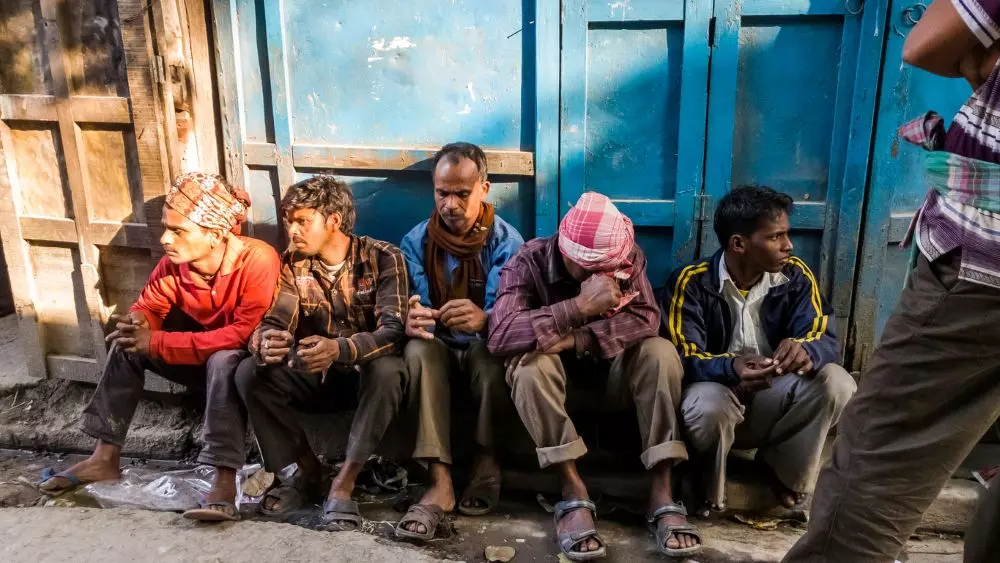
while the primary source of livelihood in the district is agriculture, locals claim 'increasing unemployment', with aspirational lifestyle the main reason behind migrantion. Photo: iStock
Senior journalist Bighneswar Sahu pegs Ganjam’s migrant population in Gujarat alone to be approximately 10 lakh. “In Surat’s textile manufacturing units, roughly over 8 lakh Ganjam residents are engaged, many of them are considered experts in their trade,” Sahu says.
But as Chikiti’s Bharatiya Janata Party (BJP) MLA Manoranjan Dyan Samantara points out, “My constituency consists of people of different castes and communities, including fishermen and members of the Scheduled Tribes (ST). Roughly 30 per cent of the population is constituted by the Telugu-speaking community.” And according to the lawmaker, for some years, primarily those from the Telugu community have been migrating more to foreign destinations, including Oman, Turkey and Saudi Arabia. Some also headed to Russia, like Ramaya.
According to reports, a recruiting agency had sent 2000 youth from the area to global destinations in 2022. Of them, 200 from Pitatali had purportedly landed up in Turkey.
Bibhudendra Padhi, a local journalist, pegs the number of migrants from Pitatali currently working in countries like Saudi Arabia, Turkey, Canada and across various European and African countries to be around 400. As per his estimates, there are 10 from the area currently in Russia.
“The lifestyle and economic condition of the international migrant workers have changed. They live in better houses, own new bikes... Which attracts other youths to try their luck abroad,” thinks Padhi.
The aspiration has led to the opening of training-cum-placement agencies, promising starry-eyed locals their dream life abroad. Fees range from Rs 1-2 lakhs.
“All transactions are made in cash. The agencies also charge some amount (generally around 10 per cent or less) from the monthly salary of each youth recruited through them,” claims Padhi.
The trend has seen a rise in informal borrowing from private moneylenders, points out Umi Daniel, director, migration and education, Aide et Action International, South Asia. He adds: “Many migrants believe that an overseas workplace is a dignified destination. Some even sell or mortgage their land for the purpose.”
But the move is not without risks. Daniel talks of cases whether people have purportedly been made to work in countries other than the promised location. “However, in case of a mishap, the middlemen [agencies] are out of the picture; they wash their hands off. Those running such shops locally are small fish in the supply chain. They are not even registered. The original owners are rich, influential and well-connected people who live far away from these local outlets,” he alleges.
Also read: How Jitu Munda — Odisha man who carried dead sister’s skeletal remains to bank — became ‘a VIP’
Like destinations, the demography of migrants, too, varies, at least to an extent.
“Many educated professionals from here are doing well in IT and other sectors in different countries,” says Samantara.
An ophthalmologist from the region, currently based in Brahmapur (Berhampur), southern Odisha’s economic hub, says the people of Chikiti region are hardworking, but the primary source of livelihood is agriculture. “It’s natural for the youths to get attracted to better job scopes outside. There are many educated youths (B Tech, M Tech) in the village. A few from here work in government departments. Those who have studied up to high school level or little more work as welders, fitters and helpers around the country. Many also prefer working abroad,” he adds.
That agriculture remains the primary occupational option is something that the district’s official website, too, mentions. Though it claims that the economy of the district is “supported by both industry and agriculture”, it goes on to add that “agriculture forms the backbone of the district’s economy, with more than 70 per cent of the population being dependent on it”.
Locals claim it is not enough to address the area’s “ever-growing unemployment issue”.
“Simply put, in farming, adequate amount of cash [earning] is a far cry. As a result, vast swathes of fields are left uncultivated,” says Daniel.
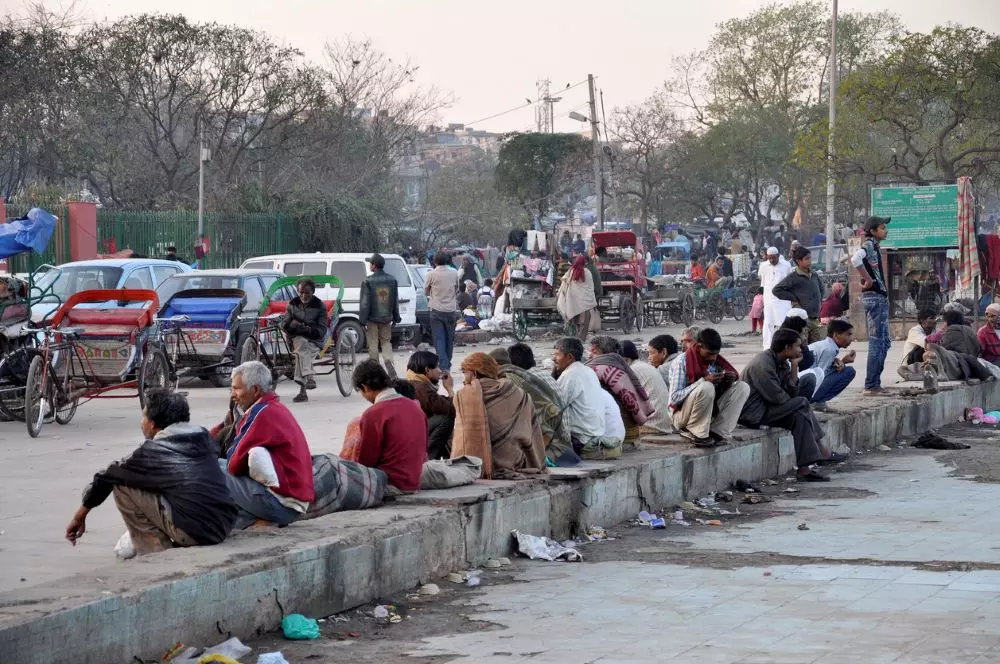
Remittances sent by the migrants have helped improve the quality of life for those back home, say experts. Photo: iStock
Explaining the factors that decide migration, he says it is driven by two factors — push (unemployment, poverty, conflict) and pull (better livelihood, superior lifestyle, aspirations). “Ganjam’s migration is somewhere between push and pull factors,” he claims.
Remittances sent by the migrants have also helped improve the quality of life for those back home. By Daniel’s estimate, Ganjam “receives around Rs 7000 crore a year from its migrant force”.
For the migrants, either within India or abroad, life is not always easy. But it is a struggle they have accepted.
“To achieve something in life, one has to adjust,” says Santosh Bisoyi, a 39-year-old from Ganjam’s Bhanjanagar town, who has been working in Surat for the past 17 years. “Initially, four-five of us stayed in a rented room, cooked for ourselves after work,” he adds, describing their life.
“I would love to work near my village, but where is the opportunity,” he questions.
With time, the earnings improve. “Newcomers earn daily Rs 700- 800, but it goes up to 40-50,000 in two-three years. One can save around Rs 2 lakh a year,” says Lenka.
It’s this dream of a better life, for oneself and the loved ones back home that holds the migrants back. There is heartache, but often they band together, trying to create their own little home-away-from-home. “We have built a Jagannath temple here. A bigger temple is under construction,” says Lenka.