- Home
- India
- World
- Premium
- THE FEDERAL SPECIAL
- States
- Perspective
- Videos
- Sports
- Education
- Entertainment
- Elections
- Features
- Health
- Business
- Series
- In memoriam: Sheikh Mujibur Rahman
- Bishnoi's Men
- NEET TANGLE
- Economy Series
- Earth Day
- Kashmir’s Frozen Turbulence
- India@75
- The legend of Ramjanmabhoomi
- Liberalisation@30
- How to tame a dragon
- Celebrating biodiversity
- Farm Matters
- 50 days of solitude
- Bringing Migrants Home
- Budget 2020
- Jharkhand Votes
- The Federal Investigates
- The Federal Impact
- Vanishing Sand
- Gandhi @ 150
- Andhra Today
- Field report
- Operation Gulmarg
- Pandemic @1 Mn in India
- The Federal Year-End
- The Zero Year
- Science
- Brand studio
- Newsletter

How an art style that flourished in 18-19th century Patna is getting a second shot at popularity
Patna Qalam, or Patna Kalam, was known for its unique style of direct brushstrokes, without the use of any pencil outlines. Over time, it faded into the pages of history. However, following the use of a Patna Qalam painting in a 2010 calendar by the Bihar govt, efforts are on to revive it.

A school of art that flourished in the 18th and 19th centuries in Patna, before fading into the pages of history, is being rediscovered and revived. Named after the Bihar capital where it thrived, Patna Qalam, or Patna Kalam as it is also known, drew upon the ordinary, everyday life of the city by which it was identified, for its subject.Various reports cite various sources to piece together...
A school of art that flourished in the 18th and 19th centuries in Patna, before fading into the pages of history, is being rediscovered and revived. Named after the Bihar capital where it thrived, Patna Qalam, or Patna Kalam as it is also known, drew upon the ordinary, everyday life of the city by which it was identified, for its subject.
Various reports cite various sources to piece together the history of Patna Qalam. The story goes that the style, “a blend of Mughal and European traditions”, originated in Udaipur (in the erstwhile Rajput states), before practicing artists made their way to the Mughal courts, sometime in the 16th century. However, the lack of patronage during the reign of Aurangzeb (1658-1707) forced them to relocate, this time to Murshidabad (in West Bengal). Following the Battle of Plassey (in 1757), however, and alleged attacks by the new nawab Mir Jafar’s son, Mohamed Sadiq Khan, the artists migrated again, to Patna.
“Many of these artists who migrated to Patna in the mid-18th to mid-19th century and created a distinctive art form called Patna Qalam, had earlier worked in the court of nawabs of Murshidabad,” said Rachna Priyadarshini, of Your Heritage, a Bihar-based start-up, which promotes the state’s heritage, culture and traditions.
She added: “Patna Qalam paintings stand out because of their fine brushwork, realistic everyday figures and soft, earthy colors, set against plain or minimalistic backgrounds that avoided elaborate landscapes, backgrounds and borders, to keep the focus on the central subject.”
Also read: How the centuries-old tradition of Tamil Nadu’s Athangudi tiles is finding a place in modern homes
Experts point out the lack of ‘grandiose’ that often mark royal portraits or artworks of the time, or the departure from the religious themes, in Patna Qalam paintings.
"You can find a portrait of a bhishti [water bearer], or a painting of a cobbler mending shoes. These works captured the then society in Patna and its nearby regions," Bhairab Lal Das, co-convener of the Patna chapter of the Indian National Trust for Art and Cultural Heritage (INTACH), told The Federal. "Thus, Patna Qalam paintings not only hold cultural significance but are also the repository of historical data.”
Referring to another Patna Qalam work, which is among the collection at Planet Patna, a space which showcases the city’s history and culture, Bhairab added: "If you see this painting showing the sati practice [banned by the British in 1829], you will also find a Muslim boy in the frame. Which is a reflection of the cordial relations between the two communities at the time." The painting, titled ‘Sati’, dates back to the early 19th century, but the name of the artist is not known.
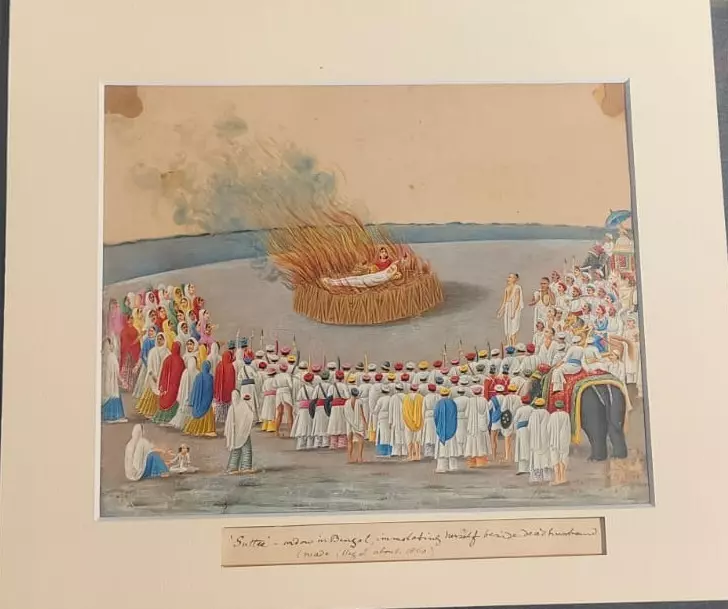
Sati, an early 19th century Patna Qalam painting. Photo: By special arrangemet
The artists of Patna Qalam paintings used the ‘Kajli Seahi’ method for their works; a unique painting style in which brushstrokes were directly used on the canvas, without any pencil outlines. Another distinctive feature of this painting was that it used squirrel-hair brushes for precision. The paintings were made of natural dyes on abrak (mica) papers.
"Since these paintings depicted Patna's culture and society, many British officers would take them back to England to show them to their friends and families. Thus, we also see many of the paintings use pastel shades to cater to the European taste," Bhairab pointed out.
Some experts, however, cite a slightly different reason for the British interest in Patna Qalam works. “They [British officers] used Patna Qalam to show the poverty in Bihar. This is why these paintings used working-class people as subjects,” countered Azfar Ahmad, museum director at Planet Patna.
Also read: How Hyderabad’s iconic palaces and monuments narrate a story of past architectural glory
The growing use of lithography and the invention of the camera (sometime in the early 1800s), however, dealt a blow to the “usefulness” of Patna Qalam and with dwindling patronage following Independence, the style gradually fell out of use.
Till, the Bihar government, in a 2010 calendar, used a Patna Qalam painting, triggering a renewed interest in the style and efforts to revive it.
Since 2020, Your Heritage and INTACH have been organising the Patna Qalam workshops — a total of seven in the past five years — each having an average participation between 25 and 30 students.
Once upon a time, Patna Qalam boasted well-known artists such as Sewak Ram, Shiva Lal and others. But when INTACH decided to organise workshops to revive the art form, they ran into an immediate challenge — the lack of a teacher who could hold these workshops.
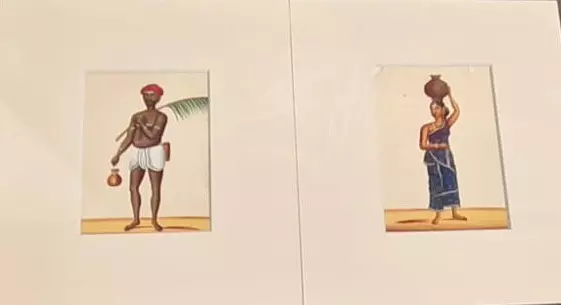
Old Patna Qalam works. Photo: By special arrangement
“While Patna Qalam paintings were a part of the syllabus in art colleges, there were no teachers in the discipline, because there were no takers for the course. After meeting many people, we were finally able to find professor Jitendra Mohan, who had a basic idea of Patna Qalam paintings. First, he brushed up his own skills before teaching the workshops,” Bhairab explained.
Mohan himself is overwhelmed by the response he has received. “One of the workshops had around 20 participants,” he said.
While presently INTACH is only organising Patna Qalam workshops in the Bihar capital — the most recent one in December 2025 — according to Bhairab, there are plans to also have residency programmes for artists involved in creating this work.
The workshops have helped participants not just learn about a forgotten art style, but also to connect and give artistic expression to the state’s cultural heritage.
“One of my paintings, depicting the Chhath festival in the Patna Qalam style, was also showcased at an exhibition held at the Lalit Kala Akademi. I aspire to pursue a degree in art and further contribute to the Patna Qalam style,” said Anurag Kumar Verma, an 18-year-old student who had participated in one of the workshops.
The renewed interest in the style has also purportedly piqued the curiosity of some of the descendants of old Patna Qalam artists. One of the Patna Qalam painters of yore was Munshi Mahadev Lal, whose family members had given up the practice of Patna Qalam after his death. “Now, two members of the sixth generation of his family have participated in the INTACH workshops,” claimed Bhairab.
Also read: What Telangana’s Mudumal Menhirs say about India’s past astronomical prowess
Meanwhile, Planet Patna has been showcasing Patna Qalam paintings in its display. According to Aditya Jalan, founder of the Planet Patna museum, most of the Patna Qalam works being displayed by them were part of the collection of Bal Manohar Jalan, grandson of Radha Krishna Jalan, a prominent businessman and philanthropist of the British era. Aditya is Bal Manohar Jalan’s son.
“We have over 300 Patna Qalam paintings and we will put many of these paintings in our gallery over time, so that people can visit and understand more about these paintings and their role in depicting the history of Patna,” Aditya added.
The Patna Museum, too, in December, held an exhibition of Patna Qalam works, titled ‘Patna Kalam: Ek Virasat’ (Patna Kalam: A Legacy).
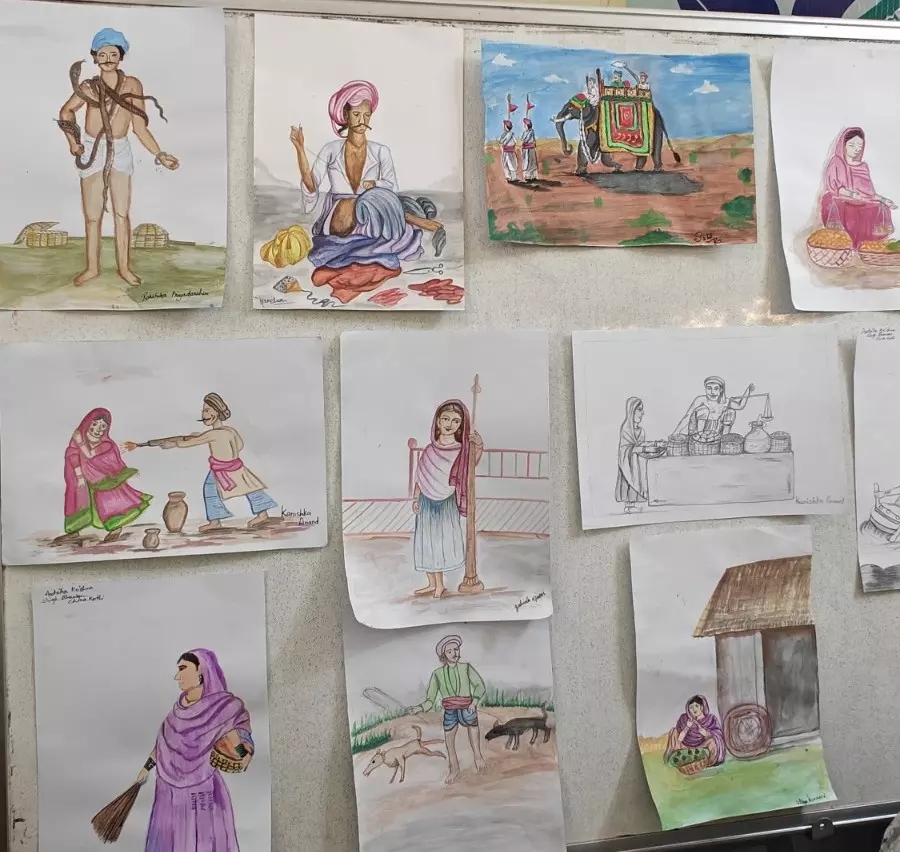
Patna Qalam works made by participants at a workshop. Photo: By special arrangement
For many now rediscovering the style, Patna Qalam holds a personal significance.
Forty-year-old Santosh Kumar, a schoolteacher and artist, got interested in Patna Qalam about 18 months ago. “For me, it is not just painting. Since I am from the city, Patna Qalam for me holds a lot of cultural relevance,” he explained.
“Since I was a student of fine arts, I already had a basic idea of this style. But when I came across this painting on social media, it piqued my interest and I enrolled myself for a workshop and started practicing it,” Santosh added.
The teacher is one among the many rediscovering both the artistic value and cultural legacy of Patna Qalam in recent years.