- Home
- India
- World
- Premium
- THE FEDERAL SPECIAL
- States
- Perspective
- Videos
- Sports
- Education
- Entertainment
- Elections
- Features
- Health
- Business
- Series
- In memoriam: Sheikh Mujibur Rahman
- Bishnoi's Men
- NEET TANGLE
- Economy Series
- Earth Day
- Kashmir’s Frozen Turbulence
- India@75
- The legend of Ramjanmabhoomi
- Liberalisation@30
- How to tame a dragon
- Celebrating biodiversity
- Farm Matters
- 50 days of solitude
- Bringing Migrants Home
- Budget 2020
- Jharkhand Votes
- The Federal Investigates
- The Federal Impact
- Vanishing Sand
- Gandhi @ 150
- Andhra Today
- Field report
- Operation Gulmarg
- Pandemic @1 Mn in India
- The Federal Year-End
- The Zero Year
- Science
- Brand studio
- Newsletter

How fresh finds, research progress made 2025 a significant year for science and technology
From a solar probe to turning lead into gold and discovering thriving ecosystems in the ocean's deepest trenches — a look at 2025's top 10 advances in science and technology and why, despite the highs, concerns such as lag in climate action and gaps in healthcare access continue to pull us down.

The year 2025 has been productive in enhancing our understanding of the world around us and advancing technological innovation. We have touched the Sun's atmosphere, developed light-powered computers and discovered thriving life in the pitch dark of the deepest ocean trenches. These remarkable advancements have been accompanied by grave concerns, ranging from inequal access to healthcare and...
The year 2025 has been productive in enhancing our understanding of the world around us and advancing technological innovation. We have touched the Sun's atmosphere, developed light-powered computers and discovered thriving life in the pitch dark of the deepest ocean trenches. These remarkable advancements have been accompanied by grave concerns, ranging from inequal access to healthcare and food to a climate crisis that threatens the very fabric of our society and existence. Overall, while the year saw innumerable advancements in the field of science and technology, the following ten stand out for their ability to redefine possibilities and instil optimism for the future.
1. Parker Solar Probe Dives into the Solar Atmosphere
A human-made object has entered the Sun's atmosphere for the first time and collected samples. The Parker Solar Probe, launched by the US’s National Aeronautics and Space Administration (NASA) in 2018, has glided into the Sun's outer atmosphere. The spacecraft began collecting never-before-seen data from this hostile environment during its first closest approach on December 24, 20[1] 24.
Currently orbiting the Sun in an elliptical orbit with a period of about 88 days, during 2025 it made multiple closest approaches to the Sun — on March 22, June 19, September 15 and lastly December 12, 2025 — each time reaching as close as 6.8 million kilometres to the solar surface, about 10 times the Sun's radius.
Operating while the Sun is in a more active phase of the 11-year solar cycle — which sees an increase in the number of sunspots, indicating the active state of the Sun — the probe’s instruments are providing unparalleled measurements of the solar wind and energetic particle activity. Protected by an advanced heat shield made of carbon composite, nearly 11.5 centimetres thick and capable of withstanding temperatures around 1,377 degrees Celsius, the Parker Solar Probe continues its 88-day orbits, delivering insights that are revolutionising our understanding of our closest star.
2. A Leap Forward in Optical Computing
In a breakthrough for computing technology, researchers in China successfully demonstrated a new kind of chip designed for light-based artificial intelligence hardware. Developed by the Shanghai Institute of Optics and Fine Mechanics (SIOM) under the Chinese Academy of Sciences, the feat was reported in the June 2025 issue of the journal "eLight". This new chip processes information using photons (light particles) rather than conventional electrons. Photons make the process faster and use less energy. At a clock speed of 50 gigahertz, the chip is said to perform 2560 tera operations per second, on par with high-end graphics processing unit (GPU) chips from companies like NVIDIA. For comparison, a high-end consumer processor like the Intel i7-12700K runs at 5.0 gigahertz and gives you about 100 TOPS (Tera Operations per Second).
The key innovation lies in how the chip manages light. Where typical optical processors use a single wavelength or colour of light to carry information, the SIOM design employs a special microcomb structure. This component acts as a resonator, splitting a single laser into over one hundred distinct coloured channels. All these channels travel through the same chip, which is about the size of a fingernail, simultaneously. This method is like turning a one-lane road into a hundred-lane highway, increasing data throughput by up to 100 times without requiring a larger chip or a faster clock speed. One significant benefit of using light is that it does not cause resistive heating, a major problem in electronic chips because colliding electrons generate excess heat that slows down the device. With minimal energy loss and low thermal risk, the parallel optical lanes can operate efficiently.
The chip features an optical bandwidth exceeding 40 nanometres and fully reconfigurable routing, enabling it to handle tasks ranging from image recognition to real-time signal processing. This development points to a potential alternative to today's graphics processing units, offering a path to accelerate neural networks and power AI applications with high on-chip parallelism and improved power efficiency.
Also read: Why December 4 supermoon will be 7% bigger in diameter, 16% brighter than average full moon
3. Unveiling a Brand-New Organelle
A fundamental discovery in cell biology has revealed a previously unknown organelle, a specialised structure within our cells. Named the "hemifusome" by teams from the Virginia School of Medicine and the US’s National Institutes of Health, this structure is not a permanent fixture like the mitochondria, the cell's powerhouse, or the ribosomes, which act like tiny chefs building proteins. Hemifusomes assemble only when needed to manage cellular cargo, then disassemble afterwards.
Its temporary nature is precisely why it had remained undiscovered until now. Scientists visualised it using an advanced imaging technique called cryo-electron tomography (cryo-ET). This method involves flash-freezing cells to capture highly detailed, three-dimensional snapshots of their inner workings at the nanometer scale.
The hemifusome functions as a critical logistics hub. Cells transport materials in small sacs called vesicles. The hemifusome acts like a temporary loading dock for these vesicles. It briefly connects with them to facilitate the sorting, recycling, or disposal of their cargo.
When this process malfunctions, it is linked to rare genetic disorders such as Hermansky-Pudlak syndrome, which affects pigmentation, vision and blood clotting. Beyond rare diseases, understanding this new organelle provides fresh insights into broader health conditions, including Alzheimer’s disease and certain cancers, where internal cellular transport goes awry.
4. Nipping Pancreatic Cancer in the Bud
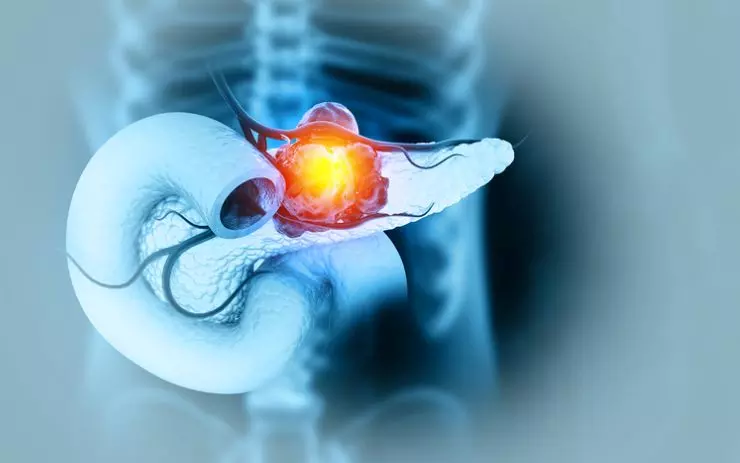
Scientists at the Cold Spring Harbour Laboratory have made progress in arresting pancreatic cancer at its earliest stage using gene editing. This is a big step forward for cancer research. Their study suggests that targeting FGFR2, a protein receptor that signals cells to grow, can block cancer growth. This target is crucial for cancers caused by a mutant KRAS gene.
Representative image. Photo: iStock image
The researchers found higher levels of the FGFR2 protein in early abnormal cell clusters, called precancerous lesions, and in some pancreatic tumours. In studies with mice, blocking this FGFR2 protein, or sometimes combining it with blocking another similar protein, EGFR, significantly reduced these lesions and slowed the formation of deadly pancreatic ductal adenocarcinoma, the most common type of pancreatic cancer. Think of mutant KRAS as a rogue driver making cells multiply uncontrollably; FGFR2 appears to be a crucial helper in this process. Therefore, inactivating it can prevent progress of the cancer.
This strategy offers a potential way to prevent or delay this deadly disease in high-risk individuals. While these findings from mouse models provide critical insights for designing early interception strategies, further clinical trials will be necessary to confirm their effectiveness in humans.
5. A New Eye on the Dynamic Cosmos
The Vera C. Rubin Observatory in Chile became operational in June 2025, signalling the commencement of a new era in astronomy. It has the world's largest digital camera. The facility released its first set of images in June 2025, showing off its incredible capabilities. In just a few hours of testing, it captured images of millions of stars and galaxies, as well as close-ups of nebulae and distant galaxy clusters. Its AI-powered algorithm could immediately identify more than 2,000 new asteroids, some of which have orbits close to Earth.
This impressive start is a prelude to the observatory's primary decade-long mission, the Legacy Survey of Space and Time. The project will repeatedly scan the entire southern sky, generating a colossal 20 terabytes of data each night. The ultimate goal is to create a continuous, high-definition "movie" of the cosmos, tracking changes like stellar explosions and moving asteroids. This unprecedented dataset will be instrumental in probing central mysteries, including the nature of dark matter and dark energy and the evolution of the universe itself.
Also read: Why Hurricane Melissa is a wake-up call on how a warming climate can intensify natural disasters
6. Invisible Signatures for the AI Age
Generative watermarking is a new technology that helps restore trust as artificial intelligence (AI) improves at creating images and text that look confusingly real. The method involves putting a hidden digital tag into an AI-generated image, audio clip, or text. Similar to security features on banknotes, this invisible marker enables computers to identify the synthetic origin of the content. The watermark is embedded at the pixel level, a scale imperceptible to the human eye.
Representative image: Photo: iStock image
Some big tech companies have started using these watermarking systems on their own, and experts say mandatory regulations should be put in place to ensure they are strictly enforced. But there are still issues, such as inconsistent use across platforms, users trying to remove or fake watermarks and ethical concerns about mistakenly marking real human-made content as AI-made. The next step in research is to develop stronger, harder-to-remove watermarks. This is important for ensuring that real and synthetic digital content is distinguished in the public sphere.
7. A Solar-Powered Solution for Carbon
To address climate change, we need new ways to remove carbon dioxide (CO₂) from the atmosphere. This is because CO₂ acts like a blanket and keeps the outgoing heat trapped in the atmosphere, triggering global warming. Scientists have developed a reactor that not only collects CO₂ from the air but also turns it into a valuable fuel powered solely by sunlight, much like photosynthesis in plants. This solar-powered device, developed by researchers at Cambridge, represents a novel approach to carbon capture and storage.
Functioning like a bright sponge, specialised filters in the reactor absorb CO₂ from ambient air at night. During the day, sunlight triggers a two-part reaction. The first step heats the trapped gas by absorbing infrared radiation from the Sun. The second step uses ultraviolet radiation from the Sun to power the semiconductor device, which triggers a chemical reaction. This reaction converts the captured carbon dioxide into syngas, a synthetic gas mixture of hydrogen and carbon monoxide, which can be used to make many different chemicals and medicines. A mirror concentrates sunlight, making this process more efficient. The team's results, published in the journal Nature Energy, show the reactor successfully produces syngas.
The researchers are now working to convert this syngas into liquefied fuels. Since these fuels would be made from atmospheric carbon, their use would not add new CO₂, creating a potential carbon-neutral cycle.
8. The Alchemist's Dream, Realised in a Particle Collider
Scientists at the European Organization for Nuclear Research (CERN) have turned lead into gold, akin to the old dream of mediaeval alchemists. They sped up lead nuclei to almost the speed of light with the Large Hadron Collider (LHC, the world’s largest and most powerful particle accelerator). When these ultra-fast nuclei near-miss head-on collision, they create strong electromagnetic fields, which are basically dense pulses of light. When these pulses strike other lead nuclei, they can knock out three protons through a process called electromagnetic dissociation, directly converting lead into gold.

Representative image: Photo: iStock image
The team of 'A Large Ion Collider Experiment (ALICE)' confirmed that gold nuclei were produced, but only in tiny amounts, and the gold atoms remained for only a short period of time. The scientists have estimated that over the past few years, the LHC would have produced about 89,000 gold nuclei per second; however, the total mass of the gold created in all these years would amount to just a few picograms.
9. The Diversifying Landscape of Artificial Intelligence
The field of artificial intelligence is rapidly evolving beyond large language models. A notable development in early 2025 was DeepSeek R1, an open-source model from China that demonstrated advanced reasoning capabilities at a significantly lower computational cost than comparable Western models, highlighting intensifying global competition.
At the same time, new types of AI are evolving. Traditional AI only responds to prompts, but new Autonomous AI Agents can now plan, use tools, and carry out multi-step tasks on their own, like coding or managing logistics. Another significant change is the move towards Multimodal AI, which can process and understand different kinds of data, like images, audio, and text, all at once. This makes it possible to use it in more ways, such as in a medical system that uses a scan, a written report and a doctor's spoken notes to aid diagnosis. There is also a trend towards developing Small Language Models. These small models, with billions of parameters rather than trillions, are best suited for personal devices, such as mobile phones.
10. Thriving Ecosystems in the Ocean’s Deepest Trenches
A startling discovery has redefined the limits of where life can exist. Chinese scientist Mengran Du and her team, using the deep-sea submersible 'Fendouzhe', discovered a vibrant ecosystem at depths of over 9,000 metres in the Kuril–Kamchatka Trench (in the Pacific Ocean). The discovery was reported in the July 2025 issue of the journal Nature. This hadal zone, in perpetual darkness and under immense pressure, was long thought to be a lifeless abyss.
The team documented a group of living organisms, such as bristleworms, tubeworms, gastropods and clams. Earlier scientists were convinced that photosynthesis, which uses sunlight, is necessary for complex life, and hence the hadal zone would be completely lifeless. The discovery shows that life at these depths uses an entirely different energy source, chemosynthesis, for survival. Microbes that are good at using chemical energy from chemicals like methane and hydrogen sulphide, that seep from the ocean floor, are the first rung of the food chain in these deep-sea ecosystems. They convert inorganic carbon into organic matter, which serves as the food source for the entire ecosystem of worms, clams, and other animals that thrive at these depths.
A World Advancing, Yet Failing Its People
Despite 2025's breathtaking science and technology advances, two stark blots remain: 21,000 preventable daily deaths from poor healthcare and hunger, and wealthy nations falling short on the 2015 Paris Agreement on climate change, pushing the world to the brink.
Research indicates that 'inequality kills'. According to data from various reports — including those by the World Health Organization (WHO), United Nations Development Programme (UNDP) and the Oxfam inequality report — approximately 15,000 deaths occur daily as a result of inadequate healthcare, with thousands more attributed to hunger. Around 2,60,000 women died from pregnancy-related causes in 2023, primarily from haemorrhage, hypertensive disorders, and sepsis. 1.5 million deaths could be avoided annually if global vaccination coverage improved. All these are preventable using our current knowledge and skills. Surprisingly, even the United States of America is witnessing increasing maternal deaths and infant mortality. The KFF’s December 2025 report, ‘Racial Disparities in Maternal and Infant Health: Current Status and Key Issues’, stated, “Pregnancy-related mortality rates among Black women are over three times higher than the rate for White women”. Another report claimed "economic violence" to be not an accident but the result of policies that favour the rich, making it harder for disadvantaged groups to be healthy and happy.
Ten years after the Paris Agreement, the world has moved forward on climate action, but not fast enough. The latest UNEP Emissions Gap Report warns that even if all countries fully carry out their Nationally Determined Contributions, global temperatures may still rise by 2.3–2.5°C (above pre-Industrial levels) this century. With present policies, the rise could be around 2.8°C. The world needs to cut emissions by 35 per cent and 55 per cent by 2035, compared to 2019 levels, to keep warming below 2°C or 1.5°C. We are not even close to this path. Few countries, like India, have made big strides in renewable energy. Still, emissions around the world have not gone down in any significant way. The world is actually having a hard time reducing greenhouse gas emissions. Current pledges remain inadequate. The U.S. withdrawal from the Paris Agreement under the Donald Trump administration has also weakened global efforts. Its emissions have fallen by only about three per cent since 1990.