Bengal elections: A three-tier strategy behind EC's bureaucratic reshuffle
With TMC MP Kalyan Banerjee moving the Calcutta HC challenging the reshuffle, a legal dimension has been added to an already contentious administrative and political battle, raising questions about the balance between state governance and electoral supervision

The Election Commission’s (EC) sweeping overhaul of West Bengal’s administrative and police machinery points to an effort to tighten control over the election machinery at three critical levels, namely top command, district-level execution and parallel monitoring.
It began immediately after the model code of conduct came into force following the announcement of the poll schedule on Sunday evening (March 15), with the removal of the entire top administrative leadership.
Govt’s ‘command chain’
The move aims to break the incumbent government’s “command chain” and prevent any coordinated “administrative bias” during the polls, according to a senior state government official who spoke on condition of anonymity.
Also read: TMC bets on women-minorities-SC/ST coalition in manifesto with '10-pledge' roadmap
Those transferred at the first go are chief secretary Nandini Chakravorty, home secretary JP Meena, director general of police Peeush Pandey and Kolkata police commissioner Supratim Sarkar among others. They are also barred from holding any election-related duties in the state.
After removing the top leadership, the poll panel moved to take control of ground-level management by replacing district magistrates (DMs), superintendents of police (SPs) and deputy inspectors general (DIGs) of police perceived as “too embedded locally”.
60 senior IAS, IPS officers shifted
The scale of the changes, beginning with the removal of the top bureaucratic leadership and extending to district-level reshuffles, marks a shift from routine pre-election transfers and is unprecedented, according to Jawahar Sircar, a retired administrative service officer who served as chief electoral officer (CEO) in West Bengal.
In all, the EC has so far shifted around 60 senior IAS and IPS officers.
The changes at the district level assume greater significance, retired IPS officer Nazrul Islam told The Federal, pointing out the importance of neutrality of district officials in ensuring credible elections.
Also read: EC's officer reshuffle in poll-bound states faces legal heat: What's the plan?
The DMs in particular play a pivotal role in elections, doubling as district election officers (DEOs) who control polling staff, logistics, counting and law-and-order coordination, among other responsibilities.
Reducing local political-administrative nexus
The broader goal behind the rejig is to reduce the local political-administrative nexus. That the Commission effected these changes as part of a targeted strategy is evident from the fact that changes were made in border districts (Nadia, Cooch Behar, North Dinajpur and North and South 24 Parganas) and minority-dominated districts (Malda and Murshidabad).
The Commission relied on field-level feedback, observer inputs and background checks, including prior action against officials over irregularities, before removing them, according to sources in the chief electoral officer’s (CEO) office.
“There are some officials who were perceived as too close to the ruling dispensation and that is why the poll panel pressed for changes at multiple levels,” Islam said.
Also read: RG Kar in the eye of the storm again as man killed in hospital lift collapse
He pointed to the appointment of Chakravorty as chief secretary earlier this year, superseding eight senior IAS officers in the state cadre, and to Rajeev Kumar joining the Trinamool Congress (TMC) as a Rajya Sabha member soon after retirement, as examples of how officials’ perceived political connections influenced the view of the Commission.
Police station-level reshuffle
The sources in the CEO office indicate that police station-level reshuffle is also in the pipeline.
The Commission has recently requested the police headquarters to provide a detailed list of officers-in-charge (OCs) and supervisory-level officers under whose jurisdiction pre-poll, polling-day, and post-poll violence occurred in 2021 and 2024, sources added.
Another key approach of the Commission is the deployment of general and police observers who report directly to the poll panel in New Delhi, creating a parallel monitoring structure not solely relying on the state bureaucracy anymore.
It has decided to deploy 478 observers, including 294 general observers (one for each constituency), along with police and expenditure observers to function as the commission’s eyes and ears on the ground.
EC’s three-tier strategy
According to officials, the Commission’s three-tier strategy is designed to address key vulnerabilities that have historically plagued elections in the state, including attempts to disrupt polling through crowding at booths, poll-related violence to intimidate opposition voters, and obstruction of voter access to polling stations.
While the Commission’s move has been by and large welcomed by almost all non-TMC parties as necessary, many question whether such transfers alone can deliver a free and fair poll.
“We support efforts to strengthen election management, but merely moving officials will not automatically guarantee free and fair polls,” said Ranajit Mukherjee, a senior state Congress leader. “The Commission must also address lakhs of genuine voters whose names have been struck off from the voter lists and ensure unbiased enforcement of rules. Otherwise, public confidence in the process will remain weak.”
Neutrality of EC comes under scrutiny
Critics like Islam further pointed out that even newly shifted officers at the district-level are still part of the state administrative structure and may remain influenced by local political ecosystems.
Further, the neutrality of the Commission itself has come under scrutiny, especially amid controversy over the Special Intensive Revision (SIR) of electoral rolls.
Ranjit Sur of Association for Protection of Democratic Rights highlighted reports that the Commission’s own officers sent informal WhatsApp instructions that appeared to alter formal SIR rules, a point now under Supreme Court notice in a plea by TMC leader Derek O’Brien.
Even seasoned observers argue the poll panel may be overreaching. Sircar said that while the Commission has the constitutional power to order transfers once the model code of conduct is in place, “having power does not mean it should always be exercised in this manner”, and warned that the “speed and extent” of the reshuffle appears “an overreach” that risks disrupting governance and undermining trust in both state administration and electoral institutions.
Mamata slams EC’s actions as ‘undeclared emergency’
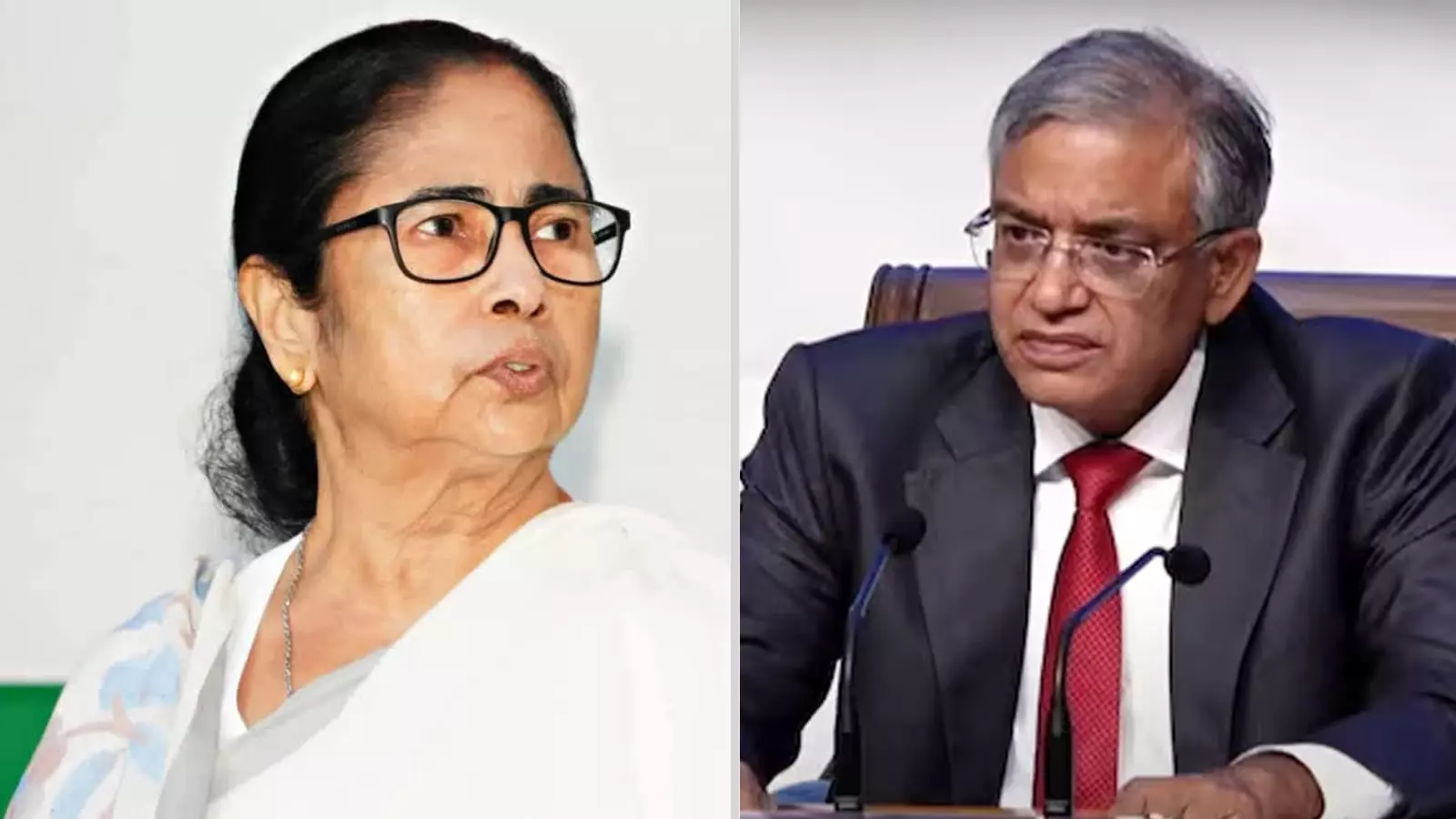
Meanwhile, West Bengal Chief Minister Mamata Banerjee flayed the Commission’s actions, describing the administrative overhaul as an “undeclared emergency” and even suggesting it amounts to “an unpromulgated form of President’s Rule driven by political vendetta”.
She has also labelled the poll panel’s decision to remove the state’s first woman chief secretary as “anti‑Bengali and anti‑women”.
Now that TMC MP Kalyan Banerjee has moved the Calcutta High Court challenging the reshuffle, a legal dimension has been added to an already contentious administrative and political battle, raising questions about the balance between state governance and electoral supervision.