In Kerala CM stalemate, a familiar Congress predicament, and a test for Rahul Gandhi
A week after UDF’s victory, Congress struggles to pick Kerala’s CM as Satheesan, Venugopal, and Chennithala battle for power amid factional rifts

A week since the Congress-led United Democratic Front (UDF) stormed to power in Kerala, ending Pinarayi Vijayan’s decade-long run at the helm of the Left Democratic Front (LDF) government, the impasse over who would lead the state as chief minister continues.
The Congress high command, unanimously authorised by its newly-elected legislature party to select the CM, remains unable to break the deadlock and has now summoned former Kerala unit chiefs to Delhi for discussions on Tuesday (May 12).
At the heart of the stalemate lies a familiar Congress predicament – should the party reward seniority, political labour and leadership, or the proximity of a loyal lieutenant to the high command?
The contenders
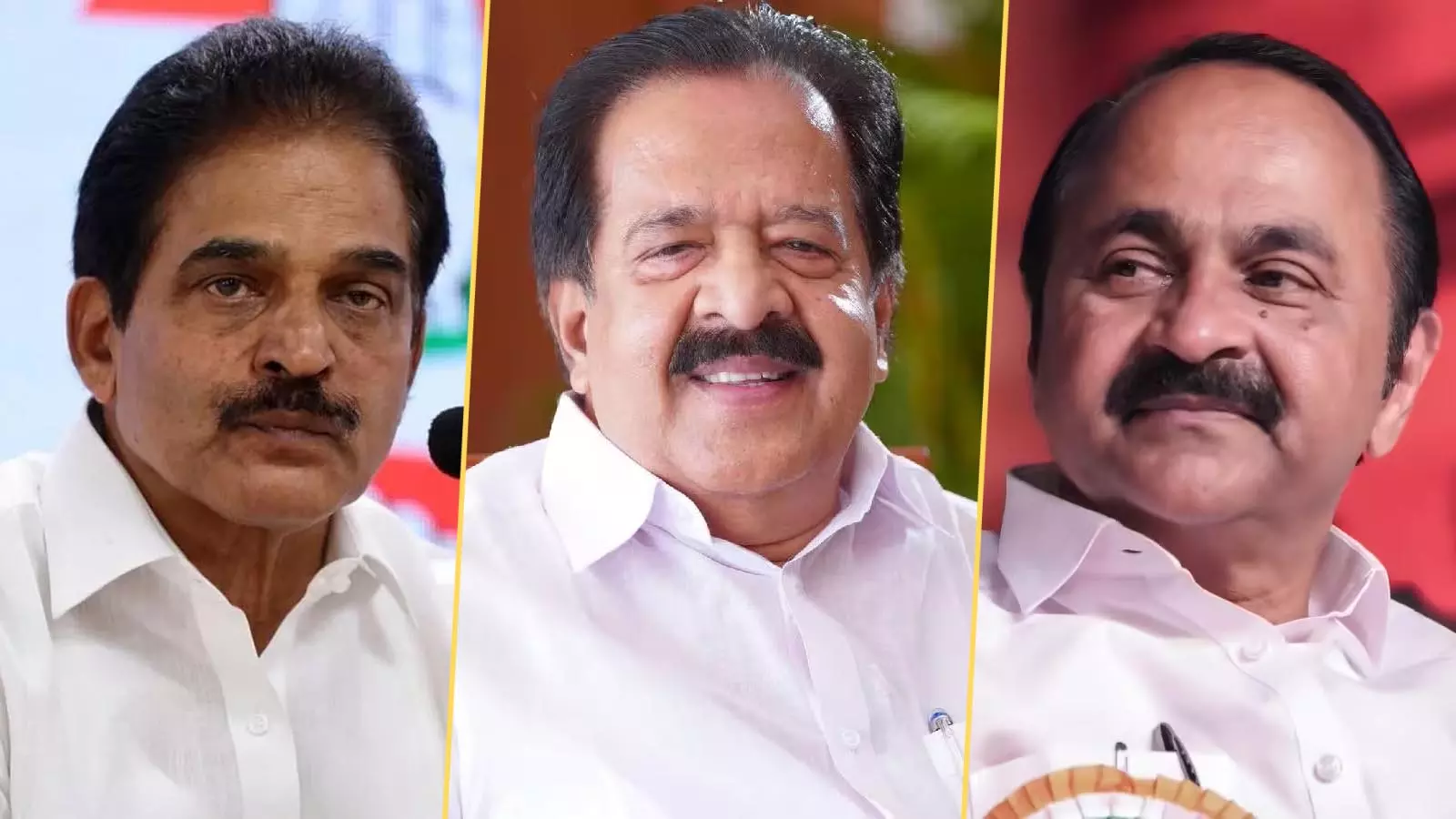
On one side stands VD Satheesan, who as Leader of Opposition spent the last five years reinvigorating a demoralised party cadre after the 2021 Kerala defeat and aggressively taking on both the LDF government and the BJP with a conviction increasingly rare in today’s Congress.
Also read: Kerala polls: How secular consolidation defeated the Left's social engineering gambit
On the other is KC Venugopal, the all-powerful AICC general secretary (organisation), who has spent the last seven years cultivating the goodwill of the one man whose opinion matters most in this contest – Lok Sabha’s Leader of Opposition, Rahul Gandhi.
Lurking in between is the party’s perennial CM-in-waiting, Ramesh Chennithala, a loyalist whose over-four-decade-long political career has included stints as Kerala Congress chief, Leader of Opposition in the Kerala Assembly, minister in the governments of K Karunakaran and Oommen Chandy, Congress Working Committee member and AICC general secretary. Now elected MLA for the sixth time, Chennithala has previously served four terms in the Lok Sabha too.
Delhi deadlock
Each believes his claim outweighs the others. At a meeting with Congress president Mallikarjun Kharge and Rahul in Delhi last Saturday, after central observers Mukul Wasnik and Ajay Maken completed a headcount of supporters among the Congress’s 63 MLAs and concluded Venugopal had the backing of over 40 legislators, each refused to back down.
Despite Rahul’s reported displeasure at the public spectacle of factional brinkmanship in Kerala, Satheesan is learnt to have made clear that he would accept nothing short of the chief ministership. Venugopal stressed on the “majority support” he enjoyed within the legislature party and Chennithala about his seniority, loyalty and vast experience.
Also read: How UDF won Kerala after a decade: From 'total disarray' to total dominance
The deadlock has persisted through two more days of quiet consultations with Kerala leaders, though many in the party continue to see Venugopal as the frontrunner.
Allies and external pressure
In a bid to break the impasse, the party’s Kerala in-charge Deepa Dasmunsi has summoned several former state unit chiefs — including K Muraleedharan, K Sudhakaran, Mullappally Ramachandran, and VM Sudheeran — for further discussions with Kharge and Rahul scheduled on Tuesday.
Sources said Rahul also sought the views of former chief minister AK Antony, who is learnt to have stressed the need for the “broadest possible consensus” before a CM is picked. Antony reportedly cautioned Rahul that imposing the high command’s choice without considering cadre sentiment would create problems both for the party and its new government in Kerala.
Kharge and Priyanka Gandhi Vadra are also expected to consult Congress allies in Kerala. The UDF’s second-largest constituent, the Indian Union Muslim League, which won 22 seats in the May 4 results, has already backed Satheesan and expressed displeasure at the Congress’s delay in settling the issue. For Rahul and Priyanka, ignoring the IUML isn’t without personal risk. The League commands significant influence in Wayanad, where Priyanka now has a direct political stake. Slighting the ally merely to favour a family courtier could create friction not only within the UDF but also in Priyanka’s future electoral prospects in the constituency.
Calls for a dark horse
Though the race remains primarily between Satheesan, Chennithala and Venugopal, some leaders have also urged Rahul to search for a dark horse; a candidate who could be projected as a political masterstroke. A section within the party believes that since the contest has already deeply polarised the Kerala unit – with cadres backing Satheesan and MLAs lining up behind Venugopal – it might be prudent to look for a choice who can also signal a sharp shift in narrative and political direction. Among the more radical ideas floated is to turn the current chaos into an opportunity by appointing Kerala’s first Dalit chief minister, aligning the choice with Rahul’s recent emphasis on political empowerment of historically oppressed communities.
Also read: Kerala polls: Between UDF-LDF’s usual vote exchange, a steady expansion of BJP base
Senior AICC functionaries believe the high command’s indecision stems partly from a perception that Venugopal is being favoured despite not being an MLA and despite the party having barred sitting MPs from contesting the Kerala polls. The protests by Satheesan’s supporters, relentless media commentary and Venugopal’s own conduct during his years as AICC general secretary (organisation) have only strengthened this perception.
Several Congress leaders privately admit that if MLAs were asked to indicate their preference again through a secret ballot, the support Venugopal received during the earlier consultations could swiftly swing towards Satheesan. The reluctance among legislators to reveal their “true preference” before Wasnik and Maken, they suggest, stemmed from fears that not backing Venugopal – widely seen as Rahul’s choice – would alienate them from the party’s principal power centre.
The skewed power equations in the contest have also triggered murmurs within the party over whether Wasnik and Maken were themselves motivated in ensuring that a majority of MLAs backed Venugopal.
Organisational stakes
The GSO’s position is second only to the Congress president in the party hierarchy and grants its occupant enormous influence over organisational affairs and access to the high command. If Venugopal becomes chief minister, the post would fall vacant and Rahul could lean on him to recommend a successor should Priyanka, whom many want as the next GSO, decline the role.
There is also a section within the Congress that believes Venugopal’s exit from the AICC should be facilitated “in the interest of the party”, even if his claim to the Kerala chief ministership remains questionable on grounds of merit, popularity and leadership.
Also read: Kerala election results: What led to LDF's rout and what next for the Left?
In private, leaders concede that Venugopal’s tight control over access to Rahul – despite what they describe as a striking lack of organisational, electoral and oratorical proficiency – has increasingly insulated Rahul from objective feedback about the party’s mounting deficiencies. These leaders argue that while Kerala’s internal squabbles may still be managed under a Venugopal government, his continuation as GSO would deepen the Congress’s organisational, and by extension electoral, decline nationally.
Concerns over Venugopal
That every discussion around Venugopal’s chief ministerial prospects begins and ends with references to his proximity to Rahul is perhaps also his biggest political hurdle. Those opposed to his candidature argue that appointing him by overriding cadre sentiment would directly undermine Rahul’s repeated calls for organisational revival and empowering the cadres. Any future resentment over Venugopal’s governance in Kerala, they reason, would inevitably scorch Rahul too.
The immediate challenge for the party, if Venugopal is chosen, would be the need to win two bypolls. Since he is currently a Lok Sabha MP, he would have to vacate his Alappuzha seat and get elected as an MLA within six months. One of the Congress’s newly-elected MLAs would also have to resign to create a vacancy for him.
Also read: Free bus rides for women: After UDF win, gender ticketing introduced in Kerala
In such a scenario, the support of Satheesan, Chennithala and their loyalists would become crucial for the Congress to retain both seats, particularly since both the LDF and the BJP would be expected to treat the contests as prestige battles.
The road ahead
By entertaining Venugopal’s claim despite denying several sitting MPs the opportunity to contest the Assembly elections, the Congress high command appears to have complicated a decision that should ideally have been resolved immediately after a rare and emphatic electoral victory. The prolonged deliberations are now merely the consequence of this folly.
For now, all eyes remain on Tuesday’s consultations between the high command and senior Kerala leaders. Whether the Congress can still evolve a solution acceptable to all sides after a week of brazen factional displays remains to be seen.