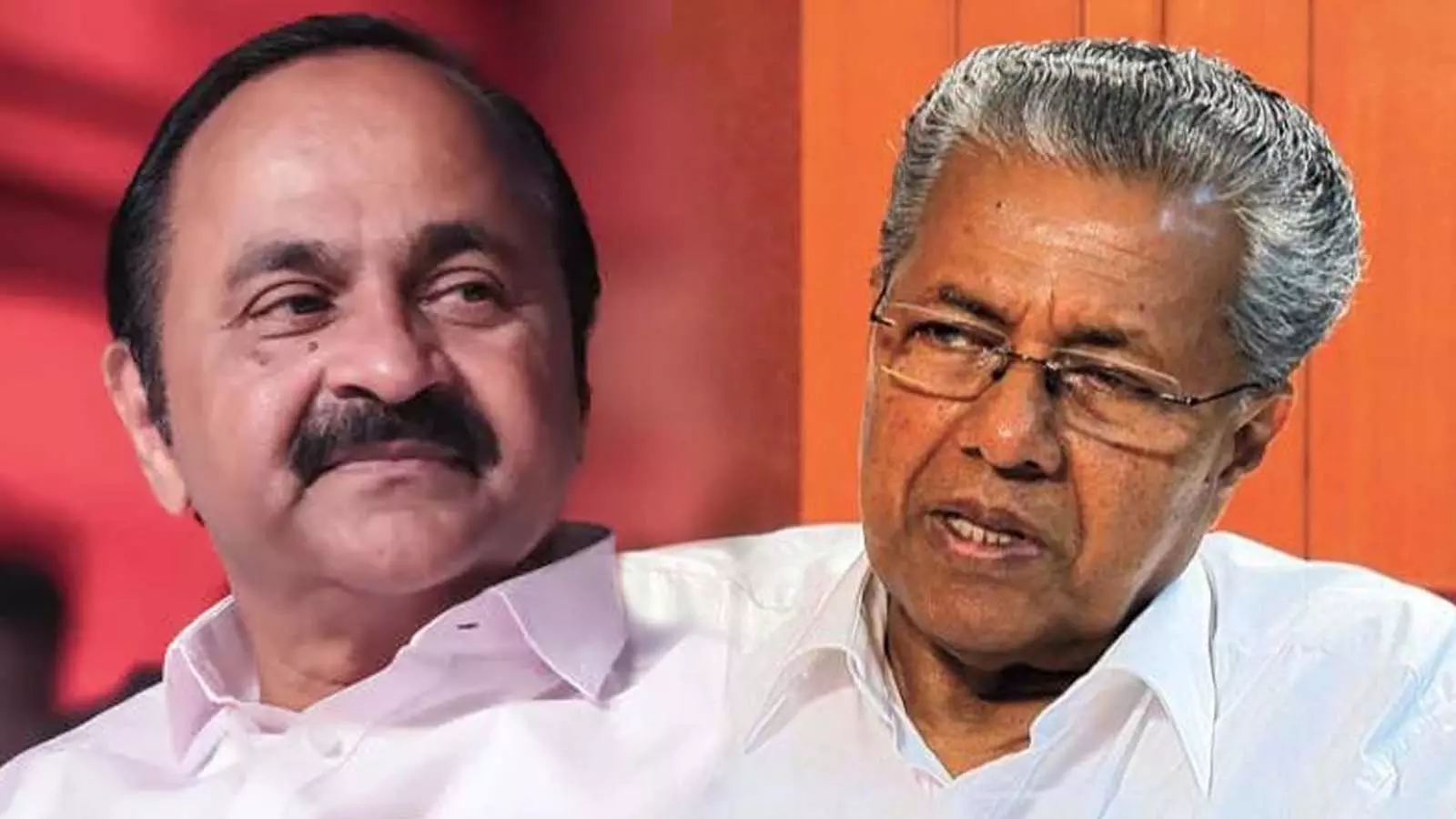
UDF landslide in Kerala: The multiple factors that toppled Left
Anti-incumbency, leadership perception issues, minority shift and BJP’s gradual expansion together weaken Left’s electoral base

The scale of the LDF’s defeat in Kerala goes well beyond a routine anti-incumbency verdict. This is a landslide, and it reflects a convergence of multiple forces working against the Left, particularly the CPI(M).
Anti-incumbency was strong and visible. After a rare consecutive second term under Pinarayi Vijayan, the LDF faced the weight of accumulated public dissatisfaction. Governance fatigue had set in, and the perception of an increasingly centralised leadership added to the disconnect. What might have been manageable discontent turned into a broader rejection.
Coalition collapse
But this was not just anti-incumbency. The more decisive factor was the collapse of the LDF’s social coalition. Minority consolidation, among Muslim and Christian voters, clearly favoured the UDF. In almost all the Muslim and Christian-majority pockets, the shift was near total. In the Muslim areas, the UDF’s positioning as the principal anti-BJP force, along with its sustained allegation of a BJP-CPI(M) understanding, played a crucial role in driving this consolidation. Perception mattered more than proof, and politically it worked.
Also read: Has UDF broken Pinarayi's hat-trick chances? Exit Polls 2026
The CPI(M)’s attempt at social engineering, including its softer approach towards figures seen as overtly anti-Muslim players like Vellappally Natesan, appears to have backfired significantly among Muslim voters.
Christian shift
As far as the Christian community is concerned, the FCRA amendment acted as a clear warning signal. It nudged sections that had shown signs of drifting towards the BJP in recent years back into the UDF fold. The outcomes in Thrissur constituency and across districts like Ernakulam, Idukki, Kottayam and Pathanamthitta reflect this shift clearly.
Also read: Pinarayi Vijayan joins chorus against FCRA overhaul, urges PM to withdraw bill
At the same time, there was visible erosion in backward class support for the Left. Sections that had traditionally stood with the CPI(M) appear to have drifted. Some of this shift benefited the BJP, which has been attempting a slow but steady social expansion in Kerala. Even where the BJP did not convert votes into seats, its inroads into Left bastions contributed to fragmenting the LDF’s base.
Setback for strongholds
The most telling sign of the scale of the setback came from Kannur. The trouncing of Left citadels here is not just electoral, it is structural. Kannur has long been the organisational backbone of the CPI(M), where cadre strength and political discipline translate into consistent victories. For that stronghold to weaken suggests deeper internal erosion.
Also read: ‘Congress is BJP’s B-team,’ Pinarayi Vijayan says after Rajya Sabha polls
The impact made by two dissidents, T K Govindan and K Kunhikrishnan, in party citadels like Thaliparamba and Payyannur has delivered severe jolts to the CPI(M). Another moment that captured this shift most sharply was in Dharmadam. This is a constituency that has never let the CPI(M) down in the past, not even in individual rounds of counting. Yet this time, when Pinarayi Vijayan trailed in the first seven rounds, the symbolism was unmistakable. A fortress seat showing vulnerability reflects a wider political churn.
UDF strategy
The UDF’s strategy appears to have come together with precision. Its outreach to minorities was systematic, but it also extended beyond that. The front reached out to Left dissidents, many of whom had switched sides ahead of the election. These leaders brought both local influence and organisational insight. Their acceptance within the UDF translated into electoral gains across constituencies. The only notable exception was P K Sasi in Ottapalam, where the expected traction did not materialise.
Also read: Pinarayi meets Mohanlal: Cultural moment or political PR?
Alongside this, the UDF also engaged with sections of the intelligentsia and opinion makers. Kerala’s political discourse is shaped as much by narrative as by numbers. By positioning itself as a democratic counter to both the BJP and an increasingly centralised Left leadership, the UDF managed to build a favourable narrative environment.
Role of BJP
The BJP’s role, while limited in terms of seats, cannot be ignored. Its gradual inroads into traditional Left support bases, especially among backward communities, added another layer of pressure. The BJP’s strategy in Kerala remains long term, and even marginal vote shifts had a significant impact in a tightly contested environment.
Leadership style also became a factor. Pinarayi Vijayan’s strong and centralised approach, once seen as decisive, increasingly came to be viewed as inaccessible. Reports of reduced internal consultation within the party fed into this perception. In a cadre-driven organisation like the CPI(M), this can affect both morale and mobilisation.
Final verdict
What makes this verdict significant is that it is not the result of a single issue. Anti-incumbency, minority consolidation, erosion of backward class support, BJP inroads, the fall of traditional strongholds, and a well-executed UDF strategy all combined. Each factor reinforced the other.
Also read: Kerala wants high-speed rail corridor irrespective of who brings it: Pinarayi Vijayan
For the CPI(M) and the LDF, this is not just an electoral loss but a structural setback. Rebuilding will require more than tactical adjustments. It will involve rethinking social alliances, organisational methods, and leadership style.
For the UDF, this is a validation of the strategy. By consolidating minorities, reaching out to dissidents, and projecting itself as the principal anti-BJP force, it managed to build a broad and effective coalition.
In the end, everything that could go against the LDF did. And that is what turned this election into a landslide.