Rise of a third force and what it means for Tamil Nadu’s political future | Exit Polls 2026
Political experts, journalists, and analysts break down the exit poll predictions and what they mean for Tamil Nadu

The tightly contested Tamil Nadu election appears to be tilting towards the DMK alliance, but not without a significant disruption: actor-turned-politician Vijay’s Tamilaga Vettri Kazhagam (TVK) emerging as a formidable third force.
Exit polls suggest a DMK-led victory, yet the scale of that win—and the deeper political churn beneath it—remains uncertain ahead of counting day.
In a live discussion, K Elangovan, senior advocate; R Kannan, political analyst; and Mahalingam P, Editor - Special Projects, The Federal, decode the trends, the rise of a third force, and what it means for the state’s political future.
Exit poll signals
Most exit polls point to a DMK alliance advantage, broadly in line with pre-election projections that had placed the ruling party ahead due to its organisational strength and welfare-driven campaign. The DMK’s electoral machinery and loyal voter base were cited as key factors behind its projected lead.
However, the margins appear narrower than anticipated. While the party had set an ambitious narrative of sweeping victory, exit poll estimates in the 120–150 seat range suggest a more competitive outcome. This gap between expectation and projection has raised questions about whether the ruling alliance has taken a dent despite remaining ahead.
K Elangovan noted that while a DMK win would not be surprising, “the extent of that victory is what is now in question,” especially given the perceived erosion in its expected vote share.
Welfare versus fatigue
The election appears to have been shaped by a balance between welfare-driven governance and a muted anti-incumbency sentiment. Welfare schemes—particularly those targeting women, including financial assistance and free bus travel—are believed to have consolidated support for the ruling party.
Also read: Major exit polls predict DMK return in Tamil Nadu; TVK likely to make a mark
At the same time, there are indications of fatigue among sections of voters. While not strong enough to decisively unseat the government, this sentiment may have limited the scale of the DMK’s advantage.
Mahalingam observed that the ruling party successfully framed the contest as a broader political narrative—positioning Tamil Nadu’s interests against the Centre—while retaining minority and welfare-driven vote banks. Yet, this strategy may not have fully neutralised emerging voter aspirations for change.
Third force impact
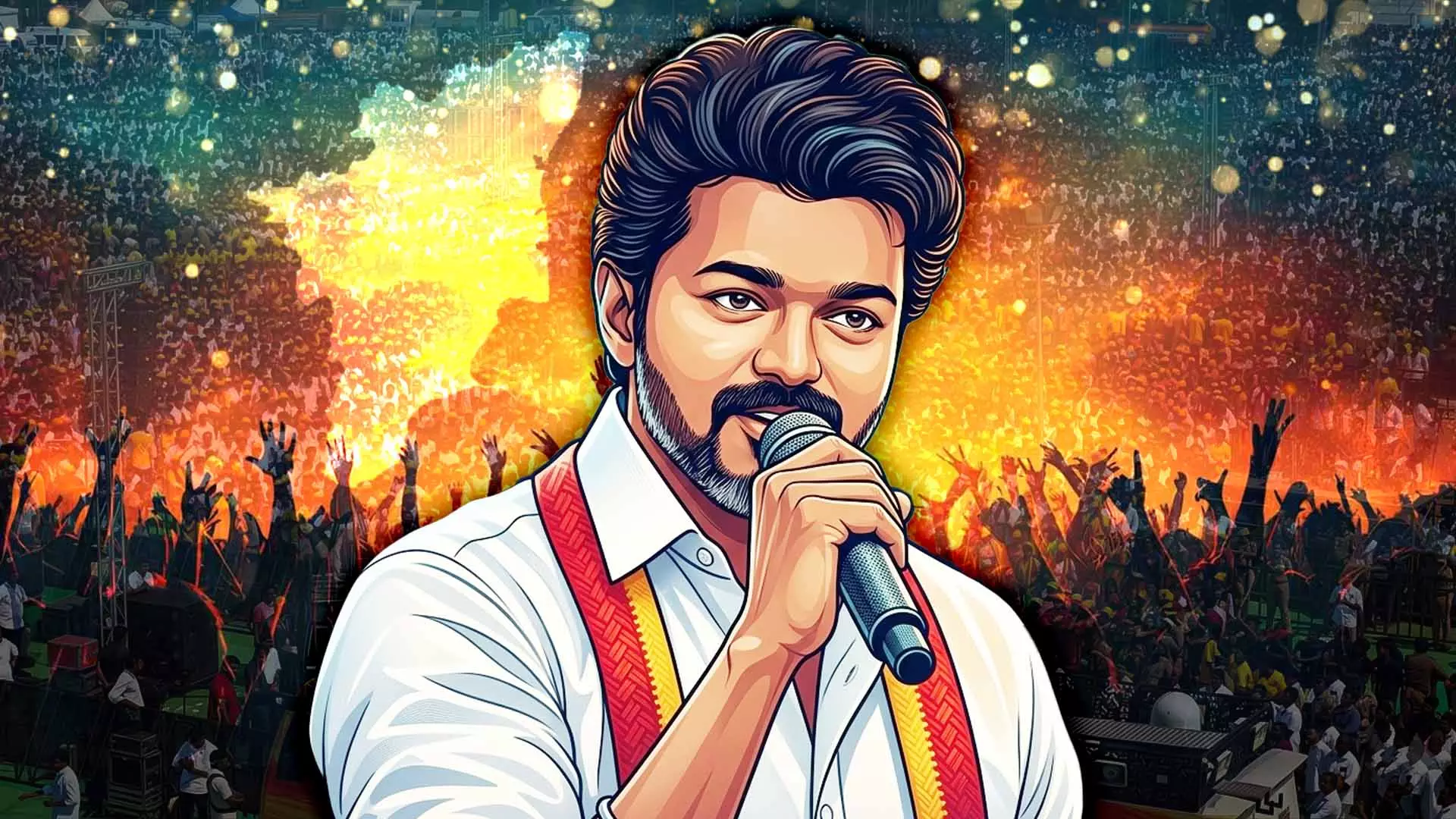
The most striking feature of this election is the rise of TVK. Exit polls consistently project a double-digit vote share and a notable seat presence for Vijay’s party—far exceeding initial expectations of a marginal debut.
Rather than acting merely as a vote-splitter, the panel broadly agreed that TVK represents a structural shift in Tamil Nadu politics. The party appears to have tapped into a growing desire among younger voters for alternatives to the entrenched Dravidian majors.
R Kannan described the development as evidence of “room for a third force,” noting that even a 15 per cent vote share for a debutant party is “very respectable” in the state’s political landscape.
This emergence complicates traditional electoral arithmetic, particularly by dividing anti-incumbency votes that might otherwise have consolidated behind the AIADMK-led opposition.
Opposition split
The fragmentation of Opposition votes is likely to have played a decisive role in shaping the exit polls outcome. With the AIADMK-BJP alliance on one side and TVK on the other, the anti-DMK vote appears to have been split, benefiting the ruling party.
Also read: Vijay's political gamble: Big crowds, bigger questions
Mahalingam pointed out that even small margins—ranging from a few thousand votes—could determine results in many constituencies. In such a scenario, the presence of a third force becomes critical, potentially altering outcomes across dozens of seats.
There were also questions about the role of regional players and splinter influences, which could further affect tight contests.
Limits of strategy
Despite its visible popularity, questions remain about TVK’s political execution. The panellists underscored gaps in conventional political engagement, including limited coalition-building efforts and relatively restricted campaign outreach.
Elangovan argued that Vijay’s appeal as a film star does not automatically translate into political credibility. He suggested that while the party has mobilised youth support, it has yet to fully establish itself as a mature political alternative capable of governing.
The lack of sustained engagement with established political actors and institutions was also flagged as a potential limitation in converting popularity into electoral success.
Youth factor
A key driver of TVK’s rise appears to be youth mobilisation. Across regions, there were visible signs of first-time voters and younger demographics aligning with Vijay’s call for change.
This shift reflects a broader transformation in voter expectations. Beyond welfare, there is growing demand for governance reforms, employment opportunities, and cleaner political systems.
Also read: From 'Bro' to 'Dhurandhar': Seven defining moments that shaped 2026 election trail
Kannan linked this to a wider sense of frustration, arguing that many voters—especially those exposed to global standards—are seeking a break from entrenched political structures. “There is a subconscious push for change,” he noted, pointing to aspirations for better infrastructure, governance, and economic opportunities.
What next?
While exit polls indicate a DMK advantage, the final outcome will hinge on margins, vote transfers, and the extent of TVK’s impact across constituencies. The results could redefine Tamil Nadu’s political trajectory in multiple ways.
A reduced mandate for the DMK could alter its internal and alliance dynamics. A strong showing by TVK, even without power, would establish it as a credible long-term challenger. Meanwhile, the AIADMK’s position may depend on how deeply it has been affected by the vote split.
The broader takeaway is clear: Tamil Nadu’s political landscape is no longer a straightforward bipolar contest. The emergence of a third force, combined with shifting voter priorities, suggests a more complex and competitive future.
(The content above has been transcribed from video using a fine-tuned AI model. To ensure accuracy, quality, and editorial integrity, we employ a Human-In-The-Loop (HITL) process. While AI assists in creating the initial draft, our experienced editorial team carefully reviews, edits, and refines the content before publication. At The Federal, we combine the efficiency of AI with the expertise of human editors to deliver reliable and insightful journalism.)