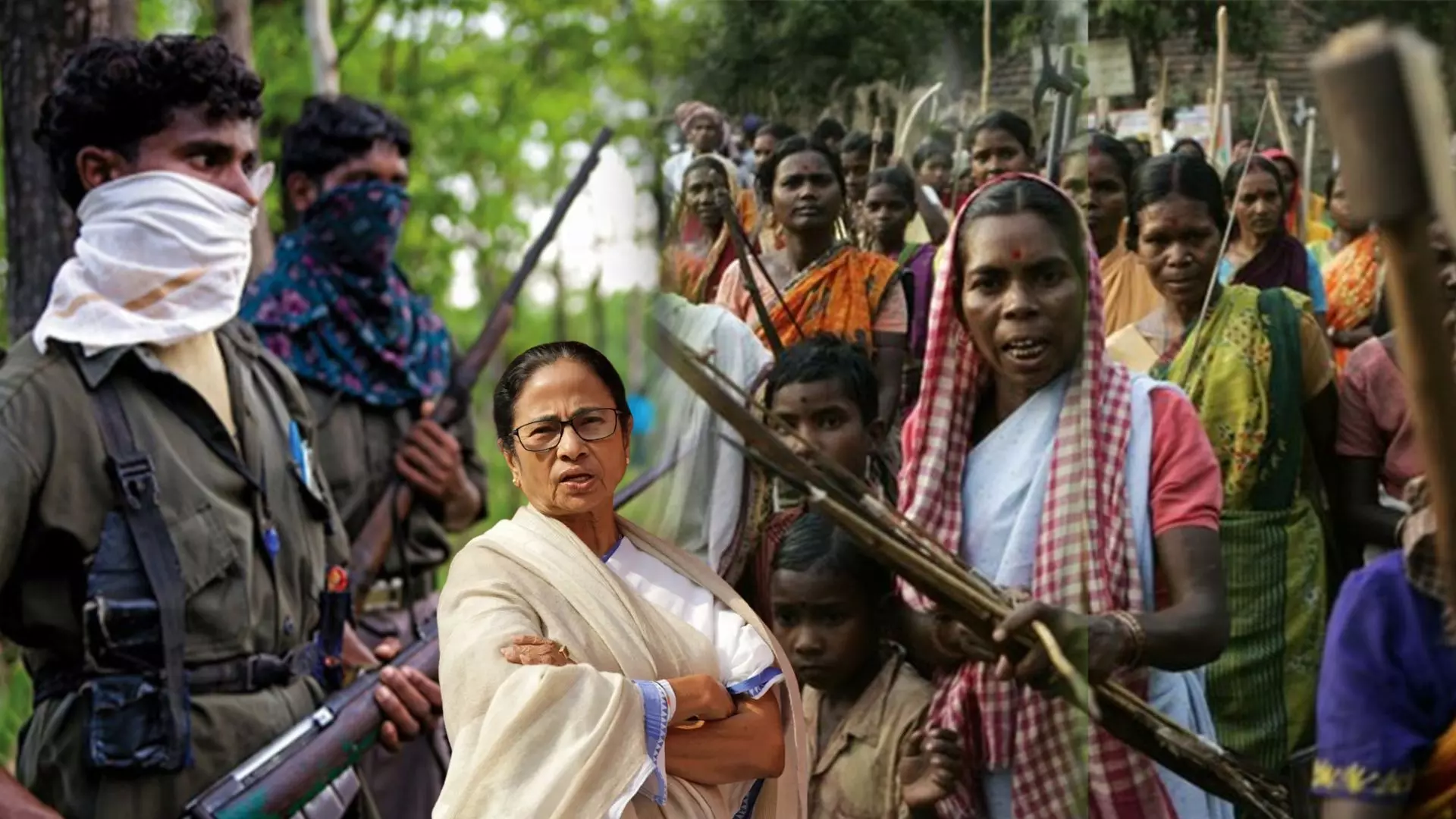
While the state government highlights welfare schemes as a support system, many residents say the benefits are uneven and insufficient to address deeper economic issues.
Bengal polls: Peace returns to Jangalmahal, development yet to catch up
Once a Maoist-hit region, Jangalmahal is now peaceful, but unemployment and migration dominate voter concerns ahead of crucial polls

From the late 1990s to the late 2000s, the Maoist insurgency had turned Jangalmahal into a conflict zone. Police stations were attacked and villagers lived under constant fear, with election boycotts common.
Also read: Bengal elections: Peace came to Jangalmahal, but prosperity didn't follow | Ground Report
Since 2011, however, the situation has changed significantly. Peace has gradually returned, elections are held regularly, and political activity is now visible even in villages that once stayed away from the democratic process.
Past scars
Despite the return of normalcy, memories of violence still linger among residents. Stories like that of Kisku reflect a time when fear, suspicion and survival defined everyday life across villages.
But as the region moved away from conflict, a new challenge has taken centre stage — development that has not kept pace with peace.
Also read: Kudmi test continues for TMC in Jangalmahal; will new outreach work?
Unemployment remains the biggest concern across Jangalmahal. In villages such as Kalabani, agriculture continues to depend heavily on the monsoon, with most farmers able to grow only one crop a year.
Jobs crisis
Daily life remains uncertain, closely tied to rainfall and limited economic opportunities. With few local jobs available, migration has become a necessity rather than a choice.
Young men routinely travel to cities like Delhi, Gujarat, Maharashtra and southern states in search of work. Even educated youth are compelled to leave due to the lack of opportunities at home.
Also read: Bengal SIR under Maoist shadow in Jangalmahal as tribals reject EC exercise
While the state government highlights welfare schemes as a support system, many residents say the benefits are uneven and insufficient to address deeper economic issues.
Political mood
Politically, the situation is complex. There is visible dissatisfaction with the ruling Trinamool Congress, but this has not automatically translated into support for the Bharatiya Janata Party (BJP).
Voter dilemma
Many voters remain cautious, carefully weighing their options. There is both anger and hesitation, reflecting uncertainty about which political alternative can deliver them a meaningful change.
Also read: TMC flaunts Mamatanomics growth model, but is Bengal truly shining?
The core demand has shifted over the years — from security during the insurgency period to jobs, income and stability today.
With around 40 key seats in play, Jangalmahal could significantly influence the election outcome. The region may have moved beyond conflict, but whether peace alone can translate into votes remains the central question.
The content above has been transcribed from video using a fine-tuned AI model. To ensure accuracy, quality, and editorial integrity, we employ a Human-In-The-Loop (HITL) process. While AI assists in creating the initial draft, our experienced editorial team carefully reviews, edits, and refines the content before publication. At The Federal, we combine the efficiency of AI with the expertise of human editors to deliver reliable and insightful journalism.