Caste maths, fluid allies: What will decide Purvanchal in 2027 UP election
Ground report: With seats down from 115 to 88 in 2022, BJP leans on Yogi, development and allies to retain caste vote banks even as SP, BSP and Congress close in

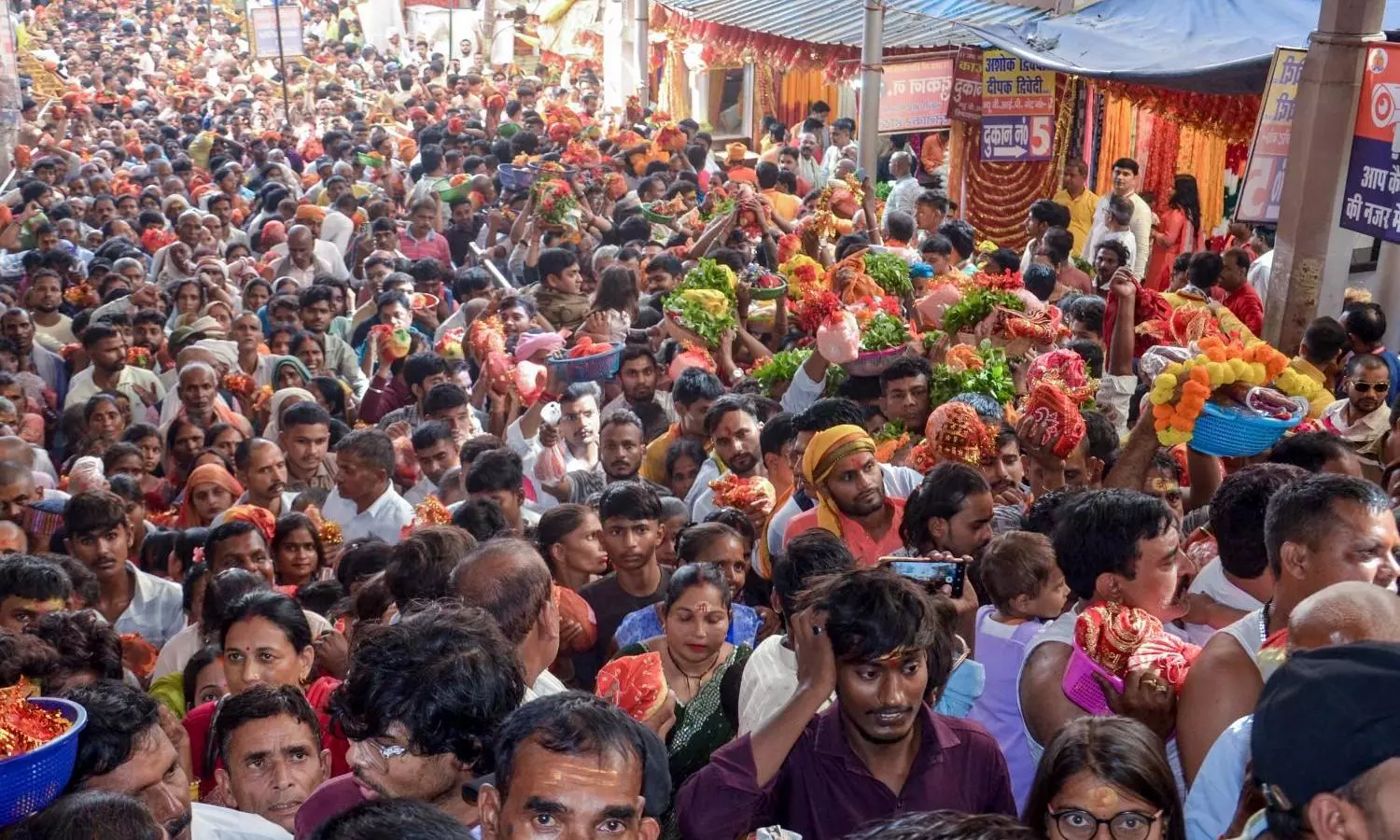
Purvanchal, the eastern part of Uttar Pradesh, as the very name suggests, has for long been shaping the state’s politics. With just months to go before Uttar Pradesh votes in a new Assembly, there is a visible shift in Purvanchal, which has left the BJP government in the state worried. Caste equations are changing, as is the power play of the regional satraps. The Federal visited the region to hear and see first-hand what's spurring the shift, and how it could impact the election. This is the last of a two-part series.
Much like Rome, the BJP's dominance in Purvanchal was not built in a day. It was the culmination of decades of concerted efforts to redefine Hindutva. While the Ram Mandir movement gave the party a strong ideological foundation for broader Hindu vote consolidation, the RSS’s sustained outreach to Dalits helped it expand its footprint in the region.
Also read | UP's SIR: Voter list flooded with 'logical discrepancies' days before draft roll, BLOs say
According to political observers, two distinct developments helped the BJP disrupt Purvanchal’s established political order. The first was the growing importance of the Gorakhnath Math and the rise of Yogi Adityanath. He not only emerged as the political successor to Mahant Avaidyanath but also carved out his own political legacy. Yogi has enjoyed two largely unchallenged tenures as Chief Minister.
Rise of Yogi
“Yogi Adityanath increasingly projected himself as a counterweight to criminal networks that benefited from their proximity to the Samajwadi Party. This helped him gain prominence among Kurmis and other backward-caste groups, as they were among those most affected by the mafia’s clout in the region,” veteran political observer and scholar Surendra Dubey told The Federal.
The electoral dividends were significant. Yogi was repeatedly elected to the Lok Sabha from Gorakhpur, beginning in 1998, and gradually built an independent political identity in the region.
All roads to Purvanchal: Why the region matters
♦ Hosts one-fourth of Uttar Pradesh’s Assembly seats
♦ Home to BJP’s cultural-nationalist core - Ayodhya, Varanasi and Prayagraj
♦ Yogi Adityanath’s home ground - Gorakhpur
♦ Narendra Modi's constituency - Varanasi
Another phase of saffron consolidation began with the India Against Corruption (IAC) movement, from which the BJP and Prime Minister Narendra Modi eventually emerged as major beneficiaries. Welfare delivery, development claims and a law-and-order pitch became important complements to Hindutva.
“The Ram Mandir movement was also seen as a matter of social justice rather than just identity politics. Besides, Modi’s insistence on clean governance resonated with people who had grown weary of regional parties,” Dubey added.
Shifting electoral loyalties
In 2012, the SP, under Akhilesh Yadav, swept Uttar Pradesh, winning 224 seats. The BJP managed to win just 47.
The BJP’s breakthrough, however, came when it cobbled together a coalition of communities that had rarely voted as part of a single political formation. It did so by leveraging alliances with smaller parties under the NDA umbrella. Apna Dal offered a bridge to Kurmi voters. The Suheldev Bharatiya Samaj Party (SBSP) opened a channel into the Rajbhar community, while the Nishad Party gave the BJP access to the politically significant Nishad electorate.
In 2017, the BJP won a resounding majority with 312 seats. The SP was reduced to 47 seats, while the BSP managed just 19. In 2022, the BJP retained power with 255 seats, but cracks began to show. The SP rebounded to 111 seats. In Purvanchal, the SP increased its tally from 17 in 2017 to 48 in 2022. Meanwhile, the BJP’s tally fell to 88 from 115 in 2017, according to Election Commission of India (ECI) data.
Also read | Congress's Brahmin gambit in UP: Tactical move or tokenism?
The Lok Sabha elections reinforced this churn. The BJP’s tally in Uttar Pradesh fell from 71 seats in 2014 to 62 in 2019 and 33 in 2024. The SP, meanwhile, rose from five seats in 2014 to 37 in 2024.
Fluid allies, consequential roles
Another crucial feature of Purvanchal’s political landscape is the presence of small caste-based parties. These include Apna Dal, founded in 1995 by former BSP leader Sonelal Patel; the Suheldev Bharatiya Samaj Party, founded in 2002 by Om Prakash Rajbhar, another former BSP leader; and the Nishad Party, founded in 2016 by Sanjay Nishad.
Despite their limited electoral strength, these parties help major formations stitch together broader social coalitions beyond traditional vote banks. Apna Dal and the SBSP help mobilise Kurmis, Rajbhars and other backward-caste groups, while the Nishad Party helps bring together riverine communities, including Nishads, Mallahs and Kewats.
Also read | Purvanchal’s restless politics tests BJP’s hold on UP before 2027 polls
But their loyalties are rarely permanent. Experts say these parties operate as pressure groups, recalibrating their alliances as their political calculations change.
For instance, Rajbhar left the BJP before the 2022 Assembly elections to join the SP-led camp, while Dara Singh Chauhan resigned from the Yogi cabinet and moved to the SP. Both subsequently returned to the BJP camp, with Rajbhar rejoining the NDA in 2023 and Chauhan returning to the BJP.
“Their bargaining power becomes far greater during Assembly elections. While major parties depend on these local leaders, they also seek to reach caste groups directly and build parallel leadership within them,” pointed out political commentator and Deen Dayal Upadhyaya Gorakhpur University professor Harsh Sinha.
Four parties, one high-stakes battle
These shifting alliances and competing social coalitions form the backdrop to the 2027 contest.
The BJP is tempering its Hindutva pitch with development and an emphasis on improved law and order under Chief Minister Yogi Adityanath to hold together its coalition of upper castes, non-Jatav Dalits and non-Yadav OBCs.
“Chief Minister Yogi Adityanath has become the face of development in Purvanchal and the force who decimated the ‘Bahubali’ and ‘Mafia’ culture that had become synonymous with the region,” BJP state spokesperson Dinesh Pratap Singh told The Federal.
According to Singh, the BJP is focusing on strengthening its cadre and voter base through grassroots mobilisation following its reassessment of the 2024 election results.
“The CM himself is making multiple visits to meet party workers and voters. Our state president, Pankaj Chaudhary, comes from the same region. Our national president Nitin Nabin is also holding rallies and meetings in the region. We are all geared up to prove our dominance here,” Singh added.
PDA to the rescue?
The SP hopes its Pichhda, Dalit, Alpsankhyak (PDA) coalition will help turn the brewing anti-incumbency into electoral gains. “Purvanchal is all the more important to us, not only because we wish to expand our gains from 2022 and 2024, but also because it is the region where PM Modi and CM Yogi have their Lok Sabha and Assembly constituencies. We want to deliver them [the BJP] a humiliating defeat right where it will hurt the most,” SP spokesperson Abhishek Bajpai told The Federal.
Also read | What Mayawati’s succession drama means for BSP’s future and Dalit politics
The BSP is banking on its Dalit-Brahmin social coalition, while the Congress hopes public discontent over paper leaks, inflation and alleged irregularities in the Special Intensive Revision (SIR) of electoral rolls will help revive its fortunes.
“We will deploy the same strategy this time to not only regain lost ground but also script a new chapter in the party’s political journey,” said BSP state president Vishwanath Pal.
“Just like the rest of India, Purvanchal, too, is gravitating towards Rahul Gandhi. Our new state president also comes from the region. All this will help us regain the confidence of the people,” Congress spokesperson Surendra Rajput said.