Beyond the boundary: Jemimah Rodrigues and the need to talk about mental health
Jemimah Rodrigues’s honesty about mental struggles has made her an unexpected flagbearer for a conversation Indian cricket desperately needs. She had faced the worst kind of online hate, including rape threats and abuse, but had somehow kept her belief intact

The floodlights at the DY Patil Stadium were so bright that evening, they seemed to cut through the tension. Australia had just piled up 338 in 49.5 overs, a total no team had ever successfully chased in Women’s ODI history. For the home fans in Navi Mumbai, a mix of excitement and dread dominated as the weight of a billion hopes hung heavy.
But then came Jemimah Rodrigues. At 25, she carried both the spark of youth and the scars of experience. What she did next transformed an ICC Women’s World Cup 2025 semifinal into a story for the ages.
When Jemimah faced online hate, rape threats
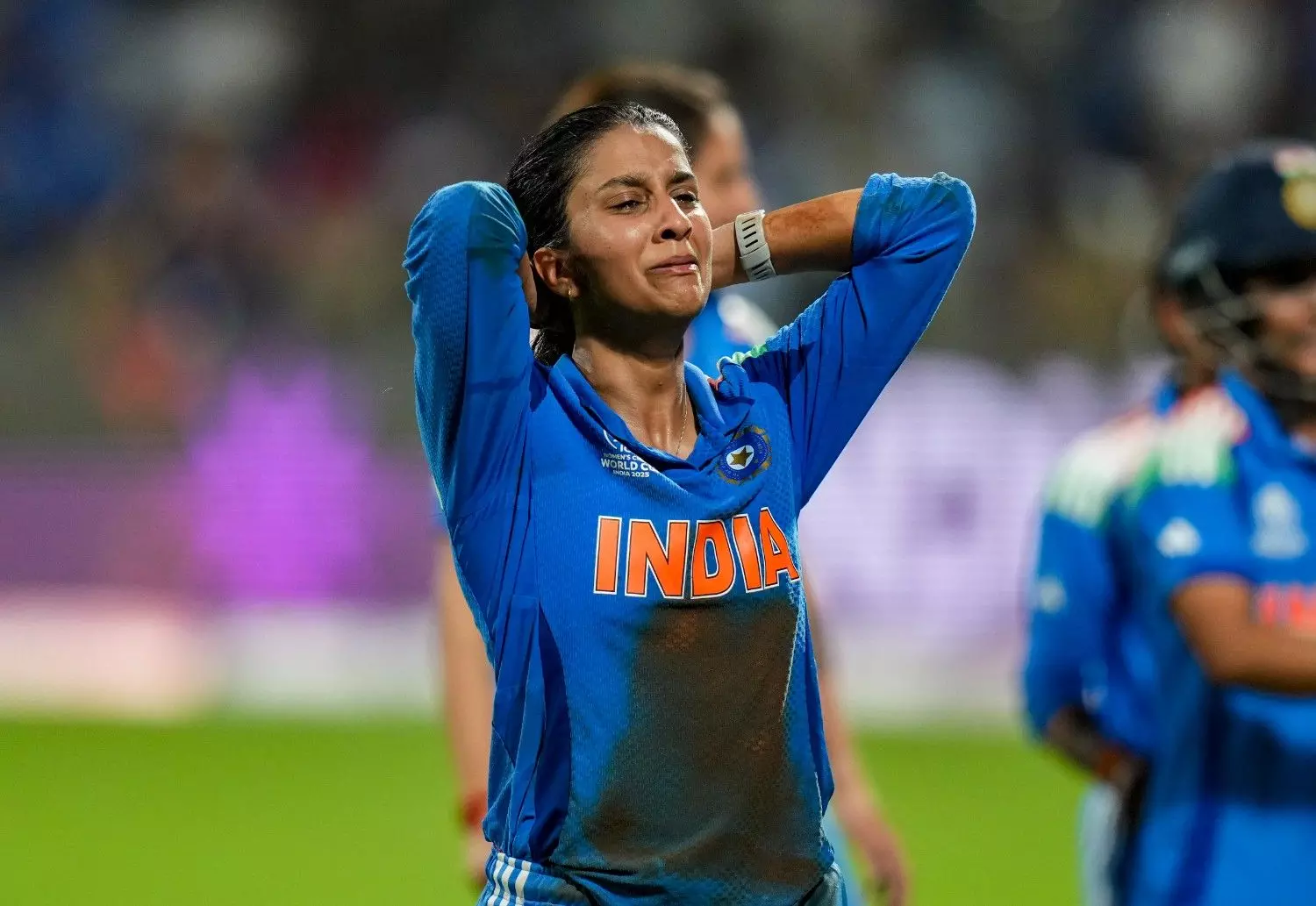
When the winning boundary was hit, India had scripted one of the most astonishing chases in women’s cricket history and as Jemimah dropped her bat and looked skyward, the tears just flowed. Those tears swept across the stands and through television screens, pulling fans into that moment with her. For those tears were not just about victory. They carried another story, of anxiety, self-doubt, fear, and faith. Of a young woman who had faced the worst kind of online hate, including rape threats and abuse, but had somehow kept her belief intact.
Also read: Women's World Cup: Jemimah’s unbeaten 127 powers India past Australia into final
In the press conference that followed, Jemimah spoke with calm honesty and amazing candour. “There were days,” she said, “when I didn’t think I’d come back. I doubted myself, I cried a lot. But my teammates, my family – they never gave up on me.”
Her openness about anxiety and mental demons marked a rare moment in Indian cricket, where vulnerability is often mistaken for weakness. “I wanted people to know it’s okay,” she said that night. “It’s okay to ask for help. It’s okay to not be okay.” Her teammates, too, stood by her through the dark patches. Smriti Mandhana, her closest friend in the squad, has revealed how they would talk late into the night, reminding each other of their worth beyond runs and rankings. Skipper Harmanpreet Kaur’s embrace at the end of the semifinal was not just celebratory, it was protective, almost sisterly.
The comeback journey
Jemimah’s journey has never been linear. Born in a close-knit Christian family in Mumbai, she picked up the bat at four, playing gully cricket with her brothers while her father, Ivan Rodrigues, watched over her technique. Talent was never the issue. She rose fast through Mumbai’s age groups, broke into the national side as a teenager and dazzled with her stroke play.
Jemimah Rodrigues scored 127 not out in the semifinal. PTI
But sport, especially in India, can be unforgiving. In 2022, when selectors dropped her from the ODI World Cup squad in New Zealand citing inconsistency, it felt like the ground had shifted beneath her. For the first time in her career, she had to sit and watch while others played her dream tournament. The scrutiny that followed was merciless. Trolls on social media targeted her faith and family. Some went as far as sending rape threats after poor outings in franchise leagues.
Also read: Faith, fire, folded hands and a flying kiss: Jemimah Rodrigues' incredible night
In an interview, Jemimah admitted that it broke her. She spoke of sleepless nights and questioning whether she even wanted to play anymore. “It was dark,” she said simply. “I felt small. I felt like I had lost my joy for the game.”
Mercifully, instead of withdrawing, Jemimah began a slow, almost invisible comeback. She trained quietly at the Khar Gymkhana nets with her father, who not only fine-tuned her back-foot game but reminded her of the little girl who once loved batting for its own sake. Therapy became part of her weekly routine. Meditation replaced scrolling.
By 2024, she had started rebuilding her confidence through domestic cricket and the Women’s Premier League (WPL). The Delhi Capitals’ management backed her, even when runs didn’t come easily. Slowly, the rhythm returned. When the selectors announced the 2025 World Cup squad, Jemimah’s name was back on it, a comeback many had thought unlikely.
India’s World Cup campaign
India’s campaign began in fits and starts. A narrow loss to South Africa, a heartbreak against England by four runs, and another tough defeat to Australia in the group stage tested belief within the team. After one of those losses, Smriti broke down in the post-match presentation, promising that India would fight harder. Those moments of emotion became a rallying point in the dressing room.
Also read: Deepika Padukone named India’s first Mental Health Ambassador by Union Ministry
For Jemimah personally, the tournament was even tougher as she was dropped after a few failures. But she found her touch in the crunch game against New Zealand, scoring a fluent 76 that steadied India’s shaky start. But the semifinal was a different universe. Australia were defending champions, confident and relentless. When India lost two early wickets chasing 338, the task seemed impossible.
Walking in at No. 3, Jemimah took her time. She left the good ones, timed the bad ones, and trusted herself. She and Harmanpreet built a 167-run partnership that defined calm under pressure. Every single felt like a statement of belief. As Harmanpreet fell short of a century, Jemimah took over, threading gaps and guiding India home.
The celebration was raw. Jemimah cried openly. As did her parents in the stands. People watching on television could feel the emotion across the screen. But what made that moment more powerful was knowing what it took to get there.
Her honesty about mental struggles has made her an unexpected flagbearer for a conversation Indian cricket desperately needs. The sport has long measured success in averages and strike rates, but stories like Jemimah’s remind us that resilience is often built far from the scoreboard.
No full-time psychologist
The conversation around mental health in cricket is no longer confined to whispers. In recent years, many top players have opened up. Virat Kohli admitted to struggling with depression during an England tour, saying he “felt alone” despite being surrounded by people. Robin Uthappa has written about his battle with depression, calling it the toughest opponent he ever faced. Former Indian seamer David Johnson’s tragic death last year was another sobering reminder of what silence can cost.
Jemimah Rodrigues celebrates after taking India to the World Cup final. PTI
Globally, England’s Marcus Trescothick, who left the game early because of anxiety, and Australia’s Glenn Maxwell, who took time off to recover mentally, have made vulnerability a part of cricket’s modern vocabulary.
India, however, still lags behind in structured support. The Board of Control for Cricket in India (BCCI), despite its wealth, doesn’t have a full-time psychologist across formats. Ironically, when India won the 2011 men’s World Cup, they had Paddy Upton as a full-time mental-conditioning coach. Since then, such roles have been sporadic.
Experts argue that psychological support shouldn’t be a temporary measure during big tournaments. It should be constant part of training and recovery. Regular one-on-one sessions, early intervention, and mental-health education at junior levels could make all the difference.
Mind needs as much care as the body
As India now prepares for the final, their first since 2017, the focus naturally turns to strategy and selection. But somewhere in that discussion lies a quieter revolution. Jemimah has shown that courage in sport isn’t just about facing a bouncer or surviving a chase. Her story is not one of weakness, but of balance. It is a reminder that even in elite sport, the mind needs as much care as the body.
When she raised her bat after that brilliant 127 not out against the Aussies, the stadium saw a champion. But what was even more remarkable was the strength behind that smile, a young woman who fell, rebuilt herself, and rose again when her country needed her most.
No matter what happens in the final, the 2025 World Cup will be remembered as the moment Indian women’s cricket grew up. And at the heart of that transformation will stand Jemimah, proof that sometimes, the bravest innings are played long before a single ball is bowled!