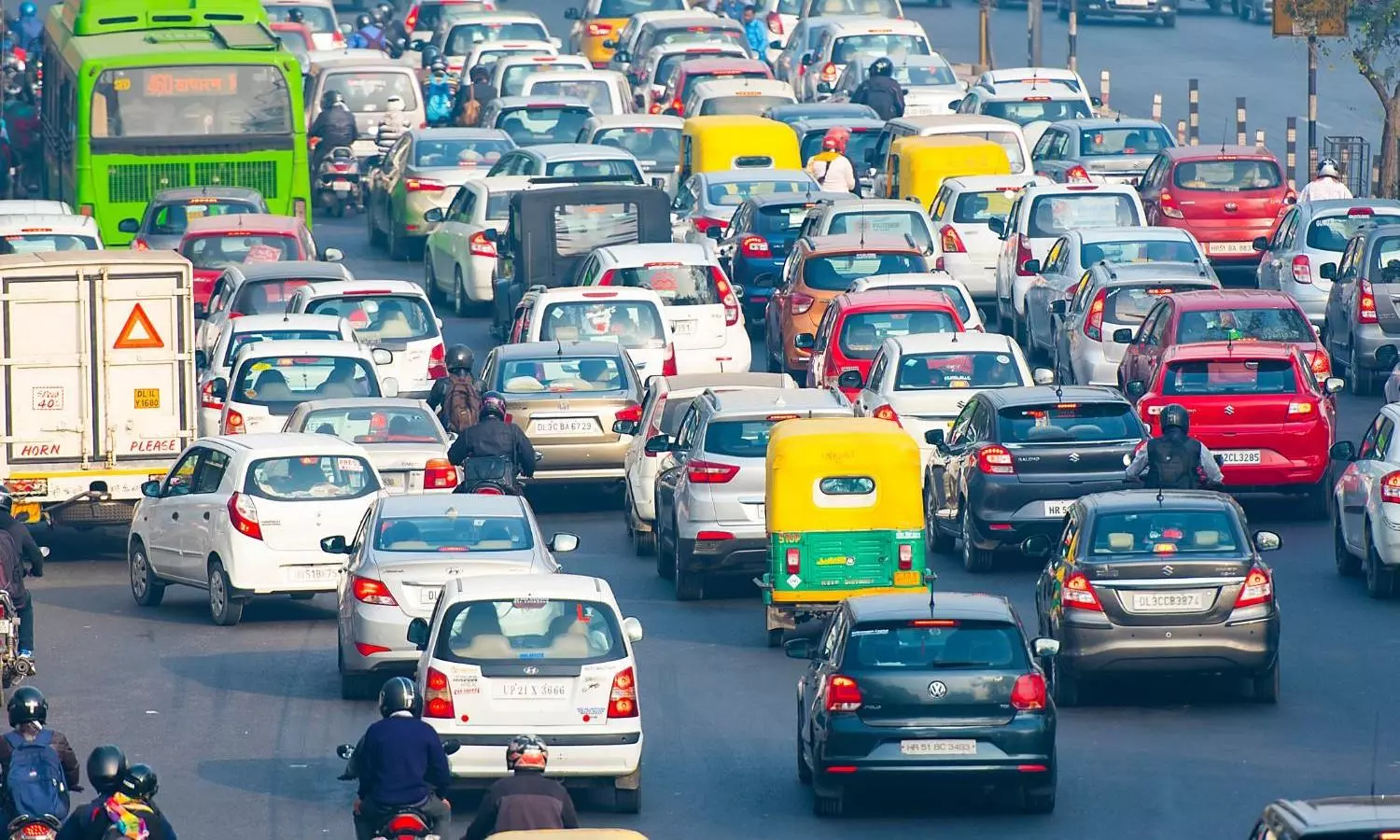
Centre consults states on stricter Motor Vehicles Act rules to avoid pushback
Proposals include seizing uninsured vehicles and variable fines; Centre aims to avoid a repeat of the resistance seen by some states against the 2019 amendments

The Centre has started a consultative process with state governments over its proposed changes to the Motor Vehicles Act, including stricter rules for uninsured vehicles and driving licences.
The outreach is aimed at avoiding a repeat of resistance seen in the past from some non-BJP-ruled states to earlier amendments to motor vehicle laws, people familiar with the matter said.
The road transport and highways ministry has written to all states, including West Bengal, asking them to share their views on the proposed amendments and flag any legal or constitutional concerns before the changes are finalised, state government sources said.
Transport is a concurrent subject under the constitution, giving legislative authority to both the Centre and the states.
However, enforcement of motor vehicle laws rests largely with state governments, making their cooperation crucial for any nationwide reform. Officials said the consultation reflects lessons drawn from the 2019 amendments to the Motor Vehicles Act, when several states either delayed or refused to implement key provisions, particularly a steep increase in penalties for traffic violations.
West Bengal opposed 2019 amendments
West Bengal was among the most vocal opponents. Chief Minister Mamata Banerjee publicly declined to enforce the amended law, arguing that sharply higher fines would disproportionately affect ordinary citizens. She also termed parts of the legislation as harsh and an encroachment on federal principles.
The West Bengal government continues to operate under its existing motor vehicle rules, resisting higher penalties for offences such as riding without helmets or driving without using seat belts.
State officials also criticised changes to vehicle fitness certification procedures, highlighting the tension between central legislation and state-level enforcement autonomy.
Even with the state’s resistance to stricter penalties, West Bengal’s road safety record is a mixed bag.
The state does not top the national charts for accidents or fatalities and has dropped out of the top 10 most accident-prone states in recent years, according to the annual accident report 2023 released by the Union ministry of road transport in September last year.
Also Read: Ensure zero-tolerance policy towards drunken driving, HC tells Centre
Still, the number of deaths on the roads is high enough to show that road safety remains a serious concern.
In 2024, Kolkata recorded 191 road deaths from 188 accidents, the lowest among India’s six biggest metro areas, including Delhi, Mumbai, Chennai, Bengaluru, and Hyderabad, according to a comparative study report published by the Kolkata police recently.
These numbers show that while avoiding higher fines may not have made things much worse in big cities, road safety is still an issue across the state.
“Simply applying steep fines everywhere could hit ordinary citizens hard without really fixing the causes of accidents, especially in rural and smaller towns where the risks are different,” pointed out state transport minister Snehasis Chakraborty.
Officials said the state government’s past responses have influenced the Centre’s approach to the latest proposed amendments.
Rules governing uninsured vehicles
At the heart of the new proposals is a push to tighten rules governing uninsured vehicles, which officials say remain widespread across India, especially among two-wheelers.
While police currently have the authority to seize vehicles without registration or permits, enforcement options are limited when insurance is missing. Under existing law, driving without valid insurance attracts a fixed monetary fine, even for repeat offences.
The Centre argued this has failed to deter motorists and has contributed to persistently high levels of uninsured vehicles on roads. To address this, the ministry is proposing to empower enforcement agencies to seize vehicles found without valid insurance cover.
It is also considering replacing the uniform fine with a variable penalty linked to the vehicle’s insurance premium, a move that could significantly raise the cost of non-compliance.
Also Read: Motor vehicle act: Some states dilute norms, others buy time
The proposals were shared earlier this week with state transport ministers and transport commissioners at a meeting convened by the ministry, officials said. Written communications have also been sent to state governments seeking formal feedback.
The initiative follows recommendations from the National Road Safety Council, which has flagged uninsured vehicles as a major obstacle to timely accident compensation and a broader risk to road safety, sources said. Victims of road accidents often face delays or disputes in compensation when the offending vehicle lacks insurance, officials said.
States have been asked to specifically assess whether the proposed enforcement powers and penalty structure could face constitutional challenges or conflict with existing state laws.
Changes to insurance pricing, driving licence norms
Beyond enforcement, the draft amendments include broader changes to insurance pricing and driving licence norms.
One key proposal would amend Section 147 of the Motor Vehicles Act to allow the insurance regulator, the Insurance Regulatory and Development Authority of India (IRDAI), to determine base insurance premiums using additional parameters such as a vehicle’s age and the owner’s traffic violation history.
Also Read: Delhi LG proposes linking vehicle insurance premiums to traffic violations
Currently, third-party insurance premiums are fixed by the government in consultation with IRDAI. Officials said the proposed change would allow for more risk-based pricing and better reflect individual driving behaviour.
Traffic violation data, they said, provides valuable insights into accident risk and could help insurers price policies more accurately, while also incentivising safer driving.
Other proposed changes
Other proposed changes include expanding mandatory third-party insurance coverage to explicitly include vehicle owners, drivers, and occupants of personal vehicles.
The Centre is also considering graded eligibility criteria for driving heavier vehicles, aimed at improving road safety standards among commercial drivers.
Also Read: ‘Bumper-to-bumper’ vehicle insurance mandatory from September 1
Another proposal would raise the age at which mandatory medical fitness certification is required from 40 years to 60 years, aligning the rule with changing demographic and health patterns, officials further informed.
Getting States on board
The ministry plans to examine feedback from states before finalising the draft and introducing it in Parliament so as to avoid implementation bottlenecks that could arise if States resist enforcing the new rules.
“The idea is to improve road safety without triggering another Centre–State standoff,” one official familiar with the discussions said.
Also Read: HC order on compulsory 5-year vehicle insurance to jack up car prices
“Whether the Centre can get States on board, especially politically-assertive ones like West Bengal, will decide the fate of these proposed reforms,” quipped another official.