Why a high-speed rail network could lead to Kerala-Centre flashpoint
After E Sreedharan’s Centre-backed proposal, Kerala comes up with a plan, modelled on Delhi-Meerut RRTS

The Kerala government’s latest Budget recommendation has formally placed the Regional Rapid Transit System or RRTS at the centre of the state’s long-running debate on high-speed rail connectivity.
In the Budget, the government acknowledged that a fast north-south transport corridor from Thiruvananthapuram to Kasaragod is inevitable and said Kerala is now envisioning such a system in four phases, modelled on the Delhi-Meerut RRTS corridor.
North-South connectivity
“The Union Ministry of Housing and Urban Affairs has offered support for the scheme, which is proposed to be implemented in phases from Thiruvananthapuram to Thrissur, Thrissur to Kozhikode, Kozhikode to Kannur, and Kannur to Kasaragod. The system, largely running on elevated pillars, is projected as one that can be integrated with existing and future urban metro projects,” said K N Balagopal, finance minister, in his Budget speech.
Also read: Kerala Budget prioritises welfare as LDF govt banks on continuity
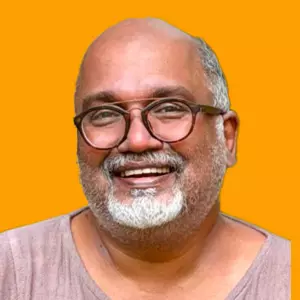
The Budget announcement comes at a politically sensitive moment, with a parallel high-speed rail proposal being articulated by E Sreedharan, popularly known as ‘Metro Man’, with the Centre's backing. While both ideas address the same structural problem of Kerala’s constrained north-south mobility, they differ sharply in institutional ownership, political signalling, and how they have entered the public domain.
RRTS proposal
The RRTS proposal, as outlined in the Budget and later detailed in official briefings, positions itself firmly as a state-articulated plan, even while acknowledging central assistance. It draws from the Regional Rapid Transit System concept implemented in the National Capital Region (NCR), which combines high-frequency services with higher speeds than conventional rail, and closer station spacing than long distance express corridors. The emphasis is on phased implementation, urban integration, and functional compatibility with metro systems in cities such as Thiruvananthapuram, Kochi, and Kozhikode.
Also read: SilverLine out, central high-speed rail in: The contest over Kerala’s mobility control
By including the RRTS in a Budget document approved by the Assembly, the state government has asserted procedural ownership of the idea. This is a marked contrast to the manner in which the alternative high-speed rail proposal has surfaced, largely through public statements by E Sreedharan, former MD of Delhi Metro Rail Corporation (DMRC), and reports of the DMRC [Delhi Metro Rail Corporation] being tasked with preparing a detailed project report.
Sreedharan’s proposal
Sreedharan has said the proposed corridor would have stations every 20 to 25 kilometres, trains running every five minutes, and operating speeds of up to 200 kilometres per hour. He has argued that the project would ease Kerala’s transport constraints and help reduce dependence on road travel in a state with high accident rates. He has also highlighted design differences from the shelved SilverLine project, claiming that land acquisition would be limited to about one-third of what SilverLine required, with 70 to 75 per cent of the corridor elevated and some sections underground.
However, unlike the RRTS proposal, Sreedharan’s plan has not been formally announced by the Union government. There has been no cabinet decision, no official project note, and no notification on funding structure or ownership model. This ambiguity has become a political issue in itself, particularly because SilverLine, the LDF government’s earlier semi-high speed rail project, was stalled after the Union government refused to grant clearance.
Rail politics
The state government now appears wary of a situation where a centrally driven project is advanced informally through a high-profile technocrat, bypassing the elected state administration. Sreedharan contested the last Assembly elections in Kerala on a BJP ticket and lost. That discomfort is evident in public statements from ministers who say they have not received any official communication about the new proposal, despite preparatory work reportedly underway.
Also read: PM Modi flags off 3 Amrit Bharat trains, launches projects in Kerala
Former finance minister Thomas Isaac, framed the issue as one of control rather than speed. “There is another major difference,” he said. “The new project will be under the control of the Union government, while K Rail was under the control of Kerala. For the state, the equity contribution to a special high-speed rail company is not very different in either case. In K Rail, Kerala had 51 per cent shareholding and the Railways 49 per cent. The new proposal follows the Konkan Railway model, with the Centre holding 51 per cent and Kerala 49 per cent. This means the new company will be controlled by the Centre.”
Isaac also questioned the lack of clarity around the Centre’s intentions. “Who knows whether the central proposal will actually follow the Konkan Railway model. Will it be a PPP model. Will private corporates also have a stake along with the Centre and the state. As in the Vizhinjam project, will central spending be converted into debt for the state. None of this is known,” he wrote on Facebook. He pointed out that the Union government has not officially communicated anything so far and cautioned against reacting solely to statements made by Sreedharan.
“Let the Centre’s proposal come. The Kerala government will certainly study it and respond. There is no intention to reject anything without hearing it. But for the Leader of the Opposition, Sreedharan’s words were enough to accept it. Was so much hostility towards K Rail justified merely because it was proposed by the Kerala government. Kerala will recognise this double standard.”
Meanwhile, Chief Minister Pinarayi Vijayan on Friday (January 30) said the state cabinet approved RRTS after repeated attempts to secure a response from the Centre on high- speed rail failed. Speaking at the inaugural session of the Loka Kerala Sabha, he said Kerala had earlier submitted proposals, including one discussed with E. Sreedharan and former Union minister K. V. Thomas, but the Ministry of Railways had not provided any official response. According to the Chief Minister, the state later approached the Union Ministry of Housing and Urban Affairs, which indicated that a proposal for an RRTS corridor would receive support if formally submitted. This assurance led the state to place the RRTS proposal before the cabinet and include it in the Budget.
Vijayan said the decision was not taken in isolation but after exploring all available options for improving north- south rail connectivity. He emphasised that the state government remains open to examining any alternative proposal put forward by the Centre, but only after it is officially communicated and placed on record.
Parallel proposals
The juxtaposition of the RRTS budget recommendation and Sreedharan’s proposal underlines a deeper political contest. SilverLine, despite extensive research [detailed studies including ] LiDAR surveys, environmental assessments, and a detailed project report prepared by a global consultancy, was opposed by the Union government and sections of the opposition on technical and financial grounds. The new proposal, still without a DPR or formal approval, has received a more favourable political reception from the same quarters.
Also read: No funds vs no land: Karnataka-Centre feud over limping railway projects
At the same time, the Union government’s silence on the specifics of the Sreedharan proposal keeps the political temperature high. Without clarity on ownership, financing, or implementation timelines, the project remains an announcement without a framework.
Responding to the Chief Minister’s statement, E Sreedharan said approval for RRTS from the Centre would be difficult. He argued that shorter RRTS-style corridors, such as between Thiruvananthapuram and Kollam, were more realistic under the present policy framework. Dubbing the proposal 'not feasible', he described the ''RRTS proposal as an election stunt by the LDF government''.