Round One to Kejriwal: How a contempt order delivered the recusal he was denied
Justice Swarana Kanta Sharma will not now hear the excise policy revision. Round Two, the contempt fight, is on harder ground for the litigant

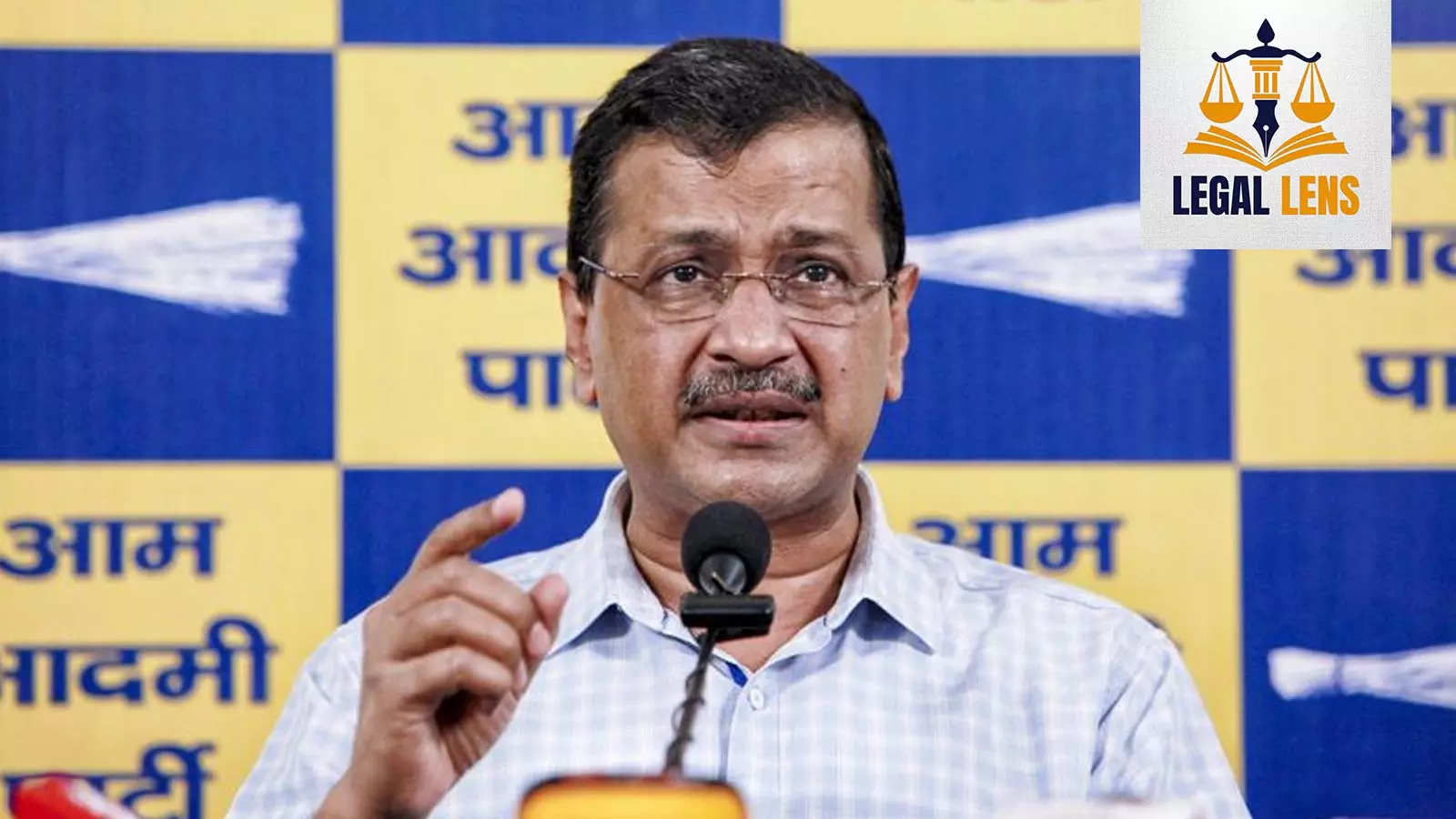
AAP leader Arvind Kejriwal's legal fight over the Delhi excise policy has grabbed the headlines.
Aam Aadmi Party (AAP) national convener and former Delhi chief minister Arvind Kejriwal has, in effect, secured what he could not win on the merits. On Thursday (May 14), Delhi High Court's Justice Swarana Kanta Sharma sent the Central Bureau of Investigation's (CBI) revision against his discharge in the Delhi excise policy case to another bench.
Also read: Between appeal and acquiescence: Kejriwal’s withdrawal offers a middle path
Three weeks earlier, she had refused to step aside from the same revision when Kejriwal had asked her to. The reason for Thursday's transfer was that she had decided to draw criminal contempt against him and five of his AAP colleagues.
The allegation: a coordinated campaign of vilification on social media. A judge who initiates contempt, she held, cannot continue with the substantive matter against the same litigant.
What was asked for, and was denied
The order Justice Sharma has now released, running to 68 pages, recalls the sequence in this case. Two days after her March 9 notice finding trial court’s discharge of Kejriwal and the co-accused prima facie erroneous, some of the respondents wrote to the chief justice of the Delhi High Court.
They asked for the matter to be transferred to another bench on the administrative side. The chief justice declined. They then moved the Supreme Court, filing a special leave petition against the March 9 order and a writ petition challenging the chief justice's communication.
Both proceedings were filed and abandoned without being pressed to a hearing. Only after these did the recusal application come before Justice Sharma.
Kejriwal has secured, by the operation of her own decision, the change of bench he could not secure on the recusal application. He has acquired a contempt notice he will fight on a different ground.
The recusal application, filed in late March by Kejriwal, Manish Sisodia, Durgesh Pathak, Vijay Nair, Arun Pillai and Chanpreet Singh Rayat, rested on three grounds. The first was that Justice Sharma had, on March 9, stayed the trial court's adverse remarks against the CBI and the investigating officer.
Also read: Why Delhi HC judge’s refusal to recuse in Kejriwal case may not be the last word
The second was that her children were on the central government's panel of advocates. They received briefs routed through Solicitor General Tushar Mehta, who appeared for the CBI before her.
The third was that she had attended four programmes of the Akhil Bharatiya Adhivakta Parishad between 2022 and 2025. The Parishad is the lawyers' affiliate of the Rashtriya Swayamsevak Sangh.
On April 20, in a 115-page order, Justice Sharma rejected all three. To recuse on these grounds, she said, would invite bench-hunting.
What happened between April 20 and May 14
After the dismissal, Kejriwal did not return to the Supreme Court. He, Sisodia and Pathak wrote to the judge instead, on April 27, announcing that they would boycott the proceedings, in person or through counsel. Their letter was followed by a series of social media posts, some of which she found prima facie contemptuous.
The two orders, in one sitting
On the afternoon of May 14, Justice Sharma was to appoint amicus curiae for Kejriwal, Sisodia and Pathak, who had not appeared. Instead, she announced criminal contempt against the six AAP leaders. The order also names Saurabh Bharadwaj's press conference of March 10.
Bharadwaj had asked publicly what relationship a sitting judge had with the Bharatiya Janata Party. Justice Sharma has held that the cumulative effect was a coordinated campaign that crossed from criticism into scandalising the court. Those characterisations are her prima facie findings, made for the purpose of issuing notice.
They will be tested in the contempt proceeding that the notice initiates. She then turned to the main case. Solicitor General Mehta and Additional Solicitor General S V Raju urged her to retain it. The remedy for an unsuccessful recusal application, they said, was an appeal to the Supreme Court.
The AAP leaders had not pursued that remedy. The judge declined. A judge who has drawn contempt against an accused, she said, cannot hear the substantive matter against the same accused. The revision was therefore being sent to another bench, subject to the orders of the chief justice.
She added a sentence that captures the architecture of the order. "This is not recusal," she said. "This is judicial discipline."
The transfer was not, on her telling, a concession to the recusal application she had dismissed three weeks ago. It was the operation of an unrelated rule, triggered by her own subsequent decision.
Why Round 2 is harder for Kejriwal
The order draws contempt under Justice Sharma's suo motu power, but it does not retain the proceedings before her. Paragraph 132 records her view that judicial propriety requires the proceedings not to continue before the same bench that initiated them.
Paragraph 137 puts the point more practically: the case should be heard by another bench, lest the alleged contemnors project themselves as victims of bias. Both the main revision and the suo motu contempt have therefore been referred to the chief justice for assignment to another bench.
Also read: Kejriwal vs Delhi HC judge: Protest against the law or political gamble?
The Round Two fight is therefore a fight before a fresh bench, which will start by reading the 68-page order. In it, the alleged contemnors will face Justice Sharma's prima facie findings.
The conduct, in her reading, was a coordinated campaign of vilification.
A video showing her making a speech at a university workshop in Varanasi was edited to ridicule the bench, she alleged. The imputations scandalise rather than criticise, she added. They will have an opportunity to show cause. The new bench will then make its own determination.
Kejriwal's route to relief lies through a defence before that bench or, failing that, through an appeal to the Supreme Court.
The judge's Satyagraha argument
The May 14 judgment does not merely respond to Kejriwal's choice of the word 'Satyagraha' to describe his boycott of her court’s proceedings in the Delhi excise policy matter. It takes the word seriously and turns it against him.
'Satyagraha', Justice Sharma writes at paragraph 125, means holding firmly to truth. In the constitutional setting, that means taking one's truth to a higher court when one is sure of it. It does not mean believing in one's truth and proving it to the public in place of the court of law.
The contemnors, in her reading, have tried to prove that there is something wrong with the judge rather than with the judgment. They were entitled to challenge the judgment.
Also read: Won't appear in person or through lawyer: Kejriwal writes to Delhi HC Justice Swarana
They had no right to challenge the judge by scandalising her court and labelling her as politically aligned. That, she holds, is the inverse of 'Satyagraha'. The passage is unusual in judicial writing. It claims for the order itself the moral language that the campaign sought to claim for the boycott.
Near the end of her order, at paragraph 113, Justice Sharma writes of the "self-imposed silence of judicial discipline" and of an asymmetry between a dignified judicial order and the loud public scandalisation that surrounded it. She concludes that campaigns fade, while a reasoned and courageous order becomes a precedent.
That is the institutional reading of May 14.
The political reading is shorter. Kejriwal has secured, by the operation of her own decision, the change of bench he could not secure on the recusal application. He has acquired a contempt notice he will fight on a different ground.
The Supreme Court, if and when the contempt reaches it, will decide which of the two readings the law will endorse.