How routine, diligent policing has kept communal peace in Mangaluru
Firm action against hate speech, swift arrests in political murders, quiet intelligence work blunt efforts by extremist groups to stoke unrest in coastal city

Mangaluru has acquired notoriety as a communal hotspot, but the ill-reputation is the consequence of political mobilisation by Hindutva and Islamic groups rather than deep-seated antagonism between the two principal communities.
Unlike cities that have seen religious violence — where mobs burn, loot, kill, and maim — people have not clashed in Mangaluru, or Udupi. The violence, in speech and action, is confined to outfits espousing communal ideology like the RSS-BJP and the Socialist Democratic Party of India (SDPI), which champions the Muslim cause.
Also read | Move to rename, upscale Dakshina Kannada hits 'appeasement' roadblock
Occasionally, students are mobilised, as happened when Muslim girl students were barred in2022 from wearing the hijab at a government pre-university college in Udupi. The matter snowballed after Hindutva outfits got Hindu students to wear saffron scarves and turbans in the classroom to force the government to make the wearing of uniforms in colleges mandatory, and the government obliged, effectively banning the hijab.
Communal faultlines created
Preventing Hindu and Muslim students from befriending or partying, barring Muslim hawkers from fairs at temples during festivals, harassing and assaulting cattle traders, celebrating festivals noisily in front of mosques, and tit-for-tat political murders have been the ways by which communal faultlines have been created or widened.
How cops 'cleaned up' Mangaluru
♦ Booked and arrested those spreading inflammatory social media posts
♦ Pursued political murder cases without religious or party bias
♦ Deployed special action force for preventive, localised policing
♦ Strengthened prosecution through special legal panels
♦ Tightened monitoring of warrants and court compliance
The groups involved operate through informers like autorickshaw drivers, bus conductors, or petty shop keepers. People, by and large, are silent approvers.
There was full-blast communal cacophony during the two-years of the BJP government till May 2023, when Basavaraj Bommai was the Chief Minister.
Tit-for-tat political murders
After the Congress government took over, there has been communal quiet except when a three-year lull in tit-for-tat political murders — 18 in 15 years per the Mangaluru City police commissioner — was broken at the end of April 2025.
A labourer, Ashraf, was beaten to death on the outskirts of the city by a mob for (falsely, it turned out) shouting "Pakistan Zindabad" during a local cricket match. A few days later, on May 1, a gangster, Suhas Shetty, with five criminal cases against him and hailed as a Hindutva warrior, was killed near the airport. A member of the Bajrang Dal, he was an accused in the murder of a Muslim youth three years ago and was out on bail.
Also Read: Mohammed Ashraf's 'lynching' in Mangaluru | Activist Manavi speaks up
A notification handing over the case to the National Investigative Agency (NIA) said members of the banned People’s Front of India (PFI), a radical Muslim outfit that is an associate of the SDPI, was behind it. In retaliation, the secretary of a mosque (also a driver of a truck hauling sand), Abdul Rahiman, was killed, allegedly by members of the Bajrang Dal.
When Muslim members of the Congress's minority cell threatened to resign if security was not assured to their community, the government set up a Special Action Force (SAF) comprising three units of 78 police personnel each to quell communal incidents in Dakshina Kannda, Udupi, and Shivamogga district.
The move drew cries of “appeasement” from state BJP leaders.
‘Silent, preventive work’
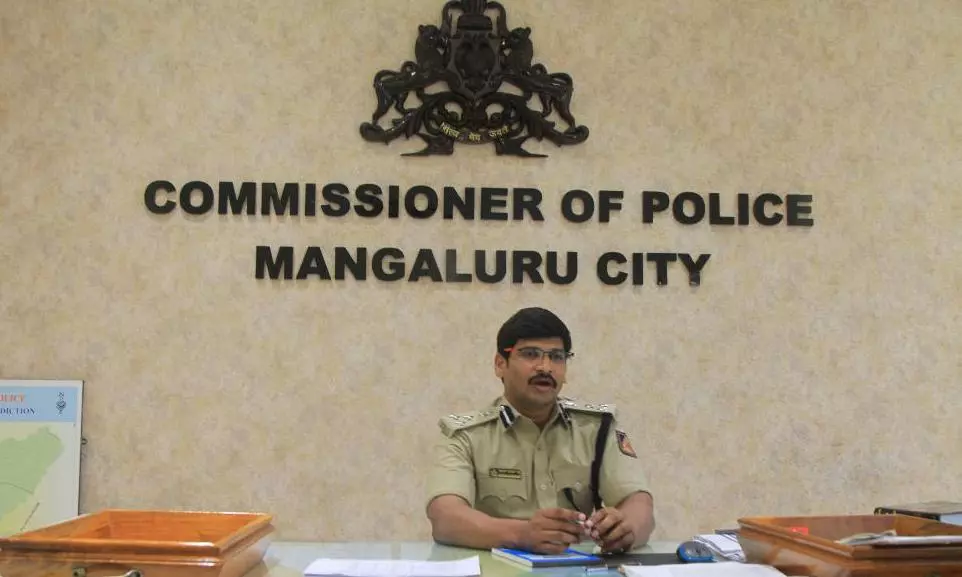
In an interview to The Federal, Sudheer Kumar Reddy, who took over as Mangaluru City Police Commissioner in May, and heads the SAF, said the special force is doing “silent, preventive work”. In July, he had told The Federal that its personnel were undergoing training with the aim of achieving “area dominance”.
Currently, he says, they are taking lessons in Tulu, the widely-spoken dialect, in which he is himself proficient. Many of them did well when tested for their ability to gather local intelligence, he added.
Reddy ascribes the communal quietude in the city and the district to routine policing functions, performed diligently. For instance, those posting inflammatory social media posts are booked and arrested. Forty-six of them have been arrested since May. Of these, 21 were sent to judicial custody and the others released under court orders after being warned against repeating the offences. Those let off are usually first-time offenders.
Also Read: NIA to probe murder of Hindu activist Suhas Shetty in Mangaluru
The challenge for the police, Reddy said, is to lift the cover of anonymity from the hate-speech mongers. They get emboldened when law enforcers lose track or interest. But when the troublemakers are apprehended, and the fact is amplified in the media, those tempted to stir trouble are compelled to rethink.
Chasing criminals sans bias
Successful efforts at apprehending all those accused of political murders regardless of their party or religious affiliation has also created a sense of unease among criminals, Reddy said. As per an NIA press release, chargesheets have been filed against 11 persons for the murder of Shetty. Fourteen persons have been arrested for the murder of Abdul Rahiman, the mosque secretary, and the Karnataka Control of Organised Crime Act (KCOCA) has been invoked against them.
Also Read: Mangaluru murders: Karnataka sets up anti-communal task force
Even handedness is necessary as the police has been accused of communal bias, a charge Reddy denies. During Bommai’s tenure, policepersons of two stations in the state posed in saffron clothes, drawing criticism from Siddaramaiah, the present Chief Minster.
The Muslim and Christian communities of the two districts realise they need the goodwill of Hindus, and have launched outreach cells and programmes, but the response from the Hindus has not been encouraging.
When a KCOCA court in Mysuru sent back Bharat Kumdel, a Bajrang Dal leader and accused in the murder of an SDPI member in 2017, and of Rahiman, to be tried in a Mangaluru court, Muslim groups blamed the police for being slack in not filing a chargesheet under KCOCA within the period of 90 days. Reddy says the police is making amends.
Special panel of lawyers
In July, the government created a special panel of lawyers to represent the Mangaluru City Police Commissionerate and the Dakshina Kannada District Police Unit in the Karnataka High Court to handle the rising communal cases. This is to ensure that all appeals are contested and the accused do not get bail easily.
To ensure that arrest warrants are executed and do not get overlooked out of complacency or lack of earnestness, Reddy said, he has formed a team to report daily about warrants that have been issued, the number executed, and those pending. Doing the rounds of the courts gives the offenders less time for nefarious activities. If they fail to appear, the property of the sureties is auctioned.
Also Read: Mangaluru: Tensions run high after man's murder, prohibitory orders imposed
In September, the city police also apprehended about half-a-dozen persons who had used fake Aadhaar cards and a land rights document called RTC to stand surety for three persons accused of murder and other crimes.
Outreach by minorities
The Muslim and Christian communities of the two districts realise they need the goodwill of Hindus. The Catholic dioceses of the two districts have outreach cells and programmes, but the response from the Hindus has not been encouraging.
The Karnataka State Sunni Yuvajana Sangha organised public rallies at various spots in Udupi and Dakshina Kannada districts as part of Souharda Sanchara, or Goodwill Tours, in July 2025.
A bishop said communal feeling has seeped. He cites the fall in the share of non-Catholics in Catholic schools, as a metric. This is the result of the other communities establishing schools and the scare caused by the bogey of religious conversion.
The Muslim outreach is not as structured as that of the Catholics, but one recent event stands out. At the end of July, the Karnataka State Sunni Yuvajana Sangha organised public rallies at various spots in Udupi and Dakshina Kannada districts as part of the Souharda Sanchara, or a Goodwill Tour.
Message of brotherhood
Sangha general secretary Maulana Abubakar Siddik Montagoli said the purpose of the tour was to spread the message of brotherhood.
He said there were no communal feelings when he grew up, but now politicians are using communal conflict to get votes. Once there is communal disruption, the affected people don’t get back to the previous state even after the return of normalcy, he said.
Also Read: Suhas Shetty murder: CM denies knowledge of 'link' with Fazil compensation
The Hindu, Muslim, and Christian communities of Dakshina Kannada and Udupi districts have traditionally lived side-by-side, maintaining distinct cultural identities but freely interacting in the secular sphere.
Communal disruption has economic consequences. The only people benefitting from division in society are the political entrepreneurs. There is no denying the undercurrent of communal feelings, but the present administration has kept them from boiling over so far.