Cost of non-disclosure: Why two SC cases sparked questions of judicial impartiality
Justice SC Sharma’s role in two high-profile cases, coupled with questions over undisclosed family links to EC, renews scrutiny of recusal and disclosure norms

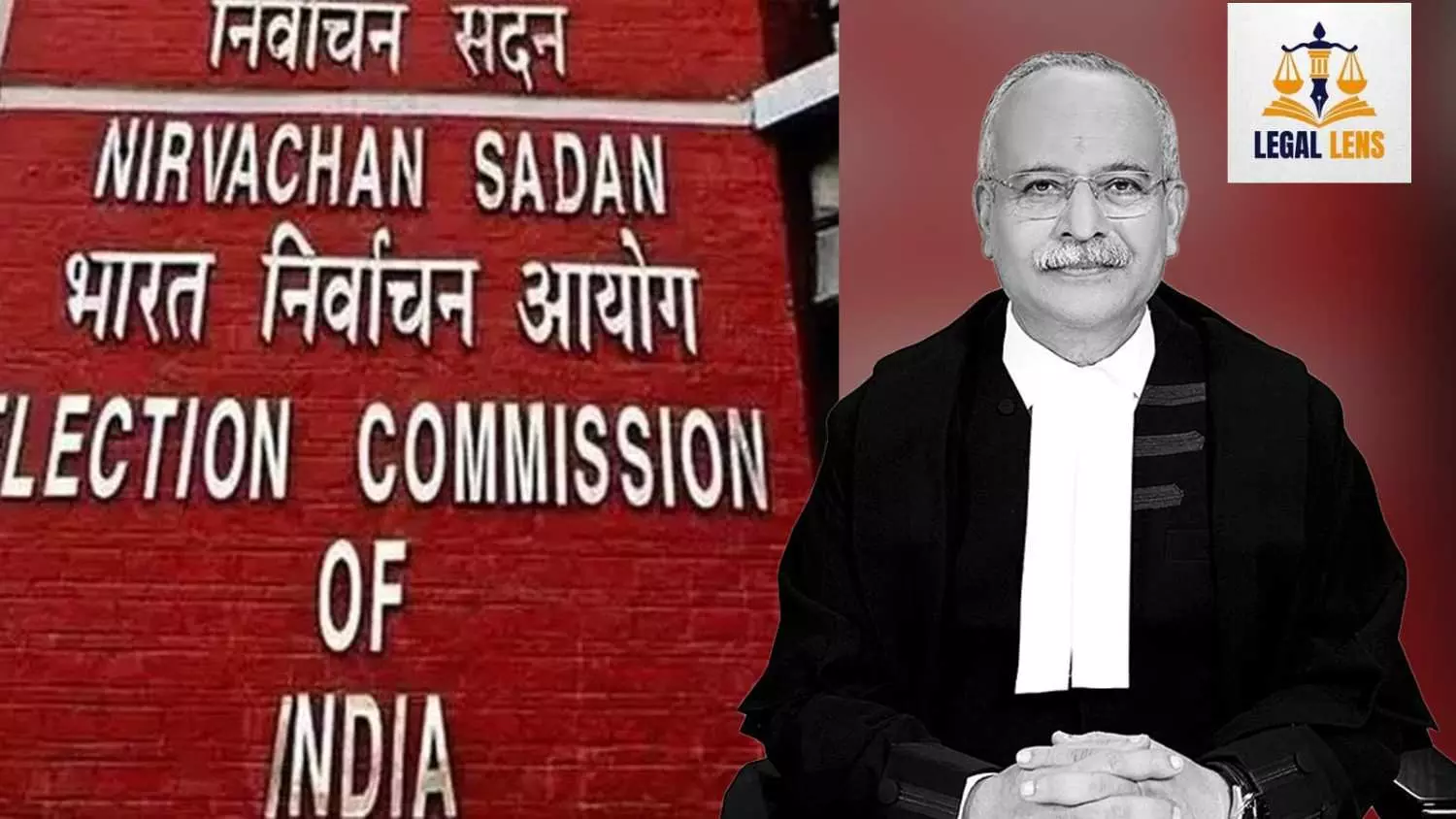
On September 23, Justice Satish Chandra Sharma of the Supreme Court sat on two benches. The first decided Dr Jaya Thakur v Union of India, the challenge to the 2023 law on appointments to the Election Commission of India (EC). The second heard a petition by Medha Roopam, the Noida district magistrate who is the daughter of Chief Election Commissioner (CEC) Gyanesh Kumar.
On September 25, LiveLaw reported that Justice Satish Chandra Sharma's son, Siddharth Sharma, is listed as the EC's standing counsel in the Madhya Pradesh High Court. No one has shown that Justice Satish Chandra Sharma acted on anything beyond his reading of the law. The concern lies in what the parties before him could reasonably believe.
What did the two benches decide?
The petitioners in Dr Jaya Thakur include advocate Dr Jaya Thakur, the Association for Democratic Reforms, the People's Union for Civil Liberties, and Lok Prahari. They argue that the 2023 Act restores executive control, since it replaced the Chief Justice of India (CJI) on the selection panel with a union minister. The Anoop Baranwal judgment of 2023 had placed the CJI there until Parliament legislated.
In May 2026, after the petitioners had argued the merits, Attorney General R Venkataramani urged a reference to a Constitution Bench, and Solicitor General Tushar Mehta adopted his stand. The petitioners objected that the Union had never sought this in its counter-affidavit, and called the plea a ploy to delay. On September 23, Justice Dipankar Datta and Justice Satish Chandra Sharma split on the request. Justice Datta held that the two-judge bench could decide the petitions itself. Justice Satish Chandra Sharma found the law officers' arguments well-founded and favoured a Constitution Bench. However, both agreed that the case, as a result of the 1:1 split, could be referred by the CJI to a five-judge Constitution Bench rather than the next ladder in the judicial hierarchy, namely, the three-Judge bench to avoid delay.
Also Read: SC split on CEC appointment law: Justice Datta says EC must be seen as independent
In 2024, the petitioners had sought a stay of Gyanesh Kumar's appointment as an Election Commissioner under this law. However, with the court declining a stay, he first became the Commissioner, and then the CEC in 2025.
In the second case, Roopam and the Uttar Pradesh government challenged an Allahabad High Court judgment of September 2. The High Court had quashed her NSA detention order against Akriti Chaudhary, a Delhi University student held after a labour protest. It had also passed strictures against Roopam and awarded costs, which reports put at Rs 5 lakh, to be recovered from officials, including her. Senior advocate Mukul Rohatgi argued for Roopam before a bench of Justices Satish Chandra Sharma and N Kotiswar Singh. The record also lists Tushar Mehta, the Solicitor General who sought the reference in Dr Jaya Thakur, among counsel on the petitioners' side.
The first version of the order stayed “the operation of the impugned judgment, particularly paragraphs 27 to 33”. The revised order confined the stay to those paragraphs, covering the costs and strictures against Roopam, and left the quashing of the detention intact. Reports said part of the hearing of the case on September 23 was muted on the video link. The matter is listed next on October 7.
Why is Roopam case listing questioned?
LiveLaw reported that Justice Satish Chandra Sharma's bench did not hold the regular roster for such matters. A bench led by Justice BV Nagarathna was already hearing connected cases. How the petition reached his Bench instead is a question only the Chief Justice Surya Kant, as master of the roster, can answer.
Also Read: ‘Orwellian Dystopia’: Allahabad HC slams DM for student activist’s detention
In a statement on September 25, the Lawyers' Association for Constitution asked the Chief Justice to recall both orders. It wants both matters heard afresh by a bench without Justice Satish Chandra Sharma. It has also urged a protocol for disclosure where a judge's relatives appear for an interested institution.
What is the son's link?
According to the LiveLaw report, the Madhya Pradesh High Court's website lists the judge's elder son as standing counsel for the EC. The lawyers' association has named him as Siddharth Sharma, enrolled in 2017.
None of the documents the Court issued on September 23, in either case, records any disclosure of this link by the judge. Senior advocate Gopal Sankaranarayanan, who argued for the Dr Jaya Thakur petitioners, told Mojo Story on September 26 that he learnt of the “conflict of interest” involving Justice Satish Chandra Sharma only from LiveLaw. He said neither he nor his clients had been told this at any stage. In the Roopam matter, LiveLaw said it was not clear whether the parties had been informed, and the lawyers' association said it was unsure.
Arguments that support the judge’s conduct
A fair account must begin with the arguments that support the judge's conduct in both cases. No court has yet ruled on the 2023 Act, and a first challenge to such a law can plausibly go to five judges. That was the core of Justice Satish Chandra Sharma’s opinion in the CEC and ECs appointment case. Interim stays of strictures against officers like Roopam are common, and correcting an order may reflect care rather than haste.
Also Read: Noida unrest: ‘Who gave cops the right to beat us', ask workers even as UP hikes wages
Justice Satish Chandra Sharma’s son practises in a different court, and nothing on record suggests a financial stake in either outcome. In April 2026, Delhi High Court judge Justice Swarana Kanta Sharma rejected a recusal plea that rested on her children's work as Union panel counsel.
Why does it still matter?
The difficulty lies in the conjunction of facts. The litigant in one case is the CEC's daughter, and her petition reached a bench outside the roster. The other case bears on the law under which her father holds office. The judge's son, meanwhile, serves the very Commission her father heads. Together, these facts form a picture any reasonable observer would question.
Indian law asks exactly that question. In Ranjit Thakur v Union of India (1987), Justice MN Venkatachaliah (who had served as the CJI) held that a judge must look to the mind of the party before him. The test is whether the party could reasonably apprehend bias, whatever the judge believes about himself.
Also Read: Appointment dispute and internal dissent: EC faces a checks-and-balances question
Disclosure at the outset would have met most of this concern. In State of Punjab v Davinder Pal Singh Bhullar (2011), the Supreme Court held that a party who knows of possible bias and stays silent cannot object later. One sentence from the bench on September 23 would have handed the parties that choice.
What can the Court do now?
The Chief Justice could list the Roopam matter, still at an interim stage, before the regular roster bench. Justice Satish Chandra Sharma is due to retire at the end of November, which limits any future role in the election law challenge.
The Supreme Court's 1997 Restatement of Values of Judicial Life bars a judge from hearing a matter in which a family member is concerned. It leaves “concerned” undefined, and no rule requires a judge to record reasons for staying on.
Also Read: EC SIR row: INDIA bloc gets ammunition, but Modi govt may brazen it out
A model exists in Section 12 of the Arbitration and Conciliation Act, 1996. Since its 2015 amendment, it has obliged arbitrators to disclose any relationship with the parties. Judges enforce this standard on arbitrators, yet impose nothing comparable on themselves.
The Court could frame a similar rule under Article 145. Judges could file a register of their relatives' institutional clients, checked by the Registry at the listing stage. Such a rule would need precise triggers, since recusal on demand would hand litigants a veto over their judges.
Justice Satish Chandra Sharma's two orders on September 23 show what the absence of such a rule costs. A judge who may well have decided both matters on their merits now faces questions that a disclosure on the record could have settled.