Between appeal and acquiescence: Kejriwal’s withdrawal offers a middle path
What Kejriwal has done is to add, to the litigant’s repertoire, a public refusal that runs alongside the appeal: bounded, costly, and reasoned; will it work?

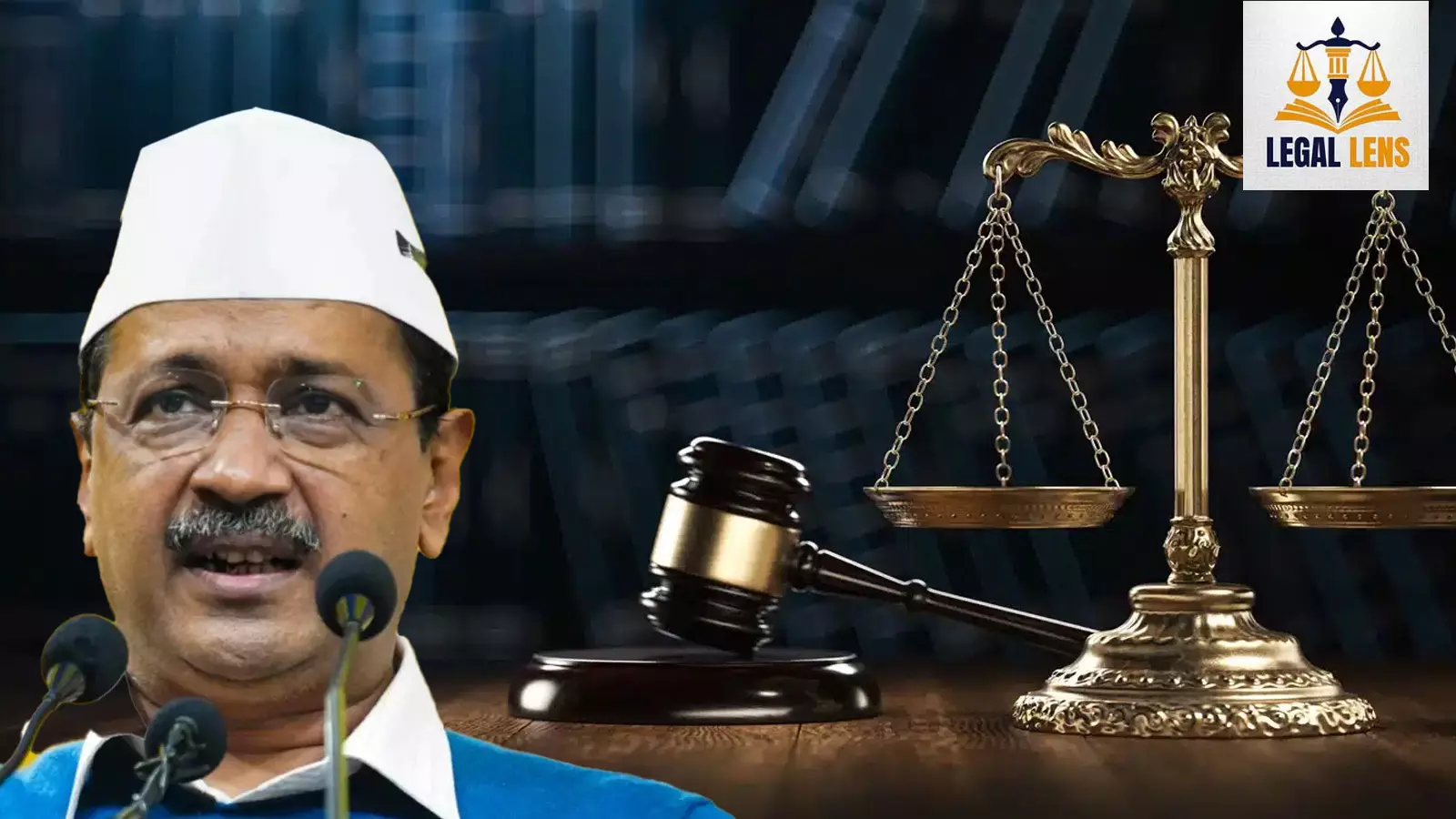
Former Delhi chief minister Arvind Kejriwal wrote to Justice Swarna Kanta Sharma of the Delhi High Court on Monday (April 27) that he would not appear before her, in person or through counsel. He invoked the discipline of Mahatma Gandhi’s Satyagraha. The case is the Central Bureau of Investigation’s revision petition against his discharge in the Delhi excise policy matter.
The trial court at Rouse Avenue discharged Kejriwal and 22 others on February 27. The CBI took the matter to the high court in revision. Six of the discharged accused asked Justice Sharma to step down on grounds of bias. She rejected the application on April 20, in a 115-page order opening “I will not recuse”.
Indian courts have not seen anything quite like it. An accused in a serious criminal proceeding has publicly refused to defend himself before a particular judge. The act has invited two competing labels. The first is principled non-cooperation in the Gandhian mould. The second is political theatre dressed as conscience.
The sequence of satyagraha
Gandhi’s satyagraha has a sequence. The citizen who senses injustice begins with dialogue. He places the perceived injustice before the authority competent to correct it. He gives that authority a fair opportunity to reflect. He examines his own motives. Only then, if the injustice remains, does he refuse cooperation, prepared to bear the consequences.
Also read: Why Delhi HC judge’s refusal to recuse in Kejriwal case may not be the last word
Kejriwal’s letter is structured around that sequence. He filed a recusal application, with reasons set out at length. He argued it in person. The application was dismissed in language that, in his reading, treated the asking itself as the affront. The order spoke of “accusations hurled” at the bench. It described the application as a litigant putting the judge “on trial”. “In my own conscience, I have now reached a point where I can no longer meaningfully participate in these proceedings,” Kejriwal writes, “without feeling that I am lending my presence to a process in which my faith, in this specific context, stands deeply shaken.” The dialogue, in that sense, was exhausted. The withdrawal followed.
Kejriwal’s withdrawal is confined to matters where the Solicitor General appears, or where the Union, the BJP, or the RSS is involved. He continues to appear before the same judge in other matters. The letter is explicit on the limits. “My present inability is confined to this matter and to such future proceedings in which these very apprehensions arise with equal force,” he writes. “It should not be understood as a refusal to appear before Your Ladyship in all cases.” He has reserved the right to challenge the April 20 order in the Supreme Court. He has refused complicity in one specific proceeding.
Cost acceptance
The recusal doctrine has two halves. Justice must be done, and it must be seen to be done. The second half operates only in public. A private withdrawal preserves only a personal grievance. A public withdrawal places the legitimacy question on the record. The letter is addressed to the judge but written for the reading public.
Also read: Won't appear in person or through lawyer: Kejriwal writes to Delhi HC Justice Swarana
In KS Panduranga vs State of Karnataka, (2013), the Supreme Court held that the high court hearing would go on even if the accused was not represented by a counsel, with an amicus appointed if needed. The case may be argued on a record Kejriwal has not contested before the bench. The decision may go against him. He has put this in writing. He has reserved the appeal, but not used it as a substitute. Cost-acceptance is the part of satyagraha that is hardest to fake.
Kejriwal has accepted, expressly, that an adverse decision may follow. The letter is also explicit on what it is not. “Today, I walk free because of judiciary,” Kejriwal writes. “Let there exist no figment of imagination that my present stand is against the institution. It is only against a situation in which public faith risks being asked to bear more than it reasonably can.” What he refuses is his own participation.
Does satyagraha work in litigation?
It is said that the Gandhian tradition of protest does not fit in litigation. Bal Gangadhar Tilak and Mahatma Gandhi, during the freedom struggle, accepted punishment. They did not walk away from the courtroom. The point has weight. Their non-cooperation was political and addressed to colonial authority. They bore the cost of jail. Kejriwal’s withdrawal is addressed to a specific bench. He bears the cost of adverse legal consequences. The discipline translates: dialogue, non-cooperation, willingness to suffer. The form differs. The grammar is the same.
It is further said that the proper recourse was an appeal, not a letter. Kejriwal has reserved the appeal. The letter is not in lieu of one. It is ahead of one. It does what an appeal cannot. It places on the public domain, in the litigant’s own voice, why the proceedings will continue without him.
Also read: Chadha, others’ exit was a disaster waiting to happen for AAP
The strongest objection is that the act, if accepted, opens a door. Every politically powerful litigant could threaten withdrawal. Courts would face manufactured suspicion in case after case. But this argument glosses the fact that Kejriwal has put in writing that he may lose this case as a result.
A litigant who refuses to participate, accepts the cost, and reserves the appeal is not threatening the institution. The alternative for such a litigant is silence or futile participation. Neither contributes to the health of the courts. A bounded refusal, costly to the refuser, does.
This is an unusual remedy. Litigants ordinarily appear, lose, and appeal. Kejriwal has refused that sequence on the ground that it would dignify a process he believes corrupted. He has paid for the refusal in advance, by accepting that the case may go against him. What Kejriwal has done is to add, to the litigant’s repertoire, a public refusal that runs alongside the appeal: bounded, costly, and reasoned. Whether Indian practice accommodates it is the question his act raises.