1,000 MW N-plant in Kudankulam marching towards commissioning in 2027
NPCIL completes a crucial flushing operation at Kudankulam Unit 3, marking a key commissioning milestone as hydro tests and hot runs pave way for fuel loading

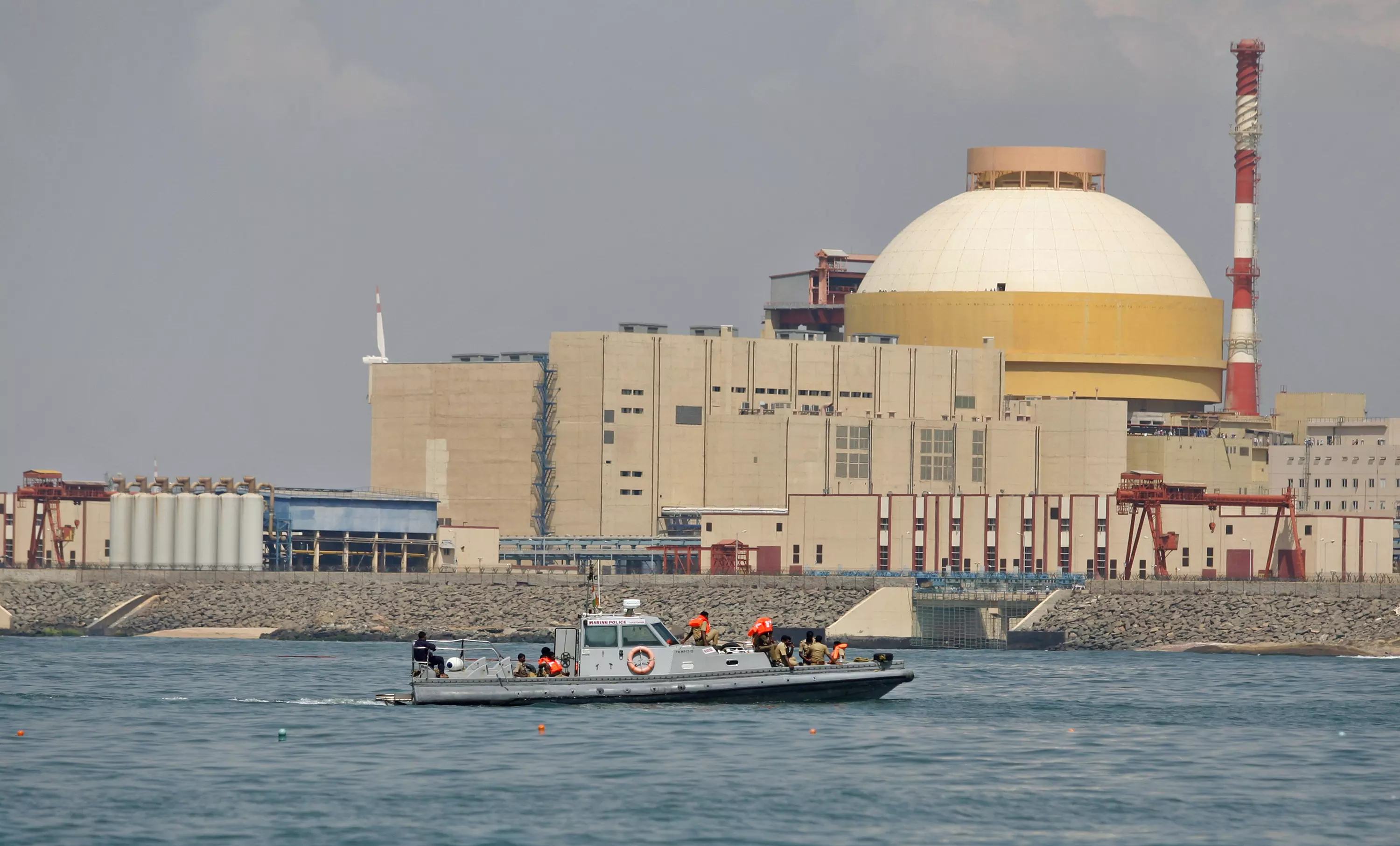
Kudankulam Unit 3 is officially on the fast track. Nuclear Power Corporation of India (NPCIL) just checked off a huge box on its commissioning checklist: a rigorous safety system flush known as "Spillage to Open Reactor."
With the pipes clean and the systems vetted, Tamil Nadu’s newest 1,000 MW power source is one step closer to hitting the grid.
Controlled process
On April 25, NPCIL carried out the Spillage to Open Reactor activity, flushing of safety systems and Main Coolant Pipelines (MCP) using light water to ensure cleanliness of the systems for further commissioning activities. It is a major milestone in the commissioning process of a nuclear power plant.
The flushing operation is carried out by operating safety system pumps from the Main Control Room in a controlled, sequential manner to maintain system integrity and achieve the required technical parameters as per design requirements.
This signifies the start of individual functional testing of primary system equipment and piping in accordance with design requirements, marking a critical step towards commissioning of the plant.
“Next step will be the hydrotest of the primary circuit, followed by hot run. Activities are going on in full swing,” Bhuwan Chandra Pathak, Chairman and Managing Director, NPCIL, told The Federal.
A hydro test or hydrostatic test involves filling up the reactor vessel and piping systems with water to check for leakages.
Also read: India’s PFBR reaches criticality: Milestone after years of delays and questions
On the other hand, a hot run is a test carried out by stimulating normal hot operating conditions without the use of nuclear fuel but with the heat generated by reactor coolant pumps. After draining the water and if all things are good, nuclear fuel will be loaded.
Russian collaboration
A total of six atomic power plants of 1,000 MW each were agreed to be built in Kudankulam with Russian assistance.
Russia’s integrated nuclear power operator Rosatom agreed to supply the nuclear side equipment —VVER reactors and the fuel. The first stage, consisting of power Units 1 and 2, was commissioned in 2013 and 2017, respectively.
Last December, Rosatom said its subsidiary TVEL JSC’s Nuclear Fuel Division had supplied nuclear fuel for the initial loading of the VVER-1000 reactor core at Unit 3.
Also read: Kudankulam NPP's Unit 1 and 2 receive new type of fuel from Russian company
The fuel, including the initial reactor loading and some reserve assemblies, was manufactured by the Novosibirsk Chemical Concentrates Plant (a facility of Rosatom’s Nuclear Fuel Division).
Support from Rosatom
Under the contract, Rosatom will supply the fuel for the full lifetime of Units 3 and 4, starting from the initial loading.
Rosatom also provides engineering services, increasing the efficiency of power units, introducing new fuel and fuel cycle solutions.
According to Rosatom, during the operation of Units 1 and 2, Russian and Indian engineers have done a considerable amount of work to increase their efficiency through the introduction of advanced nuclear fuel and extended fuel cycles.
Fuel technology
Starting from 2022, the Kudankulam units are supplied with nuclear fuel of the TVS-2M model. It provides more reliable and cost-effective reactor operation due to its rigid design, a new generation anti-debris filter and an increased mass of uranium.
Also read: This is why TN wants refuelling months of Kudankulam plant changed
Its introduction has also enabled elongation of the fuel cycle of the reactors from 12 to 18 months, so the power units are being stopped less frequently for fuel reload and generate more electricity.
Units 3 and 4 will become the first in history VVER-1000 power units to be launched already in an 18-month fuel cycle, Rosatom had said.
Project timeline
Be that as it may, the Unit 3 at Kudankulam, which was expected to go critical - the start of nuclear fission-in FY26, is likely to do so this fiscal.
As per the information given to a Parliamentary Committee by the Department of Atomic Energy, the cumulative physical progress of Units 3 and 4 as of January 2026 was 80.77 per cent.
The two units are expected to be commissioned in 2027, though Pathak remained silent on that point.
Two more units of 1,000 MW (Units 5 and 6) are under construction at Kudankulam has achieved a physical progress of about 42.12 per cent as of January 2026.
Also read: Atomic Energy Bill 2025: Why India’s 100 GW nuclear mission is a distant dream | Interview
The two units are expected to be commissioned in 2030, states the Parliamentary Committee report.
Concerns over fuel dependency
Interestingly, the Parliamentary Committee noted that the fuel for the Kudankulam units is procured under inter-governmental arrangements with the Russian Federation, and that geopolitical conditions affecting this supply relationship have a direct bearing on India’s nuclear fuel expenditure and electricity generation.
The Committee recommended that the Government should set a clear policy objective of progressively reducing dependence on any single external source for nuclear fuel supply, and take concrete steps towards expanding domestic uranium production, fuel fabrication capacity, and supply agreements with a diversified set of partner nations.
Also read: India’s nuclear push comes with a catch: Absurdly low liability, unlimited public risk
The Committee also recommended that the Department of Atomic Energy should institute a quarterly monitoring mechanism to track fuel delivery milestones and projected payment obligations and use this to arrive at more accurate Budget Estimates, thereby reducing the recurrence of large supplementary demands on the one hand and large unspent provisions on the other.