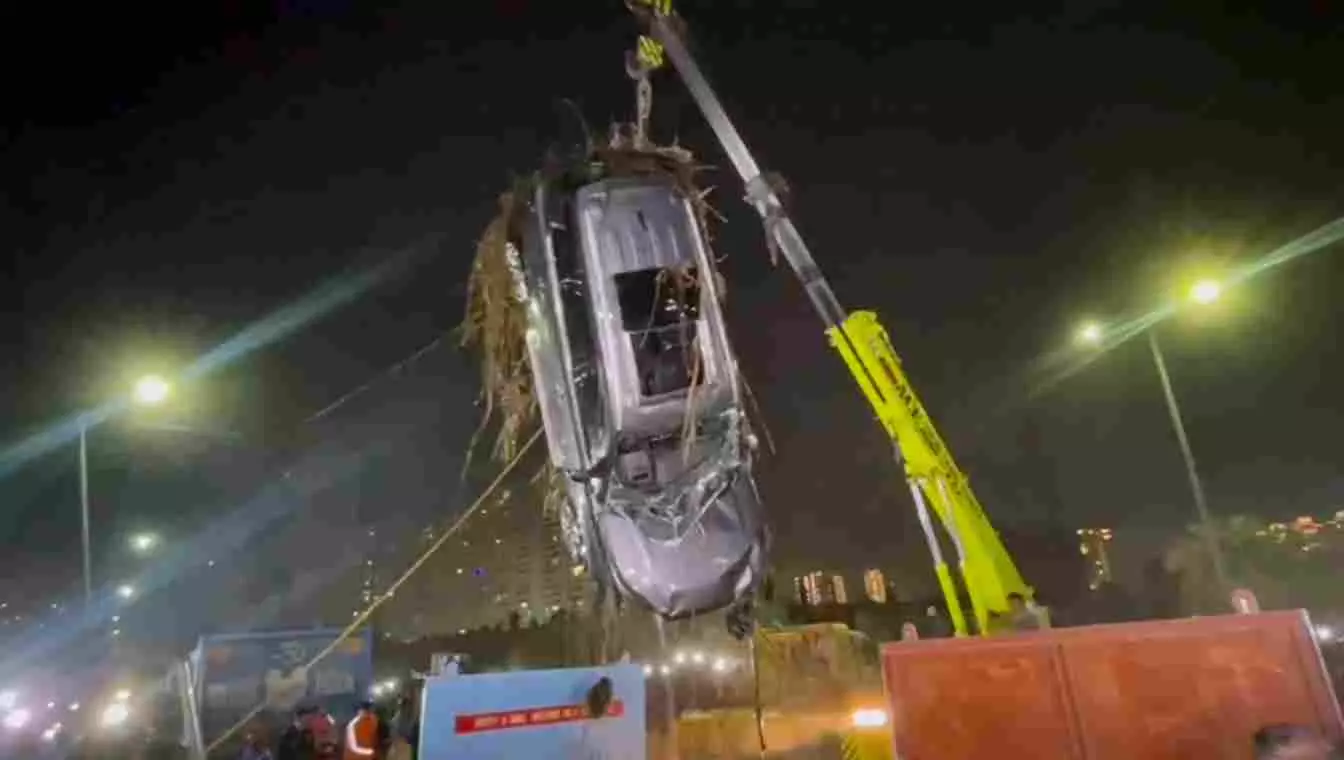
Noida techie drowning: What went wrong, and why it can happen again
Over 200 trained personnel remained spectators for two hours as the 27-year-old pleaded for help, sparking outrage over systemic apathy and inadequate equipment

The tragic drowning of a young techie, Yuvraj Mehta, in Noida on January 17 (Saturday) has harshly brought the focus back on India’s disaster management ecosystem, which, despite some commendable performances, has succumbed to the unprecedented catastrophe that comes as part of the job.
Mehta drowned after his car fell into a deep drain, with NDRF (National Disaster Response Force) and SDRF (State Disaster Response Force) volunteers standing mutely, hand on hips, too apprehensive to fathom the water.
Also read: ‘Papa, I am stuck’: Noida techie’s last call before drowning after car crash
The victim, 27, survived the initial plunge and climbed onto the roof of his vehicle, but drowned while waiting for rescue for more than two hours.
Rescue volunteers, more than 200, stood idle
Eyewitness and media reports indicated that the rescue volunteers present there — numbering more than 200 — hesitated to enter the water for nearly two hours due to fog and risks, leading to public outcry over systemic apathy, even as the young man pleaded for help from the water's edge, witnessed by his helpless father and officials.
In contrast, a brave delivery agent tried to help, highlighting the failure of trained professionals to act immediately, with authorities later trotting out lame-duck excuses such as fog, cold water, and hidden debris, while the incident sparked protests over unaddressed local warnings about the dangerous drain.
India's disaster management structure strong but...
While India has a robust disaster management framework — including the National Disaster Management Authority (NDMA) and state disaster management authorities (SDMAs) — reports suggest significant weaknesses, with issues ranging from poor coordination, policy gaps, inadequate training, lack of resources, and deficient infrastructure.
Also read: Two Noida builders booked over techie's death in water-filled pit of construction site
In Noida’s Sector 150, where this tragedy took place, the potential rescuers had ropes that fell short, cranes that did not reach their destination and ladders that were too small to extend to their intended target. And all of this went practically the whole night.
The latest outrage has triggered criticism that the system is often "in shambles" during crises, particularly regarding implementation and community-level readiness despite strong central bodies.
While the NDMA has improved cyclone forecasting and NDRF response, systemic problems persist in linking technology to effective, localised action, ensuring accountability, and moving beyond a centralised and reactive model.
This overemphasis on a centralised template means that SDRFs in India, particularly in mountainous regions such as Uttarakhand and Jammu & Kashmir, face significant, "uphill" challenges during search and rescue operations. These challenges stem from harsh, unpredictable environments, high-altitude logistics, and, in some cases, the need for better equipment.
The other challenges faced by state agencies include:
Extreme high-altitude conditions: Teams operating at heights exceeding 15,000 feet must contend with freezing temperatures and high winds.
Logistical and resource constraints: Limited rations in remote areas force teams to carry supplies for both themselves and the victims they rescue.
Dangerous terrain and weather: Landslides, avalanches, and mudslides constantly threaten rescue personnel, with unstable slopes posing a significant risk.
Complex water rescues: During floods, divers face high-flow water and zero visibility, sometimes necessitating, dangerous, manual searches.
Communication and access breakdowns: Natural disasters often sever communication lines and block roads, forcing personnel to trek for miles to reach affected villages.
To address these hurdles, the SDRF is increasingly training local communities to be first responders and upgrading their skills through specialised, mountaineering and rescue courses, a statement issued by the government says.
Also read: Nearly 6 months after flash floods wreaked havoc in Dharali, why locals are yet to move on
But as the case in Noida demonstrates, public participation can often turn hazardous — you can end up with more `eyewitnesses’ than `volunteers’.
Some recent glaring setbacks include:
Chennai floods (2023): Linked to unchecked development and encroachment on wetlands, showing urban planning failures.
Kerala floods (2018): Highlighted issues with early warning clarity and local preparedness.
Delhi's mechanism: Described as "mired in red tape" with bureaucratic hurdles despite past terror attacks, per a 2011 report.
To be sure, there have been significant improvements in the system, but the overall scale of accidents has been so frequent and colossal that the rescue volunteers have found themselves overwhelmed.
Govt keen on financing key sector
The government has been keen to improve the finances for this crucial sector. For instance, the 15th Finance Commission has recommended the creation of funds for disaster mitigation along with disaster response, which will now together be called the National Disaster Risk Management Fund (NDRMF) and state disaster risk management funds (SDRMFs).
The commission has also recommended an allocation of Rs 1,60,153 crore in the SDRMF for the years 2021-26, out of which Rs 1,28,122 crore (80 per cent of SDRMF) is for the State Disaster Response Fund and Rs 32,031 crore (20 per cent of SDRMF) is for the State Disaster Mitigation Fund.
Also read: Goa nightclub fire: Narrow exits, palm decor, no fire safety norms led to city's deadliest disaster
But clearly, as the Noida drowning indicated, any infrastructural push and technology upgrade works well only when the human element is factored in, and they work in unison. The question being asked is whether the same team of rescuers would have allowed a VIP to sink in place of Yuvraj Mehta?