SIR verdict: Operation successful, patient under observation
The court approved the removal of 47 lakh names from the Bihar voter list, leaving open the harder question of what this means for the voter

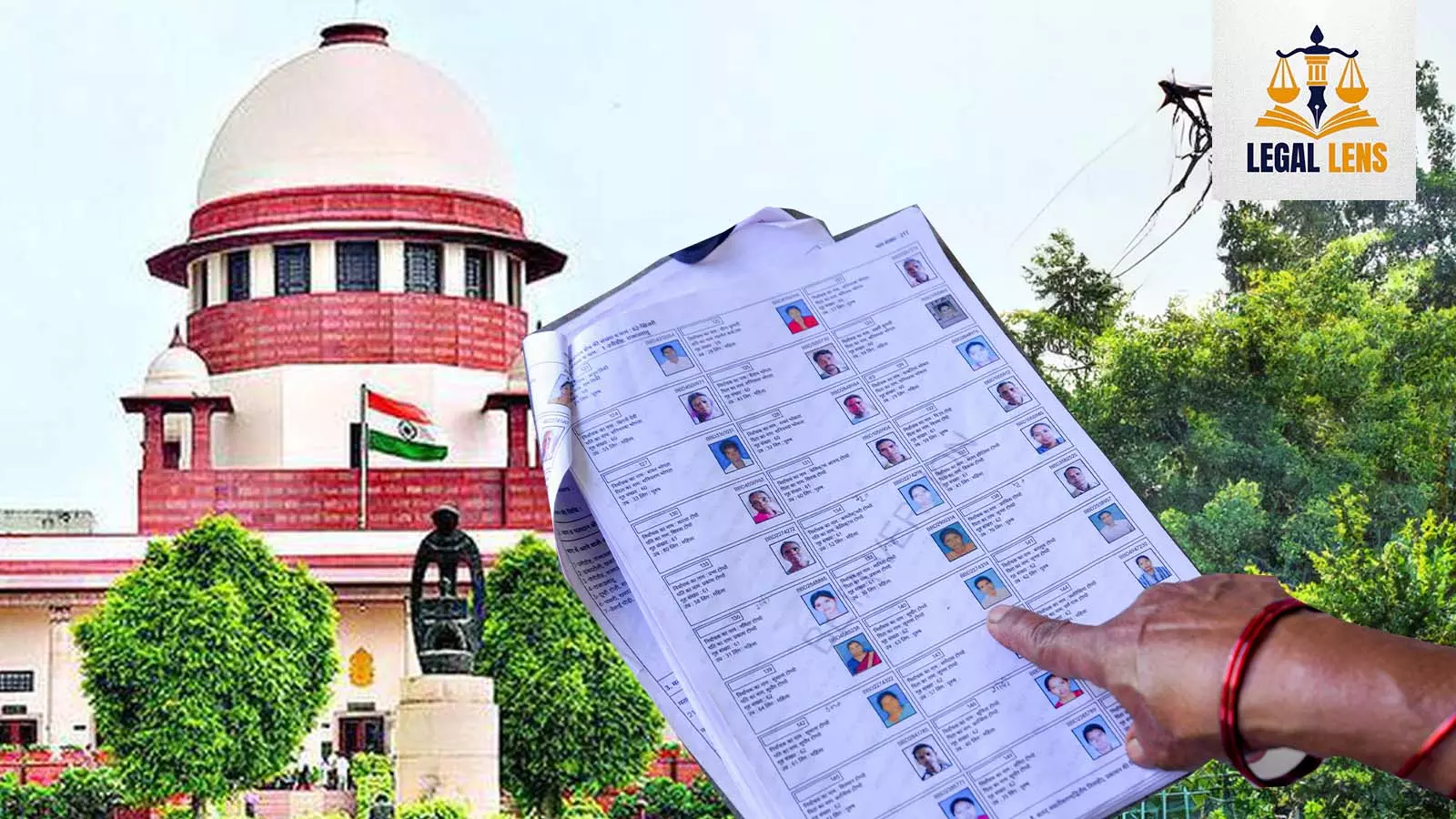
In the four months between June and September last year, the Election Commission of India (ECI) struck roughly 47 lakh names off the Bihar electoral roll. The exercise, called the Special Intensive Revision (SIR), began on June 24, 2025, with 7.89 crore voters on the roll. The final roll, published on September 30, carried 7.42 crore. Assembly elections followed in November; results were declared on November 14, 2025. By the time the Supreme Court sat to decide whether the SIR was constitutional, those elections were over.
On May 27, a bench of Chief Justice Surya Kant and Justice Joymalya Bagchi delivered its verdict: The SIR was lawful, proportionate, and procedurally sound. It did not amount to the Commission deciding on citizenship. The lead petitioner was the Association for Democratic Reforms. Yogendra Yadav, as a petitioner-in-person, argued his own case.
EC’s power
The petitioners argued that Article 324 of the Constitution could not override what Parliament had laid down. Article 324 gives the Election Commission the power to superintend, direct and control elections. The Representation of the People Act, 1950 (RP Act, 1950) and the Registration of Electors Rules, 1960 already cover the field, they said. Article 324 was a gap-filler.
Also read: 'Blank cheque given to EC': SC verdict on SIR sparks sharp reactions
The bench disagreed. Article 327, which lets Parliament make election laws, opens with “subject to the provisions of this Constitution”. That means Parliament cannot override Article 324. The two work together.
The more contested ground was Section 21(3) of the RP Act, 1950. It permits a “special revision” for any constituency or part of a constituency. The petitioners read “any” narrowly: revisions had to be constituency-specific. The bench read it the other way. “Any” could mean “all” where context warrants. Where duplications, undeclared deaths and migration cut across every constituency, a constituency-by-constituency exercise would be a fiction.
What proportionality means
Proportionality is the test Indian constitutional law uses whenever the state restricts a fundamental right. It is the four-question framework the Supreme Court has developed in cases like Modern Dental College (2016) and Puttaswamy (2017). Is the purpose of the measure legitimate? Is the method chosen reasonably linked to that purpose? Could a softer method have done the same job? And does the gain to the public outweigh the loss to the right? If any one answer is no, the measure fails.
The court took the four questions one at a time. The purpose was legitimate: a clean electoral roll is foundational to democracy. The method was reasonable: going door to door, asking for documents, is a sensible way to find duplicates, deceased voters, and people who had moved. Neither was seriously contested.
Also read: Supreme Court says SIR is legally valid, doesn't violate constitutional provision
The third question, whether a softer method could have done the job, was where the petitioners pressed hardest. They argued the Commission could have used lighter tools: targeted revisions where problems were known, cross-checks with existing databases, or correction by exception. The bench drew instead on the demonetisation ruling in Vivek Narayan Sharma (2023): courts should not second-guess expert decisions in matters of policy. A statewide drive was not obviously excessive.
This is where the verdict will draw criticism. Demonetisation was monetary policy. The right to vote is not. And the dissent in Vivek Narayan Sharma, which had warned against giving the executive a free pass where fundamental rights are at stake, gets no mention.
The fourth question, the balance between the goal and the cost to the voter, is where the bench is most candid. The right to vote, it held, is a constitutional right, not just a statutory one. It rested this on Rajbala and on In Re: Section 6A of the Citizenship Act 1955, the latter written by Chief Justice Surya Kant himself.
Constitutional right
A short word on what that distinction means. For decades, Indian courts treated the right to vote as a statutory right, created by Parliament and regulable within statutory limits. Rajbala v. Haryana (2015) shifted the position. The right to vote under Article 326, the Supreme Court there said, was not merely statutory but constitutional. The Section 6A ruling reaffirmed it. The shift matters because a constitutional right attracts the proportionality test that a statutory right would not.
Also read: SIR didn't cost Mamata Bengal, women's anger did, says Yashwant Deshmukh | AI With Sanket
But the bench’s reading of the constitutional right is qualified from the start. It is constitutional, but “not absolute or unregulated”. Articles 325 and 326 guarantee the franchise; the RP Act, 1950, and Rules legitimately set conditions of identity, residence and eligibility. Asking voters to produce documents, on this reading, does not infringe the right. It operationalises it.
On what basis, though, does the SIR’s burden pass muster? The bench is unusually frank. The SIR “as initially designed”, it writes, “did raise legitimate concerns regarding documentation, transparency, and access”. Those concerns “were addressed through a series of judicial interventions”. The court fixed the SIR as it went along. It ordered Aadhaar accepted as a 12th document. It directed the publication of the booth-wise list of the 65 lakh voters left off the August 1 draft roll. It told political parties to send Booth Level Agents to help voters with paperwork. Each repair came from the bench, not the Commission. The SIR that passes the proportionality test is the SIR the court fixed. The four-question framework will travel to the SIRs running in West Bengal, Tamil Nadu, Kerala and elsewhere. The Bihar safeguards will not, unless the court orders them in every state.
Lal Babu Hussein case
The petitioners next leaned on Lal Babu Hussein v. Electoral Registration Officer (1995). The Supreme Court had held there that a voter already on the roll is presumed to be a citizen, and cannot be removed without due process. The SIR, the petitioners said, turns that presumption on its head: it makes already-enrolled voters prove afresh what the law already assumes.
The bench accepted the presumption but softened it. It is an evidence-based presumption, drawn from Section 114 of the Evidence Act. Lal Babu Hussein is concerned about individual objections to specific voters. The SIR is a system-wide check by the Commission itself. The presumption survives, but does not stop the Commission from asking whether the conditions for inclusion are still met. The choice of the 2003 roll as the reference point also survives: that year was when Bihar last had an intensive revision.
Also read: Centre tells SC it will bring back deported individuals for citizenship review
The line is clean on paper, harder in practice. Imagine a poor voter told to produce documents she was never asked for before. With limited schooling and a notice she may never have seen, she will find little comfort in the distinction. The court’s answer is that notice, response and appeal are built in. Whether they work on the ground is another matter.
Citizenship Act
The petitioners argued that citizenship is the Centre’s business. Under the Citizenship Act, 1955, and the Government of India (Allocation of Business) Rules, 1961, the question rests with the Ministry of Home Affairs. The Commission was taking that role for itself.
The bench rejected the framing but accepted the limit. The Commission can examine citizenship, because Section 16 of the RP Act, 1950 bars non-citizens from being enrolled. But this is administrative satisfaction for the roll, not a final ruling on citizenship. A person turned away from the roll has not lost their citizenship.
Two directions of practical consequence follow. Where the Commission is not satisfied that an applicant is a citizen, it must refer the case to the competent authority at the Centre, which decides under the Citizenship Act. For those already struck off the 2003 Bihar roll on a citizenship ground, the referral must happen within four weeks. The decision should preferably come before the next election. If the person is found to be a citizen, the name must be restored. Voters wrongly deleted on other grounds can go to court. In any state running an SIR, a deletion on citizenship grounds is now not the last word.
Also read: Aadhaar, PAN, voter ID don’t make person Indian citizen: Bombay HC
The bench is silent on the most awkward fact in the case. The petitions had been argued and reserved through the SIR’s final stages, the Bihar elections, and the declaration of results. The relief sought, setting aside the SIR before the election, was overtaken by the election itself.
The bottom line
The SIR has been upheld. Its proportionality stands, though what was endorsed is the version the court itself fixed. The 11-document regime stands. The Aadhaar inclusion stands. But the Commission does not have the final word on who is or is not an Indian citizen. That power stays with the competent authority at the Centre under the Citizenship Act.
For an exercise that affected 47 lakh names in one state, and is now in motion in many more, that is the only safeguard the court did not soften. Whether it holds in practice will drive the next round of litigation.