Six things to watch as SC examines EC’s decisions
The court refused suspension of CEC Gyanesh Kumar, but its notice now opens the Commission’s files to judicial scrutiny

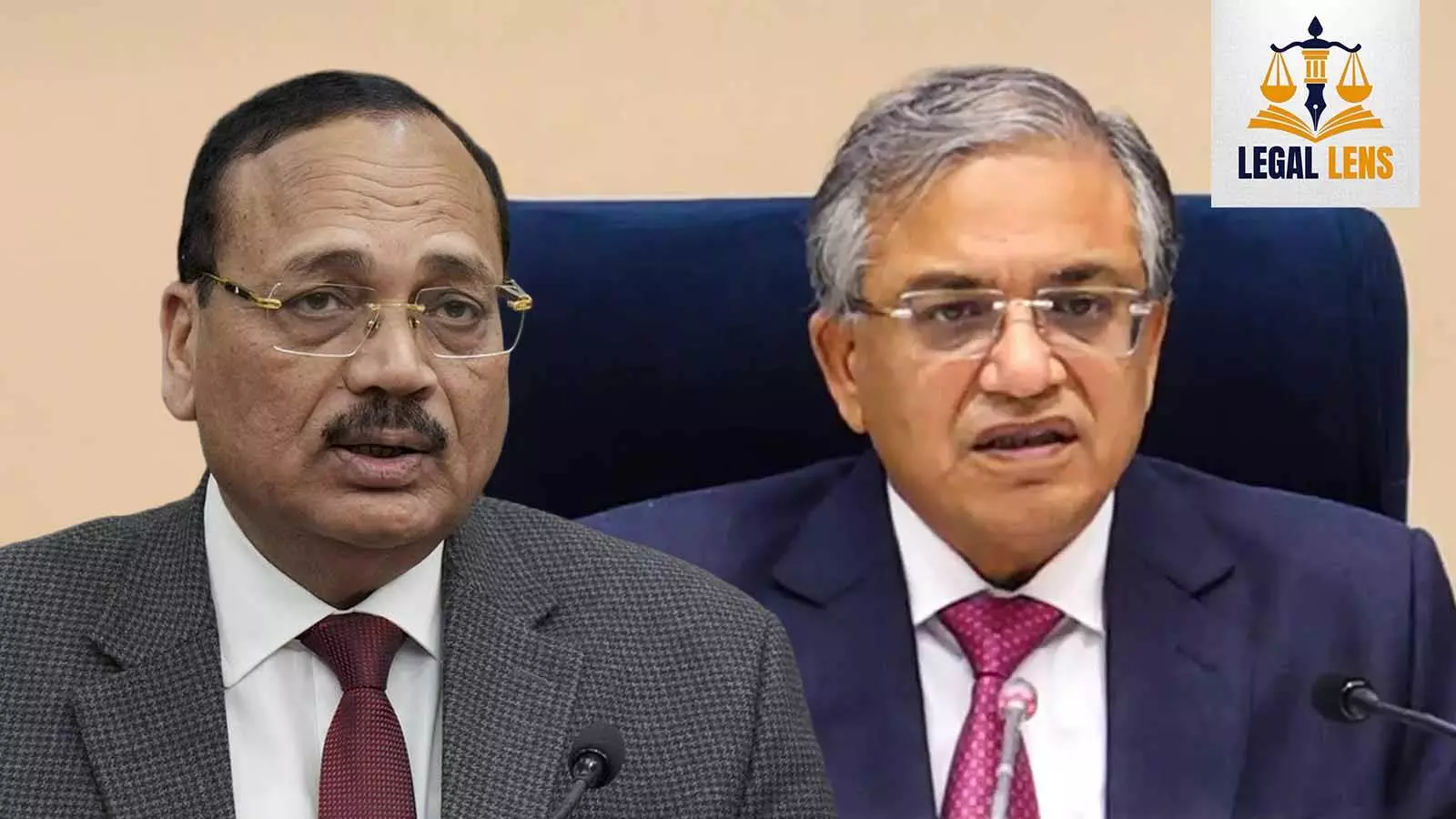
The Supreme Court’s refusal on October 5 to suspend Chief Election Commissioner Gyanesh Kumar was only the first step in the case. A Bench of Chief Justice Surya Kant, Justice Joymalya Bagchi and Justice V Mohana issued notice on two writ petitions. A notice calls upon the parties named in a petition to file their replies. Both petitions rely on objections recorded on file by Election Commissioners Sukhbir Singh Sandhu and Vivek Joshi.
The petitioners are Rakesh Kumar Singh, a Patna resident, and advocate Shailendra Mani Tripathi. Apart from the Union government, the Commission and Kumar, both have named two senior officials as respondents, the parties who must answer the case. They are Maneesh Garg, Senior Deputy Election Commissioner, and Seema Khanna, Director General (Information Technology).
Also read | Indian voter is angry, but Gyanesh Kumar can still atone for his ‘crimes’
Six questions will decide the course of the case, beginning with the one the Bench has already answered, for now.
1. Why the plea for suspension failed
The plea for suspension came from Singh alone, and Tripathi’s petition does not seek it. It was the last of Singh’s five interim prayers, the reliefs sought until the case is finally decided. He asked that Kumar be restrained from functioning as Chief Election Commissioner.
Singh rested the plea on three connected grounds, the first of which concerned the integrity of the rolls. He argued that Kumar’s continuance, despite sustained dissent by two of the three Commissioners, cast doubt on every roll exercise held meanwhile. The second is that the court’s own orders on the special intensive revision (SIR) of electoral rolls assumed the exercise was the Commission’s. The third presents suspension as the means of restoring the multi-member Commission.
The petitions have been filed under Article 32 of the Constitution, which allows a citizen to move the Supreme Court directly to enforce fundamental rights. The petition cites no provision that empowers a court to suspend a Chief Election Commissioner. Article 324(5) allows the removal of the CEC only in the manner prescribed for a Supreme Court judge, and is silent on suspension.
The Bench’s oral observations disclose three reasons for the refusal. The Chief Justice said the court could not act on newspaper reports alone, and the respondents had yet to be heard. The Bench asked who would conduct elections if the Chief Election Commissioner were suspended. Justice Bagchi said that granting such relief before examining the record would put the cart before the horse. The refusal came at the interim stage, and the prayer remains part of the petition.
2. What is sought against each respondent?
Singh’s petition treats its seven respondents very differently, and the differences reveal its design. Against Kumar alone, it seeks a writ of quo warranto, a Latin phrase meaning “by what authority”. Through this writ, a court calls upon the holder of a public office to show the authority under which he holds it. Singh wants Kumar to show by what authority he exercises alone a power vested in the Commission as a body. The petition concedes that the writ ordinarily tests title to an office and leaves conduct in office alone.
The two officials face a different remedy, directed at their acts and leaving their offices untouched. Singh asks the court to set aside Garg’s order of July 28, which reallocated oversight of the IT wing. That relief is sought through certiorari, the writ by which a court quashes, or sets aside, an unlawful decision. The prayers for restoring registration officers’ access to the electoral roll database concern the division Khanna heads. The declarations on how the Commission must decide are addressed to the Commission and the Union government.
No relief is sought against Sandhu and Joshi. They are parties because their objections form the petitioner’s case, and the suspension plea would have had them run the Commission. The two may now have to state on oath what was placed before the Commission and what it decided. They may stand by their notings, say that their concerns were since resolved, or join a common affidavit, or sworn statement, filed by the Commission.
Tripathi’s petition is built differently, since it seeks no quo warranto, leaves out the two Commissioners and adds the Cabinet Secretary.
3. The Commission’s files, and a sorting of the 14 objections
Section 18 of the 2023 Act governs how the Commission decides. Decisions are to be unanimous as far as possible, and by majority where the members differ. Justice Bagchi indicated that decisions shown to lack that support would be injuncted, or restrained by court order. Singh therefore asks the court to call for minutes, agendas, file notings, server logs and audit trails.
Also read | SC clarification on Form 6 gives Oppn fresh ammo against CEC day before EC office rally
Public discussion has treated the 14 objections as 14 unilateral decisions, but the table in Singh’s petition supports a more careful reading. Six entries concern how the Commission conducts its business, such as communications issued without approval. Three relate to one episode in July, when the two Commissioners struck down Garg’s order on the IT wing. The remaining five touch the voter directly, through Form 6, access to the roll database and appeals in West Bengal.
4. An inquiry into who changed Form 6
The Chief Justice has said the court wants to see who modified Form 6. The form is prescribed under the Registration of Electors Rules, 1960. Section 28 of the Representation of the People Act, 1950 vests rule-making in the Central government, after consulting the Commission. If the new declaration alters the form in substance, even a unanimous Commission lacks the power to introduce it.
The Commission maintains that the declaration is a separate SIR document, although it has withdrawn it outside States where the SIR continues. The legal question is whether a mandatory addition to a statutory form amounts to an amendment of that form.
The CJI observed during the hearing that "any modified Form 6 has not been approved by us". The remark contradicts the Commission's September 26 press note, which had claimed that the Supreme Court upheld the declaration attached to the form. The Bihar SIR judgment of May 27 could not have upheld it, because the declaration was introduced only after that judgment was delivered.
5. The prosecution plea under Section 32
Tripathi seeks prosecution of Kumar, Garg and Khanna under Section 32 of the 1950 Act. The section makes officials personally answerable for wrongdoing in the preparation of electoral rolls. It covers Electoral Registration Officers, their assistants, and any other person whom the Act charges with an official duty concerning the rolls.
An offence is made out when such a person breaches that duty, by act or omission, without reasonable cause. The punishment is imprisonment for at least three months, which may extend to two years, together with a fine.
Three hurdles stand in his way, and the first concerns the reach of the section, which is framed around field officials. The court must decide whether a Chief Election Commissioner is a person charged with a duty under the Act. The second hurdle lies in sub-section (3) of the same provision. A court may take up the offence only on a complaint authorised by the Election Commission or the State’s Chief Electoral Officer. A citizen therefore cannot go directly to a magistrate, and a complaint against Kumar would need the authority of the very body he chairs.
The third hurdle is Section 16 of the 2023 Act. It bars civil or criminal proceedings against a Commissioner for acts done while acting or purporting to act in official duty. Tripathi answers that deliberate manipulation of the rolls has no reasonable connection with official duty. A separate challenge to this immunity has been pending before the Court since January.
6. A test for the SIR itself
Singh’s widest prayer asks the court to declare the entire SIR void for want of lawful authority. His reasoning is that the court permitted the exercise on the footing that the Commission as a body had decided it. If the files show otherwise, he says, the court was never told the true institutional position.
Also read | When State elects the people: Notebandi, votebandi and the inversion of democracy
The prayer faces two difficulties, beginning with the Bench itself. The Chief Justice and Justice Bagchi would have to unsettle their own May 27 judgment upholding the Bihar SIR. The table of objections, moreover, begins in October 2025, four months after the order launching the SIR, and leaves that order untouched.
Singh asks that roll entries altered under any decision later quashed be re-examined in accordance with law. Tripathi asks the court to set aside 16.10 lakh appeals filed in West Bengal against voters whom judicial officers had restored.
The Commission’s answer
The Commission will have its own answers on these counts. Section 18 lets it, by unanimous decision, allocate business among its members, which could cover routine communications. It has already said that the order launching the SIR, and its later schedules, were unanimous. It may also contend that a Commissioner’s note on a file records an individual view and falls short of a decision. How far these answers hold will become clear once the replies and the files are before the court.